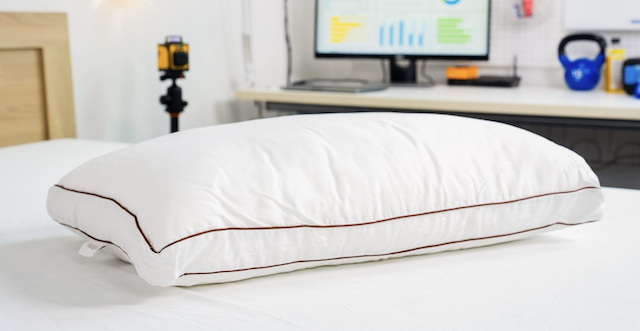
The 8 Best Mattresses for Stomach Sleepers in 2026

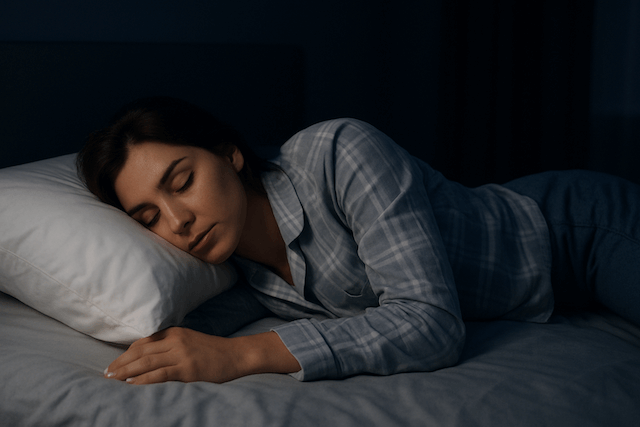
If you’re a stomach sleeper, you already know the struggle. Most mattresses aren’t designed with your sleep position in mind, and waking up with lower back pain has probably become an unwelcome morning ritual. After years of researching sleep quality and dealing with my own sleep challenges, I’ve learned that stomach sleepers have very specific mattress needs that most beds simply don’t address.
The problem? Stomach sleeping puts unique pressure on your spine. Without proper support, your hips sink too deeply into the mattress, creating an uncomfortable arch in your lower back that leads to pain and poor sleep quality. You need a mattress that’s firm enough to keep your body aligned but still comfortable enough to cushion pressure points.
In this guide, I’m breaking down the eight best mattresses for stomach sleepers based on extensive research and testing data from Sleep Doctor. Whether you’re dealing with back pain, sleeping hot, shopping on a budget, or sharing your bed with a partner who sleeps in a different position, I’ve got a recommendation that will actually work for your needs.
Why Stomach Sleeping Requires a Special Mattress
Stomach sleeping is the least common sleep position, which means mattress manufacturers rarely prioritize it in their designs. But if it’s how you naturally sleep most comfortably, you shouldn’t have to suffer through back pain or restless nights.
The core issue with stomach sleeping is spinal alignment. When you lie face-down, gravity pulls your midsection—the heaviest part of your body—downward into the mattress. On a soft or medium mattress, your hips and stomach sink while your head and legs remain higher, creating a U-shape curve in your spine. This unnatural position strains your lower back muscles and can compress spinal discs, leading to pain and stiffness.
A proper mattress for stomach sleepers prevents this sinkage. It should provide firm, responsive support that keeps your body in a relatively neutral position throughout the night. The key word here is “responsive”—you want a mattress that adjusts quickly as you move, not one that lets you sink deeper the longer you lie there.
As someone who’s managed sleep apnea for over a decade, I can tell you that proper spinal alignment matters for more than just back comfort. When your spine is properly supported, your airways stay more open, you breathe better, and your overall sleep quality improves dramatically. This is true whether you have sleep apnea or not—alignment affects everything from breathing to circulation to how rested you feel in the morning.
What to Look for in a Mattress for Stomach Sleepers
Before we dive into specific mattress recommendations, here are the key features you should prioritize:
Firmness Level: Most stomach sleepers need a firm to extra-firm mattress (7-9 on a 10-point scale). Heavier individuals, especially those over 230 pounds, typically need something on the firmer end. Lighter sleepers under 130 pounds might be comfortable with a medium-firm option (6-7 on the scale).
Responsive Support: Look for mattresses with individually wrapped coils or high-density foam that pushes back quickly. You don’t want memory foam that lets you sink slowly into the mattress over time.
Zoned Support: The best mattresses for stomach sleepers feature zoned construction—firmer materials positioned under your hips and torso to prevent sinkage where you need support most.
Minimal Contouring: Unlike side sleepers who need deep pressure relief, stomach sleepers benefit from less cushioning and contouring. You want to sleep “on” the mattress, not “in” it.
Strong Edge Support: This makes it easier to get in and out of bed and gives you access to the full sleep surface.
Cooling Features: Firm mattresses naturally sleep cooler than soft ones, but look for additional features like coil systems (for airflow), breathable covers, and heat-wicking materials.
The 8 Best Mattresses for Stomach Sleepers
1. Helix Dawn – Best Overall Mattress for Stomach Sleepers
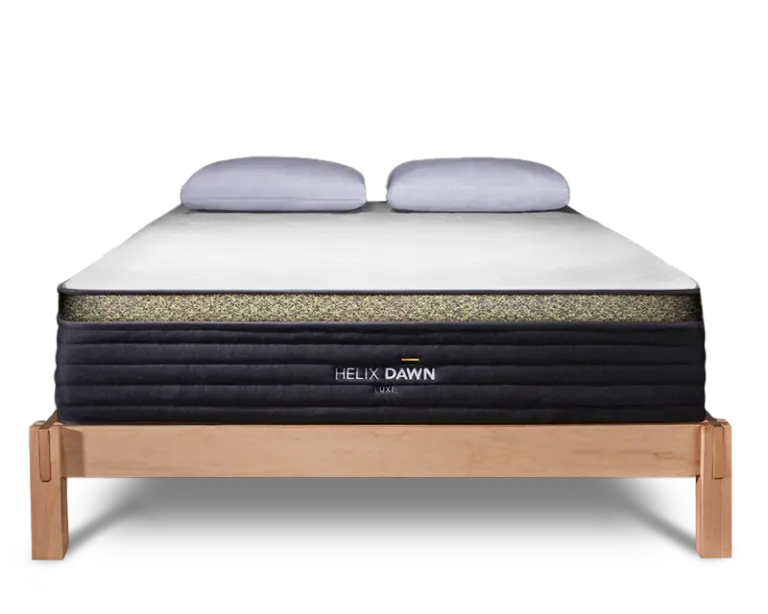
The Helix Dawn checks every box for stomach sleepers and earns the top spot as the best overall choice. This mattress delivers firm support without feeling like you’re sleeping on concrete—a balance that’s surprisingly hard to find.
With a firmness rating of about 8 out of 10, the Helix Dawn provides plenty of pushback from its support core. You won’t experience that sinking feeling that plagues stomach sleepers on softer mattresses. Instead, you get the robust support needed to prevent that dreaded downward dip in your spine.
What makes the Helix Dawn special is its thoughtfully designed four-layer comfort system. It includes gel memory foam and a latex foam hybrid layer for dynamic cushioning that responds quickly to movement. Two transitional layers feature higher-density foam that offers zoned ergonomic support, preventing sinkage specifically where stomach sleepers need it—through the hips and torso.
The support core uses individually wrapped coils that deliver targeted pushback. This responsive coil system adapts to your body position throughout the night, maintaining consistent support even as you shift positions.
Price: $999 for a queen
Sleep Trial: 100 nights
Warranty: Lifetime warranty
Shipping: Free shipping and returns
At $999, the Helix Dawn offers exceptional value for a high-quality hybrid mattress. You’re getting targeted support, responsive materials, and long-term durability at a price point that’s hundreds less than comparable options.
2. WinkBed – Best Mattress for Stomach Sleepers with Back Pain
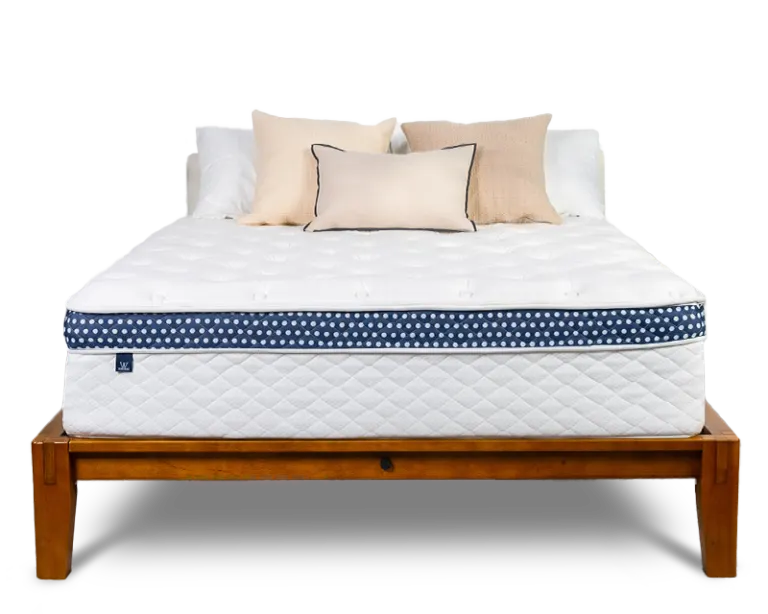
If you’re a stomach sleeper constantly waking up with back pain, the WinkBed deserves serious consideration. This mattress addresses the primary cause of stomach sleeping discomfort: inadequate support that lets your body sink too deeply into the sleep surface.
The WinkBed comes in three firmness levels, but the firmer option is ideal for most stomach sleepers. If you weigh over 230 pounds, consider the WinkBed Plus for even more robust support. Both versions feature that superior hybrid design that delivers support without sacrificing comfort.
The firmer WinkBed includes a double-layered euro pillow top for gentle contouring and a layer of gel foam for pressure relief. This top layer provides just enough cushioning to avoid pressure points on your ribs and hips without letting you sink.
The real magic happens in the support core. A three-zone coil system specifically targets hip support, keeping this heavy part of your body uplifted and maintaining spinal alignment. The WinkBed Plus takes this further with a zoned latex layer for additional responsive uplift and a five-zone support core that provides extra support through the middle third of your body.
Price: Just under $1,500 for the firmer option; about $1,700 for the Plus
Sleep Trial: 120 nights
Warranty: Lifetime warranty
Shipping: Free shipping and returns
The combination of quality materials, thoughtful construction, and lifetime warranty makes the WinkBed an excellent long-term investment for stomach sleepers dealing with chronic back pain.
3. Leesa Superior Chill – Best for Comfort and Temperature Regulation
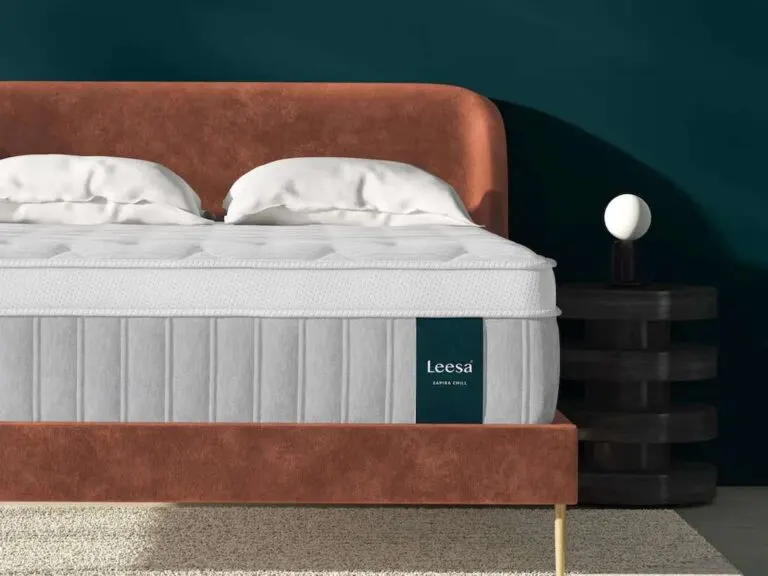
Not every stomach sleeper wants a rock-hard mattress. If you appreciate extra cushioning but still need proper support, the Leesa Superior Chill strikes an excellent balance—especially if you tend to sleep hot.
This foam hybrid comes in three firmness levels, allowing you to customize the feel to your preference. Regardless of which firmness you choose, you’ll get substantial cushioning from three foam layers in its euro-top comfort system. This provides pressure relief on your ribs, shoulders, and hips without excessive sinkage.
The cushioning is supported by dense transitional foam and zoned coils that deliver responsive pushback that’s stronger through the hips. This design maintains proper spinal alignment while still giving you that comfortable, cushioned feeling.
Temperature regulation is a standout feature. The Superior Chill uses open-cell construction in its foam layers for breathability, a coil core that promotes airflow, and a cover with built-in heat-wicking fibers. If you’re someone who tends to overheat at night—or if you use CPAP equipment that can make you warmer—this cooling technology makes a noticeable difference.
Price: Just under $1,700 for a queen
Sleep Trial: 100 nights
Warranty: Limited lifetime warranty
Shipping: Free shipping and returns; white glove delivery available for additional fee
The price point is reasonable for such a thoughtfully designed hybrid, and the white glove delivery option is worth considering if you want professional setup and old mattress removal.
4. Saatva Classic – Best Luxury Mattress for Stomach Sleepers
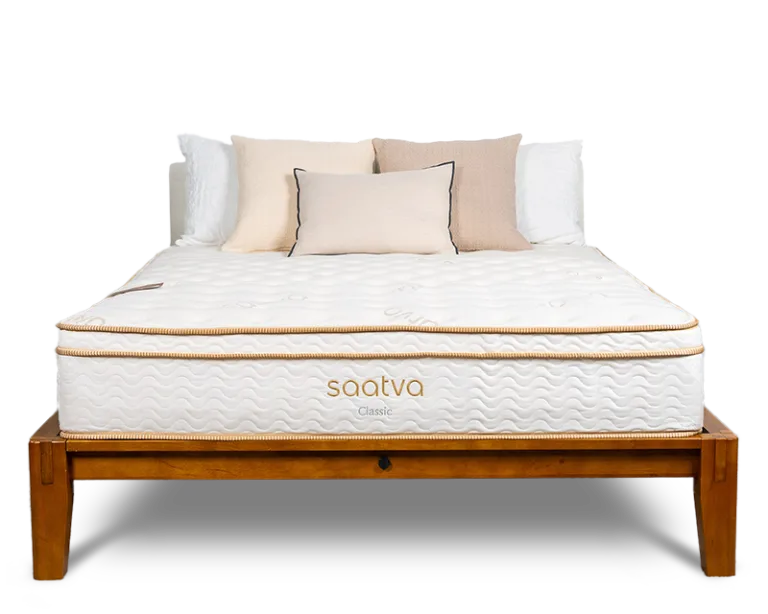
If you’re willing to invest more for true luxury-level construction and materials, the Saatva Classic delivers exceptional value at its price point. This traditional innerspring mattress combines old-school craftsmanship with modern innovation.
The Saatva Classic features a plush euro top and an innovative coil-on-coil design. The amount of contouring you experience depends on the firmness level you select, but for most stomach sleepers, the firm option is ideal. It delivers just enough cradling to relieve pressure points without excessive give that would compromise spinal alignment.
Where the Saatva really excels is in its support system. A super-responsive micro-coil layer delivers ultra-targeted pushback, preventing pressure points especially through the middle third of your body where stomach sleepers need it most. The tempered steel coils in the core offer a robust foundation that keeps you from sinking into the sleep surface.
The dual-coil system also provides superior airflow, making this one of the coolest-sleeping mattresses you’ll find. The combination of breathable materials and constant air circulation throughout the mattress core means you’re unlikely to overheat.
Price: Just over $1,800 for a queen
Sleep Trial: 365 nights (a full year!)
Warranty: Lifetime warranty
Shipping: Free delivery and setup; old mattress removal upon request
The Saatva’s white glove delivery is included in the price—they’ll set up your new mattress in the room of your choice and haul away your old one. The generous 365-night sleep trial is also a major advantage, giving you a full year to decide if the mattress works for you.
5. Brooklyn Bedding Copper Flex Hybrid – Best Budget Mattress for Stomach Sleepers
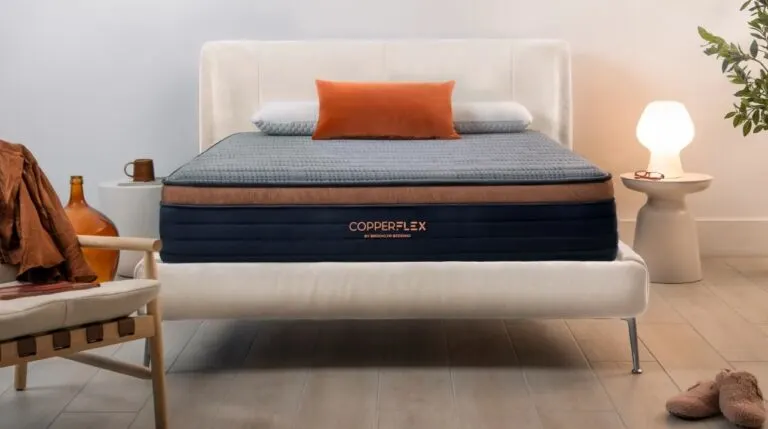
If you’re shopping on a tight budget, you might assume you’ll have to sacrifice quality or features. The Brooklyn Bedding Copper Flex Hybrid proves that assumption wrong, delivering luxury-level performance at an incredibly accessible price point.
For just about $700, you get a high-quality hybrid mattress with thoughtful design elements specifically beneficial for stomach sleepers. It starts with a quilted foam cover that keeps the sleep surface plush and comfortable. Just underneath, a layer of copper-infused memory foam regulates heat while contouring around pressure points.
A transitional foam layer under the comfort system prevents stomach sleepers from dipping too far into the mattress—this is crucial for maintaining spinal alignment. A final zoned foam layer adds additional pushback through the torso, targeting the exact area where stomach sleepers need extra support.
Individually encased coils in the support core create a sturdy foundation that keeps stomach sleepers uplifted and properly aligned throughout the night.
Price: Around $700 for a queen
Sleep Trial: 120 nights
Warranty: Limited lifetime warranty
Shipping: Free
At this price point with these features, the Copper Flex Hybrid represents outstanding value. The 120-night trial and lifetime warranty mean you’re not sacrificing protection for affordability.
6. Nolah Evolution 15 – Best Mattress for Couples with Different Sleep Positions
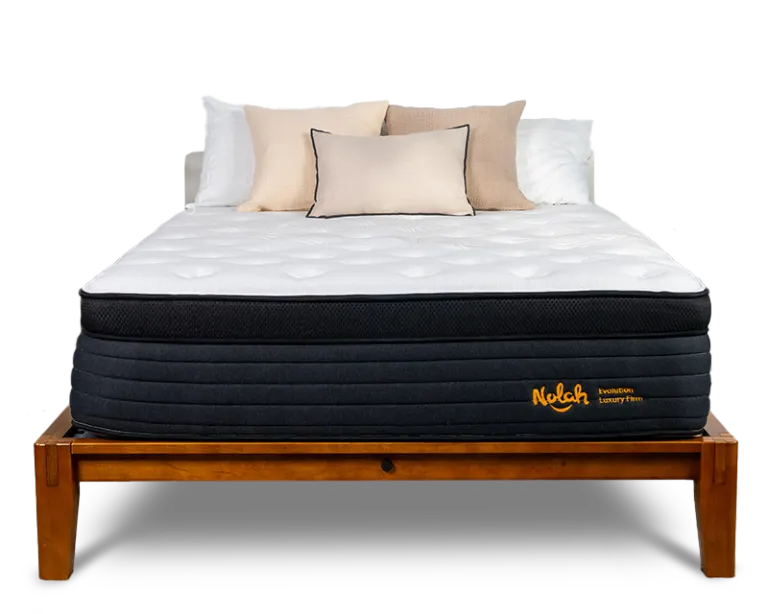
Here’s a common scenario: you’re a stomach sleeper, but your partner sleeps on their side or back. Most mattresses force one person to compromise on comfort. The Nolah Evolution 15 solves this problem with impressive versatility.
This mattress comes in three firmness levels and features four layers of adaptive polyfoam plus a multi-zone coil core. The result? A mattress that’s supportive enough for most stomach sleepers while remaining comfortable for side and back sleepers.
The luxury firm option works particularly well as a compromise. It provides the firm support stomach sleepers need while offering enough cushioning for other sleep positions. Both partners can benefit from the materials and design without sacrificing their individual comfort needs.
Motion isolation is another major advantage for couples. Thanks to thick foam layers, the Evolution 15 excels at preventing motion transfer. If your partner tosses and turns throughout the night, you’re far less likely to feel their movements and wake up.
The zoned support system delivers targeted support where each sleep position needs it most, making this one of the most adaptable mattresses for mixed-position couples.
Price: Just under $1,500 for a queen
Sleep Trial: 120 nights
Warranty: Lifetime warranty
Shipping: Free
For couples struggling to find a mattress that works for both partners, the Nolah Evolution 15 is worth the investment. The hotel-quality construction and thoughtful design make it a solid long-term choice.
7. Plank Firm Luxe – Best Extra Firm Mattress for Maximum Support
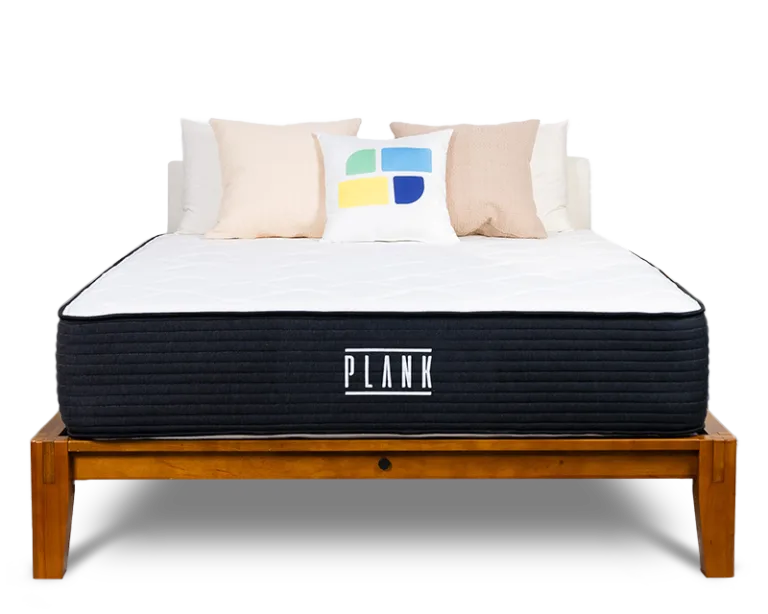
Some stomach sleepers—especially heavier individuals—don’t just want firm support. They need extra firm, no-compromise support to prevent sinkage and maintain alignment. The Plank Firm Luxe is designed specifically for this need.
This flippable hybrid mattress offers two firmness options in one bed. The firm side rates about a 7 on the 10-point firmness scale and features a quilted cover over a 1-inch comfort layer and 2 inches of responsive transition foam. This side works well for average-weight stomach sleepers who want solid support with minimal cushioning.
The extra firm side is where this mattress really shines for heavier stomach sleepers. Rating a whopping 9 out of 10 on the firmness scale, it’s one of the firmest mattresses tested by Sleep Doctor. This side has a thinner quilted cover and eliminates the comfort layer entirely, putting you much closer to the coil support core.
For stomach sleepers weighing more than 230 pounds, this extra firm side excels at keeping your torso lifted and body supported. There’s virtually no sinkage, which means your spine stays in proper alignment throughout the night.
Price: Around $1,300 for a queen
Sleep Trial: 120 nights
Warranty: Limited lifetime warranty
Shipping: Free
The Plank Firm Luxe costs less than many of the other options on this list while delivering superior performance for heavy stomach sleepers. The ability to flip between two firmness levels also gives you flexibility as your needs or weight changes.
8. Birch – Best Organic Mattress for Stomach Sleepers
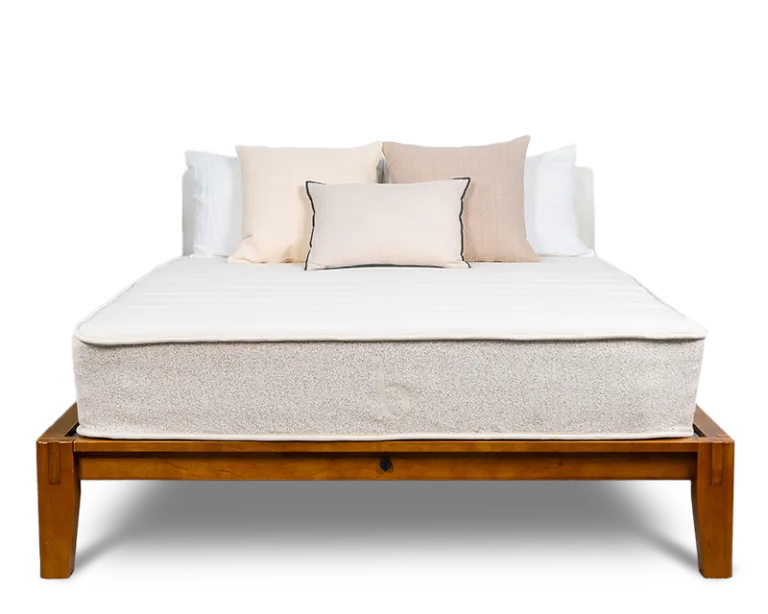
If you prioritize natural materials and want to avoid chemical-based components, the Birch mattress offers an excellent organic option designed with stomach sleepers in mind.
This hybrid features GOLS-certified organic latex in the comfort system, providing gentle contouring and bouncy responsiveness that works especially well for stomach sleeping. Unlike memory foam that can let you sink slowly over time, latex maintains its supportive lift and responds quickly to movement.
Individually wrapped coils in the support core maintain spinal alignment, while a combination of organic cotton and natural wool in the top layers adds temperature regulation and breathability. These natural materials help wick away moisture and promote airflow, keeping you cool throughout the night.
Important consideration: The Birch is the softest mattress on this list, rating a 6 out of 10 on the firmness scale. This means it may not provide adequate support for stomach sleepers weighing more than 230 pounds. However, it can be an excellent option for lighter stomach sleepers who can benefit from additional pressure relief while still maintaining proper alignment.
Price: Around $1,400 for a queen
Sleep Trial: 100 nights
Warranty: Limited lifetime warranty
Shipping: Free
At $1,400, you’re getting organic materials and premium construction without paying a significant price premium over non-organic options. For eco-conscious stomach sleepers under 230 pounds, this is an ideal choice.
What Firmness Should Stomach Sleepers Choose?
Firmness needs vary based on body weight and personal preference, but here are general guidelines:
Under 130 pounds: Medium-firm to firm (6-7 on the scale). You might be comfortable with slightly softer options like the Birch or the medium-firm Leesa Superior Chill, as your lighter weight is less likely to cause excessive sinkage.
130-230 pounds: Firm (7-8 on the scale). Most of the mattresses on this list fall into this range. The Helix Dawn, WinkBed, and Saatva Classic are all excellent choices.
Over 230 pounds: Firm to extra firm (8-9 on the scale). Look at the WinkBed Plus, the extra firm side of the Plank Firm Luxe, or the firmest options available in other mattresses. You need more robust support to prevent sinkage.
Remember that firmness scales vary between manufacturers, so a “7” from one brand might feel different than a “7” from another. This is why sleep trials are so important—you need time to test the mattress and see how it actually feels over multiple nights.
Can Stomach Sleepers Have Back Pain?
Absolutely, and it’s one of the most common complaints from stomach sleepers. The primary cause is inadequate mattress support that allows your hips to sink too deeply, creating an arch in your lower back.
If you’re waking up with back pain, examine your mattress first. A mattress that’s too soft, too old, or worn out will let your body sink into positions that strain your spine. The solution is usually a firmer, more supportive mattress that keeps your body in better alignment.
The WinkBed is specifically designed to address back pain with its zoned support system. The Helix Dawn’s targeted pushback also helps prevent the spinal misalignment that causes morning back pain. For heavier individuals, the Plank Firm Luxe’s extra firm side can provide the robust support needed to eliminate sinkage-related pain.
From my experience managing sleep apnea and dealing with various sleep-related issues, I can tell you that addressing back pain through proper mattress support has cascading benefits. When you’re not in pain, you sleep more soundly, move less during the night, and wake up actually feeling rested instead of stiff and achy.
Why Most Mattresses Don’t Work for Stomach Sleepers
Stomach sleeping is the least common sleep position—only about 7% of adults sleep primarily on their stomachs. Because of this, most mattress manufacturers design their products with back and side sleepers in mind.
The “universal comfort” mattresses you see advertised everywhere are typically medium to medium-firm (5-6 on the scale). This works reasonably well for back and side sleepers but provides inadequate support for stomach sleeping. Marketing often emphasizes pressure relief and contouring, which are benefits for side sleepers but problems for stomach sleepers.
This is why finding a mattress specifically designed or well-suited for stomach sleeping is so important. You need a mattress that prioritizes support and responsiveness over deep contouring and plush comfort layers.
Should Stomach Sleepers Use a Pillow?
This is slightly off-topic but worth addressing since pillow choice significantly impacts spine alignment for stomach sleepers.
Many stomach sleepers do better with a very thin pillow or no pillow at all. A thick pillow forces your neck into an uncomfortable upward angle, creating neck strain and potentially affecting your breathing.
If you do use a pillow, look for one specifically designed for stomach sleepers—these are typically very flat and provide minimal loft. Some stomach sleepers prefer placing a thin pillow under their hips instead of their head to help maintain spinal alignment.
How Mattress Choice Affects Sleep Apnea
As someone who’s managed severe obstructive sleep apnea for years, I’ve learned that while your mattress isn’t a treatment for sleep apnea, it definitely impacts your overall sleep quality and breathing.
Stomach sleeping is generally not recommended for people with sleep apnea, as it can compress the chest and make breathing more difficult. However, if stomach sleeping is your natural position, a firm, supportive mattress that maintains proper spinal alignment can help you breathe more easily than a soft mattress that lets your body sink.
For CPAP users who sleep on their stomachs, a firmer mattress makes it easier to maintain a stable position with your mask, reducing mask leaks that can disrupt therapy. The cooler sleep surface of firm mattresses also helps offset the facial warmth that CPAP therapy can create.
If you have sleep apnea and prefer stomach sleeping, talk to your doctor about whether this position is safe for you. Many sleep apnea patients find that side or back sleeping with proper support is more beneficial for managing their condition.
Frequently Asked Questions
Should stomach sleepers sleep with a pillow?
If you’re a stomach sleeper, a thin pillow — or even no pillow at all — is usually the most comfortable choice. Thick pillows push your neck upward at an awkward angle, which can lead to stiffness or pain. A low-loft pillow under 3 inches gives you a bit of cushioning without putting your neck out of alignment.
What mattress types should stomach sleepers avoid?
Stomach sleepers generally want to avoid mattresses that are too soft or that let you sink too deeply. When your hips drop into the mattress, your spine curves in an uncomfortable way, and you’re more likely to wake up sore. Very soft all-foam mattresses with lots of contouring often create that “stuck in the bed” feeling, which doesn’t work well for stomach sleepers.
What if you’re a stomach sleeper who likes a plush or soft mattress?
If you sleep on your stomach but love a cozy, plush feel, look for a mattress that combines softness with proper support. Medium-soft models with responsive foam or hybrid designs are great options because they cushion pressure points while still keeping your spine aligned. This gives you the softer feel you enjoy without the morning aches.
Final Thoughts: Which Mattress Is Right for You?
Choosing the best mattress for stomach sleeping depends on your specific needs:
Best Overall: Helix Dawn offers excellent all-around performance, targeted support, and great value at $999.
Best for Back Pain: WinkBed delivers zoned support specifically designed to prevent the spinal misalignment that causes pain.
Best for Hot Sleepers: Leesa Superior Chill combines cooling technology with firm support for comfortable, cool sleep.
Best Luxury Option: Saatva Classic provides premium materials, dual-coil support, and a full-year sleep trial.
Best Budget Choice: Brooklyn Bedding Copper Flex Hybrid proves you don’t need to spend $1,500+ to get quality support at just $700.
Best for Couples: Nolah Evolution 15 accommodates different sleep positions without forcing either partner to compromise.
Best for Heavy Sleepers: Plank Firm Luxe’s extra firm side provides maximum support for stomach sleepers over 230 pounds.
Best Organic Option: Birch delivers natural materials and responsive latex support for lighter stomach sleepers.
Every mattress on this list comes with a sleep trial of at least 100 nights (Saatva offers a full year). Take advantage of these trial periods—what feels comfortable for 10 minutes in a showroom might feel different after 30 nights of actual sleep.
The right mattress should keep your spine aligned, prevent sinkage through your hips, and help you wake up without back pain or stiffness. As a stomach sleeper, you have specific needs that most mattresses don’t address, but the options on this list are specifically designed to support your sleep position.
⚠️ MEDICAL DISCLAIMER This blog provides general information only and is not a substitute for professional medical advice, diagnosis, or treatment. Sleep apnea is a serious condition, and CPAP equipment should be used under proper medical supervision. Always consult your doctor or sleep specialist before starting, stopping, or changing any therapy. I share personal experiences as a CPAP user, not as a medical professional. Individual results vary. For medical guidance, please consult a qualified clinician or the American Academy of Sleep Medicine (aasm.org).