Chilipad Dock Pro Review: A Research Based Buyer’s Guide

“This post contains affiliate links. I may earn a commission if you buy through these links at no extra cost to you. Read my Disclaimer for more details.”
A quick note before you read another word. I have not slept on the ChiliSleep Dock Pro. I have not personally tested its cooling, the noise level, or what it feels like to wake up at 3 a.m. and tap a phone app to drop the temperature two degrees. What you are reading is a research based overview of the product, not a hands-on review.
I am writing it because the Dock Pro shows up constantly in conversations about sleep technology, the price tag is significant, and a lot of the reviews online read like they were written by people who barely understand what they are looking at. If you are trying to decide whether $1,699 or $1,899 is a sensible amount to spend on a temperature controlled mattress pad, you deserve a straight answer about what is verifiable, what is contested, and what only your own 30-night trial can tell you.
That is what this article is for.
What the Chilipad Dock Pro Actually Is
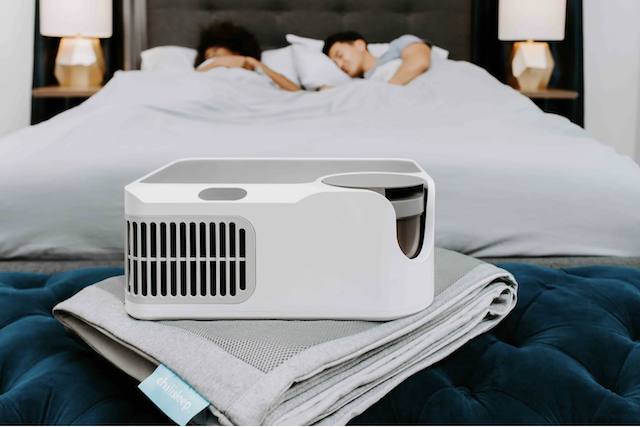
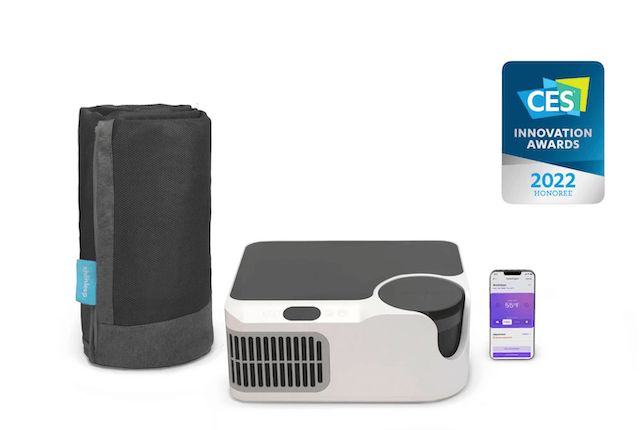
The ChiliSleep Dock Pro is a water-based mattress cooling and heating system made by Sleep.me, the company formerly known as ChiliSleep. Both brands sit under the same parent company, Kryo. The product itself has two pieces. The first is a small control unit roughly the size of a shoebox that sits beside or under the bed. The second is a thin mattress pad that slips on like a fitted sheet.
The control unit heats or cools water, then circulates that water through soft channels woven into the pad. You set the temperature on a phone app, on the Sleep.me web dashboard, or with buttons on top of the unit. The system holds that temperature through the night.
Sleep.me publishes an operating range of 55 to 115 degrees Fahrenheit. Multiple verified reviewers, including the Sleep Foundation’s own product testing team, confirm the system reaches the target temperature in roughly 10 to 20 minutes. That means you start it before you actually get into bed.
You buy it in one of two configurations. The “Me” version covers half the bed and uses a single control unit. The “We” version covers the full bed with two control units, one per side, so you and a partner can run different temperatures.
What the Sleep Temperature Research Actually Says
Before deciding whether $1,899 of bed cooling is a reasonable purchase, it helps to know what science says about sleep temperature in the first place.
The Sleep Foundation recommends an optimal bedroom temperature for adult sleep of roughly 65 to 68 degrees Fahrenheit. The Cleveland Clinic, citing sleep psychologist Dr. Michelle Drerup, places the range a touch lower, around 60 to 67 degrees. Both sources agree on the underlying mechanism. Your core body temperature drops naturally as part of falling asleep, and a cool bedroom supports that drop. A bedroom warmer than about 70 degrees can disrupt REM sleep and pull you into lighter, more easily interrupted stages.
Notice what the research is actually saying though. The recommendation is for ambient room temperature, not surface temperature on the bed itself. The Dock Pro is essentially a way to localize the cooling to the bed surface, which can matter for hot sleepers, for people sharing a bed with someone who has different preferences, or for anyone whose mattress traps heat. It is not a magic upgrade for sleep quality if the rest of your sleep environment is already dialed in.
That distinction matters when you are deciding whether a system this expensive is solving the actual problem you have.
Pricing, Stated Honestly
This is one area where most existing Dock Pro write ups bury the lead. Here is the simple version.
The half bed “Me” configuration starts at around $999 for a queen size. The full bed “We” configuration starts at $1,699 for a queen and runs up to $1,899 for a king or California king. If you add the optional sleep tracking accessory and extended coverage, the price climbs further. A king with dual zones, sleep tracking, and extended coverage has been quoted as high as $2,666.
One important update many older reviews still miss. In May 2025, Sleep.me removed the recurring subscription that previously gated some sleep tracking features. So while the upfront cost is high, there is no monthly fee tied to using the system. That is a real change from how the product was sold for the first few years of its life.
What Long-Term Reviewers Consistently Report
I read or watched several reviews from people who have actually slept on the Dock Pro for months. The same handful of signals came up across most of them.
The cooling itself is real. Reviewers who set the unit aggressively, around 60 degrees on the surface, often describe needing to dial it back because the bed got too cold to sleep in. That is a different problem than wondering whether the system works.
The fan noise is the most common complaint. Sleep.me publishes a noise specification of 41 to 46 decibels measured 30 cm from the unit. That is roughly the level of a quiet library or a residential refrigerator. Reviewers split on this. Some find it functions as gentle white noise. Others find it intrusive enough to mention as a real downside, particularly partners who do not sleep with earplugs or a fan.
Maintenance is real, ongoing work. The system uses distilled water, which slowly evaporates over weeks, so you have to top it up periodically. Sleep.me also recommends draining and cleaning the unit monthly with a proprietary cleaning solution, and the mattress pad is machine washable but heavy and awkward to drain before washing. The team at NoSleeplessNights, who has used the system for over 200 nights, estimated the cleaning solution alone runs around $200 a year if you follow the recommended monthly schedule with both units in a “We” setup.
The dual zone feature works well for moderate differences but has limits. If one partner sets their side to 60 degrees and the other sets theirs to 90 degrees, the middle of the bed converges to something in between. Reviewers consistently report that dual zones perform well for typical preference gaps but cannot fully isolate extreme differences.
Wi-Fi setup is occasionally finicky. The unit operates on 2.4 GHz networks. Several reviewers mention initial pairing taking longer than expected, which is consistent with how a lot of smart home gear behaves on dual band routers.
None of this is a deal breaker on its own. Taken together, it is the difference between buying an appliance and buying a luxury item that needs care.
How It Compares to the Eight Sleep Pod 5
The most common alternative people consider is the Eight Sleep Pod 5. Both systems use water based temperature regulation. The differences come down to philosophy.
The Eight Sleep Pod 5 is the more expensive, more software heavy product. It tracks heart rate, heart rate variability, sleep stages, and respiratory rate. It adjusts temperature automatically based on those signals. It comes with a subscription for the full feature set, and the starting price is more than three thousand dollars before that subscription kicks in.
The Dock Pro is the simpler, more focused product. It controls bed temperature precisely. It does not track biometrics. It does not adjust automatically based on your sleep stage. It costs less, and as of May 2025 it has no subscription. If you want a thermostat for your bed and not much else, that is what the Dock Pro offers.
Neither product is universally better. They are different tools for different buyers. If you geek out on sleep data and want a system that quietly optimizes itself, Eight Sleep is the more interesting product. If you just want a bed that is the temperature you set, the Dock Pro is the more honest product.
| Feature | Chilipad Dock Pro | Eight Sleep Pod 5 |
|---|---|---|
| Cooling Method | Water-based hydro system | Water-based + active grid sensors |
| Heating Method | Water-based | Water-based |
| Temperature Range | 55°F to 115°F | 55°F to 110°F |
| Dual-Zone Support | Yes (Queen size and up) | Yes |
| Smart App Integration | Sleepme app (Wi-Fi + Bluetooth) | Eight Sleep app (Wi-Fi, Apple Health, Google Fit) |
| Biometric Tracking | No | Yes (heart rate, HRV, sleep stages, respiratory rate) |
| Sleep Coaching | No | Yes (requires subscription) |
| Noise Level | Very quiet | Quiet |
| Maintenance | Distilled water refill every 1–3 months | Minimal (self-maintaining system) |
| 🛏️ Mattress Integration | Works with your existing mattress | Comes with integrated smart mattress |
| Subscription Required | No | Yes ($15–$24/month for full features) |
| Price | From $999 (half bed setup) | From $3,245 (mattress + cover bundle) |
Who This Seems to Be For
Based on the patterns in published reviews, the Dock Pro tends to deliver real value for people in a few specific situations.
Hot sleepers who have already tried passive solutions like cooling sheets, a cooling topper, or stronger air conditioning, and still wake up uncomfortable, seem to get the most use out of the system. People going through menopause and dealing with night sweats show up often in positive reviews for the same reason. Couples with significantly different temperature preferences appreciate the dual zone control, with the caveat noted above about extreme gaps.
The system also makes sense if you live somewhere with hot summers and you would rather cool the bed than run the air conditioning hard all night. The energy math takes years to work out in your favor, but the comfort math can pay off immediately.
Athletes, biohackers, and anyone interested in optimizing recovery sleep are another visible segment, though for that crowd the lack of biometric tracking on the Dock Pro is a real limitation compared to Eight Sleep.
Who Should Probably Skip It
If your temperature complaints are occasional rather than chronic, $1,699 to $1,899 is a lot of money to throw at a problem that a $200 cooling topper might handle just fine. The published reviews are pretty consistent that buyers who get the Dock Pro for marginal hot sleeper symptoms tend to feel less sure about the value than people who bought it because nothing else was working.
If you need an utterly silent bedroom, the fan noise is going to be a problem. Some people genuinely cannot sleep with a 41 to 46 dB hum nearby, and reading positive reviews from people who use earplugs is not going to change your situation.
If you do not want to maintain it, this is not the right product. A unit that needs monthly cleaning, periodic distilled water top ups, occasional pad washing, and a yearly budget for cleaning solution is a real ongoing commitment.
And if your sleep problems are not actually about temperature, no amount of bed cooling will fix them. Stress, sleep hygiene, untreated breathing disorders, alcohol close to bedtime, and an inconsistent schedule all matter more than what your sheets feel like.
The 30 Night Trial Is the Real Answer
Sleep.me offers a 30 night trial, which is genuinely the only honest way to know if the Dock Pro is worth it for you. The trial gives you enough time to experiment with different temperature settings, see how your sleep responds, and decide whether the maintenance is something you can live with.
A few practical thoughts on using the trial well, drawn from how the more thorough reviewers describe their first month.
Spend the first week or two finding your comfort range. Most users land somewhere between 60 and 75 degrees on the pad surface, but personal preference varies widely. Track your sleep during week three, ideally with a journal or a wearable, so you can compare against your baseline. Make your buy or return decision around day twenty rather than waiting for day twenty-nine.
If you are not noticeably sleeping better at three weeks in, returning it is the rational call. If you are, the math gets a lot easier.
What This Review Can and Cannot Tell You
I am not going to pretend this is a substitute for hands on testing.
If you want detailed, video supported, multi month reviews with actual measurements, the team at NoSleeplessNights has both an initial review and a 200 day follow up that go deeper into the day to day experience than I can. The Sleep Foundation also has an independent product evaluation worth reading. Those are the resources I would point you to first.
What this article aims to do is something different. It is an honest synthesis from someone who has read those reviews, looked at the manufacturer’s specifications, and tried to give you a clear eyed framework for the decision without inventing personal experience I do not have. If that is useful to you, I am glad. If you want a hands on take, the links above will get you there.
If you decide the Dock Pro is worth trying, the trial period and the absence of a subscription mean the worst case is that you ship it back and lose a few weeks of curiosity. If you decide it is not for you, you have saved yourself somewhere between $999 and $2,666.
Either outcome is fine. What you do not want to do is buy a $1,899 mattress pad on the basis of a confident sounding review that nobody actually wrote with their hands on the product.
⚠️ MEDICAL DISCLAIMER This blog provides general information only and is not a substitute for professional medical advice, diagnosis, or treatment. Sleep apnea is a serious condition, and CPAP equipment should be used under proper medical supervision. Always consult your doctor or sleep specialist before starting, stopping, or changing any therapy. I share personal experiences as a CPAP user, not as a medical professional. Individual results vary. For medical guidance, please consult a qualified clinician or the American Academy of Sleep Medicine (aasm.org).