Best CPAP Mask Liners for 2026: What I Actually Use

“This post contains affiliate links. I may earn a commission if you buy through these links at no extra cost to you. Read my Disclaimer for more details.”

For the first couple of years on CPAP, I didn’t think much about mask marks. The red lines on my face each morning were just part of the deal — you wear a mask all night, you get lines. I’d notice them, they’d fade, and I’d move on.
Then I started noticing they weren’t fading as fast. I’d be sitting on the train to work an hour after waking up, and I could still feel the indentations across my nose and cheeks. Whether anyone else noticed, I genuinely don’t know, but I noticed, and it started to bother me.
That’s what my face looked like on a typical morning before I found mask liners. The marks from the F20 cushion sitting against my nose and cheeks for seven hours a night, taking longer and longer to fade as I got older.
A mask liner is exactly what it sounds like — a thin fabric layer that sits between your face and the mask cushion, so the silicone isn’t pressing directly against your skin. It reduces the concentrated pressure at the seal points, absorbs the moisture and facial oils that accumulate overnight, and significantly reduces the friction that causes marks and irritation. For a lot of people, it also meaningfully improves the mask seal, because the fabric creates a more consistent surface than skin alone, particularly for people with facial hair or uneven skin texture.
I’ve tried several brands over the years. These are the four worth knowing about.
Quick picks:
| Your situation | My recommendation |
|---|---|
| Best overall | Snugz Full Face CPAP Mask Liners |
| Best budget / first-time buyers | RespLabs Medical CPAP Mask Liners |
| Best for nasal masks | RemZzzs Nasal Pillow Liners |
| Best for sensitive skin | Silent Night CPAP Liners |
Snugz Full Face CPAP Mask Liners — Best Overall

This is what I use. I’ve been using Snugz consistently for well over a year and I’d genuinely recommend them to any full face mask user dealing with the marks, irritation, or leak issues that brought you to this page.
The fabric is the thing that stands out immediately. It’s soft in a way that the cheaper liners aren’t — closer to a well-worn cotton t-shirt than the slightly scratchy feel of some alternatives. That matters because you’re wearing this against your face for seven or eight hours. The difference between a fabric that feels slightly rough and one that feels genuinely soft is the difference between something you notice all night and something you forget is there.
Durability holds up well through repeated washing. I wash mine every couple of nights and replace them roughly every six weeks. The two-pack is the right quantity to have in rotation — one on the mask, one clean and ready to go.
My marks now fade within twenty minutes of taking the mask off in the morning. That’s the practical result that matters.
RespLabs Medical CPAP Mask Liners — Best Budget
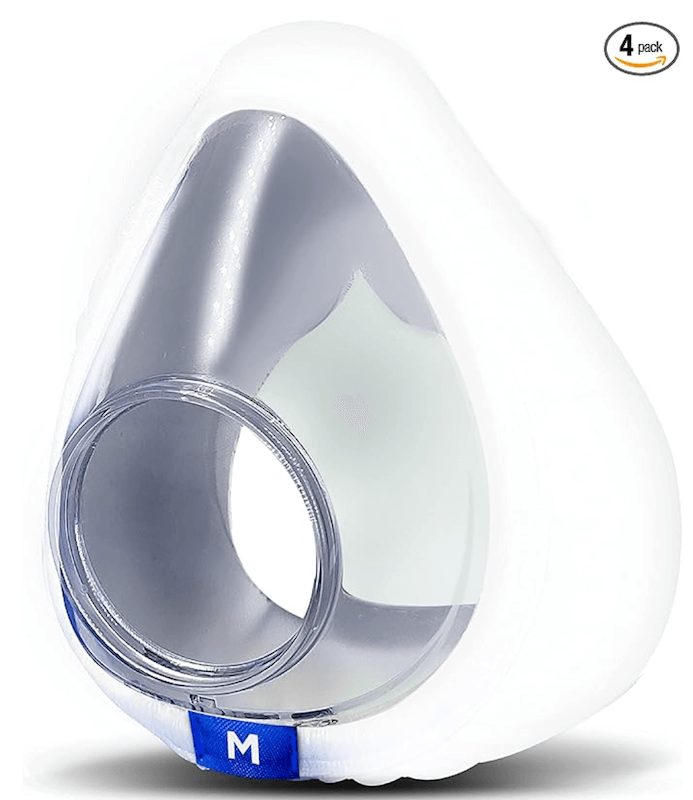
If you’ve never tried a liner and you’re not sure whether they’ll make enough difference to be worth it, RespLabs is the right starting point. The four-pack at a lower price point means you’re not committing much to find out whether liners work for your particular situation.
Performance is solid across the basics — marks are reduced, the seal is more consistent, the fabric is comfortable enough for regular use. It’s not quite the quality of the Snugz fabric, which is why I keep RespLabs as my backup when all my Snugz liners are in the wash rather than making it my primary. But for a first trial, or for someone managing their CPAP budget carefully, it does the job.
RemZzzs Nasal Pillow Liners — Best for Nasal Masks
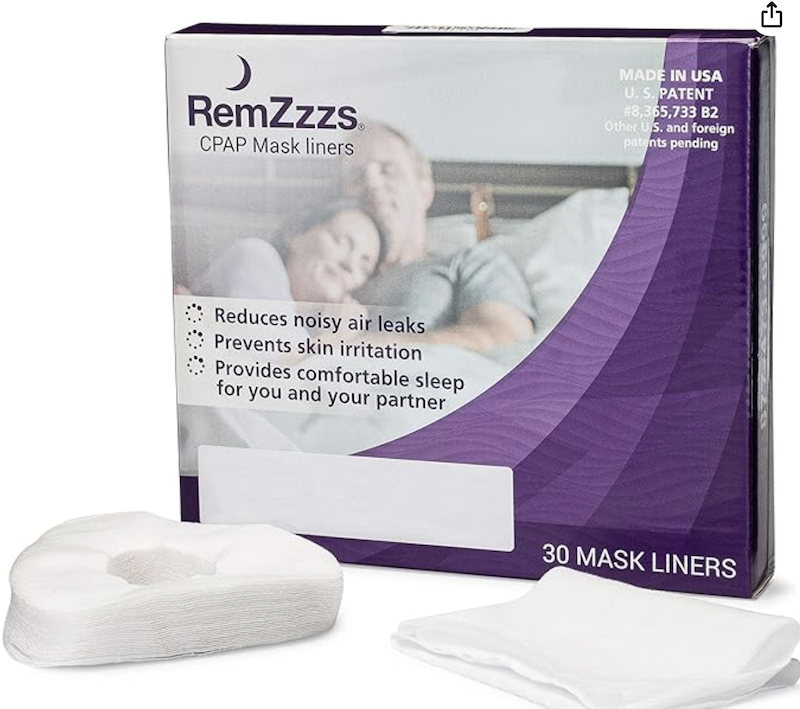
I use a full face mask, so RemZzzs isn’t part of my personal kit — but if you use a nasal or nasal pillow mask, the Snugz full face liner isn’t designed for your mask geometry and won’t fit properly. RemZzzs is purpose-built for nasal users and the feedback from readers who use them is consistently positive.
The 100% cotton construction is genuinely soft — arguably the softest material across any liner I’ve handled. They’re disposable rather than reusable, which makes them particularly useful for travel, where you don’t want to deal with washing. The per-night cost is higher than a reusable liner, but the convenience of zero maintenance is real.
Silent Night CPAP Liners — Best for Sensitive Skin
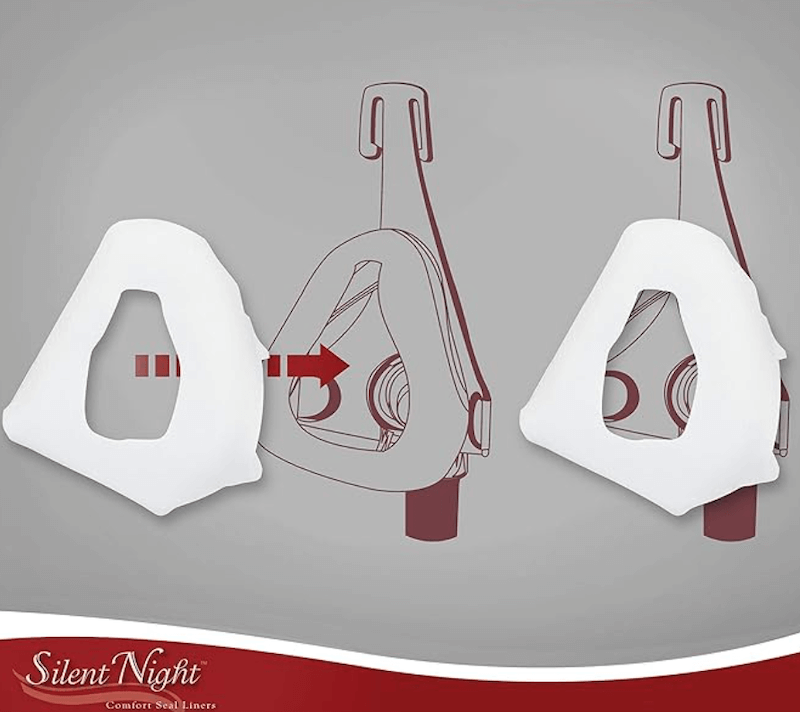
Silent Night uses an antimicrobial treatment that’s the relevant differentiator here. If you’re prone to skin breakouts or irritation at the mask seal points — acne, redness, or any kind of reactive skin — the bacteria that accumulate on a mask cushion overnight are a contributing factor, and the antimicrobial treatment addresses that directly.
The moisture-wicking properties also make this the better choice for hot sleepers or people using CPAP in warm, humid conditions. I switch to Silent Night during summer months when heat and humidity change the overnight dynamics at the mask interface. The grip tabs that keep the liner positioned through the night are a practical feature that not all liners have — liner displacement mid-night is a real annoyance, and these solve it.
Which One to Choose
The decision is mostly straightforward. If you use a full face mask, Snugz is my direct recommendation — it’s what I use and what I’d suggest starting with. If you want to spend less to test the concept first, RespLabs will tell you whether liners make a meaningful difference to your comfort without much financial commitment. If you use a nasal or nasal pillow mask, RemZzzs is designed for you. If your primary problem is skin irritation or breakouts rather than just marks, Silent Night’s antimicrobial treatment is the relevant feature.
The one thing worth knowing before you buy is that liners are designed to solve the mask-to-skin interface problems — marks, irritation, friction, and moisture-related seal issues. They’re not going to fix a mask that’s fundamentally the wrong size, the wrong type for your breathing pattern, or set to the wrong pressure. If you’re dealing with significant leak rates or poor therapy, start by reviewing whether your mask fit and pressure settings are correct before investing in accessories. My guides on CPAP mask fit and why CPAP masks leak cover those issues in detail.
But if your therapy is working, your mask fit is solid, and the daily red marks are the remaining friction point — a liner is the simplest, cheapest fix available. I wish I’d found them in my first year rather than sitting on that train for months, massaging lines into my face.
⚠️ MEDICAL DISCLAIMER This blog provides general information only and is not a substitute for professional medical advice, diagnosis, or treatment. Sleep apnea is a serious condition, and CPAP equipment should be used under proper medical supervision. Always consult your doctor or sleep specialist before starting, stopping, or changing any therapy. I share personal experiences as a CPAP user, not as a medical professional. Individual results vary. For medical guidance, please consult a qualified clinician or the American Academy of Sleep Medicine (aasm.org).