Best CPAP Masks: What Worked for Me + User Favorites
“This post contains affiliate links. I may earn a commission if you buy through these links at no extra cost to you. Read my Disclaimer for more details.”
Welcome to my best CPAP mask review!

If you’ve been diagnosed with sleep apnea, you’re probably starting the journey of finding a CPAP mask that works for your unique needs.
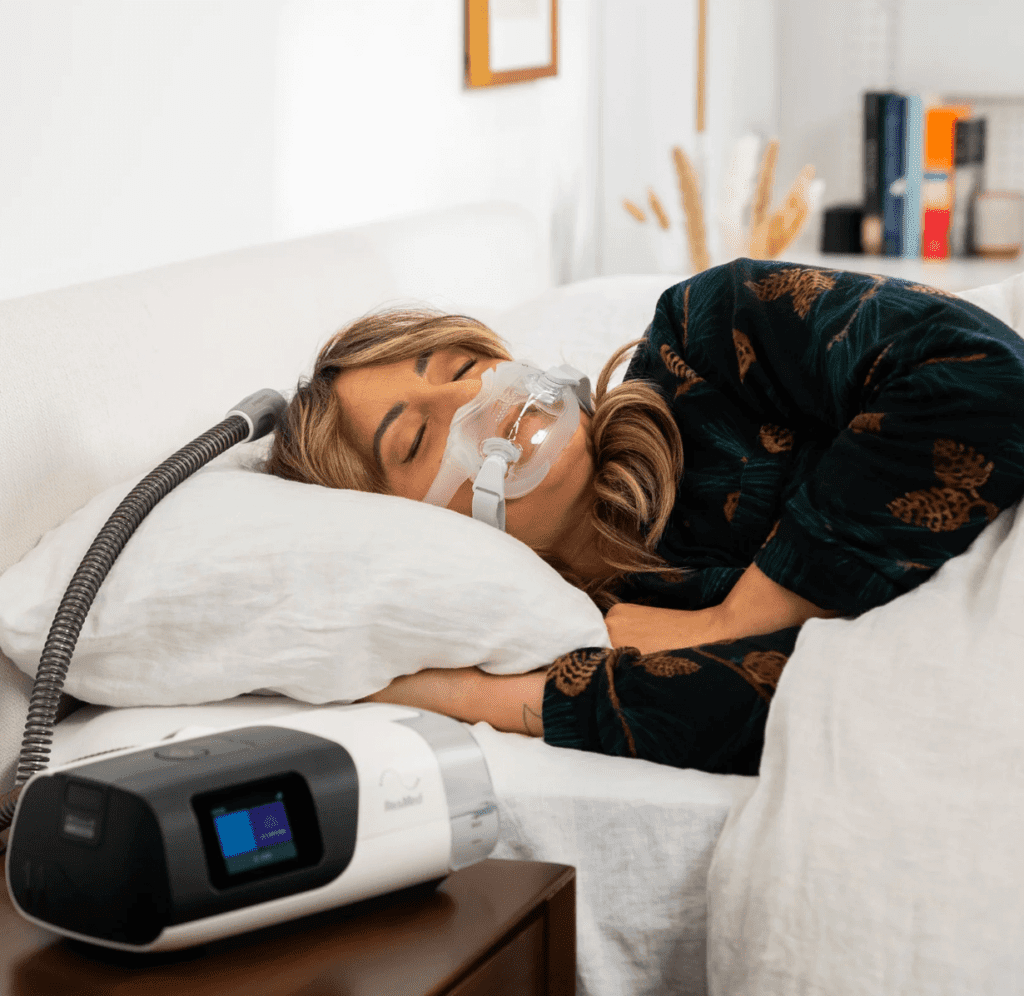
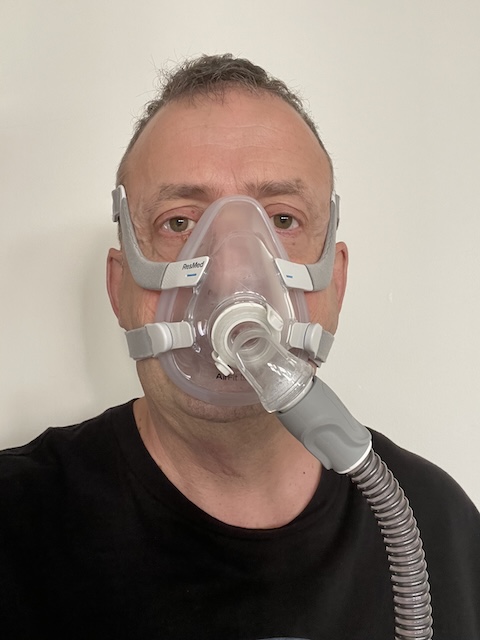
Or maybe you want to replace your existing mask, as I did in the picture above.
I’ve been there. I was diagnosed with severe obstructive sleep apnea over 10 years ago, and I’ve learned a lot through personal experience and helping readers of this blog.
My Story:
When I first started therapy, I knew I needed a full-face mask because I breathe through my mouth while sleeping. But figuring out which specific mask worked for my pressure settings, face shape, and sleep position took time, professional guidance, and some trial and error.
What This Guide Offers:
- My personal experience with masks I’ve tested
- Popular options other CPAP users report success with
- Practical tips from 10+ years of nightly use
- Troubleshooting advice for common issues
- Questions to ask your sleep specialist
What This Guide Does NOT Replace:
- Professional mask fitting from your sleep clinic
- Your doctor’s evaluation of your specific needs
- Individualized pressure titration studies
- Medical assessment of facial structure and breathing patterns
The Professional Fitting Requirement:
According to the American Academy of Sleep Medicine, proper CPAP mask fitting requires professional evaluation because:
- Pressure requirements vary significantly between patients
- Facial anatomy affects seal quality and comfort
- Medical history impacts mask type appropriateness
- Improper fitting reduces therapy effectiveness
Your sleep specialist or respiratory therapist can assess factors that I simply cannot
evaluate through a blog post – like your specific pressure needs, leak rates, AHI
(Apnea-Hypopnea Index), and potential contraindications.
How to Use This Guide:
- Read about different mask types and features
- Note which options interest you
- Bring this information to your sleep clinic appointment
- Get professionally fitted and evaluated
- Come back here for maintenance and troubleshooting tips
Think of this as a starting point for conversations with your medical team, not a
replacement for their expertise.
Let’s dive in!
Best CPAP Masks: Reviewed and Ranked
Popular CPAP Masks: My Experience + User Feedback
Before You Continue: The masks below reflect my personal experience and feedback
from the CPAP user community. These are NOT medical recommendations. Your sleep specialist should evaluate which mask type and model suits YOUR specific:
- Pressure requirements
- Facial structure
- Breathing patterns
- Medical history
- Sleep position preferences
What “Popular” Means Here:
- High ratings from verified users
- Consistent positive feedback in CPAP communities
- Personal testing and long-term use (where applicable)
- Availability through medical suppliers
What I’m NOT Claiming:
- These are not the “best” for everyone
- Rankings reflect personal preference, not clinical data
- Your ideal mask may not be on this list
- Professional fitting is required regardless of popularity
How to Use These Recommendations:
- Consider which features might work for you
- Research the masks that interest you
- Ask your sleep clinic if they have demo units
- Get professionally fitted before purchasing
- Follow up with your clinic for pressure adjustments
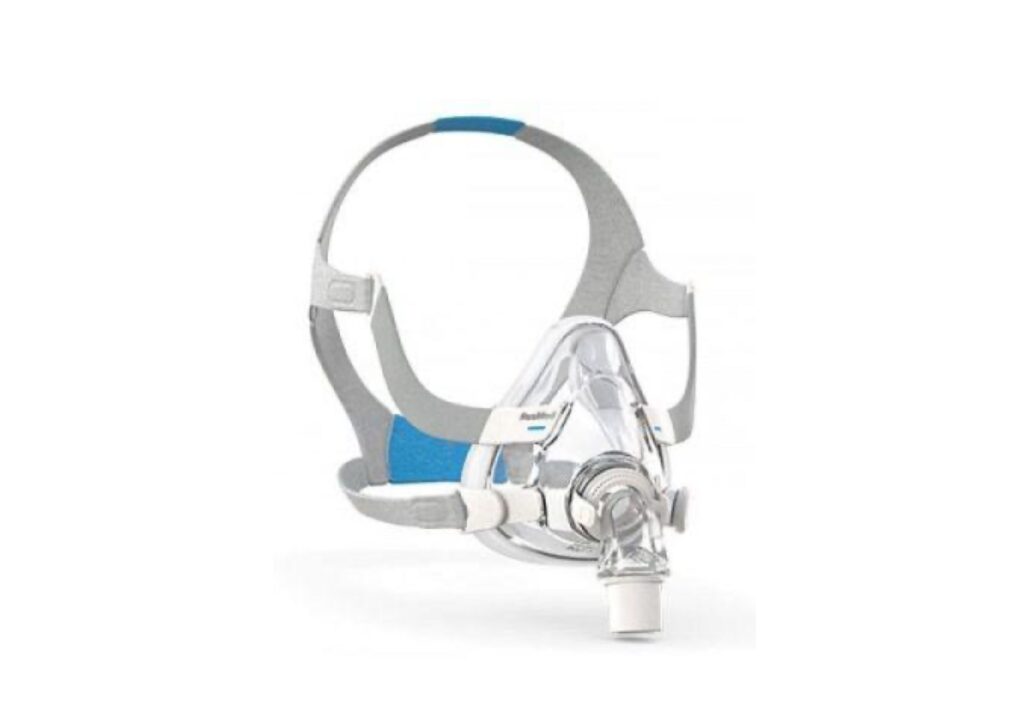
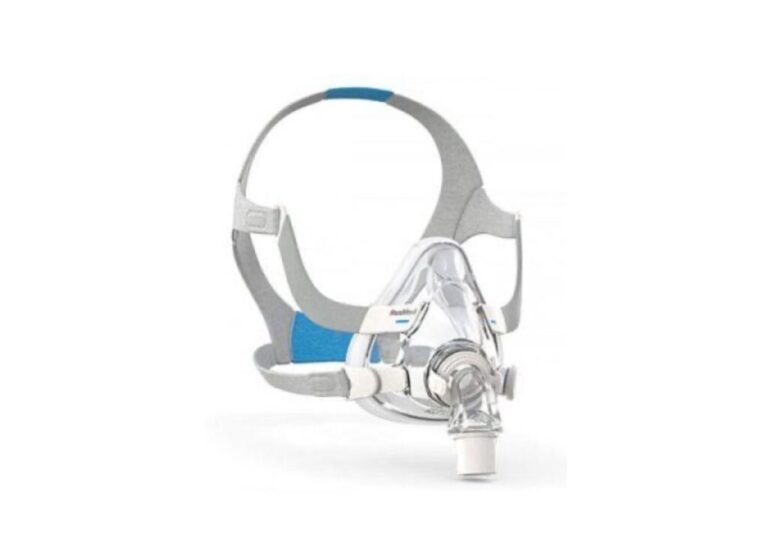
๐ฅย Best Overall: ResMed AirTouch F20 Full Face Mask

I’ve been using the ResMed F20 system since my diagnosis. It works well for my specific situation: high-pressure settings (prescribed by my doctor), mouth breathing, and side-sleeping position.

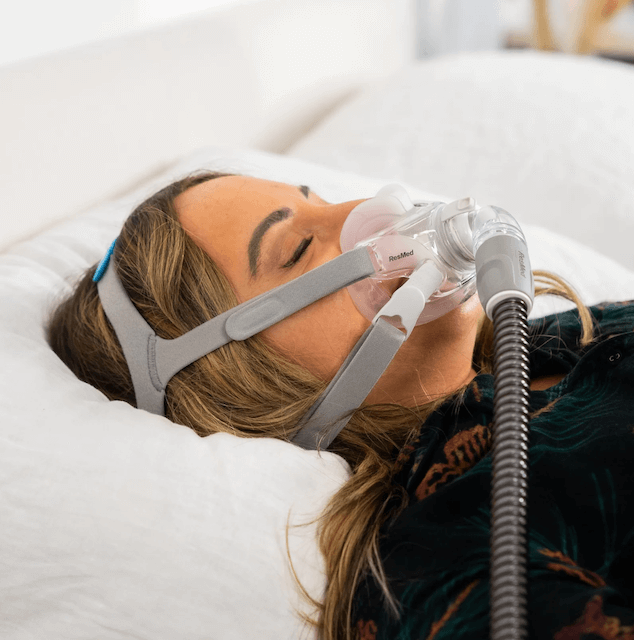
This is me wearing the ResMed F20 mask. Sorry for not smiling for the picture ๐
What Worked for Me:
- The memory foam cushion provides a comfortable seal at my pressure level
- Maintains seal when I shift positions during sleep
- Minimal adjustments needed once properly fitted by my sleep clinic
- Quiet exhaust ports don’t disturb my partner
What Didn’t Work for Me:
- Stomach sleeping pushes the mask off – I had to adjust my sleep position
- Initial professional fitting took 2 appointments to optimize
- Cushions need replacement monthly (as recommended by the manufacturer)
Common User Feedback:
According to reviews in CPAP user communities:
- Often recommended for mouth breathers requiring full-face coverage
- Users report good seal maintenance at higher pressure settings
- Memory foam is polarizing – some love it, others prefer silicone
โ ๏ธ Important Considerations:
This mask worked for MY prescribed pressure (16 cmH2O), facial structure, and sleep
habits. Your sleep specialist needs to evaluate:
- Whether a full-face mask is appropriate for you
- If this model is compatible with your pressure requirements
- How it fits your specific facial anatomy
- Alternative options that might work better for your situation
Professional Fitting Required:
Even if you order this mask, your sleep clinic must:
- Verify proper size selection
- Adjust headgear for a leak-free seal
- Confirm therapy effectiveness with this mask
- Monitor your AHI and leak rates
Questions for Your Sleep Specialist:
- “Would a full-face mask like the F20 be appropriate for my pressure settings?”
- “Can I try this mask during a fitting session?”
- “What size would you recommend based on my facial measurements?”
- “How will we monitor if this mask is effective for my therapy?”
๐ฅย Best for First-Time Users: Philips DreamWear Full Face Mask
- Ideal for: People new to therapy or those unsure about fit
- What I love: The โunder the noseโ design keeps things open and comfortable
- Downside: There is a slight learning curve with the top-of-head hose connection

It’s a great starter option. Iโve recommended this to three friends who are still using it.
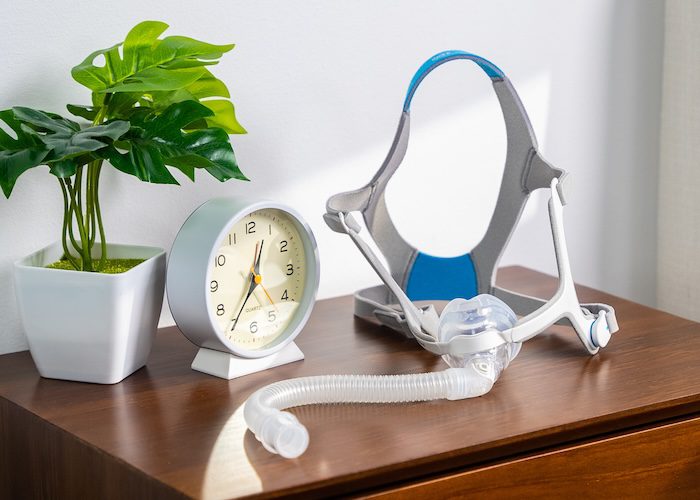
๐น Best Nasal Mask: ResMed AirFit N20
- Ideal for: Side sleepers, nose breathers
- What I love: Magnetic clips, soft cushioning, reliable seal
- Downside: Not for mouth breathers

This oneโs a favorite for a reasonโcheck my full list of top nasal masks.
๐น Best Nasal Pillow Mask: ResMed AirFit P10
- Ideal for: Minimalists, low-pressure users, and travelers
- What I love: Itโs ultra-quiet and feather-light
- Downside: Not for high pressures or mouth breathing

If youโre feeling claustrophobic or tired of bulky gear, this could be your next best friend.
This one changed my sleep. I used to wake up from pressure leaks around my mouth. This fixed it.
What Is a CPAP Mask and Why Does It Matter?
Your CPAP mask connects your face to your CPAP machine via a hose. But it’s not just a piece of equipmentโit’s your lifeline to restful sleep.
Hereโs why the right CPAP mask matters:
- Prevents air leaks that reduce therapy effectiveness
- Reduces irritation or facial discomfort
- Supports your preferred sleep position
- Enhances compliance (the #1 issue with CPAP users)
Letโs break down the different types of masks.
Understanding CPAP Mask Types: Professional Fitting Required
Important: Mask type selection should be guided by your sleep specialist based on:
- Your prescribed pressure range
- Anatomical considerations
- Breathing patterns during sleep studies
- Medical history and contraindications
The information below helps you understand the options and prepare questions for your sleep clinic.
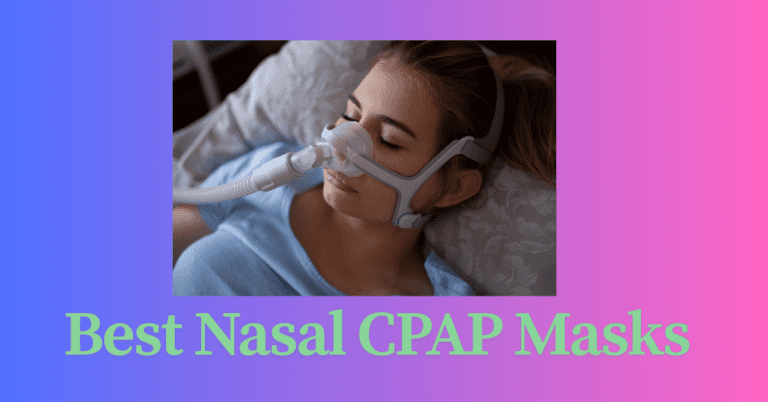
1. Nasal Masks (Covers Nose Only)

How They Work:
Deliver pressurized air through nasal passages. Require nasal breathing or use of chin strap to prevent mouth breathing.
According to Sleep Medicine Guidelines:
Nasal masks may be appropriate for patients who:
- Demonstrate nasal breathing during sleep studies
- Have adequate nasal patency (open nasal passages)
- Tolerate medium to high-pressure settings
- Prefer minimal facial coverage
My Personal Experience:
I tested nasal masks initially but found I breathe through my mouth during sleep (confirmed during my sleep study). For patients with this breathing pattern, full-face masks are typically more appropriate.
What Your Sleep Specialist Will Evaluate:
- Nasal anatomy and any obstructions
- Breathing patterns documented in your sleep study
- Presence of chronic nasal congestion
- Compatibility with your prescribed pressure
- History of mouth breathing during sleep
Common Scenarios Where Nasal Masks Work Well:
- Confirmed nasal breathers (via sleep study)
- Patients who find full-face masks claustrophobic
- Side and back sleepers who maintain nasal breathing
- Users with beards that interfere with full-face seals
Common Scenarios Where Nasal Masks May Not Work:
- Mouth breathing during sleep
- Chronic nasal congestion or allergies
- Deviated septum or other nasal obstructions
- Very high pressure requirements with mouth opening
Questions to Ask Your Sleep Clinic:
- “Did my sleep study show I breathe through my nose or mouth during sleep?”
- “Is my nasal anatomy suitable for a nasal mask?”
- “Should we try a nasal mask first, or does my breathing pattern indicate full-face?”
- “Can I demo different mask types to compare?”
Popular Nasal Mask: ResMed AirFit N20
[Link to detailed nasal masks guide]
โ ๏ธ Remember: Your sleep specialist’s evaluation is required to determine if a nasal mask is appropriate for YOUR specific situation.
Popular pick: ResMed AirFit N20
Check out: Best Nasal Masks
2. Full-Face Masks (Covers Nose and Mouth)

Yes, it’s me again!
How They Work:
Create a seal around both nose and mouth, delivering therapy regardless of breathing pattern. Accommodate mouth breathing and provide backup if nasal passages become congested.
According to Sleep Medicine Guidelines:
Full-face masks may be appropriate for patients who:
- Demonstrate mouth breathing during sleep studies
- Experience chronic nasal congestion or obstruction
- Require higher pressure settings that may cause mouth opening
- Have difficulty maintaining nasal-only breathing during sleep
My Personal Experience:
This is the mask type I use (ResMed AirTouch F20). My sleep study confirmed I’m a mouth breather during sleep, making a full-face mask medically necessary for effective therapy. My sleep specialist prescribed this type specifically based on my breathing patterns and pressure requirements (16 cmH2O).
When I tried using a nasal mask initially, I experienced:
- Significant air leaks through my mouth
- Dry mouth and throat
- Poor therapy effectiveness (high AHI remained)
- Disrupted sleep
Once professionally fitted with a full-face mask, my therapy became effective immediately.
What Your Sleep Specialist Will Evaluate:
- Breathing patterns during your sleep study (nasal vs. mouth breathing)
- Nasal obstruction or chronic congestion issues
- Prescribed pressure levels and likelihood of mouth opening
- Facial anatomy and mask seal requirements
- History of seasonal allergies or sinus issues
- Previous CPAP therapy attempts and outcomes
Common Scenarios Where Full-Face Masks Work Well:
- Confirmed mouth breathers during sleep studies
- Patients with chronic nasal congestion or allergies
- Higher pressure settings (typically 12+ cmH2O)
- Seasonal allergy sufferers need reliable therapy
- Patients who’ve failed with nasal masks due to air leaks
- Those with a deviated septum or nasal obstructions
Common Scenarios Where Full-Face Masks May Not Work:
- Claustrophobia or anxiety about facial coverage
- Stomach sleepers (mask can press off during sleep)
- Very low pressure settings where nasal masks suffice
- Facial hair that interferes with the seal around the mouth area
- Patients who want minimal facial contact
Important Considerations:
Full-face masks typically:
- Require more careful fitting due to the larger seal area
- Need regular cushion replacement (monthly) for optimal seal
- May feel more intrusive initially (adaptation period)
- Works better for side and back sleepers
- Require headgear adjustment for proper positioning
Questions to Ask Your Sleep Clinic:
- “Did my sleep study show mouth breathing during sleep?”
- “What pressure level are you prescribing, and does that affect mask selection?”
- “Do I have any nasal obstructions that would make a full-face mask more appropriate?”
- “Can we try both nasal and full-face during fitting to compare?”
- “What size full-face mask would you recommend for my facial structure?”
Popular Full-Face Masks:
- ResMed AirTouch F20 (my personal choice)
- Philips DreamWear Full Face
- ResMed AirFit F30i
[Link to detailed full-face masks guide]
โ ๏ธ Full-face mask selection requires professional evaluation of your breathing patterns, pressure needs, and facial anatomy. Never select based solely on online recommendations.
Top pick: ResMed AirTouch F20. This is the very mask I use, and it’s superb.
๐ Check out: Best Full-Face Masks
3. Nasal Pillow Masks (Inserts into Nostrils)

How They Work:
Small cushions (pillows) insert directly into or rest just inside the nostrils, creating a seal without covering the entire noseโminimal facial contact with a lightweight design.
According to Sleep Medicine Guidelines:
Nasal pillow masks may be appropriate for patients who:
- Demonstrate nasal breathing during sleep studies
- Use lower to moderate pressure settings (typically under 15 cmH2O)
- Experience claustrophobia with traditional masks
- Need minimal facial contact due to skin sensitivity
My Personal Experience:
I’ve tested nasal pillow masks, but they weren’t suitable for my situation because:
- My prescribed pressure (16 cmH2O) is too high for comfortable nasal pillow use
- I’m a mouth breather, which causes air leaks with nasal-only delivery
- My sleep specialist advised against them based on my sleep study results
However, I have friends who love nasal pillow masks – they work great for the right patient profile (nasal breathers with lower pressure needs).
What Your Sleep Specialist Will Evaluate:
- Breathing patterns confirmed through a sleep study
- Prescribed pressure range (nasal pillows work best under 15 cmH2O)
- Nostril size and anatomy
- Comfort with direct nostril contact
- History of nasal irritation or sensitivity
- Need for minimal facial coverage
Common Scenarios Where Nasal Pillow Masks Work Well:
- Confirmed nasal breathers with lower pressure needs
- Patients with claustrophobia or mask anxiety
- Active sleepers who move around frequently
- Travelers wanting compact, lightweight equipment
- People with facial hair that interferes with other masks
- Those with sensitive skin or prone to pressure marks
- Glasses wearers who want to read/watch TV before sleep
Common Scenarios Where Nasal Pillow Masks May Not Work:
- Mouth breathing during sleep (air leaks)
- High-pressure settings (above 15 cmH2O typically uncomfortable.
- Chronic nasal congestion or obstruction
- Sensitive nasal passages are prone to irritation
- Small or collapsed nostrils
- A deviated septum affecting the nostril size
- Patients new to CPAP often need a more gradual introduction.
Important Considerations:
Nasal pillow masks:
- Provide the least facial coverage (minimal claustrophobia)
- They are the lightest and most portable option
- Require proper pillow size selection (crucial for seal)
- May cause initial nostril soreness (adaptation period)
- Work best for stable sleepers who don’t move much
- Typically, the quietest mask option
- Require nasal breathing or a chin strap for mouth breathers
Sizing is Critical:
Nasal pillow masks require a precise pillow size:
- Too small = poor seal, air leaks, therapy failure
- Too large = nostril irritation, discomfort, bleeding
- Professional fitting ensures correct size selection
Questions to Ask Your Sleep Clinic:
- “Did my sleep study confirm I’m a nasal breather throughout the night?”
- “What pressure level are you prescribing? Is it appropriate for nasal pillows?”
- “What size nasal pillows would fit my nostril anatomy?”
- “Can I try different pillow sizes during fitting?”
- “Should I be concerned about nostril irritation at my pressure level?”
- “Would a chin strap help if I occasionally mouth breathe?”
Popular Nasal Pillow Masks:
- ResMed AirFit P10 (ultra-quiet, lightweight)
- ResMed AirFit P30i (top-of-head connection)
- Philips DreamWear Nasal Pillow
โ ๏ธ Nasal pillow masks are NOT suitable for everyone. Your sleep specialist must confirm you’re a nasal breather with appropriate pressure settings before recommending this style.
Mask Type Comparison Table
Use this to prepare questions for your sleep clinic – NOT to self-select:
| Feature | Nasal Mask | Full-Face Mask | Nasal Pillow |
|---|---|---|---|
| Breathing Pattern | Nasal only | Nasal + mouth | Nasal only |
| Pressure Range | Medium-High | All ranges | Low-Medium |
| Facial Coverage | Moderate | High | Minimal |
| Best For | Nasal breathers | Mouth breathers | Claustrophobia |
| Facial Hair | May interfere | May interfere | Works well |
| Sleep Position | Side, back | Side, back | All positions |
| Leak Risk | Medium | Low (if fitted) | Higher |
| Comfort | Moderate | Lower initially | High (if sized correctly) |
| Bulk | Moderate | Higher | Minimal |
| Travel | Moderate | Bulkier | Most compact |
Important: This table is for educational purposes only. Your sleep specialist will determine the appropriate mask type based on clinical evaluation, not this chart.
How Your Sleep Clinic Determines Mask Type
Professional Evaluation Process:
Step 1: Sleep Study Review
Your specialist reviews:
- Breathing patterns during sleep (nasal vs. mouth)
- AHI (Apnea-Hypopnea Index) severity
- Oxygen desaturation levels
- Sleep position patterns
- Arousal frequencies
Step 2: Physical Assessment
They evaluate:
- Facial anatomy and structure
- Nasal passage patency
- Jaw alignment and bite
- Beard or facial hair considerations
- Skin sensitivity or conditions
- Previous mask experience
Step 3: Pressure Prescription
They determine:
- Therapeutic pressure range needed
- Pressure ramp requirements
- Bi-level vs. fixed pressure
- Mask type compatibility with pressure
Step 4: Fitting Session
They provide:
- Multiple mask options to try
- Proper size selection
- Seal testing at prescribed pressure
- Headgear adjustment training
- Backup mask recommendations
Step 5: Follow-Up Monitoring
They track:
- Therapy adherence (hours per night)
- AHI improvement
- Leak rates
- Comfort and satisfaction
- Need for adjustments
This is why online mask selection cannot replace professional fitting.
My Recommendation: Start Here
If you’re new to CPAP:
- Don’t pre-select a mask type based on this guide
- Wait for your sleep study results – they reveal your breathing pattern
- Ask your sleep specialist which mask types are appropriate for YOU
- Request a fitting session where you can try different options
- Be patient – the first mask may not be “the one”
- Use this guide to understand what your specialist is recommending and why
If you’re struggling with your current mask:
- Contact your sleep clinic – don’t try to solve it alone
- Bring your therapy data (leak rates, AHI from your machine)
- Ask about trying different mask types during re-fitting
- Don’t assume a different type will work without professional evaluation
- Use this guide to articulate your specific issues to your specialist
Questions to Ask During Your Mask Consultation:
โก “What did my sleep study show about my breathing pattern?”
โก “Which mask types are appropriate for my pressure prescription?”
โก “Can I try multiple mask types during fitting?”
โก “What size would you recommend for my facial anatomy?”
โก “If this mask doesn’t work, what’s the backup plan?”
โก “How will we monitor if the mask is effective?”
โก “What leak rate and AHI should I aim for?”
โก “When should I schedule a follow-up?”
Final Reminder
Each mask type works beautifully for the RIGHT patient.
There is no “best” mask type – only the best mask type for your specific:
- Sleep study results
- Breathing patterns
- Pressure requirements
- Facial anatomy
- Medical history
- Personal preferences
Your sleep specialist has the clinical data and expertise to guide you to the right choice.
This guide helps you understand the landscape, not navigate it alone.
โ ๏ธ Professional mask fitting is non-negotiable for successful CPAP therapy.
Real-Life CPAP Comfort Hacks
โ Use Mask Liners
They reduce skin irritation and help with leaks. Iโve tested a dozen and reviewed the best CPAP mask liners here.
โ Get a CPAP Pillow
Regular pillows press against your mask. A CPAP pillow has cutouts so you can sleep on your side without breaking the seal.
โ Clean Your Mask
A dirty mask = bacteria and smells. Donโt let that ruin your therapy. Follow my CPAP cleaning guide for daily and weekly tips.
Troubleshooting Common Mask Issues
Even the best mask can cause problems without proper fitting. Here are quick solutions – click through for detailed guides.
๐ด Red Marks or Pressure Sores
Most common cause: Headgear too tight
Quick fixes: Loosen all straps, try mask liner, switch to memory foam cushion
When to get help: Marks last more than 2 hours or skin breaks down
๐ Read my complete guide to preventing strap marks
๐ง Dry Mouth or Sore Throat
Most common cause: Mouth breathing during sleep or humidity too low
Quick fixes: Increase humidifier, check for air leaks, consider full-face mask or chin strap
When to get help: Persists despite humidity adjustments after 2 weeks
๐ Read complete guide to eliminating dry mouth
๐จ Mask Leaking Air
Most common cause: Wrong size cushion or dirty equipment
Quick fixes: Clean cushion daily, adjust headgear while lying down, verify you have correct size from fitting
When to get help: Leaks continue after 3-5 nights
More Issues? Nasal congestion, claustrophobia, noise, or difficulty falling asleep?
๐ View my guide to solvinng CPAP Mask Leaks
โ ๏ธ Contact your sleep clinic if any issue persists beyond 1-2 weeks. Professional guidance ensures successful therapy.
The CPAP Machine Connection
Your mask has to work with your CPAP machine. Some older models arenโt compatible with newer mask features like magnetic clips or heated tubing.
If you need help choosing a machine, hereโs my roundup of the best CPAP machines. Not sure if you need a prescription? I answer that in detail here.
Maintaining Your CPAP Setup
Yes, your mask has a shelf life. It might be time for a replacement if you notice leaks or discomfort.
- Mask cushions (every 30 days)
- Headgear (every 6 months)
- Tubing (every 3 months)
Frequently Asked Questions
Q: How often should I replace my CPAP mask and supplies?
A: According to manufacturer guidelines and clinical standards:
- Mask cushions: Every 30 days
- Full mask frame: Every 6-12 months
- Headgear: Every 6 months
- Tubing: Every 3 months
However, your specific replacement schedule should be determined by:
- Your sleep clinic’s recommendations
- Your insurance coverage schedule
- Equipment wear patterns
- Your DME provider’s protocols
Ask your sleep clinic: “What replacement schedule do you recommend for my equipment,
and how does it align with my insurance coverage?”
Q: Will my insurance cover CPAP masks and supplies?
A: Most insurance plans cover CPAP equipment and supplies, but coverage varies
significantly:
Typical Coverage:
- Initial equipment: Usually covered after sleep study
- Regular supplies: Monthly cushions, quarterly tubing, etc.
- Replacement masks: Every 3-6 months
Requirements Usually Include:
- Physician prescription following a sleep study
- Purchase through an approved DME provider
- Documentation of compliance (using CPAP regularly)
- Prior authorization for some equipment
What You Need to Do:
- Work with your sleep clinic to obtain a prescription
- Connect with an in-network DME provider
- Verify coverage before ordering
- Maintain compliance (use CPAP as prescribed)
- Document therapy effectiveness
Ask your DME provider: “What is my specific coverage for CPAP masks and supplies
under my current insurance plan?”
My Experience:
My insurance covers cushion replacements monthly and full mask replacements every 6
months. I had to demonstrate 4+ hours of nightly use for 21+ days per month to maintain
coverage. Your insurance requirements may differ.
Q: How do I know if I need a full-face mask vs. nasal mask?
A: This is a medical determination that requires professional evaluation. Your
sleep specialist will consider:
Clinical Factors:
- Breathing patterns documented in your sleep study
- Nasal patency (openness of nasal passages)
- Prescribed pressure requirements
- Presence of mouth breathing during sleep
- Anatomical considerations
- Medical history
Your Sleep Study Results Will Show:
- Whether you breathe through your nose or mouth during sleep
- Pressure requirements for effective therapy
- Any nasal obstruction or breathing issues
What You Cannot Determine Yourself:
- Whether your nasal passages can tolerate the prescribed pressure
- If mouth breathing during sleep requires full-face coverage
- Anatomical factors affecting mask selection
- Contraindications for certain mask types
My Experience:
I believed I needed a full-face mask because I sometimes breathe through my mouth while
awake. My sleep study confirmed I’m a mouth breather during sleep, which my sleep
specialist used to prescribe full-face mask therapy. This wasn’t something I could have
accurately self-diagnosed.
Ask your sleep specialist: “Based on my sleep study results, which mask type do you recommend and why?”
Q: Can I switch mask types if my current one isn’t working?
A: Yes, but this requires professional involvement:
Proper Process:
- Contact your sleep clinic about comfort or effectiveness issues
- Schedule a re-fitting appointment
- Try different mask types during fitting
- Have your sleep specialist evaluate therapy data
- Get a new prescription if changing mask types significantly
- Coordinate with the DME provider for insurance coverage
Don’t:
- Order different mask types without clinical consultation
- Assume a different mask will work without a professional fitting
- Make changes without checking insurance coverage
- Skip follow-up to verify new mask effectiveness
My Experience:
When I wanted to try a nasal mask to see if it improved comfort, my sleep clinic had me
come in for a fitting. We discovered that my pressure settings and breathing pattern made a nasal mask inappropriate for me. Professional evaluation prevented me from wasting money on equipment that wouldn’t have worked.
Ask your sleep clinic: “I’m having [specific issue] with my current mask. Can we
explore alternative mask types during a re-fitting appointment?”
Final Thoughts: Your Path to Successful CPAP Therapy
The Right Mask Makes a Difference – But Finding It Requires Professional Help
After 10+ years of CPAP therapy, I can tell you the right mask absolutely transforms
your experience. I went from dreading my therapy to sleeping better than I have in
years. But this didn’t happen through internet research alone – it happened through
collaboration with my sleep medicine team.
What I’ve Learned:
From Personal Experience:
- Comfort matters for long-term compliance
- Individual variation is enormous – what works for me may not work for you
- Trial and error is normal, but should happen under professional guidance
- Small adjustments can make huge differences
- Patience during the initial adjustment period pays off
From Working With Sleep Professionals:
- Professional fitting is not optional – it’s essential
- Therapy data reveals issues I couldn’t see myself
- Regular follow-ups catch problems early
- Insurance coverage requires proper medical protocols
- Equipment changes need clinical evaluation
Your Next Steps:
1. Schedule a Sleep Clinic Appointment
If you haven’t already:
- Get a sleep study if you suspect sleep apnea
- Discuss symptoms with your doctor
- Don’t attempt self-diagnosis or treatment
2. Come Prepared with Questions
Use this guide to prepare questions like:
- “Which mask types are appropriate for my sleep study results?”
- “Can I try different masks during fitting?”
- “What pressure settings are you prescribing and why?”
- “How will we monitor my therapy effectiveness?”
3. Get Professionally Fitted
- Allow time for the proper fitting process
- Try multiple sizes if needed
- Don’t skip follow-up appointments
- Report any issues immediately
4. Use This Guide as a Supplementary Resource
- Reference troubleshooting tips
- Understand your equipment options
- Prepare questions for your medical team
- Learn about maintenance requirements
5. Stay Connected with Your Sleep Clinic
- Attend all follow-up appointments
- Report therapy issues promptly
- Review your compliance data regularly
- Don’t adjust equipment without consultation
The Bottom Line:
You deserve restful, uninterrupted sleep – and effective CPAP therapy can give you
that. But the path to success runs through your sleep clinic, not around it.
This guide is designed to help you:
- Understand your options
- Prepare educated questions
- Supplement professional care
- Troubleshoot minor issues
- Maintain your equipment properly
What this guide cannot do:
- Replace medical evaluation
- Determine the appropriate mask type for your anatomy
- Prescribe pressure settings
- Diagnose underlying conditions
- Guarantee any specific outcome
My Personal Commitment:
I created this site to help fellow CPAP users navigate therapy, but I’m clear about my
limitations. I’m a patient, not a doctor. My goal is to empower you with information to
have better conversations with your medical team – not to replace those conversations.
Resources for Professional Guidance:
- American Academy of Sleep Medicine: Find accredited sleep centers – aasm.org
- Your Insurance Provider: Verify coverage and find in-network providers
- Local Sleep Clinics: Search for accredited facilities in your area
Final Encouragement:
If you’re struggling with CPAP therapy, you’re not alone. Many users need multiple
adjustments before finding their ideal setup. Don’t give up – and don’t try to go it
alone. Your sleep medicine team is there to help you succeed.
Sleep well (with professional guidance)!
โ ๏ธ MEDICAL DISCLAIMER This blog provides general information only and is not a substitute for professional medical advice, diagnosis, or treatment. Sleep apnea is a serious condition, and CPAP equipment should be used under proper medical supervision. Always consult your doctor or sleep specialist before starting, stopping, or changing any therapy. I share personal experiences as a CPAP user, not as a medical professional. Individual results vary. For medical guidance, please consult a qualified clinician or the American Academy of Sleep Medicine (aasm.org).