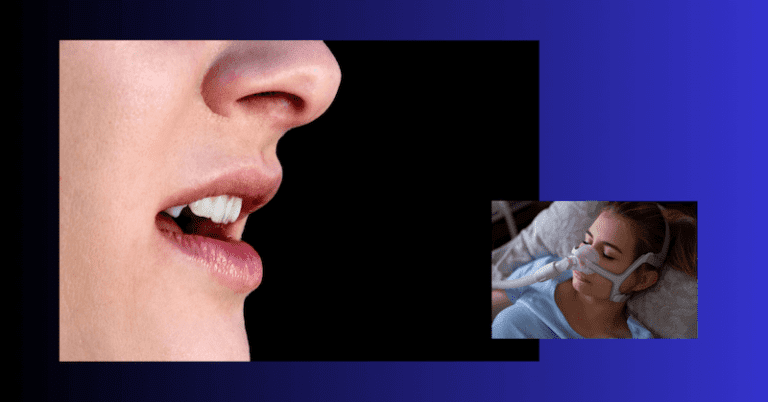
CPAP Therapy and Weight Loss: The Truth Nobody Tells You


When I was first diagnosed with severe obstructive sleep apnea, my immediate thought was that I already knew what the problem was. I could see it in the mirror. The weight around my neck. The extra padding everywhere. It seemed obvious that obesity had caused my sleep apnea, which meant losing weight would fix it. That felt like a manageable problem with a clear solution, and I latched onto it.
So I committed properly. I lost 20 pounds through careful eating and more movement. My clothes fit better. My energy started to lift. I felt healthier in a way I had not in years, and part of me was already rehearsing the moment a doctor would tell me I could put the machine away for good.
That moment never came. The weight came off and the apnea stayed exactly where it was. My AHI at diagnosis had been 51, which sits firmly in the severe range, and dropping 20 pounds did nothing to change the thing that was actually driving it. I was still stopping breathing over and over through the night. I still needed therapy.
That was my first hard lesson in why the relationship between sleep apnea and weight is far more complicated than most people assume, and why the simple answers, in both directions, are usually wrong. What follows is what I have learned since, partly from living with the condition for more than a decade and partly from reading the research properly once I stopped expecting it to tell me what I wanted to hear. I am a patient who has used CPAP for a long time, not a doctor, so treat this as one person’s experience alongside the evidence, not medical advice.
Why Sleep Apnea Actively Works Against Weight Loss
Here is the part that used to frustrate me most, because it feels so unfair. Carrying excess weight raises your risk of sleep apnea, but sleep apnea then makes losing that weight significantly harder. It is a loop that feels almost designed to keep you stuck in it.
The main mechanism is hormonal. When you have untreated sleep apnea and your sleep is fragmented dozens of times an hour, the hormones that govern hunger and fullness stop behaving. Leptin, which signals fullness and tells your brain to stop eating, drops. Ghrelin, which drives hunger, rises. The combined effect is that you feel hungrier than you should and you do not feel satisfied when you eat. Your own body chemistry is working against you, and it has nothing to do with willpower or discipline. I spent years assuming my appetite was a character flaw. It was closer to a wiring problem caused by sleep I did not know I was missing.
I find the evolutionary backstory genuinely interesting, even if it is annoying in practice. Our brains developed in a world where food was scarce. If you were awake when you should have been asleep, the most likely reason was hunger, and hunger meant you needed to get up and find food. Your brain has no idea there is a stocked kitchen down the hall. So when sleep apnea keeps yanking you out of deep sleep all night, your ancient survival system does exactly what it evolved to do and starts firing hunger signals. The result in the modern world is that you wake up craving food when you should simply feel rested.
Beyond the hormones, there is the plain reality of exhaustion. Before I started CPAP therapy, the idea of exercising after a night of broken sleep was not just unappealing, it was not viable. My body had nothing left to give. The daytime fatigue that comes with untreated sleep apnea does not only make you miserable, it quietly reduces how much you move. You take the elevator instead of the stairs without ever deciding to. You order food instead of cooking it. Small surrenders, made hundreds of times, that add up to a body that burns less and eats more. None of it feels like a choice at the time, which is exactly why it is so hard to break out of on willpower alone.

Does CPAP Make You Lose Weight? The Honest Answer
This is the question I get asked more than almost any other, and the honest answer is uncomfortable: probably not on its own, and in some people it may cause a small amount of weight gain.
The research surprised me when I first read it properly. Several studies have found that CPAP therapy, used without any change to diet, is associated with modest weight gain rather than weight loss. The proposed reason makes sense once you understand the mechanics. Severe sleep apnea burns extra energy through the night because your body is working so hard just to breathe against a collapsing airway. When CPAP removes those events, that nightly energy expenditure disappears. If you do not account for it elsewhere, you end up in a slight surplus.
There is also what I think of as the restoration effect. Once you start sleeping properly, your appetite normalizes. For someone whose appetite had been suppressed for years by chronic illness and exhaustion, simply eating a normal amount again can show up on the scale in the early months. It is not failure. It is your body returning to baseline.
But there is another side to this, and it is the side I have lived. CPAP combined with deliberate dietary and lifestyle changes does appear to support weight loss more effectively than dieting alone. Studies of structured weight loss programs have found that participants on CPAP lost more than people whose apnea went untreated, even when the diet and activity plan was otherwise identical. The therapy does not melt away fat. What it does is remove a major obstacle by steadying the hormones that were quietly sabotaging the effort, and by handing back the energy you need to do the work.
So CPAP does not cause weight loss by itself. It creates the conditions in which weight loss becomes genuinely possible, in a way it often is not while your sleep apnea runs untreated.
What CPAP Actually Gave Me
What CPAP gave me was not a smaller number on the scale. It was the capacity to go after that number at all.
Within the first week of therapy, the change was obvious enough that I noticed it daily. The fog I had been living inside for years began to clear. I could think. I wanted to move. Exercise went from being something I knew I should do but could not face, to something I actually did and, eventually, looked forward to. I walk 10,000 steps a day now, tracked on my Apple Watch, and I swim regularly. Neither of those was available to me before treatment, not because I lacked the discipline but because I lacked the fuel.
That energy is what let me lose the 20 pounds and keep them off. The credit belongs to the therapy only indirectly. The machine gave me back a functioning body, and I used it.
What CPAP did not do is cure my sleep apnea. Weight was never the whole story for me. I have anatomical features that drive my OSA regardless of what I weigh, including a narrower airway and a deviated septum that I had corrected with surgery years before my sleep apnea was ever diagnosed. That is the part worth sitting with if you are pinning your hopes on weight loss. Weight is one factor among several, and for some of us it is not the dominant one. Losing it was good for me in a dozen ways. It just was not the cure I had quietly been counting on.
When Weight Loss Does and Doesn’t Help Sleep Apnea
None of this means weight loss is pointless. For most people who carry excess weight, losing it does reduce sleep apnea severity, and the effect can be substantial. The general pattern in the research is that a meaningful drop in body weight tends to bring a meaningful drop in AHI, the apnea-hypopnea index that measures how many times an hour your breathing is interrupted. Some people lose enough to stop needing CPAP entirely. Others, like me, see the numbers improve but still require therapy.
The reason weight loss does not resolve everyone’s apnea comes down to anatomy. The shape of your jaw, the size of your tongue relative to your airway, the tone of the soft tissue in your throat as you age, the structure of your nasal passages, and plain genetics all play a part that excess weight cannot fully explain. Where you carry weight matters too. Neck circumference is often a stronger predictor of apnea severity than overall body mass, which is part of why two people at the same weight can have completely different results. Fat around the airway behaves differently from fat elsewhere.
If you do lose a significant amount of weight, a repeat sleep study is worth doing. Your pressure needs may have changed, and in some cases you may qualify for less intensive treatment. But go in without the expectation of a guaranteed cure. Finding out after months of genuine effort that you still need the machine is demoralizing if nobody prepared you for the possibility, and far easier to absorb if they did.
What Actually Works for Losing Weight with Sleep Apnea
The belief I hold most strongly about this is that traditional diets mostly fail, and not because the people on them are weak. They are built on restriction and willpower in exactly the situation where your hormones and your exhaustion are undermining both. The conditions are not fair, and pretending they are helps nobody.
What worked for me was a systems approach, the kind of thing James Clear describes in his book Atomic Habits. Instead of setting a goal like “lose 20 pounds” and gritting my teeth toward it, I focused on building small habits I could actually keep. Once the habits run on their own, the goal almost takes care of itself.
For me that meant using smaller plates, which quietly changes how much you eat without ever feeling like deprivation. It meant keeping trigger foods out of the house entirely, rather than relying on willpower to resist them when I was tired and my defenses were down. It meant parking farther from the shops by default, taking the stairs instead of the elevator, and turning a daily step count into a small game I wanted to win. None of these depends on motivation, which is the point. Motivation is exactly what sleep apnea steals from you.
The other thing that matters enormously is timing. My advice to anyone starting CPAP is to get your therapy settled and working well before you add a weight loss effort on top of it. The first months on CPAP carry their own learning curve. Mask fitting, humidity settings, sleeping positions, managing dry mouth, all of it takes real mental bandwidth. Give yourself a couple of months to adapt and to start feeling the energy return, then spend that energy deliberately rather than letting it drain away unused.
It is also worth watching your CPAP data as your weight shifts. If your AHI starts creeping up, or you feel more tired again after a stretch of good sleep, your pressure settings may need adjusting. My guide to interpreting CPAP data explains what to look for, and your sleep specialist can adjust your prescription if the numbers call for it.
Other Options Worth Knowing About
CPAP remains the most effective treatment for moderate to severe sleep apnea, and I would be cautious about trading it away unless your circumstances genuinely warrant it. But it is not the only option, and it helps to know what else is out there. I have not used the treatments below myself, so I am describing them as a reporter rather than from experience.
The FDA has approved Zepbound, a tirzepatide medication, specifically for moderate to severe obstructive sleep apnea in adults with obesity. It is the first drug approved for the condition, and it works by driving weight loss rather than acting on the airway directly, which means it is used alongside a reduced calorie diet and more activity rather than as a standalone fix. For someone who has struggled badly with both weight and apnea and has not done well with other approaches, it is worth raising with a doctor.
Oral appliances are custom fitted devices that reposition your jaw during sleep to help keep the airway open. They tend to suit mild to moderate cases, and people who truly cannot tolerate CPAP, better than they suit severe apnea, where they are generally less effective than a machine. Positional therapy can also help if your apnea is mostly tied to sleeping on your back rather than your side. If you want a fuller map of the landscape, I have written a broader overview of the alternative treatments for sleep apnea and where each one tends to fit.
The Honest Summary
Losing weight is worth doing for your general health no matter what it does to your sleep apnea. If it improves or resolves your OSA, that is a real bonus. If it does not, as in my case, you still come out the other side in better shape, with better cardiovascular numbers and less strain on your body overall. That is nothing.
CPAP will not automatically make you lose weight, and for some people it may add a little in the early months as the body resets to normal. But what it gives you is the hormonal stability, the mental clarity, and above all the energy to make weight loss possible in a way untreated sleep apnea simply does not allow. Before treatment, I was too exhausted to exercise and too hormonally scrambled to eat in a controlled way even when I tried. After treatment I had a fighting chance, and that is exactly what I used.
More than a decade on, my weight is stable, my apnea is well controlled on therapy, and I feel better than I have at any point in my adult life. The machine did not fix everything. What it did was hand me back the ability to fix things myself, and that turned out to be enough.
⚠️ MEDICAL DISCLAIMER This blog provides general information only and is not a substitute for professional medical advice, diagnosis, or treatment. Sleep apnea is a serious condition, and CPAP equipment should be used under proper medical supervision. Always consult your doctor or sleep specialist before starting, stopping, or changing any therapy. I share personal experiences as a CPAP user, not as a medical professional. Individual results vary. For medical guidance, please consult a qualified clinician or the American Academy of Sleep Medicine (aasm.org).