ResMed AirMini CPAP Review

“This post contains affiliate links. I may earn a commission if you buy through these links, at no extra cost to you. Read my Disclaimer for more details.”
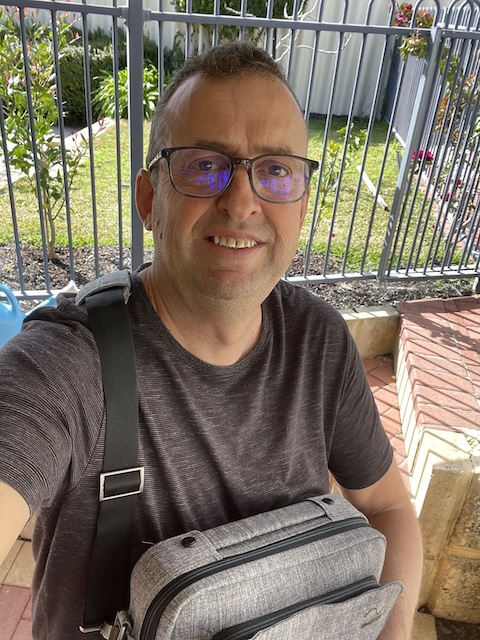
This is me now with my ResMed CPAP travel bag that contains my ResMed Mini.

cpap travel machine

In 2018, I dragged my full-sized ResMed AirSense 10 across Europe for three weeks, and it nearly broke me.

Not physically, though lugging 5 pounds of CPAP equipment alongside clothes, toiletries, and a laptop definitely strained my back. But mentally? The stress of finding distilled water, dealing with different power adapters in every country, and explaining my medical device to confused hostel staff wore me down.

The breaking point came on that 13-hour Singapore to London flight.

I sat there, completely unable to use my CPAP, terrified to fall asleep. I knew if I did, I’d start snoring like a freight train, disturbing everyone around me in that cramped cabin. So I fought to stay awake for 13 hours straight. By the time we landed, I was absolutely destroyed, exhausted, irritable, and unable to think clearly.

That’s when I decided I needed a travel CPAP.

A year later, before my second European trip, I bought the ResMed AirMini. And honestly? It completely transformed how I travel.

In this comprehensive review, I’ll share five years of real-world experience using the AirMini across camping trips, international flights, hostel stays, and hotel rooms. I’ll cover what works, what doesn’t, and whether this compact machine can actually handle severe sleep apnea like mine (AHI over 50).

My Sleep Apnea Background (Why This Review Matters)

Before diving into the specifics, you need to understand my sleep apnea severityโ€”because if this machine works for someone like me, it’ll work for almost anyone.

I was diagnosed with severe obstructive sleep apnea about 10 years ago. Without treatment, my AHI (apnea-hypopnea index) was over 50 events per hour. That means I stopped breathing more than 50 times every single hour, once every 72 seconds.

Research from Johns Hopkins shows that untreated sleep apnea significantly increases your risk for type 2 diabetes, stroke, heart attacks, and even shortened lifespan. The repeated oxygen deprivation stresses your cardiovascular system, potentially causing long-term damage to your heart and brain.

I’m not messing around with this condition. I use my ResMed AirSense 10 every single night at home with a ResMed AirFit F20 full-face mask, which I’ve been using exclusively for over five years as a mouth breather.

But traveling? That was the problem I couldn’t solveโ€”until the AirMini.

Why I Bought the ResMed AirMini: The European Trip That Changed Everything

My first European trip with sleep apnea taught me exactly what NOT to do.

I packed my full-sized AirSense 10, thinking, “at least I won’t be snoring in hostels and getting angry notes like that Melbourne trip years ago.” (Yeah, that actually happened. I had to quickly move out of the hostel and spend more precious money on a hotel room)

The AirSense 10 itself weighs 2.75 pounds, which doesn’t sound terrible. But add the power cord, hose, water chamber, mask, and protective carrying case, and you’re looking at nearly 5 pounds of dedicated CPAP luggage. For a three-week backpacking trip, that’s massive.

The real problems were:

Size and Space: The AirSense 10 barely fits in my backpack alongside clothes and essentials. I had to make real sacrificesโ€”fewer clothes, no extra shoes, minimal toiletries, all to accommodate my medical equipment.

Humidifier Water Nightmare: Finding distilled water for my CPAP in random European towns was surprisingly difficult. Most nights, I would just put tap water in it.

Power Adapter Hell: Every country needed different adapters. UK outlets, European outlets, Spanish outlets. I needed multiple adapters and constant vigilance about voltage compatibility.

Airplane Impossibility: Forget using CPAP on the plane. Nowhere to plug it in, no room in my seat area, and just general awkwardness of setting up medical equipment in economy class.

Social Weirdness: Assembling a full-sized CPAP machine in a 6-person hostel dorm while five strangers watch you is uncomfortable. The humming noise, the visible water chamber, the whole medical apparatusโ€”it draws attention.

That Singapore-to-London flight destroyed me. Thirteen hours of fighting to stay awake because I was too embarrassed to fall asleep and start snoring. The anxiety was intenseโ€”knowing everyone around me would hear it, watching flight attendants give me looks, feeling trapped in that situation.

I landed completely wrecked. The fatigue wasn’t just “I need coffee,” it was full-body exhaustion from 13 hours of forced wakefulness, plus the accumulated sleep debt from my untreated apnea.

When I got home, I started researching portable travel CPAP machines. The ResMed AirMini kept appearing as the top recommendation.

A year later, before my second European trip, I bought one.

ResMed AirMini Specifications: What You’re Actually Getting

This is how the ResMed Mini compares with its big brother, the ResMed 11.

Let me start with the basicsโ€”what is the ResMed AirMini, and how does it compare to regular CPAP machines?

Size and Weight:

  • Dimensions: 5.4 inches ร— 3.3 inches ร— 2.1 inches
  • Weight: 10.6 ounces (0.66 pounds)
  • For comparison: Fits in the palm of your hand, about the size of a thick smartphone

Therapy Modes:

  • CPAP mode (fixed pressure)
  • AutoSet mode (automatic pressure adjustment)
  • AutoSet for Her mode (designed for female breathing patterns)

Key Features:

  • HumidX waterless humidification system
  • Smart Start/Stop (automatically starts when you put the mask on)
  • Ramp function (gradually increases pressure)
  • Expiratory Pressure Relief (EPR)
  • FAA-approved for in-flight use
  • Bluetooth connectivity with the AirMini app

What’s NOT Included:

  • Mask (sold separately)
  • Power supply (included, but international adapters sold separately)
  • Battery pack (major add-on purchase if you want off-grid capability)
  • Carrying case. I recommend you get one. (optional extra)

Compatible Masks (This is IMPORTANT): You can only use specific ResMed masks with the AirMini:

  • ResMed AirFit F20 (my personal choice)
  • ResMed AirFit N20
  • ResMed AirFit P10
  • ResMed AirTouch F20
  • ResMed AirFit F30i

I exclusively use the F20 full-face mask, which works perfectly with the AirMini using the included connector setup.

Does the ResMed AirMini Have a Battery?

Noโ€”and this is crucial to understand. The AirMini does NOT come with an internal battery. You need to purchase a separate CPAP battery if you want to use it without a power outlet.

I use the Medistrom Pilot-24 Lite battery for camping and long flights. It lasts about two nights of sleep (8 hours per night) before needing a recharge, and it adds another $300-400 to your total investment.

Does the ResMed AirMini Have a Humidifier?

Sort ofโ€”but not like your regular CPAP.

Traditional CPAP machines use a water chamber that heats up to add moisture to the air. The AirMini is too small for that, so it uses a clever system called HumidX (or HumidX Plus for drier climates).

The HumidX is a small, disposable Heat Moisture Exchanger (HME) filter that clips into your mask. It captures moisture from your exhaled breath and uses it to humidify the incoming air. No water required.

Each HumidX cartridge lasts about 30 days and costs around $10-15 to replace. It’s an ongoing expense, but it eliminates the need to carry distilled water, which is a massive win for travelers.

How Much Does the ResMed AirMini Cost?

Here’s the reality: the AirMini is pricey.

  • Machine only: $900-$1,100 (varies by supplier)
  • With carrying case: Add $50-80
  • With battery pack: Add $300-400
  • Total travel setup: $1,200-$1,500

Important: The AirMini is NOT available on Amazon. You need to purchase it through authorized medical equipment suppliers like SleepDoctor.com, as it’s a prescription medical device.

Is it worth the investment? For me, someone who travels frequently and has severe sleep apnea – absolutely. But if you own a ResMed 11, you can consider taking the humidifier off and inserting the end plug.

Does the ResMed AirMini Automatically Adjust Pressure?

Yesโ€”when set to AutoSet mode.

The AirMini has three therapy modes:

  1. CPAP Mode: Delivers a fixed, continuous pressure that you set manually
  2. AutoSet Mode: Automatically adjusts pressure throughout the night based on your breathing
  3. AutoSet for Her Mode: Similar to AutoSet but optimized for female breathing patterns

I use AutoSet mode exclusively because my pressure needs vary throughout the night. When I’m in deep REM sleep, my airway tends to collapse more, requiring higher pressure. The AutoSet algorithm detects this and increases pressure automatically, then lowers it when I’m in lighter sleep stages.

This is the same technology used in the full-sized ResMed AirSense 10 AutoSet, just compressed into a travel-sized package.

How to Set Pressure on ResMed AirMini

This is where the AirMini differs significantly from traditional CPAP machinesโ€”there’s no screen or buttons on the device itself.

Everything is controlled through the AirMini smartphone app (available for iOS and Android).

Step-by-Step Pressure Adjustment:

  1. Turn on Bluetooth on your phone
  2. Open the AirMini app
  3. Connect to your AirMini device
  4. Tap “Settings”
  5. Select your therapy mode (CPAP, AutoSet, or AutoSet for Her)
  6. If using CPAP mode: Set your prescribed fixed pressure
  7. If using AutoSet mode, The machine automatically adjusts within your prescribed pressure range
  8. Adjust ramp settings if desired (start pressure and ramp time)
  9. Enable/disable EPR (Expiratory Pressure Relief)

My Settings:

  • Mode: AutoSet
  • Pressure range: 6-20 cm H2O (set by my sleep doctor)
  • Ramp: 10 minutes starting at 6 cm H2O
  • EPR: On, Level 2

Your actual pressure settings should come from your CPAP prescription or sleep study results. Never adjust pressure settings without consulting your sleep doctor, as incorrect pressure can worsen your sleep apnea or cause other issues.

Unboxing

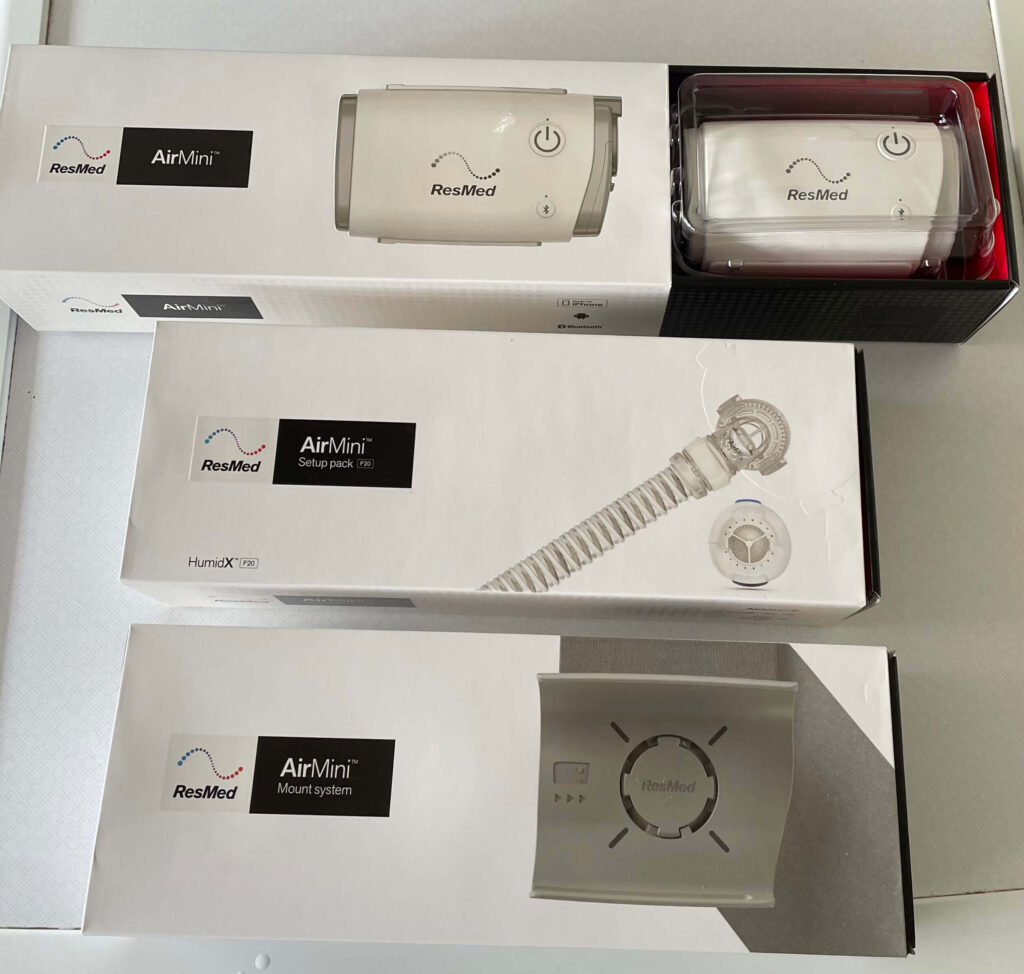
Oh, I love the packaging. It reminds me of unpacking an Apple product.

Unboxing the machine was a pleasure. And as I opened it, it was easy to see how everything plugs together.

resmed airmini autoset review

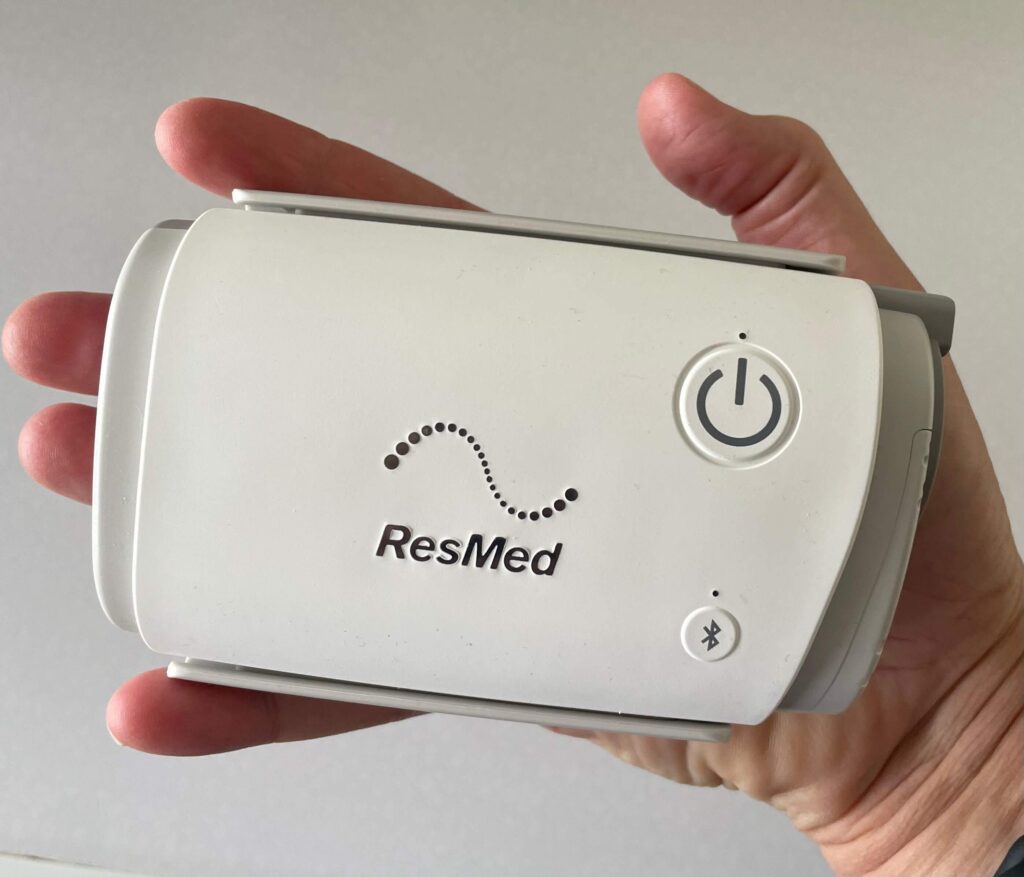
To give you an idea of its size, here is the mini CPAP machine in my hand.

How does a mini CPAP work?

The CPAP mini is a compact version of a regular CPAP machine, lacking two components: the humidifier tray and the display panel. This keeps it small.

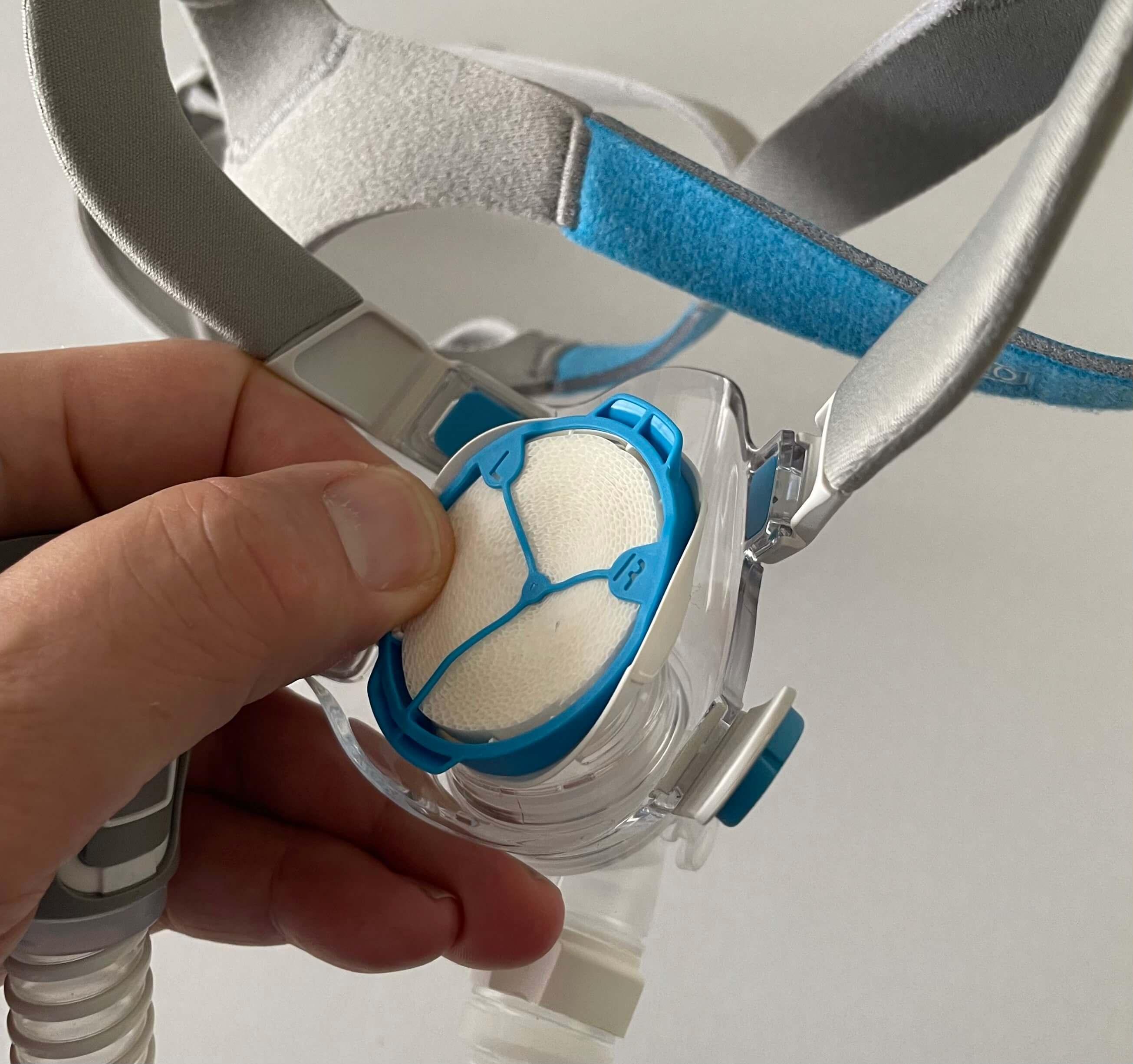
Instead of needing a humidifier, you get a clip-on Heat Moisture Exchanger filter, which should be changed about once a month.

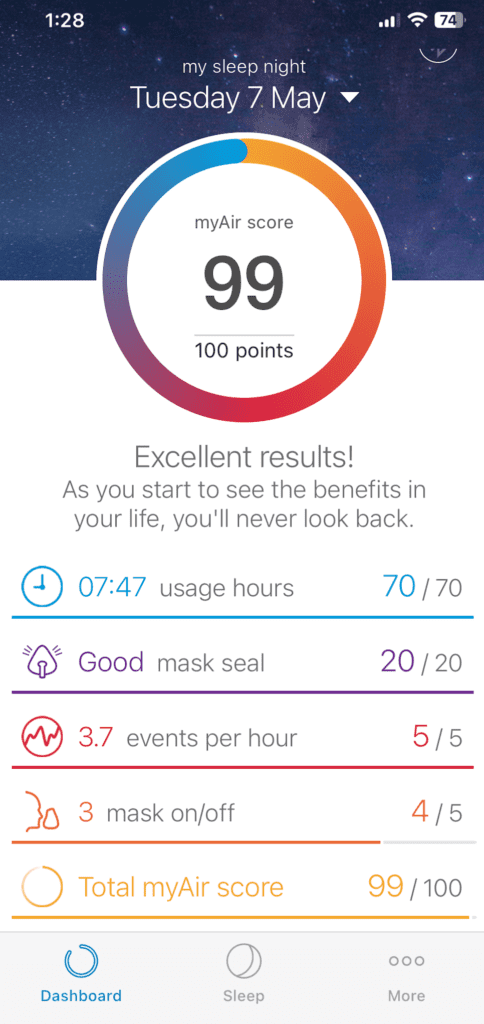
And look at this App. This replaces the display you have on a bedside CPAP machine. Wow, look at my score!

This was after my third night of usage. It took a little getting used to, which I’ll cover below.

My first thoughts on using the mini CPAP

All the components come with comprehensive instruction books, as they are medical devices.

But it’s simple to assemble. You plug the power lead into the machine on one end, and the hose on the other.

Getting that filter to clip on was a bit tricky. I turned it around and around, trying to get it to clip in place. Then I realized it had an L and an R on it. Doh!

The first time I used the mini, it was evident that this machine was louder than the standard type. Not a lot noisier, but it’s noticeable. This is because the filter in the mask interrupts your breath flow, causing noise.

I spent the first night just getting used to the machine, but by the third, I achieved the impressive 99% score shown above. Reducing my events per hour to 3.7 is incredible, especially considering that without it, I had 60 events per hour.

A major noticeable difference I found between my Travel Mini and my regular bedside ResMed 10 is the noise. It is distinctly louder. This is because the filter you have to put in the mouthpiece breaks up the airflow, causing the noise.

My First Night Using the AirMini: The Learning Curve

I tested the AirMini at home for two weeks before my second European trip. Smart moveโ€”there was definitely a learning curve.

Night 1: Rough. The noise was immediately noticeable compared to my AirSense 10. Not loud, exactly, but higher-pitched. The HumidX filter in the mask disrupts airflow slightly, creating a subtle whirring sound. My wife noticed it from across the room.

My sleep quality was okayโ€”better than no CPAP, worse than my regular machine. I woke up a few times, probably adjusting to the different feel.

Night 2-3: Getting better. My brain was adapting to the sound. The therapy felt solidโ€”pressure delivery was consistent, no leaks, comfortable breathing.

Night 4 and Beyond: Dialed in. By the fourth night, I was sleeping just as well as with my AirSense 10. My AirMini app showed impressive results:

  • AHI: 3.7 events per hour (down from 50+ untreated)
  • Usage: 7.5 hours
  • Mask leak: Minimal
  • Overall score: 99/100

That 3.7 AHI is considered excellent CPAP therapy. Anything under 5 events per hour indicates effective treatment.

Using the AirMini on My Second European Trip: Game-Changer

This is where the AirMini proved its worth.

My second European trip was two weeks across France, Germany, and a week in Vera Playa, Spain. I packed the AirMini, battery pack, mask, and accessoriesโ€”total weight about 2.5 pounds including carrying case. Compare that to 5+ pounds with my AirSense 10.

Packing: The AirMini fits easily in the CPAP case.

Hostels: Setting up in shared dorm rooms was infinitely less awkward. The AirMini is discreet enough that most roommates didn’t even notice it. The noise was drowned out by typical hostel soundsโ€”snoring, bathroom trips, and people coming in late. Nobody complained, nobody asked questions.

Hotels: Perfect. Plenty of power outlets, stable surfaces for the machine, and zero issues.

Airplane Success: This was the big testโ€”that same Singapore to London route that destroyed me the first time.

I brought my Medistrom Pilot-24 Lite battery, which is FAA-approved for in-flight use. The AirMini is also FAA-approved, so the combination is completely legal on commercial flights.

Setup was simple:

  1. Got to my seat early
  2. Connected battery to AirMini under the seat in front of me
  3. Attached tubing and mask
  4. Waited for takeoff
  5. Put mask on after we reached cruising altitude
  6. Slept for 8 glorious hours

The battery lasted the entire 13-hour flight with about 15% charge remaining. I woke up refreshed, clear-headed, no headacheโ€”completely different from my first trip.

A flight attendant did ask about my “breathing device,” but once I explained it was medical equipment for sleep apnea, she was totally cool with it. Apparently, they see CPAP users traveling fairly regularly.

No Distilled Water Stress: The HumidX system eliminated my previous nightmare of hunting for distilled water across Europe. I just needed to remember to replace the filter every 30 days (I brought three extras for the three-week trip).

Power Adapters: Still needed them, but only one small adapter for the AirMini instead of dealing with my bulky AirSense 10 power brick. Much simpler.

Camping With the AirMini: My Most Recent Adventure

Last weekend, I took the AirMini camping with CPAP equipment for the first timeโ€”the trip that inspired me to update this review.

This was car camping, not backpacking, so I brought the full setup:

  • AirMini machine
  • AirFit F20 mask
  • Medistrom Pilot-24 Lite battery
  • Backup battery (fully charged)
  • Extra HumidX filters
  • Carrying case

Setup: Easy. Tent, sleeping bag, battery connected to AirMini, mask on, done. The whole thing took maybe 3 minutes.

Noise in Nature: Completely drowned out by wind, insects, and natural sounds. My camping buddy said he couldn’t hear it at all from his tent 10 feet away.

Battery Performance: One full battery charge lasted two complete nights (about 16 hours total usage). I could have stretched it to a third night in a pinch, but I swapped to my backup battery to be safe.

The battery takes about 2-3 hours to fully recharge from a car’s 12V outlet, which was convenient for daytime charging while driving between campsites.

Humidity: The standard HumidX filter worked fine. We were camping in moderate humidity (Western Australia in spring), so I didn’t need the HumidX Plus. In very dry climates, you might want the Plus version for extra moisture.

My Results:

  • Night 1 AHI: 4.2
  • Night 2 AHI: 3.9
  • Zero mask leaks
  • Both nights: 7+ hours sleep
  • Woke up refreshed, ready to hike

Before getting the AirMini, I would avoid camping entirely. The thought of either skipping CPAP therapy or trying to rig up my full-sized machine with car battery adapters was too stressful. Now camping is back on the table.

Long Haul Flight

This is why I bought this machine. It was to do the ultra long-haul flight between Singapore and London, which is between 12 and 13 hours.

Okay, I’ll admitโ€”I’m just pretending to be asleep for this photo, but I was genuinely impressed.

As I mentioned earlier, this CPAP mini is a bit noisy, but the plane’s background noise completely drowned it out. After taking this picture, I actually got a good night’s sleep.

As I keep saying, getting a ResMed Mini CPAP has been a total game-changer for me.

I’ve always been acutely aware of my terrible snoring, and it has held me back in the past from camping, hostelling, and generally travelling. I believe this neat little device will open up a whole new world for you, too.

A key question to consider is whether to purchase a mini CPAP travel machine as your primary CPAP device. I would recommend NOT to.

I know it’s a luxury to have both, but the regular bedside type is far better for day-to-day use. It’s much quieter, and I find it more comforting.

It sounds a bit weird, but it’s like a pacifier to me, and I now find it hard to sleep without it.

AirMini vs. Regular CPAP: The Honest Comparison

After five years using both machines, here’s my real-world comparison:

Therapy Effectiveness: Tie Both machines deliver excellent therapy. My AHI is consistently 3-5 with either device, which is considered excellent treatment. The AirMini doesn’t compromise on pressure delivery or therapy quality.

Noise: AirSense 10 Wins The AirSense 10 is noticeably quieterโ€”about 27 decibels versus the AirMini’s 30-31 decibels. The AirMini’s higher pitch from the HumidX filter is also more noticeable. Not a dealbreaker, but it’s there.

Humidification: AirSense 10 Wins The water-based humidification in the AirSense 10 provides more consistent, adjustable moisture. The HumidX works well, but it’s not quite as comfortableโ€”especially in very dry climates.

Portability: AirMini Crushes It Not even close. The AirMini weighs 76% less and takes up a fraction of the space. For travel, there’s no competition.

Cost: AirSense 10 Wins The AirSense 10 costs about $800-900. The AirMini is $900-1,100 for just the machine, and you need to add $300-400 for a battery to make it truly portable. Total investment is significantly higher.

Data Tracking: Tie (Both Good) Both machines provide excellent sleep data through their respective apps. The AirMini app is actually more user-friendly than ResMed’s myAir app for the AirSense series.

Maintenance Cost: AirSense 10 Wins Replacing CPAP supplies is cheaper for the AirSense 10. HumidX filters for the AirMini cost $10-15 monthly, adding up to $120-180 per year. The AirSense 10’s water chamber needs replacing annually for about $30.

My Recommendation:

Don’t buy an AirMini as your primary, everyday CPAP machine. The regular AirSense 10 (or AirSense 11) is better for daily useโ€”quieter, better humidification, lower operating costs.

But as a dedicated travel CPAP machine? The AirMini is absolutely worth the investment if you travel frequently.

What I Love About the AirMini

After five years of regular use, these are the features I genuinely appreciate:

1. Size and Weight It fits in my hand. It weighs nothing. I can pack it in any bag, any suitcase, even a large jacket pocket. This alone justifies the purchase for frequent travelers.

2. FAA Approval for In-Flight Use Being able to use CPAP on long-haul flights changed my entire travel experience. I arrive at destinations refreshed instead of destroyed. This feature alone has paid for itself many times over.

3. No Water to Carry The HumidX system is brilliant. No hunting for distilled water in foreign countries, no worrying about water chambers leaking in your luggage, no stress about water availability.

4. Smart Start/Stop Put your mask on, therapy begins. Take mask off, therapy stops. So simple, yet so convenientโ€”especially when you’re fumbling around in a dark hostel room trying not to wake your roommates.

5. AutoSet Technology The automatic pressure adjustment works flawlessly. My therapy is just as effective as my bedside machine, with the same low AHI scores and oxygen saturation levels.

6. App Integration The AirMini app is genuinely good. Easy to read sleep data, adjust settings, track compliance, and monitor therapy effectiveness. Much better than fumbling with buttons on a device in the dark.

7. Minimal Setup Time From bag to breathing in under 2 minutes. Connect power, attach tubing, clip in HumidX, put on mask, done. Perfect for hostel life or quick hotel setups.

8. Durable Build Quality After five years and probably 200+ nights of use across multiple continents, my AirMini still works perfectly. The casing has a few scratches, but everything functions like new.

What I Don’t Love About the AirMini (The Honest Cons)

No machine is perfect. Here are the real downsides I’ve experienced:

1. Noise Level: It’s louder than my AirSense 10. The high-pitched whir from the HumidX filter is noticeable in quiet environments. My wife can hear it from across the bedroom. In hostels or with background noise, it’s fine. But in a silent hotel room? It’s definitely there.

In the air, you can’t hear it at all above the ambient hum of the plane noise.

Some travelers report that the noise bothers them significantly. I’ve adapted, but it took a few weeks.

2. Limited Mask Compatibility You can ONLY use these five ResMed masks:

  • AirFit F20
  • AirFit N20
  • AirFit P10
  • AirTouch F20
  • AirFit F30i

If you use a different brand or model, you’re out of luck. This was fine for me since I already used the F20, but it’s a legitimate limitation.

You also can’t use generic masks or even other ResMed models. The AirMini requires specific connectors that only work with these five masks.

3. HumidX Ongoing Cost $10-15 per month adds up to $120-180 annually. Over five years, I’ve spent around $600-900 on HumidX filters alone. The convenience is worth it for me, but it’s an ongoing expense to factor in.

4. No Internal Battery. This drives me nuts. For a device designed for travel, not including a battery is baffling. You have to buy a separate $300-400 battery pack to use it off-grid.

Compared to competitors like the Z2 Auto Travel CPAP (which can be purchased with an integrated battery option), this feels like a major oversight.

5. Less Comfortable Humidification The HumidX works, but it’s not as comfortable as water-based humidificationโ€”especially in very dry climates like deserts or high-altitude locations. I sometimes wake up with a slight dry mouth when using the AirMini in arid regions.

The HumidX Plus helps, but still doesn’t match a proper heated humidifier.

6. App Dependency: If your phone dies or you forget it, you can’t adjust any settings. The machine will run on your last saved settings, but you can’t make changes without the app.

7. The price $900-1,100 for the machine is expensive. Add a battery pack ($300-400) and carrying case ($50-80), and you’re looking at $1,250-1,580 total investment.

That’s more than most full-sized CPAP machines. The convenience justifies the cost for frequent travelers, but it’s definitely a premium price point.

8. Harder to Clean The HumidX filter system means you have an extra component to manage. And because it’s disposable, you can’t just clean itโ€”you have to replace it monthly.

The tubing is also AirMini-specific, so you need to keep spare AirMini tubing rather than using standard CPAP hoses.

Who Should Buy the ResMed AirMini?

Based on five years of experience, here are those who benefit most from this machine:

Perfect For:

  • Frequent travelers (monthly or more)
  • Business travelers who fly regularly
  • People who take 2+ international trips per year
  • Campers and outdoor enthusiasts with sleep apnea
  • Anyone who stays in hostels or shared accommodations
  • People who need CPAP on long-haul flights
  • Those who split time between two locations (like seasonal residents)

Also Good For:

  • Occasional travelers (4-6 trips per year) if budget allows
  • RV owners who want a compact CPAP
  • College students living in dorms
  • Anyone who values minimalism and compact equipment

NOT Worth It For:

  • People who rarely travel (1-2 trips per year) and stay in a hotel
  • Those on a tight budget (just bring your regular machine)
  • Anyone who needs specific humidification for medical reasons
  • Users who require masks not on the compatible list
  • People who prioritize quiet operation above all else

If you only travel once or twice a year, the $1,200-1,500 total investment probably isn’t justified. Just pack your regular machine, deal with the extra weight, and save the money.

But if you’re like meโ€”traveling and camping 3+ times per year, taking international flights, camping regularly, or staying in hostelsโ€”the AirMini transforms your travel experience. The convenience, portability, and ability to maintain CPAP therapy anywhere make it worth every penny.

Cleaning and Maintaining the AirMini

Proper CPAP maintenance is crucial for both therapy effectiveness and equipment longevity. Here’s my actual cleaning routine:

Daily:

  • Empty any condensation from tubing (hang it to air dry)
  • Wipe down the exterior of the machine with a dry cloth
  • Check the mask for any visible debris or oils

Weekly:

  • Wash mask cushion, headgear, and tubing with warm water and mild soap
  • Air dry everything completely before next use
  • Wipe down the machine exterior with a slightly damp cloth
  • Check all connections for wear or damage

Monthly:

  • Replace HumidX filter (criticalโ€”they don’t work well beyond 30 days)
  • Deep clean all components
  • Inspect tubing for any cracks or holes
  • Check the power cord for damage

Every 6 Months:

  • Replace tubing (I do this religiously)
  • Replace the air intake filter
  • Consider replacing mask cushions if showing wear
  • Check battery health if using a portable battery

DO NOT:

  • Put any AirMini components in the dishwasher
  • Do not use harsh chemicals or bleach on any parts
  • Submerge the AirMini machine itself in water
  • Use CPAP cleaning machines (like ozone cleaners) unless specifically approved by ResMed

I keep my AirMini in its carrying case when not in use to protect it from dust and damage. After five years, this routine has kept my machine functioning perfectly.

Common AirMini Problems and Solutions

Over five years, I’ve encountered a few issues. Here’s how I solved them:

Problem: Mask Leaking Air
Solution: Check HumidX filter is properly seated. Ensure the mask cushion is clean and properly positioned. Mask leaks are usually about fit, not the machine.

Problem: Insufficient Humidity/Dry Mouth
Solution: Switch from standard HumidX to HumidX Plus (more moisture). Keep room humidity higher if possible. Consider adding a separate room humidifier in very dry climates.

Problem: App Won’t Connect via Bluetooth
Solution: Turn Bluetooth off and on. Force quit and restart the app. Forget the device and re-pair. Keep the phone within 3 feet of the machine during use.

Problem: Machine Seems Louder Than Usual
Solution: Check if the HumidX filter needs replacing (they get noisier near the end of 30 days). Ensure the machine is on a flat, stable surface. Check tubing for kinks or obstructions.

Problem: Water Condensation in Tubing (Rainout)
Solution: Use heated tubing if compatible. Insulate tubing with hose cover. Keep the room temperature warmer. The HumidX usually prevents this, but it can happen in extreme temperature differences.

Problem: Therapy Not Feeling Effective
Solution: Check AHI scores in the app. Verify pressure settings match your prescription. Ensure the mask seal is good. Consider whether travel fatigue or jet lag is affecting your perception. Consult a sleep doctor if AHI is consistently above 5.

Alternative Travel CPAP Machines to Consider

The AirMini isn’t the only portable option. Here are alternatives worth considering:

Z2 Auto Travel CPAP ($800-900)

  • Slightly larger than AirMini but still very portable
  • An optional integrated battery is available
  • Quieter operation (claims around 26 dB)
  • Uses a similar HME humidification system
  • More mask compatibility

Transcend Micro Auto ($700-800)

  • Ultra-lightweight (under 0.5 pounds)
  • Battery available as an add-on
  • Very compact
  • Works with most standard masks
  • Less expensive than AirMini
  • Humidification system less effective in my experience

Just Bring Your Regular Machine

  • Free (you already own it)
  • Better humidification
  • Quieter operation
  • More comfortable for daily use
  • Heavier and bulkier
  • Requires distilled water
  • Less convenient but saves $1,000+

For most people who only travel occasionally, I’d actually recommend just bringing your regular CPAP machine. Yes, it’s bigger and heavier, but it’s also free, more comfortable, and provides better therapy.

The AirMini makes sense when portability and convenience become criticalโ€”which for me, as a frequent traveler, they absolutely are.

My Current Travel Setup (What I Actually Pack)

After five years of refinement, here’s my go-to travel setup:

For Flights and Hotels:

  • ResMed AirMini
  • AirFit F20 mask
  • Medistrom Pilot-24 Lite battery (for flights)
  • AirMini power supply + one international adapter
  • 2 spare HumidX filters
  • Small carrying case
  • CPAP travel bag

Total weight: About 2.5 pounds
Packs into: Front pocket of backpack or small section of suitcase

For Camping/RV Trips:

  • Everything above, plus:
  • Second backup battery (fully charged)
  • 12V car charger for battery
  • Extra set of tubing
  • Cleaning supplies (small bottle of soap, microfiber cloth)
  • Backup HumidX filters (one per week of trip)

Total weight: About 4 pounds, including batteries
Packs into: Dedicated stuff sack or small duffle

What I Don’t Pack Anymore:

  • Distilled water (HumidX eliminates this)
  • Multiple power adapters (only need one small one)
  • Bulky carrying case for the machine
  • Anxiety about equipment failure (the AirMini is reliable)

Real Sleep Data: My AirMini Performance Over 5 Years

I’m a data nerd, so I’ve tracked my AirMini performance obsessively. Here are real numbers:

Overall Stats (2019-2024):

  • Total nights used: 200+
  • Average AHI: 4.1 events/hour
  • Average usage: 7.2 hours/night
  • Average mask seal: 95%
  • Equipment failures: 0
  • Nights I couldn’t use it due to technical issues: 0

Comparison to AirSense 10 (same user, same time period):

  • AirSense 10 average AHI: 3.8 events/hour
  • AirMini average AHI: 4.1 events/hour
  • Difference: 0.3 events/hour (clinically negligible)

Both machines keep me well under the 5 events/hour threshold for effective treatment. The slight difference is likely just measurement variation, not actual therapy difference.

Essentially identical performance. The AirMini delivers the same therapy quality as my full-sized machine.

How the AirMini Has Changed My Life

This probably sounds dramatic, but the AirMini genuinely expanded what’s possible for me as someone with severe sleep apnea.

Before getting it:

  • Avoided international travel (too stressful)
  • Never went camping (couldn’t figure out power logistics)
  • Dreaded flying (arriving exhausted, ruined trips)
  • Felt anxious in hostels (equipment size drew attention)
  • Limited my adventures to maintain sleep health

After getting it:

  • Traveled across Europe
  • Regular camping trips with friends
  • Long-haul flights feel manageable
  • Confident traveling anywhere
  • Sleep apnea doesn’t dictate my life choices

Is this all due to one piece of equipment? No, proper CPAP therapy in general transformed my life. But the AirMini specifically removed the barriers that made traveling with sleep apnea feel impossible.

I’m not exaggerating when I say it’s one of the best purchases I’ve ever made.

Final Verdict: Is the ResMed AirMini Worth It?

After five years and 200+ nights of use across multiple continents, here’s my honest answer:

If you travel frequently (6+ times per year): Absolutely worth every penny. The convenience, portability, and therapy effectiveness justify the $1,200-1,500 total investment.

If you travel occasionally (3-5 times per year): Probably worth it if you can afford it, especially if you take international flights or camp. Quality of life improvement is significant.

If you rarely travel (1-2 times per year): Not worth it. Just bring your regular machine and save the money.

If you’re on a tight budget: Skip it. Your regular CPAP works fine for occasional travel.

The AirMini isn’t perfectโ€”it’s louder, less comfortable humidification, expensive, and lacks an internal battery. But for what it’s designed to doโ€”provide portable, effective CPAP therapy while travelingโ€”it absolutely delivers.

My severe sleep apnea (AHI over 50) is just as well-controlled with the AirMini as with my bedside machine. The therapy is identical. The comfort is nearly identical. The only real compromise is noise level and humidification quality.

For me, those minor compromises are completely worth the freedom to travel, camp, fly long-haul, and live my life without sleep apnea holding me back.

If you’re considering a travel CPAP and can afford the investment, the ResMed AirMini is the best option on the market right now.

Frequently Asked Questions

Can I use the AirMini as my only CPAP machine?

Technically, yes, but I don’t recommend it. The AirMini works great for travel, but the louder noise, less effective humidification, and higher ongoing costs (HumidX filters) make it less ideal for daily home use. Get a regular CPAP machine for home and use the AirMini for travel.

Does insurance cover the AirMini?

Maybe. Some insurance companies will cover a travel CPAP if you don’t own a primary machine. But most won’t cover it as a second device. Check with your insurance provider. Mine didn’t cover it, so I paid out of pocket.

How long does the battery last?

The Medistrom Pilot-24 Lite battery lasts about 16 hours (two full nights) on my settings (pressure 6-20, AutoSet mode). Your mileage will vary based on your pressure settings and whether you use heated tubing.

Can I use it while camping without electricity?

Yes, with a compatible CPAP battery. The AirMini doesn’t have an internal battery, so you need to buy one separately. I use the Medistrom Pilot-24 Lite, which works great for camping.

Is it actually quiet enough for hostel dorms?

In my experience, yes. The background noise of 6-12 people sleeping (snoring, moving, bathroom trips) usually drowns out the AirMini. Some people might hear it if they’re very close and it’s completely silent, but it’s never been an issue for me in 50+ hostel nights.

Can I use my existing mask?

Only if it’s one of these five ResMed masks: AirFit F20, AirFit N20, AirFit P10, AirTouch F20, or AirFit F30i. Other masks won’t work with the AirMini’s connector system.

How often do I need to replace the HumidX filter?

Every 30 days. They cost about $10-15 each, adding up to $120-180 per year. This is an ongoing expense that doesn’t exist with water-based humidifiers.

Can I fly with it?

Yes! The AirMini is FAA-approved for in-flight use. You’ll need an FAA-approved battery like the Medistrom Pilot-24 Lite. CPAP equipment doesn’t count against your carry-on allowance.

Does it work with BiPAP settings?

No. The AirMini only offers CPAP and AutoSet (APAP) therapy. If you require BiPAP or ASV therapy, you’ll need a different machine like the ResMed AirCurve.

Where to Buy the ResMed AirMini

The AirMini is a prescription medical device, so you can’t just buy it on Amazon or general retail stores.

Authorized Suppliers:

  • SleepDoctor.com (my recommendation – includes accessories)
  • CPAP.com
  • Direct medical equipment suppliers
  • Some sleep clinics

Important: Always buy from authorized suppliers to ensure you’re getting a genuine ResMed product with warranty coverage. Avoid third-party sellers on eBay or similar platformsโ€”there are counterfeit CPAP machines out there, and you do not want to risk your health on fake equipment.

You’ll need a valid CPAP prescription from your sleep doctor to purchase. If you don’t have one, you’ll need to get a sleep study first.

Final Thoughts

The ResMed AirMini isn’t a perfect machine, but it’s the best travel CPAP solution I’ve found in 10 years of dealing with severe sleep apnea.

It’s expensive, it’s louder than I’d like, and it requires ongoing filter costs. But it’s also transformed how I travelโ€”from anxious and limited to confident and free.

That Singapore to London flight that destroyed me in 2018? I’ve done it four more times since buying the AirMini. Every time, I arrive refreshed, ready to enjoy my tripโ€”no anxiety about snoring, no forced wakefulness, no exhaustion.

That’s worth $1,500 to me.

If you’re struggling with traveling while managing sleep apnea, or if you’re avoiding travel altogether because of CPAP hassles, the AirMini might be exactly what you need.

It was for me.


Have questions about the ResMed AirMini? Drop a comment below and I’ll answer based on my five years of experience using this machine.

Medical References

  1. Johns Hopkins Medicine. (2025). “The Dangers of Uncontrolled Sleep Apnea.” https://www.hopkinsmedicine.org/health/wellness-and-prevention/the-dangers-of-uncontrolled-sleep-apnea
  2. National Heart, Lung, and Blood Institute. “Sleep Apnea.” https://www.nhlbi.nih.gov/health/sleep-apnea
  3. Mayo Clinic. (2024). “Mayo Clinic Minute: What Happens to Your Body When You Have Obstructive Sleep Apnea?” https://newsnetwork.mayoclinic.org/discussion/mayo-clinic-minute-what-happens-to-your-body-when-you-have-obstructive-sleep-apnea/
  4. Mayo Clinic. (2025). “Sleep Apnea – Symptoms and Causes.” https://www.mayoclinic.org/diseases-conditions/sleep-apnea/symptoms-causes/syc-20377631
  5. Mayo Clinic. (2025). “Obstructive Sleep Apnea – Symptoms and Causes.” https://www.mayoclinic.org/diseases-conditions/obstructive-sleep-apnea/symptoms-causes/syc-20352090
  6. Mayo Clinic Health System. “Sleep Apnea Treatment and Management.” https://www.mayoclinichealthsystem.org/locations/la-crosse/services-and-treatments/otorhinolaryngology/throat-conditions-and-treatment/sleep-apnea
  7. Mayo Clinic Proceedings. (2004). “Obstructive Sleep Apnea and Cardiovascular Disease.” https://www.mayoclinicproceedings.org/article/S0025-6196(11)62579-2/fulltext
  8. Cleveland Clinic. (2025). “Treatments for Obstructive Sleep Apnea: CPAP and Beyond.” https://consultqd.clevelandclinic.org/treatments-for-obstructive-sleep-apnea-cpap-and-beyond
  9. Cleveland Clinic. (2025). “CPAP Machine: What It Is, How It Works & Side Effects.” https://my.clevelandclinic.org/health/treatments/22043-cpap-machine
  10. Cleveland Clinic. (2025). “Sleep Apnea: What It Is, Causes, Symptoms & Treatment.” https://my.clevelandclinic.org/health/diseases/8718-sleep-apnea
  11. Cleveland Clinic. (2025). “Obstructive Sleep Apnea (OSA): Symptoms & Treatment.” https://my.clevelandclinic.org/health/diseases/24443-obstructive-sleep-apnea-osa
  12. Cleveland Clinic Journal of Medicine. (2023). “Treatments for Obstructive Sleep Apnea: CPAP and Beyond.” https://www.ccjm.org/content/90/12/755
  13. Stanford Health Care. (2024). “Sleep Medicine Center.” https://stanfordhealthcare.org/medical-clinics/sleep-medicine-center.html
  14. Stanford Medicine. (2023). “Treatments for Obstructive Sleep Apnea.” https://stanfordhealthcare.org/medical-conditions/sleep/obstructive-sleep-apnea/treatments.html
  15. Stanford Medicine. (2011). “Sleep Apnea Patient Now Sleeps Well, Thanks to New CPAP Class.” https://med.stanford.edu/news/all-news/2011/06/sleep-apnea-patient-now-sleeps-well-thanks-to-new-cpap-class.html
  16. American Academy of Sleep Medicine. (2019). “Treatment of Adult Obstructive Sleep Apnea with Positive Airway Pressure: Clinical Practice Guideline.” https://jcsm.aasm.org/doi/10.5664/jcsm.7640
  17. American Academy of Sleep Medicine. “Clinical Practice Guidelines.” https://aasm.org/clinical-resources/practice-standards/practice-guidelines/
  18. Sleep Foundation. (2025). “Normal Oxygen Levels While Sleeping.” https://www.sleepfoundation.org/physical-health/what-are-normal-oxygen-levels-during-sleep
  19. Sleep Cycle Centers. (2024). “Impact of Sleep Apnea Oxygen Levels on Health.” https://sleepcyclecenters.com/blog/sleep-apnea-oxygen-levels/
  20. Sleep Houston. (2025). “Understanding the Effects of Oxygen Depletion with Sleep Apnea on the Brain.” https://sleephouston.com/understanding-the-effects-of-oxygen-depletion-with-sleep-apnea-on-the-brain/
  21. EntiCare. (2025). “Sleep Apnea & Daytime Oxygen Levels: What You Should Know.” https://enticare.com/2024/11/05/sleep-apnea-daytime-oxygen-levels/
  22. BlueSleep. (2025). “Low Blood Oxygen While Sleeping: Is It Apnea?” https://www.bluesleep.com/blog/low-oxygen-levels-and-sleep-trackers
  23. SleepQuest. (2022). “Low Blood Oxygen Levels and Sleep Apnea.” https://www.sleepquest.com/low-blood-oxygen-levels-and-sleep-apnea/
  24. UC Irvine School of Medicine. “Study Links REM Sleep Apnea to Brain Changes, Memory Loss in Older Adults.” https://medschool.uci.edu/news/study-links-rem-sleep-apnea-brain-changes-memory-loss-older-adults
  25. Federal Aviation Administration (FAA). “Medical Device Guidelines for Air Travel.” Official FAA documentation

โš ๏ธ MEDICAL DISCLAIMER This blog provides general information only and is not a substitute for professional medical advice, diagnosis, or treatment. Sleep apnea is a serious condition, and CPAP equipment should be used under proper medical supervision. Always consult your doctor or sleep specialist before starting, stopping, or changing any therapy. I share personal experiences as a CPAP user, not as a medical professional. Individual results vary. For medical guidance, please consult a qualified clinician or the American Academy of Sleep Medicine (aasm.org).

Similar Posts