Nighttime Urination and Sleep Apnea: What’s the Connection?

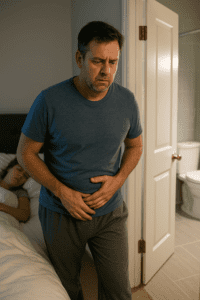
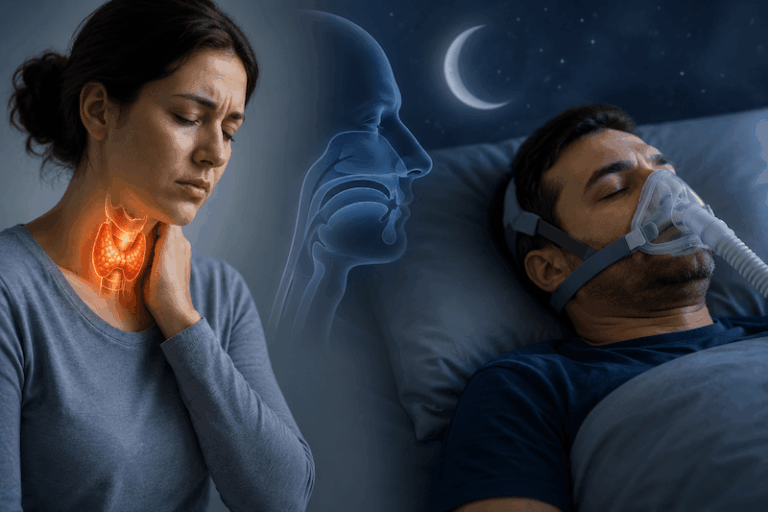
When most people picture sleep apnea, they think of snoring and daytime exhaustion. The bathroom usually does not come to mind. Yet one of the most common and most overlooked symptoms of obstructive sleep apnea is nocturia, the medical term for waking repeatedly through the night to urinate. For a long time, it gets blamed on age, on a glass of water too close to bedtime, on a weak bladder. The breathing rarely enters the conversation.
I want to be upfront about where I am writing from. My background is in computer science, not medicine, so nothing here is medical advice. I have lived with severe obstructive sleep apnea for more than a decade, with an apnea hypopnea index of 51 at diagnosis, and I have spent years reading the research and tracking my own therapy. Nocturia was not the symptom that sent me to a sleep clinic. My route to diagnosis ran through morning headaches, relentless daytime fatigue, and the things my wife noticed about my breathing, which I tell in full on my living with sleep apnea page. But once I understood the biology, the bathroom connection made complete sense, and I have heard from enough readers who recognized themselves in it that I think it deserves a careful, honest explanation.
So if you are getting up two, three, or more times a night and assuming your bladder is the problem, this is worth your time. The cause might be sitting one organ higher, in a throat that keeps closing while you sleep.
What Nocturia Actually Is
Nocturia means waking two or more times during the night specifically to urinate, with sleep on either side of the trip. One trip a night is fairly normal for a lot of adults, especially as we get older. The threshold where it starts to chip away at sleep quality is generally two or more. At that point the fragmentation adds up, and the daytime cost shows up as fatigue, poor concentration, and low mood.
It helps to know that nocturia is a symptom, not a disease in itself. Plenty of things can drive it. Drinking a large amount of fluid late in the evening is the obvious one. Certain medications, particularly diuretics, push urine production at the wrong time. Diabetes, bladder conditions, urinary tract infections, heart problems, and in women the hormonal shifts around menopause can all contribute. Sleep apnea belongs on that list too, and it is the one that tends to get missed, because the connection between a collapsing airway and a full bladder is not intuitive.
The prevalence numbers are striking. According to a clinical review of severe apnea patients, nocturia is present in close to half of people with obstructive sleep apnea, with one widely cited comparison putting it at roughly 70 percent in apnea patients versus about 25 percent in the general population. The Sleep Foundation similarly notes that nocturia occurs in up to half of people with OSA. That is not a coincidence. It points to something physiological happening while you sleep.
The Hidden Mechanism: Why a Closed Airway Sends You to the Bathroom
This is the part that genuinely surprised me, and as someone who likes to understand how systems work, it is the part I find most useful to explain clearly.
When your airway collapses during an apnea, you keep trying to breathe against a closed throat. That effort creates strong negative pressure inside your chest. The pressure tugs on the heart, stretching the walls of the upper chambers slightly. The heart reads that stretch as a sign it is overloaded with fluid, and it responds by releasing a hormone called atrial natriuretic peptide, usually shortened to ANP.
ANP has a simple job. It tells your kidneys to dump sodium and water. So your kidneys ramp up urine production in the middle of the night, not because you drank too much, but because your heart is misreading a mechanical signal caused by your breathing. This is why cutting back on evening fluids so often makes little difference for apnea related nocturia. The trigger is hormonal, not the volume in your glass.
There is a second layer on top of that. Every apnea is followed by a brief arousal as your brain rouses you just enough to reopen the airway and breathe. You usually do not remember these. They can happen many times an hour without you ever fully waking. For me, at an events per hour rate that high, the night was a long series of interruptions I had no memory of. Each arousal raises your awareness of body signals, including a bladder that may only be partly full.
Researchers have noted something important about how we interpret these wake ups. When apnea patients are studied overnight and asked why they woke, most say they needed the bathroom. The breathing data often tells a different story: an apnea woke them first, and they noticed the urge to urinate only after they were already awake. The bladder gets the blame, but the breathing pulled the trigger. It is an easy mistake to make, because by the time you are conscious, the urge is what you feel.
A third factor rounds it out. In healthy sleep, your body suppresses urine production overnight by raising antidiuretic hormone, which tells the kidneys to concentrate urine and hold water. That is how a well rested person sleeps seven or eight hours without a bathroom break. Apnea disrupts this rhythm, with the natriuretic signal effectively working against the hormone that should be keeping you dry until morning. The two systems end up pulling in opposite directions, and the one that fills your bladder tends to win.
The Symptoms That Usually Travel With It
Nocturia rarely shows up alone in apnea. It tends to arrive as part of a cluster, and seeing the cluster is often what finally makes the picture clear. The classic companions are the ones I knew well before treatment: a heavy, grinding daytime fatigue that no amount of coffee touched, the kind that had me fighting to stay alert through ordinary afternoons. Loud snoring is common, often with gasping or choking sounds that a partner notices long before the person does. Mornings can bring a dry mouth and a headache that lingers until you have been up for a while, both of which point toward mouth breathing and a struggling airway overnight.
There is also a cardiovascular thread worth taking seriously. I had high blood pressure at the time of my diagnosis, and untreated apnea is strongly tied to cardiovascular strain. The repeated drops in oxygen and the surges of stress that follow each apnea put real load on the heart and blood vessels over time. When nocturia appears alongside snoring, exhaustion, witnessed pauses in breathing, and stubborn blood pressure, the combination is far more telling than any single symptom on its own.
What separates apnea-related nocturia from other causes is the pattern. The timing feels random rather than tied to when you drank. The urgency can feel out of proportion to how full your bladder actually is. And the usual fixes, cutting fluids, skipping the evening coffee, do not move the needle much. That stubbornness is itself a clue.
Getting to a Diagnosis
If this is sounding familiar, the path forward is the same regardless of which symptom brought you in. The point is to get your breathing assessed rather than chasing the bladder in isolation.
A lot of people with nocturia see a urologist first and go through bladder testing and medication trials while the apnea underneath goes unnoticed. That is understandable, but it treats the symptom and leaves the cause running. A useful first step is a screening tool such as the STOP-BANG questionnaire, which weighs factors like snoring, tiredness, observed apneas, and blood pressure, or the Epworth Sleepiness Scale for daytime sleepiness. Neither is a diagnosis, but they help you and your doctor decide whether a sleep study is warranted.
The diagnosis itself comes from a sleep study, either an overnight lab polysomnography or, increasingly, an at home sleep test. The study measures how often your airway is partially or fully blocked, recording each apnea and hypopnea event, the dips in oxygen, and the arousals that follow. Home testing has improved a great deal and works well for many people, though severe cases are often confirmed in a lab. If you want a closer look at the home option, I have written about the WatchPAT One home sleep test I point readers toward.
One thing the data made obvious in my own case is that the events were happening constantly, far more than I ever would have guessed from the inside. You simply cannot perceive most of them. That gap between how you think you slept and what the recording shows is a big part of why apnea hides for so long.
How Treatment Helps, Starting With CPAP
CPAP is the standard treatment for moderate to severe obstructive sleep apnea, and it is what I use. The machine delivers a steady stream of air that holds the airway open, which stops the apneas and, with them, the whole cascade that drives nocturia. When the airway stays open, the chest is no longer generating that negative pressure, the heart stops misfiring its fluid signal, ANP settles down, and urine production through the night can return toward normal.
The research backs this up. A systematic review and meta analysis of CPAP and nocturia found that treatment meaningfully reduced nighttime urination episodes across the studies it pooled, with improvement appearing within days to weeks of starting therapy for many patients. A separate case series of severe apnea patients reported nighttime urination episodes falling sharply once breathing was controlled, whether through CPAP or surgery, with the authors suggesting that a high nocturia count can itself be a flag for severe disease worth investigating.
I run a ResMed AirSense 10 and have used it for the better part of a decade, with a full face mask because I am a chronic mouth breather and nothing else would have kept the therapy effective for me. I check my numbers in the myAir app most mornings, which is how I have watched my own events per hour stay low and steady over the years. I am currently weighing an upgrade to the AirSense 11, though the 10 has served me well. For trips and camping, I use a smaller ResMed travel unit, because consistency matters more than convenience and skipping nights is not something I am willing to do.
I will not pretend the first stretch is effortless. The early weeks can be a fight with mask fit, with pressure that feels too strong, and with the general strangeness of sleeping attached to a machine. If that is where you are, my notes on getting used to CPAP therapy and on CPAP anxiety cover what helped me push through. The benefit that matters most is on the other side of that adjustment, and it tracks with use. The research on CPAP compliance consistently shows that more consistent nightly use produces better results, including for nocturia. Wearing it most of the night, most nights, is where the payoff lives.
Beyond the bathroom, the broader changes were the real reward for me. My chronic morning headaches resolved, the migraines I used to get cleared up once my breathing was controlled, and my overall health picture improved alongside the blood pressure I was dealing with at diagnosis. The bladder is only one thread in a much larger tapestry.
Other Treatment Paths
CPAP is not the only option, and the right choice depends on severity and on what is driving the obstruction. There is a fuller rundown on my page covering alternative treatments for sleep apnea, but here is the shape of it.
Oral appliances, custom fitted by a dentist, reposition the jaw to keep the airway open and can work well for mild to moderate cases, though they are generally less effective than CPAP for severe apnea. Some people have positional sleep apnea, where the problem is markedly worse on the back than the side, and for them positional therapy can make a real difference. Where excess weight is a contributing factor, even modest weight loss can improve apnea severity, and the research here is consistent enough to take seriously. And when the obstruction is anatomical, surgical options ranging from tissue procedures to hypoglossal nerve stimulation may be on the table. The case series I mentioned earlier found that surgery, like CPAP, brought both apnea severity and nocturia down substantially in the patients it followed.
There are also supporting habits worth a mention, with a caveat. Strategic fluid timing, easing off liquids in the couple of hours before bed and avoiding alcohol in the evening, can help at the margins, and alcohol in particular is worth avoiding because it relaxes the throat muscles and worsens airway collapse. But for apnea related nocturia specifically, these habits are a supplement, not a substitute. The hormonal driver is the breathing, so treating the breathing is what actually fixes the problem.
Differences By Age and Sex
Apnea and nocturia do not present identically in everyone, and a couple of distinctions are worth knowing.
Women with sleep apnea often look different from the textbook picture. Instead of thunderous snoring and witnessed apneas, they are more likely to report insomnia, fatigue, depression, morning headaches, and nocturia. Apnea prevalence rises after menopause, and postmenopausal women appear notably more likely to experience nocturia from apnea than those without it. Because providers do not always think of apnea in women, especially younger or normal-weight women, it goes underdiagnosed. If you are a woman with unexplained fatigue and frequent night waking to urinate, it is reasonable to ask specifically about a sleep study.
Age is the other big one. Both nocturia and apnea become more common as we get older, which is exactly why so many people, including me for a while, write the symptoms off as ordinary aging. That assumption is risky. Population research in older adults with nocturia has found a high rate of undiagnosed obstructive sleep apnea, with the likelihood climbing as the number of nightly bathroom trips goes up.
In children, the same underlying mechanism tends to show up as bedwetting rather than conscious bathroom trips, since kids are less likely to wake fully from the urge. If a child is wetting the bed and also snoring, mouth breathing, or showing behavioral issues, pediatric apnea is worth evaluating.
When to Talk to a Doctor
The takeaway is not that every bathroom trip means apnea. It is that a particular combination should prompt a conversation. If you are consistently up two or more times a night to urinate, and that comes packaged with loud snoring, gasping or choking sounds, daytime sleepiness despite a full night in bed, morning headaches or dry mouth, trouble concentrating, mood changes, or blood pressure that is hard to control, then the bladder is probably not the whole story. Anyone who has told you that you stop breathing in your sleep has handed you the most important clue of all.
Bring it to your doctor and frame it as a possible breathing problem, not just a urinary one. Ask about a sleep apnea evaluation rather than starting and ending with the bladder. Untreated severe apnea carries genuine long term risk to the heart and brain, and catching it early changes the trajectory. For a fuller foundation on the condition itself, my overview of what sleep apnea is is a good starting point.
What I keep coming back to, both in my own experience and in what I hear from readers, is how often the obvious explanation is the wrong one. The water before bed, the getting older, the weak bladder. Sometimes that is all it is. But when the trips keep coming and nothing you try makes a difference, it is worth asking whether the real problem is happening in your throat, not your bladder.
Frequently Asked Questions
Can sleep apnea cause frequent urination during the day too? Apnea primarily drives nighttime urination through the overnight hormonal mechanism described above. That said, chronic sleep deprivation and the broader hormonal disruption can affect daytime patterns for some people. If you are urinating frequently both day and night, that is worth a fuller workup with your doctor rather than assuming a single cause.
How quickly does nocturia improve after starting CPAP? For many people, improvement shows up within days to a few weeks, and the research suggests it tracks closely with how consistently the therapy is used. The more reliably you wear it through the night, the better the results tend to be.
Will treating apnea completely eliminate nighttime urination? For a lot of people, it leads to a significant reduction or full resolution. But nocturia can have more than one cause at once. If diabetes, prostate issues, or a medication are also contributing, treating the apnea will help but may not erase the symptom entirely. That is a useful thing to sort out with your doctor.
Can nocturia be the only noticeable sign of sleep apnea? It is uncommon but possible. Snoring happens while you are asleep and unaware, and daytime sleepiness can build so gradually that you stop noticing how tired you are. If you have nocturia without an obvious bladder cause, apnea screening is reasonable.
Do I need to stop drinking water before bed if I have apnea? Easing off fluids in the evening can help at the margins, but apnea related nocturia is driven mainly by the hormonal response to disrupted breathing rather than by how much you drank. Treating the apnea itself is far more effective than fluid restriction alone.
What is the difference between nocturia and bedwetting? Nocturia means waking up to urinate. Bedwetting, or nocturnal enuresis, is involuntary urination during sleep. Both can be linked to apnea through related mechanisms. Adults with severe untreated apnea occasionally experience enuresis, while in children, apnea more commonly shows up as bedwetting.
A Note on Sources
For readers who want to go deeper, two reliable starting points are the Sleep Foundation’s overview of nocturia and frequent nighttime urination and, for an Australian perspective, the Sleep Health Foundation’s fact sheet on nocturia. The clinical findings on prevalence and on CPAP’s effect come from peer-reviewed work, including a systematic review and meta-analysis on CPAP and nocturia and a clinical case series on nocturia as an indicator of severe apnea, both available through the National Library of Medicine.
⚠️ MEDICAL DISCLAIMER This blog provides general information only and is not a substitute for professional medical advice, diagnosis, or treatment. Sleep apnea is a serious condition, and CPAP equipment should be used under proper medical supervision. Always consult your doctor or sleep specialist before starting, stopping, or changing any therapy. I share personal experiences as a CPAP user, not as a medical professional. Individual results vary. For medical guidance, please consult a qualified clinician or the American Academy of Sleep Medicine (aasm.org).