Can You Die from Sleep Apnea? My Story and the Medical Truth


Before I say anything else, I want to be clear about who I am and what this article is. I am not a doctor and I have no medical training. My background is in computer science. What I do have is severe obstructive sleep apnea, diagnosed more than a decade ago, and a lot of nights spent reading about what this condition does to people when it is left untreated. Everything here comes from that reading and from my own experience as a patient. It is not clinical guidance. Please talk to a qualified doctor about your own situation rather than relying on anything I write here.
With that said, here is the question I kept circling back to in the months after my diagnosis. Could this actually kill me?
Why I started asking the question
My AHI at diagnosis was 51. That means I was stopping breathing more than fifty times an hour, roughly once a minute, all night long. My sleep specialist was calm in the way he explained it, but the message underneath was not calm at all. This was not simply about being tired. It was a serious medical problem that needed treating without delay.
So I did what I tend to do when someone tells me something alarming. I went home and started reading. I was not a clinician trying to weigh up trials. I was a patient trying to understand what was happening inside my body every night, and whether it was capable of killing me. If you want the full story of how I came to be diagnosed in the first place, I have written about that whole experience separately. This article is narrower. It is about the one question that scared me most.
What I found was sobering enough that I have never once questioned whether wearing my CPAP every night is worth it.
What the research actually says
The honest answer, based on what I read as someone without medical training, is that obstructive sleep apnea rarely kills people in the sudden, obvious way a heart attack does. What it appears to do instead is quietly wear down the cardiovascular system over months and years until the conditions for something serious are in place.
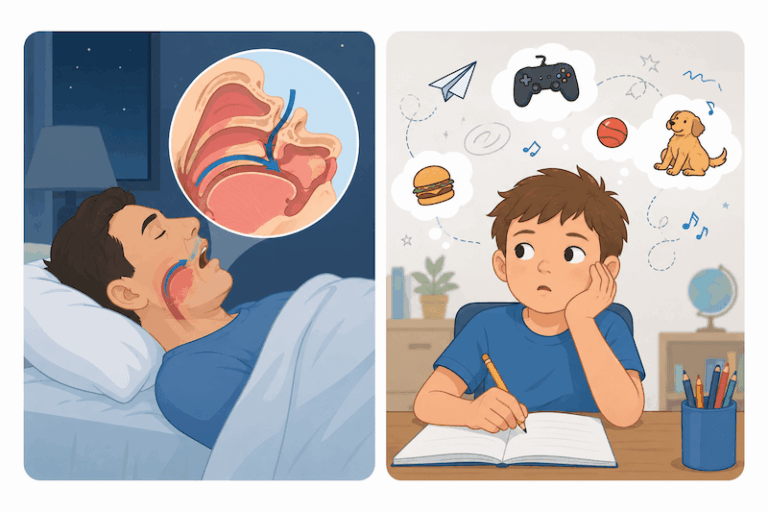
The mechanism I kept running into was this. Each time the airway collapses and breathing stops, blood oxygen falls. The heart works harder to compensate. The brain senses the problem and triggers a brief arousal to restart breathing, and blood pressure spikes along with it. Breathing resumes, sleep returns, and the cycle starts over. In my case that was happening more than fifty times an hour, which meant my heart was absorbing that stress response all night, every night, for years before anyone knew it was happening.
What the research suggested is that this adds up. Repeated drops in oxygen appear to damage blood vessels over time. The repeated blood pressure surges contribute to chronic high blood pressure. The ongoing strain raises the risk of heart disease, irregular heart rhythms, and stroke. The American Academy of Sleep Medicine lists a higher rate of death from heart disease, along with increased stroke risk and chronically elevated daytime blood pressure, among the documented effects of the condition (AASM obstructive sleep apnea fact sheet). I have written separately about the stroke risk connection and about how apnea affects heart health more broadly, both from the position of a patient who read about these things rather than a clinician presenting them.
The more acute risk I came across was the finding that people with severe untreated apnea appear more likely to die suddenly during sleep, particularly in the early morning hours when these events tend to cluster. The proposed explanation is that the repeated oxygen drops and cardiovascular strain can set off dangerous heart rhythm disturbances in people whose hearts are already under pressure. I want to be careful here, because I am not qualified to judge how strong that research is or how it applies to any one person. What I can say is that it made a strong impression on me, and it was part of why I took treatment seriously from the very first night.
The cases that made it real for me
When I was reading around this, the cases that landed hardest were the ones involving real people whose deaths were tied, at least in part, to sleep apnea.
Carrie Fisher died in December 2016 at the age of 60. The Los Angeles County coroner listed sleep apnea among the factors in her death, alongside atherosclerotic heart disease, and her autopsy noted a history of severe sleep apnea. Other factors were involved, including drug use, and the manner of death was ultimately left undetermined, so I would not hold her case up as a clean illustration of any single cause. What struck me was that the American Academy of Sleep Medicine treated her death as a public reminder of how dangerous the condition can be for the heart (AASM, on the death of Carrie Fisher).
Reggie White, widely considered one of the greatest defensive players in the history of the NFL, died in his sleep in 2004 at the age of 43. The medical examiner attributed a fatal cardiac arrhythmia to a combination of sarcoidosis, a lung disease he had lived with for years, and sleep apnea. The detail that stayed with me came out afterward. His CPAP machine was reportedly found at his bedside, unused. His family later helped start a foundation to raise awareness of sleep apnea and to get equipment to people who could not otherwise afford it.
I am not presenting these as medical analysis. I am presenting them as a patient who read about them and found them affecting. What they seemed to share, as far as I could tell from what was publicly reported, was severe apnea sitting alongside other cardiovascular or respiratory problems that it appeared to make worse. They were also younger than most people picture when they imagine a fatal cardiac event. Reggie White was 43. That is the part that stayed with me.
Does treating it actually lower the risk?
This was the question that mattered most to me once the alarm wore off, because there is no point in being frightened by a risk you cannot do anything about. The encouraging part of what I read is that this risk is not fixed. The same sources that describe the cardiovascular danger of untreated apnea also describe treatment as something that can bring the risk back down. The AASM has said plainly that proper treatment can restore healthy sleep and reduce the risk of cardiovascular death.
That framing changed how I thought about my own machine. I stopped seeing it as a nightly inconvenience and started seeing it as the thing that interrupts the cycle of oxygen drops and blood pressure spikes before it gets a chance to do its slow damage. I am not in a position to promise anyone a specific outcome, and I would never try to. But the basic logic, that keeping the airway open keeps the cardiovascular stress from happening in the first place, is the reason I have stayed consistent with therapy for more than a decade.
What treatment changed for me
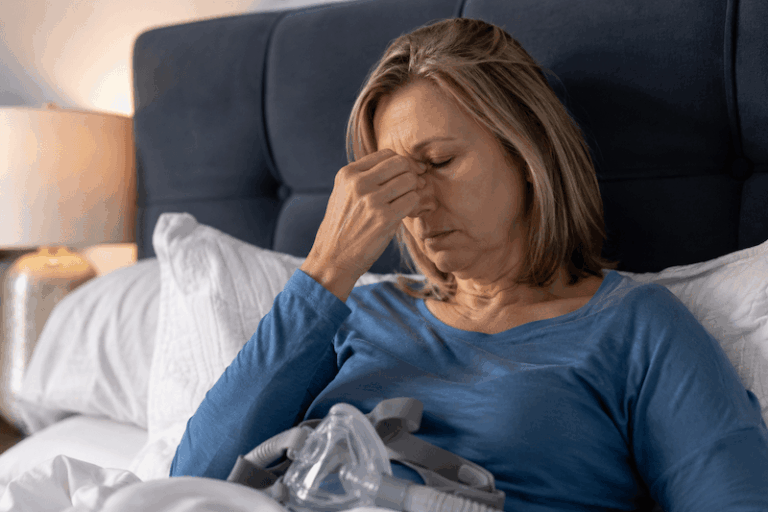
I use a ResMed AirSense 10 with a full face mask. I am a chronic mouth breather, which is why a full face mask rather than a nasal one has always made the most sense for me. On therapy my apnea is well controlled, and the difference in how I feel is not subtle.
The first thing I noticed was the headaches. I had been waking with morning headaches and migraines for a long time, and after I started treatment they faded out and have not come back in more than a decade. I have written about that resolution in more detail elsewhere, because it was one of the clearest differences between life before treatment and life after it. The exhaustion and the mental fog that had settled over everything lifted as well.
I do not say any of this to sell CPAP as a miracle. The start was genuinely an adjustment. My initial pressure was actually set too high, and I had to go back and have it lowered before the therapy really settled, which is a useful reminder that the first setup is not always the right one. The early weeks took some patience, and if that is where you are right now, I have written about getting through the anxiety of the early months. What carried me through was knowing what the alternative looked like, both from the research about cumulative cardiovascular damage and from the specific picture my own sleep study had given me of what was happening every night.
The adjustment period is temporary. The protection, as best I understand it from what I have read, is cumulative. Every night I use the machine is a night my cardiovascular system is not being put through the cycle my sleep study showed it had been under for years.
The daytime risk people underestimate
One part of the research that does not get enough attention is the daytime danger, specifically drowsy driving. People with untreated apnea are often far sleepier during the day than they realize, because they have slowly normalized a baseline of exhaustion and no longer notice how depleted they are. The AASM lists an increased risk of being involved in a serious motor vehicle accident among the effects of the condition. The exhaustion was a real part of my own life before treatment, and looking back, the thought of how little genuine rest I was operating on is not a comfortable one. The road risk is not only about the person who has the condition. It is about everyone else on the road as well.
What I would say to someone sitting on a diagnosis
If you have been diagnosed and you are in the phase of wondering whether treatment is really necessary, whether the machine is worth the hassle, whether you can just keep an eye on things for a while, I cannot give you medical advice because I am not qualified to give it. What I can tell you is what I found when I read about this, and what I concluded from living it.
The research I came across suggested that the damage from untreated apnea is slow and quiet rather than fast and obvious. You do not feel the cardiovascular strain. You do not feel the blood pressure surges at three in the morning. You simply accumulate risk in the background while explaining your symptoms away as stress, or age, or a busy life. The cases I read about were not people who ignored dramatic warning signs. They were people for whom the condition had been quietly doing its damage for a long time.
If you have not been diagnosed but you recognize the pattern, the tiredness that sleep never seems to fix, the morning headaches, the snoring with silent gaps in it, the fog that will not lift, please talk to your doctor. A home sleep test is simpler than most people expect and gives you real data to work with. A full sleep study goes further when it is needed. Getting an actual number on what happens while you sleep is the starting point for everything else.
I am not medically trained, and this whole article is one person’s reading and experience rather than clinical guidance. But that reading and that experience were enough to make me take this condition seriously, and I have been grateful for that every morning for more than a decade.
⚠️ MEDICAL DISCLAIMER This blog provides general information only and is not a substitute for professional medical advice, diagnosis, or treatment. Sleep apnea is a serious condition, and CPAP equipment should be used under proper medical supervision. Always consult your doctor or sleep specialist before starting, stopping, or changing any therapy. I share personal experiences as a CPAP user, not as a medical professional. Individual results vary. For medical guidance, please consult a qualified clinician or the American Academy of Sleep Medicine (aasm.org).