Sleep Apnea and Demographics: Who’s Most at Risk?

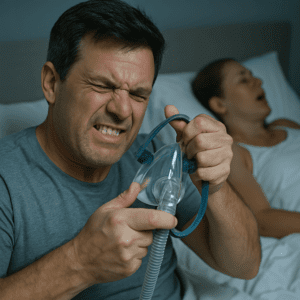
Sleep apnea gets described as if it could happen to anyone, and in a narrow sense that is true. But the numbers tell a more honest story. Some groups carry far more of the burden than others, and the gap is not small. Sex, age, body weight, ethnicity, airway anatomy, and a handful of lifestyle factors each move the risk, and they stack when they overlap. The reason this matters is not academic. The same profile that helps a clinician spot the condition quickly in one person is the reason another person goes undiagnosed for years.
I write about this from a specific seat. I was diagnosed with severe obstructive sleep apnea more than a decade ago, with an AHI of 51 at diagnosis. My training is in computer science, not medicine, so I share what I have read and what I have lived rather than anything I am qualified to prescribe. What I can do is point at the patterns that decide who gets caught early and who slips through, because I have spent a long time sitting with this condition and reading about it, and because plenty of people who have written to me since did not match the textbook picture at all.
This page walks through who is most at risk for obstructive sleep apnea and why, with particular attention to the people the standard profile tends to miss. If you mainly want the headline prevalence figures, I keep those on a separate page about how many people have sleep apnea. Here I am more interested in the shape of the risk than the raw counts.
The profile that catches some patients and misses many
Start with the stereotype, because it does real damage. The mental image many people still carry of a sleep apnea patient is the loud-snoring, overweight, middle-aged man. That picture is not wrong. It describes a large share of patients, and I fit a good part of it myself. The problem is that it also functions as a filter. A clinician who is half consciously matching patients against that image will catch the people who look the part and wave through the people who do not.
The undiagnosed share is the part that should get more attention. The consensus across major sleep medicine bodies is that most people with obstructive sleep apnea have never had a sleep study. They live with daytime fatigue, morning headaches, foggy thinking, and slowly worsening cardiovascular risk for years before anyone connects the dots. According to the American Academy of Sleep Medicine, an estimated 26 percent of adults between the ages of 30 and 70 have sleep apnea, and at least 25 million U.S. adults are affected. Prevalence has climbed over the past two decades, tracking the rise in obesity, but obesity is only part of the story.
So the demographics question is really two questions. Who actually develops obstructive sleep apnea, and who gets diagnosed once they have it? Those are not the same population, and the gap between them is where most of the harm lives.
Sex: a real difference, and a wider diagnosis gap
In study after study, men are roughly two to three times more likely to be diagnosed with obstructive sleep apnea than women. Part of that is genuine biology. Men tend to deposit more fat around the neck and upper airway. Their airways collapse differently during sleep, and there are hormonal effects on airway muscle tone that probably contribute. There is a real difference in the underlying condition.
But the diagnosis gap is wider than the disease gap, and that is the part worth understanding. Women with sleep apnea often do not fit the clinical script. They are less likely to be referred for a sleep study and more likely to be handed a diagnosis of insomnia, anxiety, or depression instead. They tend to report fatigue, morning headaches, mood changes, and unrefreshing sleep rather than thunderous snoring. Their bed partners may not flag the breathing pauses, because the pauses can be quieter and shorter. Their AHI can read mild on paper while their days are wrecked. I have written more about how the condition presents differently in women with sleep apnea.
The picture shifts around menopause. As hormone levels change, upper airway muscle tone drops, and prevalence in women rises toward male levels. So a woman who never fit the profile in her forties can move squarely into the risk band in her fifties without anything else about her changing. If your sleep is destroying your days but you have been told you do not fit the picture, the picture is the problem, not your symptoms. Push for testing.
Age: where the curve bends, at both ends
Risk rises with age, and it does not rise in a straight line. In adults, prevalence climbs steeply after about 40 and keeps climbing through the sixties and seventies before it plateaus. Several things drive that. Airway muscles lose tone. The surrounding tissues lose elasticity. Body composition drifts toward more central and neck fat even when total weight holds steady. And the conditions that travel with apnea, like high blood pressure and type 2 diabetes, both feed it and feed off it.
Older adults also accumulate medications. Some of them, particularly opioids, benzodiazepines, and other sedating drugs, suppress breathing or relax the airway further, which can tip mild sleep-disordered breathing into something more serious. The trap at this end of the spectrum is attribution. Fatigue, fog, and unrefreshing sleep get written off as ordinary aging, so the question never gets asked.
Children are a different story with a different trap. Pediatric sleep apnea usually traces to enlarged tonsils and adenoids, sometimes amplified by obesity, allergies, or a small jaw, and conditions like Down syndrome raise the risk considerably. The symptoms look nothing like the adult version. Instead of daytime sleepiness, children tend to show bedwetting, hyperactivity, trouble concentrating, behavioral problems at school, and restless sleep. A child who seems wired rather than tired can still have a real airway problem at night, which is why so much pediatric apnea gets read as a behavior issue first. I go into this further in my page on sleep apnea in children.
Body weight: the strongest factor you can change
Excess body weight is the single biggest modifiable risk factor for obstructive sleep apnea. Most adult patients fall in the overweight or obese range, and the relationship is mechanical. Fat around the neck narrows the airway from the outside. Fat in the chest and abdomen reduces lung volume and makes the airway more prone to collapse during sleep. More tissue, less room, easier to close.
The encouraging side of that mechanism is that even modest weight loss can help. The Wisconsin Sleep Cohort, one of the longest running studies of sleep disordered breathing, found that a 10 percent loss in weight predicted roughly a 26 percent decrease in AHI, while a 10 percent gain predicted about a 32 percent increase. Weight loss rarely cures established apnea on its own, but it can move someone from severe toward moderate, or from rigid nightly dependence toward more flexibility. Separately, intensive lifestyle programs in people with type 2 diabetes have been shown to reduce apnea severity over multi year follow up. I have covered the practical side of this in my piece on trying to reverse sleep apnea naturally, and the newer pharmaceutical angle in the Zepbound and sleep apnea question.
What gets lost in the weight conversation is that plenty of thin people have sleep apnea too. If your jaw is small or set back, if your airway is naturally narrow, if your tongue is large relative to your mouth, or if your tonsils are oversized, weight has very little to do with your risk. The condition called Pickwickian syndrome sits at the extreme obesity end of the spectrum, but the anatomical end is just as real and far less visible.
Ethnicity and ancestry
Risk varies measurably by ethnicity, and the pattern is more complicated than any single number. Studies have found higher prevalence of obstructive sleep apnea in African American, Hispanic, and several Asian populations compared with white populations of similar age and body mass index, and the drivers appear to differ across groups.
In African American populations, research points to both higher rates of obesity and differences in upper airway soft tissue. In several Hispanic populations, prevalence runs high alongside higher rates of metabolic risk factors. The most striking finding is in East and Southeast Asian populations, where prevalence stays high even at much lower body mass index than would predict it in Western groups. Researchers have consistently traced this to craniofacial structure, particularly a more set back lower jaw and a smaller airway space behind it. The practical lesson is that a slim Asian patient is not automatically a low-risk patient. The opposite can be true, which is one more way the standard profile misleads.
Family history threads through all of it. If a parent or sibling has been diagnosed, your own risk is meaningfully higher, partly because the physical traits that predispose an airway to collapse tend to run in families. I have written more about whether sleep apnea is genetic for anyone who recognizes the condition across several relatives.
Airway and craniofacial anatomy
This is the factor that gets the least public attention and probably deserves the most. The shape of your upper airway, the position of your jaw, the size of your tongue, and the size of your tonsils all decide whether the airway stays open while you sleep. A small or set back lower jaw, a trait called micrognathia, pushes the tongue back and crowds the airway. A high or narrow palate has a similar effect. Large tonsils can be a primary cause of obstruction, especially in children but sometimes in adults.
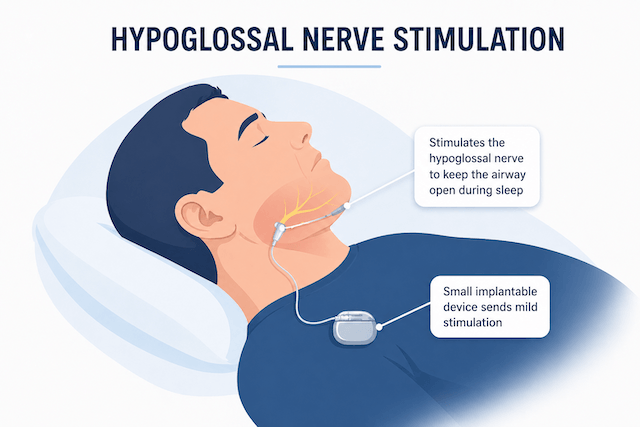
Anatomy is why the fit, slim person who does not snore loudly can still have severe sleep apnea. It does not ask permission and it does not show up in a mirror. It is also why some patients do well with approaches other than CPAP, such as oral appliances, positional therapy, or in selected cases surgery, while others do not. I have gone deeper on the full range, including surgical options like the Inspire implant, in my overview of alternative treatments for sleep apnea.
Lifestyle factors that tip the balance
Lifestyle rarely causes obstructive sleep apnea by itself, but it can move the dial enough to matter. A few factors stand out.
Smoking inflames the upper airway and swells the surrounding tissue, which narrows the passage during sleep. Smokers show higher prevalence than non smokers in most population studies, and the effect appears to scale with how much a person smokes. The same airway irritation can reach people who live with heavy smoke around them, not only the smoker.
Alcohol relaxes the muscles of the upper airway, so a borderline airway becomes much more likely to collapse. Many people with mild or moderate apnea notice that their snoring is worse and their breathing pauses last longer on nights they have had a few drinks, and a drink close to bedtime is the worst case. Sedatives and opioids act the same way, often more strongly than alcohol, which is why your sleep clinician should know about any you take.
Sleep position matters for a subset of patients whose airway collapses far more readily on the back than on the side. For these people, learning to stay off their back can cut events substantially on its own.
The conditions that travel with sleep apnea
Untreated obstructive sleep apnea sits in a tight loop with several other conditions, and the relationships run in both directions. Apnea drives them, and they make apnea worse. High blood pressure is the cleanest example. The repeated drops in blood oxygen and the surges in nervous system activity that come with each apnea push blood pressure up, especially the overnight pressure that should fall and does not. Apnea and hypertension are so tightly linked that hypertension which resists medication is often a clue that untreated apnea is underneath it.
Type 2 diabetes overlaps in both directions through disrupted sleep and shared metabolic ground. Cardiovascular disease, atrial fibrillation, and stroke risk all show elevated rates in untreated apnea, which I cover in more depth in my pages on the cardiovascular link and the stroke connection. Mental health conditions often travel alongside as well, including depression and anxiety, which I write about under sleep apnea and mental health. Morning headaches and migraine are common, and I described my own experience of those easing on therapy in sleep apnea and migraine headaches. If you carry several of these conditions and your sleep is poor, the apnea question belongs on the table.
Why the demographics actually matter
Put the threads together and the stakes become clear. The clinician who pictures the typical patient as a heavy, snoring, middle aged man will catch many real cases. The same picture will also miss the slim woman with insomnia and morning headaches, the lean patient with a set back jaw, the older adult whose fatigue gets blamed on age, the child whose restlessness gets blamed on temperament, and the postmenopausal woman whose changing hormones just crossed her into a higher risk band.
If you suspect you have sleep apnea and you have been brushed off, the demographics conversation is worth having on your own terms. The symptoms worth taking seriously include loud or chronic snoring, witnessed breathing pauses, gasping or choking awakenings, unrefreshing sleep, daytime sleepiness or sudden fatigue, morning headaches, foggy concentration, mood changes, and frequent night time bathroom trips. I keep the full rundown on my page about sleep apnea symptoms, including the specific question of whether you have ordinary snoring or something more.
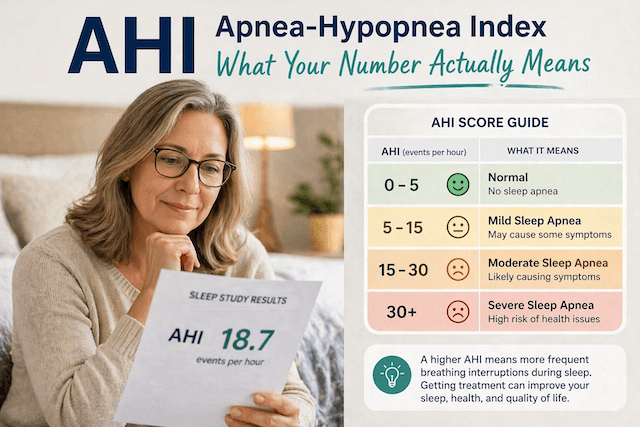
For most adults with a reasonable suspicion, a home sleep test is now the practical first step, and I have written about the WatchPAT One device for exactly that reason. For the broader picture of what testing involves and what the numbers mean afterward, see my overview of the diagnostic process and what your AHI number is actually telling you.
Where I fit, briefly
For what it is worth, my own AHI of 51 put me firmly in the severe category. I was an adult man whose wife was the first person to take the breathing pauses seriously. Looking back, parts of the demographic profile fit me cleanly and other parts did not, and none of it makes me an authority. It does mean I have spent the better part of a decade thinking about who is at risk and why, while sleeping every night on a ResMed AirSense 10 with a full face mask, watching the ResMed AirSense 11 as my likely next upgrade, and packing a smaller ResMed AirMini when the bigger machine is not practical for travel.
The longer I live with this, the less I trust tidy risk profiles and the more I trust patient stories. Plenty of people who get diagnosed never fit the textbook. Plenty of people who fit the textbook still got dismissed for years. If you are sitting with a suspicion right now, let the demographics widen the net rather than narrow it, and get tested.
The takeaway
Sleep apnea risk is layered. Sex, age, weight, ethnicity, anatomy, and lifestyle each shift the odds, and for most people the real risk is the sum of several of these rather than any one. The condition is undertreated across every group, but it is especially undertreated in the people who do not match the cultural shorthand for what an apnea patient looks like. The most useful thing demographics can do is broaden suspicion, not confirm a stereotype. If your sleep is broken and your days show it, the right next step is the same no matter which boxes you tick. Talk to a clinician, and where it makes sense, get a sleep study.
If you have already been diagnosed and you are early in therapy, my page on living with sleep apnea is where I tried to write down the things I wish someone had told me at the start.
⚠️ MEDICAL DISCLAIMER This blog provides general information only and is not a substitute for professional medical advice, diagnosis, or treatment. Sleep apnea is a serious condition, and CPAP equipment should be used under proper medical supervision. Always consult your doctor or sleep specialist before starting, stopping, or changing any therapy. I share personal experiences as a CPAP user, not as a medical professional. Individual results vary. For medical guidance, please consult a qualified clinician or the American Academy of Sleep Medicine (aasm.org).