Positional Therapy for Sleep Apnea: Does it Work?
“This post contains affiliate links. I may earn a commission if you buy through these links at no extra cost to you. Read my Disclaimer for more details.”
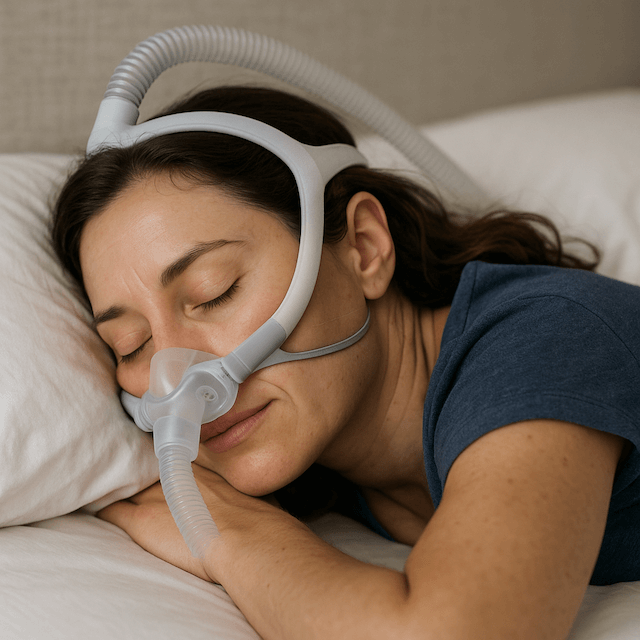
When I was first diagnosed with severe obstructive sleep apnea (OSA), my world shifted. My sleep study showed an apnea-hypopnea index (AHI) so high that my doctor told me, “CPAP isn’t optional — it’s life-saving.”
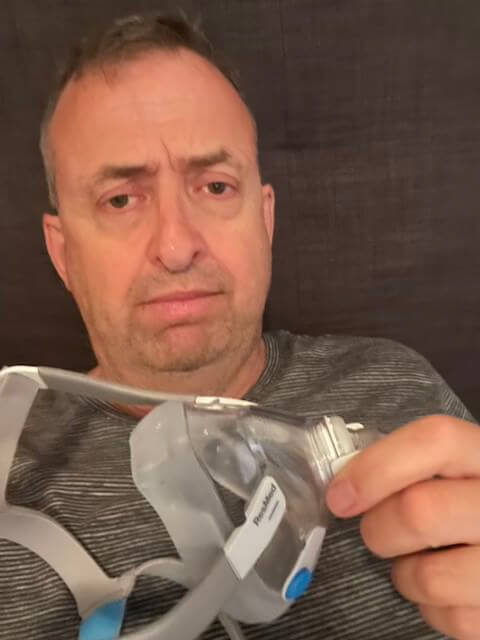
I strapped on the mask, and honestly? My CPAP journey has been smoother than most. I adapted quickly, and now I can’t imagine sleeping without it. But not everyone shares that experience. I meet people all the time who say:
“I just can’t get used to CPAP. Is there any other way?”
That’s when positional therapy comes up. The concept sounds almost laughably simple: stop sleeping on your back, and your airway stays clearer. No mask, no machine, no forced air.

But does it really work? And if so, for whom? Let’s dig into the science, the devices, and whether positional therapy could be your bridge to better sleep.
When Positional Therapy Changed Everything: David’s Story
Last fall, I got an email from David, a 38-year-old software engineer from Seattle. He’d been diagnosed with mild sleep apnea (AHI of 14) six months earlier and had been prescribed CPAP. But after three months of trying, he just couldn’t make it work.
“I’ve tried four different masks,” he wrote. “Full face, nasal, nasal pillows—doesn’t matter. I rip them off in my sleep within 2-3 hours. I wake up feeling like I’m suffocating. My wife says I’m a mess. Is CPAP really the only option, or am I just a failure at this?”
I asked him to send me his sleep study report. That’s when I noticed something interesting: his AHI was 14 overall, but when I looked at the breakdown by position, it told a completely different story:
- Back sleeping: AHI of 24 (moderate OSA)
- Side sleeping: AHI of 4 (essentially normal)
“David,” I wrote back, “you’re not a CPAP failure. You might not even need CPAP. You have textbook positional sleep apnea. Have you tried positional therapy?”
He hadn’t. His doctor had briefly mentioned “sleeping on your side” but never explained it as an actual treatment option with devices and evidence behind it.
I suggested he try the Rematee, which I feature below.
Six weeks later, David sent me his update:
“Jeremy, I can’t believe this. I’m sleeping through the night for the first time in a year. No mask, no machine, just a simple belt that keeps me off my back. I did a follow-up home sleep test last week, and my AHI is down to 6. My wife says I barely snore anymore. I wake up feeling like a human being again.”
He added: “I spent six months fighting with CPAP masks, thousands of dollars on equipment, and countless sleepless nights all because nobody told me that for MY type of apnea, something this simple could work.”
David’s not alone. About 30-50% of people with obstructive sleep apnea have positional OSA (POSA)—meaning their breathing problems are significantly worse when lying on their backs. For these people, positional therapy isn’t just a Band-Aid. It can be genuinely life-changing.
But here’s what David’s story also teaches us: positional therapy isn’t for everyone. It worked for him because his sleep study showed clear positional differences. For someone like me with severe OSA across all positions, it wouldn’t be enough.
So let’s break down exactly who benefits from positional therapy, how it works, what the science says, and how to know if it’s right for you.
What is Positional Therapy?
Positional therapy is a non-invasive treatment for obstructive sleep apnea that works by preventing you from sleeping on your back. When you lie supine (flat on your back), gravity pulls your tongue and soft palate backward, narrowing the airway. This increases the risk of snoring and apnea events.
The goal of positional therapy is simple: encourage side-sleeping. By doing so, airflow improves, apneas decrease, and sleep quality may rebound.
A key fact
According to the American Academy of Sleep Medicine, 30–50% of people with OSA have positional obstructive sleep apnea (POSA) — meaning their breathing problems are significantly worse when lying on their backs.
Your Body Wants You to Lie on Your Back!
Think of your airway like a garden hose. When you sleep on your back, it’s as if someone stepped on the hose — the flow is restricted. Rolling to your side removes that pressure, letting air pass through more freely.
But here’s the catch: your body loves rolling onto its back, especially in deep sleep. That’s why positional therapy devices exist. They’re like training wheels for your sleep — nudging you, reminding you, or outright preventing you from back-sleeping.
And while CPAP works regardless of sleep position, positional therapy might be enough for people with mild or moderate OSA, especially those who only have trouble when back-sleeping.
What Does the Research Actually Say?
Before we dive into products and methods, let’s look at what medical research tells us about positional therapy’s effectiveness.
The Science Behind Positional Sleep Apnea
Multiple peer-reviewed studies support positional therapy for the right candidates:
Effectiveness for Positional OSA:
A 2021 meta-analysis published in Sleep Medicine Reviews analyzed 23 studies involving over 1,500 patients with positional obstructive sleep apnea. The findings:
- Positional therapy reduced AHI by an average of 54% in patients with positional OSA
- Treatment success rate (AHI reduced to under 5): 34-56% depending on severity
- Side effects: minimal compared to CPAP or surgery
Who Has Positional OSA?
According to research published in the Journal of Clinical Sleep Medicine, approximately 30-50% of people with OSA have positional sleep apnea, defined as having at least twice as many apneas while sleeping on their back compared to side-sleeping.
Long-term Adherence:
One challenge with positional therapy is sticking with it. Studies have found that:
- 75% of patients were still using positional therapy devices after 6 months
- This is comparable to or better than CPAP adherence rates for mild OSA
- Comfort of the device was the biggest predictor of long-term use
Combining with Other Treatments:
Research from other studies shows that combining positional therapy with weight loss or oral appliances can improve outcomes significantly:
- Weight loss + positional therapy: 73% improvement in mild OSA patients
- Oral appliance + positional therapy: Reduced AHI by an additional 30% compared to oral appliance alone
What Medical Organizations Say
American Academy of Sleep Medicine (AASM):
The AASM’s clinical practice guidelines include positional therapy as a recommended treatment option for patients with positional obstructive sleep apnea, particularly those with:
- Mild to moderate OSA (AHI 5-30)
- Supine-dependent breathing problems
- CPAP intolerance or refusal
National Heart, Lung, and Blood Institute (NHLBI):
The NHLBI recognizes positional therapy as one of several behavioral approaches to managing obstructive sleep apnea, noting that sleeping position can significantly affect airway collapse in many patients.
The Bottom Line from Research
Positional therapy is not a gimmick. It’s a legitimate, evidence-based treatment option, but only for the right candidates. The research is clear:
✅ Works well for: Mild to moderate positional OSA (back-sleeping makes it worse)
✅ Success rate: 50-60% reduction in AHI for positional OSA patients
✅ Adherence: Comparable to or better than CPAP for mild cases
❌ Doesn’t work for: Severe OSA or non-positional OSA
The key is getting a proper sleep study that tracks position. Without that data, you’re just guessing.
So, How Do You Actually Use Positional Therapy?
Step 1: Identify if your apnea is positional
- If possible, review your sleep study. Look for differences in AHI between back vs. side positions.
- If you don’t have a recent study, consider a home sleep test.
Step 2: Choose a method
There are several approaches:
- DIY tricks (tennis ball sewn into a shirt, backpacks, pillow barriers).
- Commercial positional therapy devices (belts, wedges, pillows, vibration sensors).
- Smart wearables (devices that buzz when you roll onto your back).
Step 3: Stay consistent
- Use the device nightly.
- Track results with a CPAP machine (if you use one) or a sleep tracker.
- Reassess with your doctor after 4–6 weeks.
Step 4: Troubleshoot
- If discomfort wakes you, adjust straps or padding.
- If you “cheat” and roll onto your back, consider a firmer system (like a belt or wedge).
- If symptoms persist, you may need a different therapy altogether.
DIY Positional Therapy Methods: Start Here Before Buying Anything
Before spending $50-$300 on commercial devices, try these free or low-cost methods. Many people find they work just as well—they’re just less comfortable for long-term use.
Method 1: The Classic Tennis Ball Technique
This is the original positional therapy hack that’s been studied in clinical research since the 1980s.
What you need:
- Old t-shirt or sleep shirt
- 2-3 tennis balls
- Needle and thread (or fabric glue)
How to make it:
- Lay the shirt flat, back side up
- Sew a pocket or small pouch between the shoulder blades
- Insert 2-3 tennis balls (side by side, not stacked)
- Sew or secure the opening so balls can’t escape
- Wear to bed over your regular pajamas
How it works: When you try to roll onto your back, the tennis balls create an uncomfortable pressure point, unconsciously training you to stay on your side.
Pros:
✅ Free (uses items you probably have)
✅ Clinically proven to work in research studies
✅ Easy to make in 15 minutes
Cons:
❌ Uncomfortable—can wake you up frequently at first
❌ Tennis balls can deflate or shift during the night
❌ Looks ridiculous (but hey, so does a CPAP mask)
❌ May cause pressure point soreness
Pro tip from a reader: “I used two racquetballs instead of tennis balls. They’re harder so they don’t deflate, and the smaller size meant less bulk. Game-changer for me.” — Mike R., Portland
Clinical evidence: A study in the Archives of Internal Medicine found that the tennis ball technique reduced AHI by an average of 50% in positional OSA patients. It’s not fancy, but it works.
Method 2: The Backpack Method (More Comfortable Alternative)
This is what I recommend people try first—it’s more comfortable than tennis balls and uses adjustable padding.
What you need:
- Small backpack or fanny pack
- Soft items for stuffing: pillow, towels, bubble wrap, pool noodle sections
How to do it:
- Fill the backpack with soft but bulky items
- Wear it backwards (on your back) over your pajamas
- Adjust the straps so it sits between the shoulder blades
- Make sure it’s snug but not cutting off circulation
How it works: Same principle as tennis balls, but with a larger, softer surface area that’s less likely to cause pressure point pain.
Pros:
✅ Much more comfortable than tennis balls
✅ Adjustable—add or remove filling based on comfort
✅ You probably already own a small backpack
✅ Easy to travel with
Cons:
❌ Can be hot in summer
❌ May shift during sleep if straps are too loose
❌ Looks even more ridiculous than the tennis ball shirt
Reader success story: “I used a small CamelBak hiking backpack stuffed with a travel pillow. Worked perfectly for three months until I saved up for a Rematee belt.” — Sarah L., Denver
Method 3: The Pillow Fortress Strategy
This is the least restricting option—no devices on your body, just strategic pillow placement.
What you need:
- 1-2 body pillows, or 3-4 regular pillows
How to do it:
- Lie on your side in bed
- Place a body pillow along your back, lengthwise
- Optional: Add another pillow or rolled blanket for extra bulk
- The pillows create a physical barrier preventing back-rolling
How it works: Instead of using discomfort to keep you off your back, this method uses a physical obstacle.
Pros:
✅ Most comfortable option—no devices on your body
✅ Uses items you already have
✅ Easy to adjust and customize
✅ Can double as support for side-sleeping comfort
Cons:
❌ Least effective method—pillows shift easily during sleep
❌ Takes up significant bed space (might annoy your partner)
❌ Doesn’t work well for active sleepers who move a lot
❌ No “training” effect since there’s no discomfort
Best for: People just starting positional therapy who want the gentlest introduction, or those with shoulder/back pain who need extra support while side-sleeping.
Method 4: Elevated Upper Body (Wedge Pillow)
This combines positional therapy with gravity-assisted breathing—a two-for-one approach.
What you need:
- Wedge pillow (30-45 degree incline), or
- Bed risers to elevate the head of your bed
How to do it:
- Place a wedge pillow on your bed, or raise the head of your bed frame 4-6 inches
- Sleep on your side on the elevated surface
- Gravity helps keep your airway open while elevation makes back-sleeping less appealing
How it works: Elevation reduces airway collapse due to gravity, while the angle makes back-sleeping uncomfortable (you tend to slide down).
Pros:
✅ Also helps with acid reflux, snoring, and sinus congestion
✅ More natural than strapping something to your body
✅ Partner-friendly—doesn’t take up their bed space
✅ Some insurance plans cover wedge pillows
Cons:
❌ Wedge pillows cost $50-150
❌ Can cause you to slide down during sleep (need fitted sheets)
❌ May take time to get used to elevated sleeping
❌ Not as portable for travel
Method 5: The Walmart Special (Ultra-Budget Option)
No money at all? Try this tonight.
What you need:
- Nothing. Seriously.
How to do it:
- Stuff several pairs of rolled-up socks into the back of your pajama shirt
- Use safety pins to secure a rolled hand towel across your upper back
- Sleep with your arm under your pillow to make side-sleeping more stable
How it works: Creates just enough bulk and discomfort to discourage back-sleeping without spending a dime.
Pros:
✅ Literally free
✅ Can do it tonight
✅ Tests whether positional therapy might work for you
Cons:
❌ Very uncomfortable—not sustainable long-term
❌ Items can shift or fall out
❌ You’ll look like you’re smuggling something
Use case: This is a proof-of-concept test. Try it for 3-5 nights. If you notice you’re sleeping better and your partner says you’re snoring less, then invest in a real device.
My Honest Recommendation: The DIY Testing Protocol
Here’s what I tell people who ask me where to start:
Week 1-2: Try the backpack method or tennis ball technique
- Costs nothing or under $5
- Tests whether positional therapy helps YOUR specific sleep apnea
- If it doesn’t work after two weeks, you’ve lost nothing
- If it works but is uncomfortable, you know a commercial device is worth buying
Week 3-4: If DIY works but hurts, upgrade to a commercial device
- Rematee Belt (~$50-80) for something simple and portable
- MedCline system ($300+) if you also have reflux or shoulder pain
- Night Shift sensor ($200) if you want smart tech that vibrates instead of blocking
Track your results:
- Morning energy level (1-10 scale)
- Partner-reported snoring (better/worse/same)
- CPAP data if you’re using CPAP alongside positional therapy
- Any morning headaches, dry mouth, or congestion
Don’t invest hundreds of dollars until you’ve proven positional therapy works for your body. Use DIY methods as your low-risk experiment.
And if none of it helps after a month? That’s valuable data too—it means your sleep apnea probably isn’t primarily positional, and you need to look at other treatment options like CPAP, oral appliances, or surgery.
Let’s Compare Some Products
Let’s look at some leading positional therapy devices on the market right now.
Rematee Positional Belt

A Smart, Travel-Friendly Anti-Snore Belt That Promotes Side Sleeping
The Rematee Positional Belt straps around your chest or waist with inflatable “bumpers” on the back. When you try to roll over, the bumpers gently block you. Think of it like wearing a life vest in bed.
- Pros: Lightweight, portable, clinically studied.
- Cons: Some users report discomfort or sweating.
If you’re a back sleeper who snores—or has mild positional sleep apnea—this chest-worn anti-snore belt offers a refreshingly simple solution.
Unlike bulky vests or buzz-based alarms, this device uses inflatable bumpers along the back to gently guide you onto your side, where your airway stays more open. It’s a passive approach, but surprisingly effective for many.
Made from soft neoprene, the belt feels smooth against your skin and holds its shape over time. Shoulder straps and adjustable Velcro keep everything in place without digging in. The inflatable bumpers let you fine-tune how firm or soft the support feels—and when you’re traveling, just deflate them and toss the belt in your bag.
What I like most is the balance between comfort, portability, and price. It’s approachable for beginners and makes a solid backup for anyone who travels with a CPAP.
Key features:
- Inflatable bumpers prevent back sleeping
- Soft neoprene material for all-night comfort
- Shoulder straps and Velcro keep it secure
- Three adjustable sizes for a better fit
- Packs flat when deflated—great for travel
- One-year warranty included
- May qualify for private insurance reimbursement
If you’ve struggled with other positional devices or want a gentler, lower-cost alternative to CPAP, this might be the fix you’ve been hoping for.
MedCline Acid Reflux Relief Wedge + Body Pillow System

MedCline Reflux Relief System: Side-Sleeping Support for GERD and Snoring
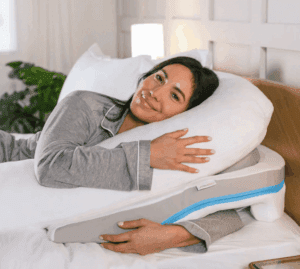
The MedCline Wedge System combines a sloped wedge with a body pillow, elevating your torso and keeping you comfortably on your side. Originally designed for acid reflux, it doubles as a positional therapy solution.
Unlike basic wedge pillows, this system combines a full-length body pillow with a reclined positioning wedge to support the upper body at a clinically proven angle. The design promotes left-side sleeping at a 15–20° incline, the ideal posture for reducing acid reflux and nighttime regurgitation, while also helping minimize snoring caused by airway compression.
The setup feels like sleeping in a supportive cradle—designed not just for comfort, but for long-term relief.
Key features:
- Dual-pillow system promotes side sleeping and upper body elevation
- Designed specifically for acid reflux, GERD, and snoring relief
- Clinically tested in 7 independent trials
- Removable, machine-washable pillowcases
- Comes with body pillow + positioning wedge for full-body support
- Available in three sizes based on height
- Not recommended for sleepers with lower back or hip injuries
Height Guide:
- Small: 4’10”–5’4”
- Medium: 5’10”–5’11”
- Large: 6’0” and up
One important note: the 15–20° incline can be challenging for those with lower back issues, hip injuries, or spinal conditions like herniated discs or scoliosis. But for those without those limitations, this setup can dramatically improve nighttime comfort and reduce GERD-related waking.
MedCline Shoulder Relief System

MedCline Shoulder Relief System: Side-Sleeping Without the Pain
If chronic shoulder pain keeps you up at night—or makes side sleeping impossible—the MedCline Shoulder Relief System was made with you in mind.
This patented, three-piece sleep setup gently lifts and supports your entire body while taking pressure off your downside shoulder. Instead of waking up sore or numb, your arm drops into a built-in shoulder pocket, while the full-length body pillow helps align your upper body and spine. The result? A neutral, supported arm position that reduces strain, eases pain, and promotes healing.
It’s especially helpful for side sleepers recovering from rotator cuff injuries, frozen shoulder, bursitis, or general joint discomfort that worsens at night.
Why it works:
- Designed to relieve chronic or injury-related shoulder pain
- Promotes comfortable left or right side sleeping
- Built-in arm pocket eliminates direct shoulder pressure
- Therapeutic body pillow supports torso and arm alignment
- Creates a gentle 10° incline for full-body support
- Takes up half of a queen-sized bed
- Available in two sizes:
- Small/Medium: 4’10”–5’9”
- Large: 5’10” and up
It’s worth noting that this incline-based design may not be a good fit for those with lumbar spine or hip conditions, as the angled setup can be uncomfortable for some.
But for side sleepers battling nightly shoulder pain, it’s one of the few systems designed specifically for long-term relief—without sacrificing comfort.
- Pros: Comfort-focused, great for side sleepers with pain.
- Cons: Larger footprint, premium cost.
Comparison Table of these Three Products
| Device | Best For | Comfort Level | Portability | Price Range |
|---|---|---|---|---|
| Rematee Belt | Travelers, simple back-sleep prevention | Moderate | High | 💲 |
| MedCline Wedge System | People with reflux + apnea | Very High | Low | 💲💲💲 |
| MedCline Shoulder Relief | Side sleepers with pain + apnea | Very High | Low | 💲💲💲 |
So, which should you choose?
- If you’re just testing positional therapy for the first time, → Rematee Belt is the simplest entry point.
- If you also battle nighttime reflux, → MedCline Wedge System pulls double duty.
- If shoulder pain keeps you from side-sleeping, → MedCline Shoulder Relief System may solve two problems at once.
For mild to moderate OSA, these devices can significantly reduce AHI scores and snoring. But for severe OSA (like mine), positional therapy is rarely enough on its own. In that case, it might be useful as a supplement to CPAP, oral appliances, or weight management.
Make it Work for You
Here’s where you take control. Instead of passively suffering through poor sleep, design your own positional therapy plan:
- Choose your device (belt, wedge, or pillow system).
- Pair it with lifestyle habits (weight loss, avoiding alcohol before bed, keeping a consistent schedule).
- Track your sleep data (apps, smartwatches, or CPAP download reports).
- Adjust until you find the sweet spot that works for you.
Remember: sleep therapy isn’t one-size-fits-all. Some people thrive on CPAP. Others do well with oral appliances. And for the right candidates, positional therapy can be a breakthrough.
FAQ
Does positional therapy work for severe sleep apnea?
Not usually. Severe OSA often requires CPAP or combination therapy. Positional therapy may help reduce events but rarely eliminates them.
Can I use positional therapy with CPAP?
Yes. In fact, combining them can lower pressure requirements and improve comfort.
Isn’t sewing a tennis ball in a shirt the same thing?
It’s a DIY version, and it can work short-term. But commercial devices are more comfortable and designed for long-term use.
Do doctors recommend positional therapy?
Yes, but usually only for people with positional OSA confirmed by a sleep study.
What’s the biggest drawback?
Comfort and adherence. If you can’t stick with the device night after night, results fade.
The Verdict: Does Positional Therapy Actually Work for Sleep Apnea?
Let’s cut through the marketing hype and give you a straight answer based on clinical research and real-world experience.
✅ YES, Positional Therapy Works If…
You have the right type of sleep apnea:
- Mild to moderate OSA (AHI between 5-30)
- Your sleep study shows at least 2x more apneas when back-sleeping vs. side-sleeping
- You don’t have severe anatomical airway obstruction (like very large tonsils)
Expected results for positional OSA patients:
- 40-60% reduction in AHI on average
- Significant reduction in snoring (often 70%+ decrease)
- Better sleep quality and daytime energy
- Improvement usually seen within 2-4 weeks
Real-world success rate: About 50-60% of people with confirmed positional OSA see significant improvement with consistent use.
❌ NO, Positional Therapy Probably Won’t Work If…
Your sleep apnea is too severe:
- AHI over 30 (severe OSA category)
- Apneas happen equally in all sleeping positions
- You have central sleep apnea (not obstructive type)
- Oxygen levels drop below 85% during sleep
You have these complicating factors:
- Severe obesity (BMI over 40)
- Very large neck circumference (men >17″, women >16″)
- Significant nasal obstruction or structural issues
- Alcohol use close to bedtime (relaxes throat muscles regardless of position)
Real talk from someone with severe OSA: My AHI was 47 across all positions—back, side, stomach, didn’t matter. Positional therapy wouldn’t have touched it. I needed CPAP, period. Know your numbers and be realistic about what positional therapy can do.
⚠️ MAYBE – Positional Therapy Works as a Supplement If…
You’re already using other treatments:
- Using CPAP but want to lower pressure requirements
- Have an oral appliance, but still have some events
- Combining with weight loss and lifestyle changes
- In between treatments (waiting for surgery, dental device, etc.)
Supplemental benefits:
- Can reduce CPAP pressure by 2-4 cm H2O in some cases
- Makes CPAP more comfortable (less air pressure needed)
- Improves oral appliance effectiveness
- Maintains progress during weight loss journey
Many people use positional therapy as one tool in a multi-pronged approach rather than a standalone solution.
The Real Question: Is It Worth Trying?
Here’s my decision framework for whether positional therapy is worth your time:
HIGH PRIORITY – Try It First:
- Mild OSA (AHI 5-15) with clear positional component
- CPAP intolerance (you’ve tried but can’t adapt)
- Needle-phobic or surgery-averse
- Want to avoid lifelong equipment dependence
- Young, otherwise healthy, motivated to make it work
MEDIUM PRIORITY – Worth Exploring:
- Moderate OSA (AHI 15-30) with some positional component
- Already using CPAP but having comfort issues
- Combining with weight loss efforts
- Pregnant (when CPAP might not be ideal)
LOW PRIORITY – Focus on Other Treatments:
- Severe OSA (AHI over 30)
- OSA happens equally in all positions
- Central or complex sleep apnea
- Significant obesity or anatomical issues
- Daytime sleepiness affecting work/driving safety
What Success Looks Like (Real Expectations)
If positional therapy works for you, here’s what you should see:
Week 1-2:
- Learning curve—uncomfortable at first
- May wake up more frequently initially
- Starting to stay on side more consistently
Week 3-4:
- Adapting to the device or method
- Noticeable reduction in morning headaches
- Partner reports less snoring
- Beginning to feel more rested
Month 2-3:
- Sleeping through the night more consistently
- Significant improvement in daytime energy
- CPAP data (if using) shows lower AHI
- Method feels more natural, less intrusive
Month 4-6:
- Positional sleeping may become habitual
- Some people can eventually reduce device use
- Sustained improvement in sleep quality
- Clear “before and after” difference
If you don’t see ANY improvement by week 6, positional therapy probably isn’t effective for your specific case.
The One Number That Matters Most
Here’s the single most important factor in determining if positional therapy will work:
Your supine AHI vs. non-supine AHI ratio
This is in your sleep study report. Look for:
- Supine AHI (back sleeping)
- Non-supine AHI (side/stomach sleeping)
If the ratio is 2:1 or higher (twice as many events on your back), you’re an excellent candidate.
Example:
- Back-sleeping AHI: 24
- Side-sleeping AHI: 6
- Ratio: 4:1 → Excellent candidate for positional therapy
Another example:
- Back-sleeping AHI: 32
- Side-sleeping AHI: 28
- Ratio: 1.1:1 → Poor candidate, apnea isn’t primarily positional
Don’t have this data? Request your full sleep study report from your doctor. If you only did a home sleep test that didn’t track position, consider getting a lab study if you’re serious about trying positional therapy.
My Professional Opinion (As a Sleep Apnea Researcher, Not a Doctor)
After talking to many people in the sleep apnea community and reading through years of research, here’s what I believe:
Positional therapy is underutilized. Too many doctors jump straight to CPAP for everyone with OSA, even mild cases where positional therapy might be sufficient. If you have positional OSA and your doctor didn’t even mention this option, that’s a problem.
But it’s also over-promised by some device makers. Marketing makes it sound like anyone can cure their sleep apnea by just sleeping on their side. That’s not true. The science is clear: it works for a specific subset of OSA patients.
The ideal candidate is someone like David (from the story at the top): mild to moderate OSA, clear positional component, motivated to try it, willing to give it 6-8 weeks before judging results.
The worst candidate is someone like me: severe OSA across all positions, needs CPAP regardless of sleep position, and using positional therapy would be actively dangerous because it wouldn’t address the problem.
Bottom line: Get the data, know your numbers, be realistic about expectations, and give it an honest try if you’re a good candidate. But don’t waste months struggling with positional therapy if your sleep apnea is severe or non-positional. CPAP isn’t fun, but it’s also not negotiable for some of us.
Your life and health are too important to mess around with inadequate treatment.
Final Thoughts: Finding the Right Treatment for YOUR Sleep Apnea
I’ll be completely honest with you: positional therapy isn’t for me. With an AHI of 60, that didn’t change whether I slept on my back, side, or standing on my head (kidding), CPAP is my lifeline. There’s no way around it.
But I’ve talked to enough people like David—smart, motivated, suffering with mild positional OSA—who spent months or years fighting with CPAP when a $60 belt could have solved their problem.
Here’s what frustrates me: The sleep medicine world sometimes treats this like it’s all-or-nothing. Either you have sleep apnea and you need CPAP forever, or you don’t have sleep apnea and you’re fine. But there’s a huge middle ground where positional therapy, weight loss, oral appliances, or combination approaches can be genuinely life-changing.
If you’re reading this and thinking, “Could this work for me?” Here’s your action plan:
- Get your sleep study data – Specifically ask for supine vs. non-supine AHI
- If you’re a 2:1 ratio or higher – You’re a strong candidate, try DIY methods first
- Give it an honest 6-8 week trial – Track your results, energy levels, and partner feedback
- If it works – Great! Keep doing it and maybe upgrade to a comfortable device
- If it doesn’t work – You tried, you learned, now explore CPAP or other options without wondering “what if”
The goal isn’t to find the coolest treatment or the easiest treatment. The goal is to find the treatment that keeps you alive, healthy, and functional.
For some people, that’s a simple belt that keeps them off their back.
For others (like me), it’s a CPAP machine that forces air into their airway all night.
For many, it’s a combination of approaches.
There’s no shame in any of it. There’s only the choice between treating your sleep apnea or letting it slowly destroy your health, relationships, and quality of life.
Choose treatment. Choose life. Choose waking up feeling like a human being again.
If you’re curious about positional therapy and think you might be a candidate, explore these options:
- 🛒 Rematee Positional Belt – Simple, portable, clinically studied
- 🛒 MedCline Acid Reflux Relief Wedge – If you also have reflux
- 🛒 MedCline Shoulder Relief System – For side sleepers with shoulder pain
And if you have questions or want to share your positional therapy experience, drop a comment below. I read every one, and your story might help someone else make the right decision for their health.
One night of good sleep could change everything. Don’t wait.
⚠️ MEDICAL DISCLAIMER This blog provides general information only and is not a substitute for professional medical advice, diagnosis, or treatment. Sleep apnea is a serious condition, and CPAP equipment should be used under proper medical supervision. Always consult your doctor or sleep specialist before starting, stopping, or changing any therapy. I share personal experiences as a CPAP user, not as a medical professional. Individual results vary. For medical guidance, please consult a qualified clinician or the American Academy of Sleep Medicine (aasm.org).