Can a Deviated Septum Cause Snoring? Mine Still Did
In my younger days, I wanted to appear cool at parties, so I’d grab someone’s cigarette and blow smoke out of one nostril. People were fascinated – they thought it was some kind of trick. It wasn’t. My septum was completely deviated, with one side totally blocked!

This diagram shows a slight deviation. Mine was extreme, where my septum touched the other side of my nose.
I figured once I got surgery to fix it, my terrible snoring would finally stop.
I was wrong.
After septoplasty (the procedure to straighten a deviated septum), I dealt with the recovery, waited for the swelling to go down, and expected to finally sleep quietly. My breathing definitely improved – I could actually breathe through both nostrils for the first time in years. But I still snored. Badly. You could still hear me snoring from another room.
It took a sleep study some years later to reveal that what was really going on was that I had severe obstructive sleep apnea with an AHI of 51. My deviated septum wasn’t helping, but it wasn’t the root cause of my snoring. I needed CPAP therapy, not just surgery.
That was over 10 years ago. I’ve used my ResMed CPAP machine every single night since, and my AHI is now around 4. The migraines I’d suffered with for years disappeared almost immediately after starting treatment.

Here’s what I wish I’d known before my septoplasty: Yes, a deviated septum can cause snoring – but if you have sleep apnea, fixing your nose won’t fix the problem. And many people who snore loudly enough to consider surgery have both issues.
Let me break down the connection between deviated septums and snoring, when surgery helps, when it doesn’t, and why you need a sleep study before you go under the knife.
The Short Answer: Yes, But It’s Complicated
A deviated septum can absolutely cause or worsen snoring. When your nasal septum, the wall between your nostrils, is crooked or off-center, it restricts airflow through your nose. This forces you to breathe through your mouth, especially during sleep, which is a major contributor to snoring.
But here’s the critical part most people miss: a deviated septum is rarely the only reason someone snores loudly enough to consider surgery.
In my case, fixing my septum improved my daytime breathing significantly. I could finally breathe through my nose while exercising, and I wasn’t constantly mouth-breathing anymore. But my nighttime snoring barely changed because I had obstructive sleep apnea – a completely different problem that required a completely different solution.
If you’re researching septoplasty because your snoring is affecting your relationship, your sleep quality, or your partner’s sleep, I strongly encourage you to get a home sleep study first. You might have more going on than just a crooked nose.
My Experience: What I Thought Septoplasty Would Fix
Before my surgery, I was certain my deviated septum was the root of all my problems. One nostril was completely blocked – not partially obstructed, but completely sealed off. I’d lived with it so long I didn’t even realize how abnormal it was until I mentioned my party trick to my doctor.
I snored loudly. I woke up exhausted. I had terrible migraines that seemed to come out of nowhere. My thinking was simple: fix the blocked nose, fix the snoring, fix everything else.
The surgery itself went fine. Recovery was uncomfortable but manageable. When the swelling finally went down, and I could breathe through both nostrils for the first time in my adult life, it felt amazing. I remember going for a run and being able to breathe through my nose the entire time – something I’d never been able to do before.
But the snoring continued…
The Sleep Study Results That Changed Everything
As I mentioned, the sleep study revealed I had severe obstructive sleep apnea with an Apnea-Hypopnea Index (AHI) of 51. To put that into perspective, an AHI of less than 5 is considered normal. Between 5 and 15 is mild sleep apnea. Between 15 and 30 is moderate. Anything over 30 is severe.
At 51, I was stopping breathing or having significantly reduced airflow an average of 51 times per hour throughout the night. My body was constantly jolting itself awake – not enough to fully wake me up, but enough to prevent deep, restorative sleep. That plays havoc on your heart and brain.
My deviated septum wasn’t causing those apneas. It was making them slightly worse by increasing nasal resistance, but the real problem was happening in my throat, not my nose. During sleep, the soft tissue in my throat was collapsing and blocking my airway repeatedly throughout the night.
No amount of nasal surgery was going to fix that.
Understanding How Deviated Septums Cause Snoring
Let me break down the actual mechanism, so you understand why a deviated septum contributes to snoring, even if it’s not the whole story.
Your nasal septum is supposed to be relatively straight, dividing your nasal passages evenly. When it’s deviated – bent, crooked, or shifted to one side – it creates an imbalance. One passage becomes narrower, creating increased resistance to airflow.
This increased resistance has several effects:
First, it forces mouth breathing. When your nose can’t move enough air, your body compensates by opening your mouth during sleep. Mouth breathing is a huge contributor to snoring because it causes the soft tissues in your throat to vibrate more freely. It also dries out your throat, making the vibration even louder.
Second, it increases negative pressure. When you try to pull air through a restricted nasal passage, you create more suction in your airway. This increased negative pressure can make your throat more likely to collapse, especially if you already have some degree of airway narrowing.
Third, it promotes turbulent airflow. Even if you manage to breathe through your nose, a severely deviated septum creates turbulent, noisy airflow rather than smooth, quiet breathing. This can create snoring sounds directly from nasal tissue vibration.
In my case, all three of these factors were at play. But they were operating on top of an already compromised airway from obstructive sleep apnea. The septoplasty reduced the nasal component, but it didn’t touch the throat component, which was the bigger problem.
The Connection Between Deviated Septums and Sleep Apnea
Here’s what surprised me most when I started researching after my diagnosis: having both a deviated septum and obstructive sleep apnea is extremely common.
Studies suggest that people with OSA have higher rates of nasal obstruction, including deviated septa, compared to the general population. The relationship works both ways – nasal obstruction can worsen sleep apnea, and sleep apnea can make you more aware of nasal obstruction because you’re struggling to breathe all night.
But they’re fundamentally different problems:
A deviated septum is a structural issue in your nose. It’s fixed anatomy. Surgery can correct it.
Obstructive sleep apnea is a functional issue in your throat. During sleep, your muscles relax, and the soft tissue in your upper airway collapses or narrows, blocking airflow. This happens regardless of whether your nose is perfectly straight.
The reason this distinction matters is that many people assume, “I snore loudly, I have a deviated septum, therefore fixing my septum will fix my snoring.” But if you have OSA – which is very likely if you’re a loud, chronic snorer – the septoplasty will only address part of the problem.
In my case, my AHI went from 51 with a deviated septum to… probably somewhere in the high 40s after septoplasty. We never tested it because once I was diagnosed with severe OSA, the focus shifted immediately to CPAP therapy, which was the appropriate treatment.
Does Septoplasty Actually Fix Snoring?
The research on septoplasty for snoring is mixed, and I think my experience explains why.
Some studies show significant improvements in snoring after septoplasty. Others show minimal change. The difference usually comes down to what was actually causing the snoring in the first place.
Septoplasty tends to work well when:
- Your snoring is primarily nasal (you can hear it in your nose, not your throat)
- You don’t have significant sleep apnea
- Your snoring is worse when you have nasal congestion
- You’re primarily a nose breather during sleep
Septoplasty tends to help less when:
- You have moderate to severe obstructive sleep apnea
- Your snoring is throat-based (the classic rumbling, vibrating sound)
- You’re significantly overweight (I’ll get to this in a moment)
- You’re a habitual mouth breather
The success rate for septoplasty eliminating snoring entirely is actually relatively low – somewhere between 20-40% depending on the study. But the success rate for improving nasal breathing and overall quality of life is much higher, around 70-85%.
For me, the surgery was worth it for the daytime breathing improvements alone. Being able to breathe through my nose while exercising changed my life. But it didn’t fix my snoring, and if that had been my only goal, I would have been disappointed.
Why Weight Loss Didn’t Fix My Snoring Either
After the septoplasty didn’t work, I tried another common recommendation: losing weight.
I lost 20 pounds. I was more fit than I’d been in years. My snoring didn’t improve.
This is another important point: not all sleep apnea is weight-related. While obesity is a major risk factor for OSA, plenty of people with normal BMIs have severe sleep apnea. The size and shape of your airway, the position of your jaw, the size of your tongue, the tone of your throat muscles – all of these factors play a role.
In my case, even at a healthy weight with a surgically corrected septum, my airway was still collapsing during sleep. My throat anatomy was the problem, not my weight or my nose.
This is why I’m so adamant about getting a proper sleep study before assuming you know what’s causing your snoring. You might fix one factor and find out there are two or three other factors still at play.
CPAP: The Solution That Actually Worked
After my sleep apnea diagnosis, I was prescribed CPAP therapy. I’ll be honest – I wasn’t thrilled about the idea of sleeping with a mask on my face for the rest of my life. But I was desperate for better sleep and relief from the constant migraines.
The difference was immediate and dramatic.
Within the first week of using CPAP, my migraines disappeared. After years of chronic headaches that I’d attributed to stress, poor sleep, or just bad luck, they were simply gone. I later learned that morning headaches are a classic symptom of sleep apnea – your brain is being starved of oxygen all night.
My AHI dropped from 51 to around 4. CPAP provides a constant stream of pressurized air that keeps your airway open throughout the night. It doesn’t matter if your throat wants to collapse – the air pressure props it open, preventing apneas.
I woke up feeling actually rested. For the first time in years, I wasn’t dragging myself through the day fighting exhaustion.
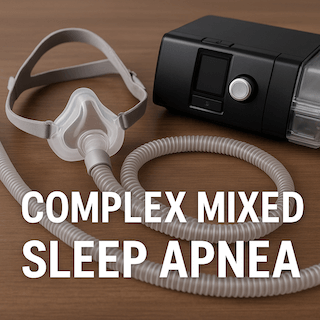
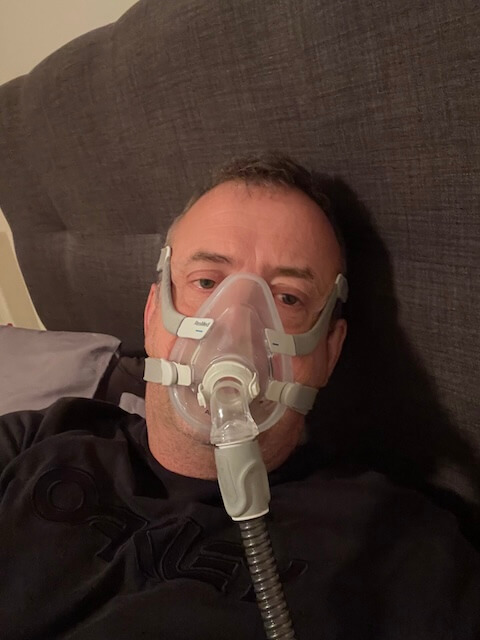
I’ve been using a ResMed AirSense 10 with an F20 full face mask for over 10 years now. I adapted to it surprisingly easily – much easier than I expected. The key for me was finding the right mask fit and pressure settings, which took a few weeks of adjustments.
Now, I can’t imagine sleeping without it. When I travel, my CPAP comes with me. The thought of going even one night without it isn’t appealing because I know exactly how terrible I’ll feel the next day.
Should You Get Septoplasty If You Snore?
Here’s my honest answer: it depends on what’s actually causing your snoring.
Consider septoplasty if:
- You have confirmed nasal obstruction causing quality-of-life issues
- Your breathing is noticeably better through one nostril than the other
- You’ve had a sleep study that ruled out significant sleep apnea
- You understand that it might improve, but not eliminate snoring
- You want the surgery for overall breathing improvement, not just snoring
Don’t assume septoplasty will fix your snoring if:
- You haven’t had a sleep study
- You snore very loudly, or your partner has noticed you stop breathing
- You wake up with headaches, feel exhausted despite “sleeping” 8+ hours
- You have other risk factors for sleep apnea (being overweight, older age, thick neck)
The thing is, there’s a significant overlap between nasal obstruction and sleep apnea symptoms. Many people have both. That’s why I strongly recommend getting a sleep study before surgery, not after.
If you have both conditions, you’ll likely need both treatments – septoplasty to improve nasal breathing, and CPAP (or another sleep apnea treatment) to address the throat obstruction. But at least you’ll know what you’re dealing with upfront.
Benefits of Septoplasty Beyond Snoring
Even though septoplasty didn’t fix my snoring, I don’t regret having it done. The quality-of-life improvements for daytime breathing were significant:
Exercise became easier. I could run, bike, and do cardio without constantly gasping for air through my mouth.
Sinus issues improved. When one nostril is completely blocked, drainage doesn’t work properly. After surgery, I had fewer sinus infections.
Sleep quality improved slightly. Even though I still had sleep apnea, breathing a bit better through my nose probably made my apneas slightly less severe before I started CPAP.
I felt more normal. Not needing to demonstrate my “party trick” because I could finally breathe like everyone else was surprisingly nice.
So if you have a deviated septum causing quality-of-life issues, septoplasty is often worth considering – just don’t expect it to be a magic cure for loud snoring or undiagnosed sleep apnea.
Warning Signs You Might Have Sleep Apnea, Not Just a Deviated Septum
If you’re experiencing any of these symptoms along with snoring, get a sleep study before considering septoplasty:
Classic sleep apnea symptoms:
- Your partner reports that you stop breathing during sleep
- You wake up gasping or choking
- Morning headaches that improve after you’ve been awake a while
- Excessive daytime sleepiness despite adequate time in bed
- Difficulty concentrating or memory problems
- Irritability or mood changes
- Waking up with a dry mouth or sore throat
My symptoms before diagnosis:
- Severe, unexplained migraines
- Constantly feeling exhausted, no matter how much I “slept.”
- Loud snoring that my wife could hear from another room
- Waking up feeling like I’d been hit by a truck
I attributed these symptoms to stress, poor sleep hygiene, or just getting older. I never connected them to my breathing during sleep. The sleep study revealed what was really happening – I was suffocating myself 51 times per hour, every single night.
If any of this sounds familiar, don’t wait. Sleep apnea isn’t just about snoring or feeling tired. Untreated OSA increases your risk of high blood pressure, heart disease, stroke, and diabetes. It’s a serious medical condition that needs proper diagnosis and treatment.
And if you’re diagnosed with sleep apnea and have a deviated septum, choosing the right CPAP mask becomes crucial – I wrote extensively about the best CPAP masks for deviated septums based on my decade of experience.
Getting a Sleep Study: What to Expect
If you’re reading this article because you’re researching septoplasty for your snoring, I’m going to save you some time and money: get a sleep study first.
A sleep study (polysomnography) measures your breathing, oxygen levels, heart rate, and brain activity during sleep. It will definitely tell you whether you have sleep apnea, how severe it is, and what’s causing your sleep disruption.
There are two types:
In-lab sleep studies have you spend the night at a sleep center while technicians monitor you. This is the gold standard and gives the most comprehensive data.
Home sleep tests let you do a simplified version in your own bed. These are cheaper and more convenient but may miss some cases of sleep apnea. I recommend WatchPat One at home sleep apnea test, which is totally FDA-cleared.
Many sleep doctors will tell you the same thing mine told me: if you’re a loud snorer considering surgery, rule out sleep apnea first. If you have OSA, treating it will often improve your snoring significantly even without septoplasty.
CPAP Equipment That Actually Works for Deviated Septums
Here’s an interesting twist: if you do have both a deviated septum and sleep apnea, you might find CPAP challenging initially because of nasal resistance.
I use a full face mask (the ResMed F20) specifically because I was concerned about nasal breathing issues. Even after my septoplasty improved my nasal airflow, I preferred the full face mask because it doesn’t matter whether I breathe through my nose or mouth – the mask delivers air either way.
For people with significant nasal obstruction who can’t or don’t want surgery, a full face mask often works better than a nasal mask or nasal pillows. The air can enter through your mouth even if your nose is blocked.
I’ve written a complete guide about choosing the best CPAP mask for a deviated septum if you want detailed recommendations and comparisons of different mask styles.
Most CPAP machines (including my ResMed AirSense 10) also have heated humidification, which helps prevent the dry mouth and throat irritation that can come from mouth breathing with CPAP.
The good news is that CPAP therapy works regardless of whether you have a deviated septum. In fact, the positive pressure can sometimes help keep nasal passages open even if they’re structurally narrow.
The Bottom Line: Fix the Right Problem
If I could go back and talk to my younger self researching septoplasty, here’s what I’d say:
Yes, your deviated septum is contributing to your snoring. But it’s not the main problem. Get a sleep study. You have severe sleep apnea, and CPAP is going to change your life in ways that septoplasty never could.
The septoplasty improved my quality of life for daytime breathing, and I’m glad I had it done. But if I’d prioritized sleep apnea treatment first, I could have avoided years of migraines, exhaustion, and health risks from untreated OSA.
So can a deviated septum cause snoring? Absolutely.
Will fixing it cure your snoring? Maybe, but probably not if you have sleep apnea – and if you’re a loud, chronic snorer, there’s a good chance you do.
The smart move is to get tested first, understand all the factors contributing to your snoring, and then decide on the right treatment or combination of treatments. For many people (including me), that means both septoplasty for nasal breathing and CPAP for sleep apnea.
Don’t make the same mistake I did. Don’t assume fixing one structural issue will solve everything. Get the full picture first.
Take Action: Next Steps
If you’re dealing with chronic snoring and suspect a deviated septum might be part of the problem:
- Schedule a sleep study. This should be your first step, not your last resort. Rule out sleep apnea before considering surgery.
- See an ENT specialist. They can evaluate your nasal anatomy and determine if septoplasty would help your breathing.
- Be honest about all your symptoms. Don’t just focus on snoring. Tell your doctor about morning headaches, daytime fatigue, witnessed breathing pauses, or any other sleep-related issues.
- Consider the full treatment plan. If you have both nasal obstruction and sleep apnea, you might need both treatments for optimal results.
I’ve been managing severe sleep apnea with CPAP for over a decade, and my quality of life is dramatically better than it was before diagnosis. My AHI went from 51 to around 4. My migraines disappeared. I wake up feeling rested.
Was the journey frustrating? Yes. Did septoplasty fix what I thought it would? No. But understanding the real cause of my symptoms and getting the right treatment changed everything.
Your snoring might be more complicated than just a crooked nose. Find out for sure before you go under the knife.
Related Articles
Could You Have Sleep Apnea?
- Common Causes of Snoring: Could it be Sleep Apnea? – Understanding the difference between simple snoring and a serious problem
- STOP-Bang Score: A Simple Screening Tool for Sleep Apnea Risk – Take this quick quiz to assess your risk
- Can Enlarged Tonsils Cause Snoring? – Another common structural cause of snoring
Getting Tested:
- WatchPAT One Review: The Low-Cost Home Sleep Test – How to get diagnosed from home ($189-$300)
- Do You Need a Prescription for CPAP? – Understanding the diagnosis and treatment process
Other Treatment Options:
- Positional Therapy for Sleep Apnea: Does it Work? – For mild cases where sleeping position is the issue
- Best Sleep Apnea Mouth Guards – Alternatives to CPAP for mild-moderate cases
- Best Sleeping Position for Sleep Apnea – Simple changes that can help reduce symptoms
References
American Academy of Sleep Medicine. Apnea-Hypopnea Index (AHI) severity classifications. Cleveland Clinic Health Library. 2025. https://my.clevelandclinic.org/health/articles/apnea-hypopnea-index-ahi
Li HY, et al. Nasal surgery for snoring in patients with obstructive sleep apnea. Laryngoscope. 2007;117(12):2145-2146. https://pubmed.ncbi.nlm.nih.gov/18000468/
Yariktas M, et al. The beneficial effect of septoplasty on snoring. Kulak Burun Bogaz Ihtis Derg. 2003;10(3):113-117. https://pubmed.ncbi.nlm.nih.gov/12717058/
Ertugay CK, et al. Is septoplasty effective on habitual snoring in patients with nasal obstruction? European Archives of Oto-Rhino-Laryngology. 2015;272(7):1687-1691. https://pubmed.ncbi.nlm.nih.gov/25182390/
American Heart Association. Sleep Apnea and Heart Health. Heart.org. https://www.heart.org/en/health-topics/sleep-disorders/sleep-apnea-and-heart-disease-stroke
Sleep Foundation. CPAP therapy reduces AHI by 73% in studies. SleepFoundation.org. 2025. https://www.sleepfoundation.org/sleep-apnea/ahi
Johns Hopkins Medicine. The Dangers of Uncontrolled Sleep Apnea. HopkinsMedicine.org. 2025. https://www.hopkinsmedicine.org/health/wellness-and-prevention/the-dangers-of-uncontrolled-sleep-apnea
Harvard Medical School. Health Consequences of Obstructive Sleep Apnea. Sleep Medicine Division. 2021. https://sleep.hms.harvard.edu/education-training/public-education/sleep-and-health-education-program/sleep-health-education-28
Yeghiazarians Y, Jneid H, Tietjens JR, Redline S, Brown DL, El-Sherif N, Mehra R, Bozkurt B, Ndumele CE, Somers VK. Obstructive sleep apnea and cardiovascular disease: a scientific statement from the American Heart Association. Circulation. 2021;144:e56-e67. https://pubmed.ncbi.nlm.nih.gov/34148375/
Yeom SW, Chung SK, Lee EJ, et al. Association between septal deviation and OSA diagnoses: a nationwide 9-year follow-up cohort study. Journal of Clinical Sleep Medicine. 2021;17(10):2099-2106. https://jcsm.aasm.org/doi/10.5664/jcsm.9352
⚠️ MEDICAL DISCLAIMER This blog provides general information only and is not a substitute for professional medical advice, diagnosis, or treatment. Sleep apnea is a serious condition, and CPAP equipment should be used under proper medical supervision. Always consult your doctor or sleep specialist before starting, stopping, or changing any therapy. I share personal experiences as a CPAP user, not as a medical professional. Individual results vary. For medical guidance, please consult a qualified clinician or the American Academy of Sleep Medicine (aasm.org).