Sleep Debt Calculator: How Much Rest Do You Need?

Back in the 1980s and 1990s, sleep deprivation was almost a point of pride. Lunch is for losers. Sleep is for suckers.
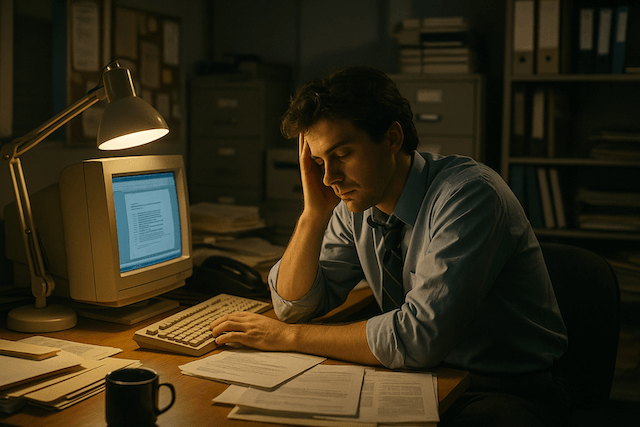
Bill Clinton once admitted that most of his bad decisions were made when he was tired, which at least suggests some self-awareness. But the broader culture treated exhaustion as evidence of productivity. The more you ran yourself down, the more seriously people seemed to take you.
Most of us have moved past that, at least in theory. We understand now that sleep is not laziness. It is the thing that makes every other part of your life function. But understanding it intellectually and actually getting enough of it are two different things, and a huge number of people are running on a sleep deficit without fully realising how much it is affecting them.
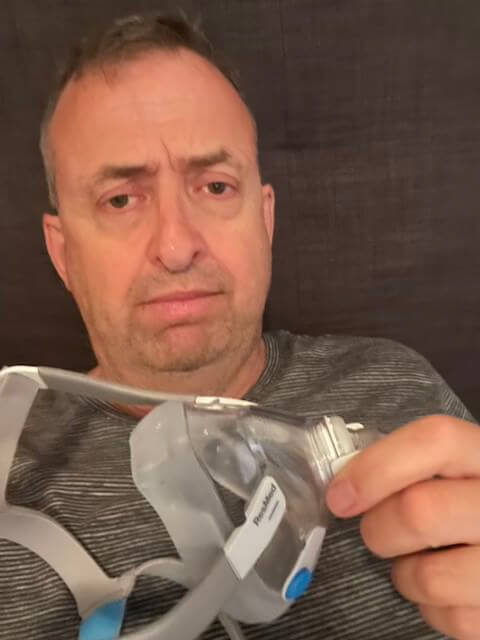
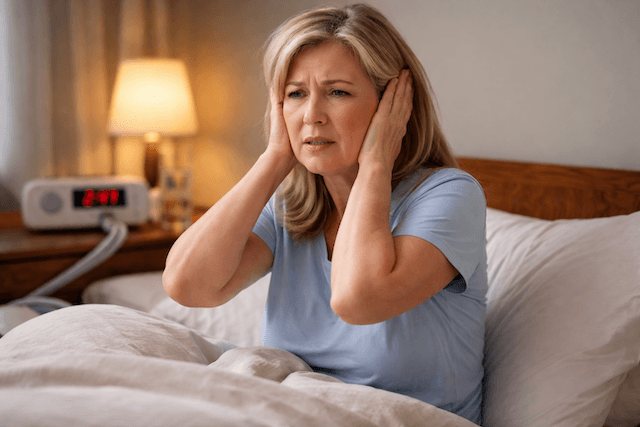
I lived like that for years. Not because I was choosing to sacrifice sleep for productivity, but because my sleep apnea was destroying the quality of whatever sleep I was getting, and I had no idea. I thought I was going to bed at a reasonable hour and waking after seven or eight hours. What was actually happening was that my airway was collapsing repeatedly all night, pulling me out of deep sleep dozens of times per hour, and accumulating sleep debt at a rate that no amount of time in bed was going to fix.
That is the part of sleep debt that does not get talked about enough, particularly for people with sleep disorders. It is not just about hours. It is about quality.
What Sleep Debt Actually Is
Sleep debt is straightforward in principle: it is the difference between the sleep your body needs and the sleep it is actually getting, accumulated over time. If you need eight hours and you are consistently getting six, you are adding two hours of debt every night. Over a working week, that is ten hours. Over a month, it is forty. The numbers accumulate faster than most people expect.
Your body keeps a running tab on this. Unlike financial debt, you cannot simply decide to stop caring about it. The biological need for sleep is not negotiable, and the consequences show up whether you want them to or not, in your reaction times, your mood, your ability to focus, your immune function, and over the long term your cardiovascular health.
The symptoms of significant sleep debt are probably familiar to anyone reading this: a kind of daytime tiredness that coffee does not really touch, difficulty concentrating, irritability that feels disproportionate to what triggered it, and headaches that linger through the morning. I had all of these for years and attributed them to stress, to getting older, to just being a busy person. None of those explanations was wrong exactly, but the underlying cause was that my brain was not getting the restorative sleep it needed, and it was showing in every part of my waking life.
Use the Sleep Debt Calculator
Sleep Debt Calculator
The Special Problem for People with Sleep Apnea
Here is the part I want to emphasise, because I did not understand it myself for a long time.
Sleep debt is not measured purely in hours. You can spend eight hours in bed and still accumulate significant debt if the sleep you are getting is structurally broken. And there are few more effective ways to break sleep architecture than untreated obstructive sleep apnea.
When your airway collapses during sleep, your brain has to pull you toward lighter sleep stages to restore muscle tone and reopen it. You do not usually wake up fully, which is why so many people with sleep apnea have no idea it is happening. But those micro-arousals prevent you from spending adequate time in the deep and REM stages your body actually needs. Stage N3 deep sleep is where physical repair happens. REM is where memory consolidation and emotional processing occur. When apnea keeps fragmenting your sleep all night, you are robbed of both, regardless of how many hours you clock.
My apnea-hypopnea index before diagnosis was 51. That is over fifty breathing interruptions per hour. I was technically sleeping eight hours a night. My brain was experiencing something closer to a long series of shallow naps. The sleep debt I was accumulating was not primarily a matter of time in bed. It was a matter of architecture.
This is why CPAP therapy felt so immediately different. The first morning after I started treatment, I woke up alert in a way I could not remember feeling. That was not because I had slept longer. It was because, for the first time in years, my sleep had the right shape, cycling through the stages it was supposed to cycle through. The debt I had been running up for so long had somewhere to start being repaid.
How Sleep Debt Accumulates Over Time
A useful way to think about sleep debt is like a bank balance that is slowly going negative. A single short night is a small withdrawal that is easy to recover from. A run of short nights starts to add up. Months or years of poor sleep, as is common with undiagnosed sleep apnea, creates a deficit that requires real consistency to work back from.
The frustrating part is that once you are significantly sleep deprived, you lose some ability to accurately assess how impaired you are. Research consistently shows that people with high sleep debt rate their own alertness as much higher than their actual performance on cognitive tasks would suggest. You adapt to feeling worse and it starts to feel normal. I genuinely thought the fog I was living in was just what adult life felt like. It was not.
Can You Pay It Back?
Yes, but not the way most people try to do it. The instinct is to sleep in massively on weekends to compensate for the week. There is some evidence that extended recovery sleep helps with acute debt, but it is not an efficient long-term strategy and it tends to disrupt your circadian rhythm, which creates its own problems.
The more effective approach is gradual and consistent. Adding thirty to sixty minutes of extra sleep per night over a sustained period, and protecting that extended sleep, allows your body to recover without wild swings in timing. Think of it less like a single large deposit and more like setting up a regular repayment plan.
Consistency of timing matters as much as duration. Going to bed and waking at the same time every day, including weekends, is one of the most powerful things you can do for sleep quality because it keeps your circadian rhythm anchored. Your body starts anticipating sleep and preparing for it at the right time, which means you fall asleep faster, cycle through stages more efficiently, and wake up more rested even if the total hours do not change dramatically.
Short naps in the early afternoon, kept to around twenty minutes, can help manage the worst of daytime sleepiness without interfering with your nighttime drive to sleep. The key is keeping them short and keeping them early. A long afternoon nap or one taken too late in the day borrows from nighttime sleep rather than supplementing it.
Sleep Quality Matters as Much as Quantity
If your calculator result does not match how tired you feel, or if you are getting what looks like enough hours but still waking exhausted, that is a signal that quality rather than quantity may be the issue.
This is where it is worth being honest with yourself about sleep apnea symptoms. Loud snoring, waking with a dry or sore throat, morning headaches, frequent nighttime urination, waking unrefreshed after a full night, and persistent daytime sleepiness are all worth taking seriously. If you have not been assessed, an at-home sleep apnea test is an accessible starting point.
If you are already on CPAP and your sleep debt does not seem to be recovering, it is worth reviewing your therapy data. Your AHI, leak rate, and nightly event breakdown tells you whether your therapy is actually controlling your apnea or whether something needs adjusting. I cover how to read that in my guide to interpreting CPAP data. Sometimes a mask that has started leaking, or a pressure setting that needs recalibrating as your body changes, is quietly undermining your therapy without you realising.
The Things That Make Sleep Debt Worse
Most people know the headline sleep hygiene advice: keep your room cool and dark, avoid screens before bed, and cut caffeine after early afternoon. These genuinely matter. What gets less attention is how aggressively alcohol disrupts sleep architecture, even when it helps you fall asleep. Alcohol suppresses REM sleep in particular. You might spend eight hours in bed after a few drinks and wake feeling like you have slept four, because in terms of the sleep stages that actually restore you, you more or less have.
Heavy meals late in the evening delay the onset of deep sleep. Irregular timing confuses your circadian rhythm and makes both falling asleep and waking up harder. Stress and anxiety extend sleep onset and increase the likelihood of waking in the night. None of this is new information, but the cumulative effect of several of these factors running simultaneously can generate debt even when you are technically spending enough time in bed.
Tracking Your Sleep
I use an Apple Watch to track steps and sleep, and while I do not treat wearable data as precise, it is useful for identifying patterns over time. Consistently short sleep, frequent waking, and low estimates for deep or REM sleep across a run of nights are worth paying attention to even if the individual numbers are not perfectly accurate.
The calculator on this page gives you the debt picture in hours. Your CPAP data gives you the quality picture. Together, they tell you most of what you need to know about where your sleep is actually landing and what needs addressing.
The Bottom Line
Sleep debt is real and it compounds. A few short nights are manageable. A chronic deficit from months or years of insufficient or poor-quality sleep has consequences that show up in your health, your mood, your ability to think clearly, and your long-term risk for heart disease and other serious conditions.
For anyone with sleep apnea, the hours calculation alone will never tell the full story. The most important step I took was not going to bed earlier. It was getting diagnosed and starting CPAP therapy, because until my airway was being kept open all night, the sleep I was getting was not doing the job sleep is supposed to do.
Use the calculator to get a sense of your debt in hours. But if the number does not explain how tired you are, or if you recognize the symptoms of sleep apnea, that is the more important thing to address first. No amount of extra time in bed will repay debt that is being continuously generated by fragmented, architecturally broken sleep.
⚠️ MEDICAL DISCLAIMER This blog provides general information only and is not a substitute for professional medical advice, diagnosis, or treatment. Sleep apnea is a serious condition, and CPAP equipment should be used under proper medical supervision. Always consult your doctor or sleep specialist before starting, stopping, or changing any therapy. I share personal experiences as a CPAP user, not as a medical professional. Individual results vary. For medical guidance, please consult a qualified clinician or the American Academy of Sleep Medicine (aasm.org).