Sleep Apnea and Hallucinations: The Connection to Sleep Paralysis and Waking Dreams

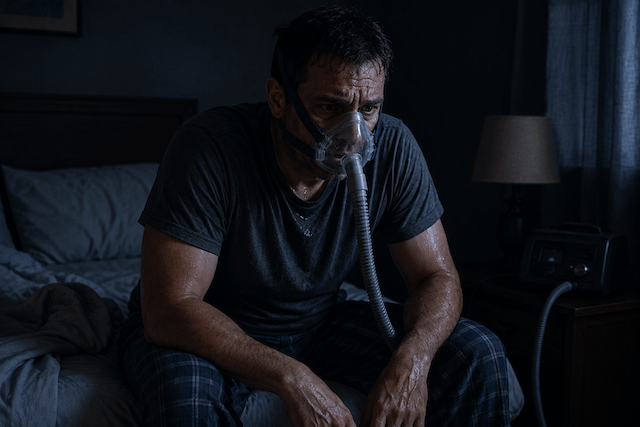
If you have searched for a link between sleep apnea and hallucinations, you are probably not asking out of idle curiosity. Something happened. Maybe you woke up unable to move, with the certain sense that someone was standing in the room. Maybe you heard your name called clearly as you drifted off, or saw a shape at the edge of the bed that dissolved the instant you were fully awake. Experiences like these are deeply unsettling, and the first worry most people reach for is that something has gone wrong with their mind.
This article looks at what the research actually says, and the news is more reassuring than the search that brought you here might suggest. Before going any further, though, a note on where I stand. I write this site as someone who has lived with severe obstructive sleep apnea for more than a decade. My background is in computer science, not medicine, so nothing here is medical advice. I have also never personally experienced sleep paralysis or the kind of hallucinations described above. That makes this a research piece rather than a personal account, and I would rather say so plainly than dress it up as something it is not. The journey pieces on this site are firsthand. You can read about my own diagnosis and the years that led to it on the living with sleep apnea page. This one is reporting.
The short version is this. Sleep apnea does not cause hallucinations the way a high fever or a strong drug might. But it disrupts sleep so thoroughly that it raises the odds of one specific family of hallucinations, the kind that happen at the boundary between sleep and waking. The connection is real, it is documented in the sleep medicine literature, and for the large majority of people it is far less alarming than it feels at three in the morning.
The hallucinations that happen at the edge of sleep
Most hallucinations that frighten people into searching for answers are not the medical textbook kind associated with psychosis. They are sleep related hallucinations, and they cluster around two moments. Hypnagogic hallucinations happen as you are falling asleep. Hypnopompic hallucinations happen as you are waking up. The names come from Greek, but the experience is simple enough to describe. For a few seconds, your brain produces vivid sensory content while you are still partly conscious, so the dream imagery arrives without the usual signal that says none of this is real.
These episodes are far more common than most people assume. The Sleep Foundation notes that a reported 86 percent of hypnagogic hallucinations are visual, often moving shapes, geometric patterns, faces, animals, or full scenes. A smaller share involve sound, and a smaller share again involve physical sensations such as falling or weightlessness. Surveys of the general population put the lifetime experience of these phenomena at roughly a third of people. In other words, having one is not rare, and it does not mark you out as unwell.
What makes them feel so convincing is the timing. A normal dream happens while you are fully asleep, and it usually has some kind of story to it. A hypnagogic hallucination happens while a part of your brain is still awake, so it feels less like a story and more like something happening in the room with you. The Cleveland Clinic draws a useful line here: with a dream you generally know on waking that you were dreaming, while with a sleep related hallucination it can take a moment to sort out what was real and what was not. That lag is the whole problem. It is also why these episodes are remembered so vividly and described with such conviction.
Sleep paralysis and the sense of a presence
Sleep paralysis is the experience that turns an odd visual into a genuinely terrifying one. To understand it, you have to know one normal fact about REM sleep. During REM, the stage where most vivid dreaming occurs, your body switches off voluntary muscle control. This is protective. It stops you from physically acting out whatever your dreaming brain is doing. The technical term is REM atonia, and almost every night it works perfectly and invisibly.
Sleep paralysis is what happens when the timing slips. Your mind becomes conscious while that muscle paralysis is still switched on. You are awake, or close to it, but you cannot move or speak, and that state can last anywhere from a few seconds to a couple of minutes. On its own that would be frightening enough. The reason sleep paralysis is so widely feared is that it often arrives bundled with a hypnopompic hallucination. The most reported version is the sense of a menacing presence in the room, sometimes accompanied by pressure on the chest or the shape of an intruder near the bed.
Researchers have proposed plausible explanations for why the intruder shows up so reliably. When the brain loses its normal stream of sensory feedback from a body it cannot move, the regions that build your internal sense of where your body is and ends can misfire, and the brain fills the gap with a threatening figure. Cultures across history have given this experience names and supernatural explanations, which tells you both how common it is and how consistent the core sensation has been for a very long time. The important medical point is straightforward. Sleep paralysis is physically harmless. It ends on its own. It is frightening rather than dangerous.
Where sleep apnea comes into the picture
If sleep related hallucinations and sleep paralysis can happen to anyone, why does sleep apnea keep coming up in connection with them? Because apnea is, at its core, a disorder of fragmented sleep, and fragmented sleep is exactly the soil these episodes grow in.
A study presented at the 2009 SLEEP conference by researchers at Loyola University Chicago looked at this directly. Reviewing the records of 537 adults with obstructive sleep apnea, the team found that close to one in ten reported parasomnia symptoms, the category that includes sleepwalking, acting out dreams, sleep paralysis, and sleep related hallucinations. Sleep paralysis and hallucinations were among the most frequently reported of those symptoms. The lead investigator framed the finding carefully, and the framing is worth keeping. Apnea does not necessarily create a predisposition to parasomnia out of nothing. What it does is make an existing predisposition worse. If your brain is already prone to these episodes, untreated apnea is a powerful aggravating factor.
There are a few mechanisms behind that, and they reinforce each other. The first is fragmentation itself. Obstructive sleep apnea pulls you toward the surface of sleep over and over through the night. In a severe case that can mean dozens or hundreds of brief arousals before morning. Every one of those arousals is another trip across the boundary between sleeping and waking, and that boundary is precisely where hypnagogic and hypnopompic hallucinations occur. More crossings means more opportunities. A person whose sleep is consolidated makes that transition cleanly a handful of times a night. A person with untreated severe apnea makes it constantly.
The second mechanism is sleep deprivation and what follows it. Apnea robs you of deep, consolidated, restorative sleep, and it eats into REM sleep in particular. The brain treats that loss as a debt. When it finally gets the chance, it tends to push into REM faster and harder than usual, a pattern often called REM rebound. That pressure can blur the line between REM state imagery and waking awareness. On top of that, sleep deprivation by itself is a well-documented trigger for hallucinations, even in people without any sleep disorder at all. Apnea quietly delivers chronic sleep deprivation night after night, which is one reason its effects reach so far beyond snoring. If you want the fuller picture of what that constant disruption looks like, the sleep apnea symptoms page covers the daytime and nighttime signs, and the sleep deprivation page goes deeper on what sustained sleep loss does to the brain.
The third mechanism is the one to hold most loosely, because the evidence for it is the least settled. Each apnea event is followed by a drop in blood oxygen, and repeated drops are stressful for the brain. Some researchers suggest this may lower the threshold for perceptual disturbances. It is a reasonable hypothesis and it fits the wider picture, but it is not as firmly established as the fragmentation and deprivation explanations, so it belongs in the article as a possibility rather than a fact.
What about hearing things rather than seeing them
Visual episodes get the most attention, but auditory sleep related hallucinations are common too, and they generate their own anxious searches. People report hearing their name spoken clearly, a doorbell, a knock at the door, a snatch of music, or unidentifiable noise, all with no source. Across studies, sound features in a meaningful minority of these episodes, well behind visual content but far from rare.
It is worth separating these from a related but distinct phenomenon called exploding head syndrome, where a person hears a sudden loud bang or crash as they fall asleep or wake, with no pain and no actual sound. That is its own parasomnia rather than a classic hypnagogic hallucination, though it sits in the same neighborhood and is also harmless.
The reason auditory episodes deserve their own mention is the worry they tend to provoke. Hearing a voice is the experience people most readily associate with serious mental illness, so an auditory hallucination at the edge of sleep can be more frightening than a visual one of equal intensity. The reassurance is the same as for the visual kind. A brief sound heard at the moment of falling asleep or waking, recognized soon afterward as not real, is a sleep state phenomenon. It is not, on its own, evidence of a psychotic disorder.
Is this psychosis? Almost always, no
This is the question underneath most searches on this topic, so it deserves a direct answer. The thing that distinguishes a sleep related hallucination from the kind of hallucination that needs urgent psychiatric attention is not how vivid it is. It is when it happens and how it resolves.
Sleep related hallucinations occur only at the boundary of sleep. They are brief. And the person almost always recognizes within a short time that what they perceived was not real. Hallucinations that occur in full wakefulness, that persist, and that the person continues to believe are real are a different matter and do warrant prompt medical evaluation. Both the Sleep Foundation and the Cleveland Clinic are clear that the great majority of hypnagogic and hypnopompic hallucinations are benign and are not a sign of mental illness.
There is one loop worth naming, because it is where sleep apnea, hallucinations, and mental health genuinely intersect. Frightening episodes can make a person anxious about going to sleep. That anxiety makes sleep lighter and more broken, which produces more of exactly the transitions that generate the episodes, which deepens the dread. Apnea feeds into the same loop from the other side by fragmenting sleep regardless of how relaxed you are. Breaking the cycle usually means addressing both the underlying sleep disruption and the anxiety around it, and the sleep apnea and mental health page looks at that relationship in more detail.
Does treating sleep apnea reduce these episodes
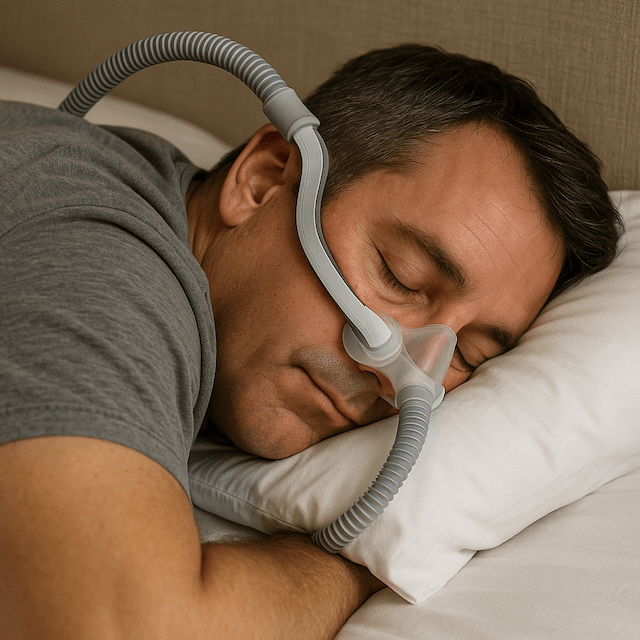
This is where the logic of the research becomes practical. If fragmentation and sleep deprivation are the main forces driving sleep related hallucinations and sleep paralysis, then anything that consolidates sleep and restores more normal sleep architecture should reduce them. For obstructive sleep apnea, the standard treatment that does exactly that is CPAP therapy.
CPAP does not target hallucinations directly. There is no setting for it. What it does is keep the airway open so the repeated arousals stop, which lets sleep deepen and hold together through the night. Fewer arousals means fewer crossings of the sleep boundary, and a brain that is no longer chronically sleep deprived has less REM debt to pay back in sudden, intrusive bursts. The Loyola researchers’ framing supports this directly. If apnea is the aggravating factor, treating the apnea removes the aggravation. It does not guarantee the episodes vanish, especially for someone with an independent predisposition, but it removes much of the fuel.
One honest caveat belongs here. In the first weeks of CPAP therapy, as the brain finally gets sustained REM sleep again, some people notice unusually intense or vivid dreams. This is REM rebound doing its job, and it is generally a sign that treatment is working rather than a problem. It tends to settle as sleep stabilizes. The broader recovery of clear thinking and steadier sleep over the first months of therapy is covered on the CPAP therapy and brain fog page, and the same gradual settling applies here.
When to talk to a doctor
Most of the time, an occasional sleep related hallucination or a single episode of sleep paralysis is not a medical emergency and does not need investigation on its own. There are, though, clear situations where it is worth getting evaluated.
If hallucinations at the edge of sleep come together with heavy daytime sleepiness, frequent sleep paralysis, and sudden episodes of muscle weakness triggered by strong emotion, that particular cluster can point toward narcolepsy, which is diagnosed with a specialized sleep study. If the hallucinations sit alongside loud snoring, witnessed pauses in breathing, gasping, or morning headaches, that points instead toward sleep apnea, and a sleep study is the way to confirm it. If you have never been tested for sleep apnea and you recognize both the breathing signs and these nighttime episodes, that combination is a strong reason to get assessed rather than wait.
Two other situations deserve a doctor’s attention regardless of apnea. The first is hallucinations that happen while you are fully awake and alert, rather than at the moment of falling asleep or waking. That is outside the sleep related category and should be evaluated on its own. The second is episodes severe or frequent enough that fear of them is keeping you from sleeping. Even when the episodes themselves are harmless, that level of distress is worth treating, and it is treatable.
The reassuring thread through all of this is that the most common version of this story has a straightforward explanation. Disrupted sleep produces unsettling experiences at the edges of sleep, and treating the disruption tends to quiet them down. Sleep apnea is one of the most common and most treatable causes of that disruption. If the episodes that brought you here are happening alongside the classic signs of apnea, the most useful next step is not to worry about your sanity. It is to get your sleep properly assessed.
⚠️ MEDICAL DISCLAIMER This blog provides general information only and is not a substitute for professional medical advice, diagnosis, or treatment. Sleep apnea is a serious condition, and CPAP equipment should be used under proper medical supervision. Always consult your doctor or sleep specialist before starting, stopping, or changing any therapy. I share personal experiences as a CPAP user, not as a medical professional. Individual results vary. For medical guidance, please consult a qualified clinician or the American Academy of Sleep Medicine (aasm.org).