Sleep Apnea and Pregnancy: What the Research Says

Let’s be straight with you before you read any further. I live with severe obstructive sleep apnea, and I have used a CPAP machine every night for more than a decade, so I understand the condition from the inside. I am not a doctor, and I have obviously never been pregnant. This page is a careful read of the medical research, not a personal account, and nothing here is a substitute for the advice of the clinician who knows your pregnancy. With that said, sleep apnea in pregnancy is one of those topics where good information is genuinely hard to find, and where being missed has real consequences. That is worth getting right.
The short version is this. Pregnancy makes obstructive sleep apnea more likely and can worsen apnea that was already there. It frequently goes unrecognized because the warning signs look a lot like the ordinary exhaustion of pregnancy. And when it is caught, it is very treatable. Those three facts are the spine of everything below.
Why pregnancy raises the risk
Obstructive sleep apnea happens when the soft tissues at the back of the throat relax and collapse during sleep, briefly blocking the airway. Breathing stops or shallows, oxygen dips, and the brain rouses just enough to reopen the airway, often without the sleeper ever knowing. Pregnancy nudges almost every one of the factors that drive this.
Weight gain is the obvious one, since added tissue around the neck and upper airway leaves less room for air to move. Hormonal shifts matter too. Rising progesterone and estrogen change the tone of the airway muscles and cause the lining of the nose to swell, which is why so many pregnant women find themselves congested and snoring for the first time in their lives. As the uterus grows, it pushes the diaphragm upward and reduces the space the lungs have to expand, which changes how breathing behaves at night. Fluid retention adds further swelling in the airway. Stack these together and you have a body that is, in effect, set up to develop disrupted breathing during sleep.
The research bears this out. Studies estimate that somewhere between roughly 3 and 27 percent of pregnant people develop obstructive sleep apnea, compared with a much smaller share of women who are not pregnant. The risk climbs as the pregnancy progresses, with the third trimester carrying the highest prevalence. The American Academy of Sleep Medicine even recognizes a distinct category, pregnancy associated sleep disorder, which tells you how real and how specific this pattern is. You can read more about how the condition shows up differently in women on the page about sleep apnea in women.
It is worth noting that the apnea that develops in pregnancy is almost always the obstructive kind, driven by airway collapse, rather than the central kind, which has to do with how the brain signals the muscles that control breathing. If you want the distinction spelled out, the page on central sleep apnea covers it.
The reason it gets missed
Here is the trap. Crushing daytime tiredness, waking up unrefreshed, getting up to use the bathroom several times a night, snoring, morning headaches, trouble concentrating. Every one of those is a textbook sleep apnea symptom. Every one of those is also something most people simply expect during pregnancy and write off as normal. So the very signals that would otherwise raise a flag get absorbed into the general assumption that pregnancy is just exhausting.
I have a particular sympathy for this because I walked around with severe, untreated apnea for a long time before anyone connected the dots, and the fatigue had become so normal to me that I had stopped questioning it. For a lot of people, it takes someone else noticing the breathing itself. A partner who hears the pauses, the gasp, the choke as breathing restarts, is often the one who finally says something. If that describes what someone is hearing next to you, it is worth taking seriously rather than waiting it out. I have written more about how my own diagnosis came together over on living with sleep apnea.
The risks worth understanding
This is the part to handle honestly, without either downplaying it or turning it into a scare. Obstructive sleep apnea in pregnancy has been linked in the research to a higher likelihood of several complications, and the associations are consistent enough across large studies to take seriously.
The most frequently reported are the hypertensive disorders of pregnancy, meaning gestational hypertension and preeclampsia, along with gestational diabetes. Studies also report associations with preterm birth, a greater likelihood of cesarean delivery, and concerns about fetal growth. The leading proposed mechanism is straightforward to picture. When breathing repeatedly stops, oxygen levels fall and the body responds with surges of stress hormones and inflammation. Over a whole night, repeated through a pregnancy, that pattern places strain on the cardiovascular system and on blood sugar regulation, which is exactly where these complications take root. The connection between apnea and the heart and blood vessels is not unique to pregnancy, and the broader picture is covered on sleep apnea and cardiovascular health.
A point of honesty here. These are associations, and untreated apnea tends to travel alongside other risk factors such as higher body weight and preexisting blood pressure problems, which makes it hard for researchers to isolate exactly how much the apnea itself is driving. The evidence that treating apnea during pregnancy improves these outcomes is still emerging and is not as settled as anyone would like. What is not in dispute is that untreated apnea is bad for sleep, bad for the cardiovascular system, and worth addressing on its own terms. Pregnancy raises the stakes rather than changing that basic logic.
Getting an actual diagnosis
You cannot diagnose sleep apnea from symptoms alone, and pregnancy makes that harder rather than easier. The questionnaires that doctors lean on to screen the general population, the STOP-BANG and the Epworth Sleepiness Scale among them, were developed and validated in people who are not pregnant, and the research shows they perform poorly in pregnancy. They lean on things like age and neck size and daytime sleepiness that either shift during pregnancy or overlap with normal pregnancy symptoms, so a reassuring score does not rule much out. The practical takeaway is that new breathing symptoms during pregnancy deserve a proper look regardless of what a screening score suggests.
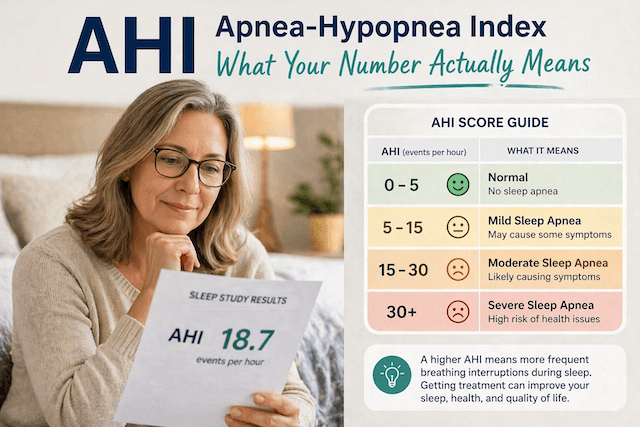
A real diagnosis comes from a sleep study, which measures what your breathing, oxygen levels, and heart rate are actually doing across a night. That can be done in a lab or, increasingly, with a home sleep apnea test that you wear in your own bed. Both are noninvasive and safe in pregnancy. The result is scored using the apnea-hypopnea index, the number of breathing interruptions per hour, which is the same yardstick used for everyone else. If you want to understand the full diagnostic path, the sleep apnea diagnosis page walks through it. The most important move is simply to raise it with your obstetrician or midwife, who can refer you on to a sleep specialist.
Treatment, and what CPAP is actually like
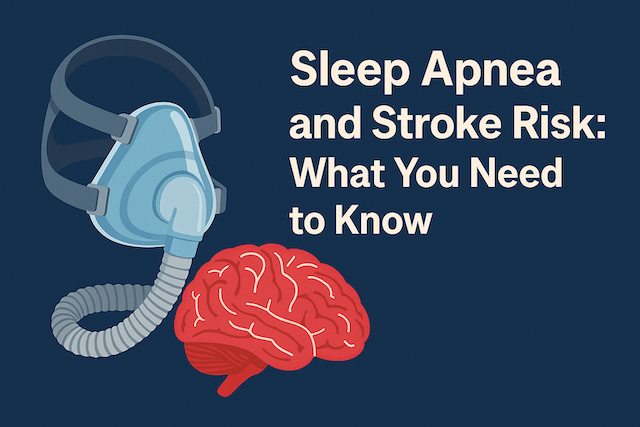
When obstructive sleep apnea is diagnosed in pregnancy, CPAP is the treatment of choice, and it is considered safe to use throughout. A CPAP machine delivers a gentle, steady stream of air through a mask that holds the airway open so it cannot collapse. It does not put medication into your body and it does not breathe for you. It simply keeps the airway propped open with air pressure. If the mechanics are new to you, how a CPAP machine works lays it out plainly.
Because I have lived with one of these machines for years, I will tell you the honest version rather than the brochure version. The first nights are awkward. The mask feels strange, the air takes getting used to, and it is normal to wonder whether you will ever sleep through it. Then, fairly quickly for most people, it stops being a contraption and starts being the thing that lets you wake up feeling human. I would not part with mine. For someone who is pregnant and already not sleeping well, that turnaround can matter a great deal, and sticking with it through the clumsy early stretch is the whole game. I have written about getting over that hump on staying consistent with CPAP therapy.
A few pregnancy-specific notes are worth flagging for a conversation with your own clinician. If you already used CPAP before becoming pregnant, your pressure needs may change as your body changes, so it is reasonable to ask a sleep specialist whether your settings should be rechecked as the pregnancy progresses. Comfort also matters more than people expect, since a mask that fits well is a mask you will actually keep on. There are masks and machines designed with women in mind, and I have collected research-based rundowns on CPAP masks for women and CPAP machines for women if that is useful, though the right choice always comes down to a fitting rather than a list.
Beyond the machine, a couple of simple measures support better breathing at night. Sleeping on your side rather than your back keeps the airway more open, and side sleeping, particularly on the left, is already widely recommended in later pregnancy for blood flow reasons, so the two goals line up neatly. More on that on the best sleeping position for sleep apnea. Treating nasal congestion can help with the snoring side of things, though it is worth checking which remedies are safe in pregnancy before reaching for anything. None of these replace treatment for diagnosed apnea, but they sit alongside it sensibly.
What happens after the baby arrives
For some women, apnea that appeared during pregnancy eases off after delivery as weight comes down and the hormonal and physical changes reverse. That is the encouraging side. The less tidy reality is that it does not always resolve quickly, and the research suggests gestational apnea can linger longer than other pregnancy related conditions and may flag a tendency toward apnea down the line. The period right after birth also deserves attention, since the combination of disrupted breathing, pain medication, and exhaustion can affect breathing in vulnerable patients, which is something the care team will be aware of. If symptoms persist after the baby arrives, it is worth a follow up rather than an assumption that the problem left with the pregnancy.
The honest bottom line
If you are pregnant and snoring heavily, gasping at night, or so tired that it goes beyond what feels reasonable, do not let it get folded into the general assumption that pregnancy is simply tiring. Mention it. Ask about a sleep study. Sleep apnea in pregnancy is common; it is routinely missed, and it is very treatable once it is found, which makes it one of the better problems to go looking for. I cannot tell you what is going on in your particular case, and I would not try. But I can tell you that treated apnea changed my life, and that the readers I would most want to reach are the ones who have learned to ignore exactly the signals that ought to be examined.
For a fuller picture of how widespread the condition is, see how many people have sleep apnea. For trustworthy external reading, the Sleep Foundation overview of sleep apnea and snoring in pregnancy is a solid starting point, and clinicians and motivated readers can go deeper with this NIH review of obstructive sleep apnea in pregnancy.
⚠️ MEDICAL DISCLAIMER This blog provides general information only and is not a substitute for professional medical advice, diagnosis, or treatment. Sleep apnea is a serious condition, and CPAP equipment should be used under proper medical supervision. Always consult your doctor or sleep specialist before starting, stopping, or changing any therapy. I share personal experiences as a CPAP user, not as a medical professional. Individual results vary. For medical guidance, please consult a qualified clinician or the American Academy of Sleep Medicine (aasm.org).