Sleep Apnea and Glaucoma: Is There a Connection?

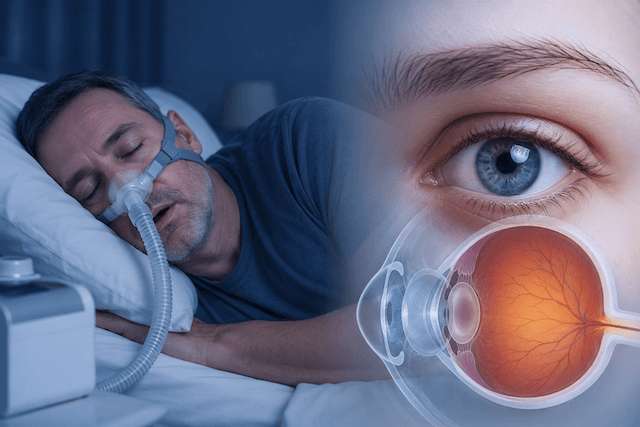
When I was diagnosed with severe obstructive sleep apnea more than a decade ago, my attention was on the obvious problems. I was exhausted during the day, my blood pressure was up, and my mornings started with headaches that I now know were tied to a night of interrupted breathing. What I did not appreciate at the time was how far the effects of untreated sleep apnea can reach. The condition does not stay politely contained in the airway. It touches the heart, the brain, the metabolism, and, as a growing body of research suggests, possibly the eyes.
One of the connections that comes up again and again in the medical literature is the link between sleep apnea and glaucoma. It is a question worth taking seriously because glaucoma is a leading cause of irreversible vision loss worldwide, and obstructive sleep apnea is common and frequently undiagnosed. If the two are related, then a large number of people could be carrying a risk they have never been told about.
Before going further, a note on who is writing this. My background is in computer science, not medicine. I am a patient who has lived with this condition for a long time and who reads the research closely, not an ophthalmologist or a sleep physician. Everything below is reporting on what the studies say, not a diagnosis or a treatment plan. For anything specific to your own eyes or your own sleep, the people to talk to are your eye doctor and your sleep physician.
What Glaucoma Actually Is
Glaucoma is not a single disease but a group of conditions that damage the optic nerve, the bundle of fibers that carries visual information from the eye to the brain. As the nerve is damaged, vision is lost, usually starting at the edges of the visual field and moving inward. The damage is permanent. Treatment can slow or halt further loss, but it cannot restore what is already gone, which is why early detection matters so much.
For a long time, glaucoma was understood mainly as a disease of high pressure inside the eye. The eye is filled with fluid, and the balance between fluid production and drainage determines intraocular pressure, often shortened to IOP. When pressure runs high, it can stress the optic nerve. Lowering that pressure with drops, lasers, or surgery is still the main way glaucoma is treated.
But the picture turned out to be more complicated. A significant share of people develop glaucoma even though their eye pressure measures in the normal range. This form is called normal tension glaucoma, and its existence tells researchers that pressure is not the whole story. Blood flow to the optic nerve, the structure of the nerve itself, and the body’s broader vascular health all appear to play a role. That detail matters here, because it is exactly the territory where sleep apnea enters the conversation.
The Research Linking Sleep Apnea and Glaucoma
Researchers have been studying a possible connection between obstructive sleep apnea and glaucoma for decades, and the honest summary is that the evidence points toward a link without fully proving one.
Several large reviews have found that people with obstructive sleep apnea are more likely to be diagnosed with glaucoma than people without it. A systematic review and meta analysis published in 2023 in the journal Eye pooled dozens of studies covering millions of patients and concluded that OSA was associated with a higher risk of glaucoma. Earlier pooled analyses reached similar conclusions, with some estimates suggesting people with OSA carry a notably greater likelihood of glaucoma than people without the condition. The American Academy of Ophthalmology, in its patient guidance, states plainly that studies show people with sleep apnea may be more likely to develop glaucoma, while noting that it is not fully understood how the two diseases are directly related (American Academy of Ophthalmology).
That last point is important and easy to lose. Not every study agrees. Some large investigations have found no clear association, and the strength of the link varies depending on how the studies were designed, which populations they looked at, and how glaucoma and sleep apnea were defined and measured. Researchers have also used genetic methods, which are less vulnerable to certain biases, to test whether sleep apnea actually causes glaucoma rather than simply appearing alongside it. Those analyses have so far not confirmed a direct causal pathway.
So the careful way to state it is this. People with obstructive sleep apnea, as a group, appear to develop glaucoma more often than people without it, and the association shows up repeatedly across many studies. What has not been established is that sleep apnea directly causes glaucoma in any given person. An association is a signal worth acting on. It is not the same as proof of cause and effect, and anyone telling you otherwise has gotten ahead of the science.
Why the Two Conditions Might Be Linked
If there is a real connection, what would explain it? Researchers have proposed several mechanisms, and they are not mutually exclusive. The interesting thing is that all of them trace back to the same root problem that defines obstructive sleep apnea: repeated collapse of the airway during sleep and the cascade of stress that follows.
The first proposed mechanism is intermittent oxygen deprivation. During an apnea event, breathing stops or drops sharply, and the level of oxygen in the blood falls before the body rouses enough to resume breathing. Across a full night, this can happen dozens or even hundreds of times. The optic nerve is metabolically demanding tissue, and it does not tolerate repeated drops in oxygen well. The theory is that these cycles of low oxygen, repeated night after night for years, could gradually injure the optic nerve and its supporting cells. If you want to understand how dramatic these swings can be, it helps to look at what actually happens to blood oxygen levels during sleep in untreated sleep apnea.
The second mechanism involves blood flow and pressure. Obstructive sleep apnea causes sharp swings in blood pressure throughout the night, and over time it contributes to sustained high blood pressure and vascular dysregulation. The optic nerve depends on a steady, well regulated blood supply. If the balance between blood pressure and the pressure inside the eye is disturbed, the nerve can be left underperfused, meaning it does not get the blood flow it needs. This vascular angle is one reason the connection to normal tension glaucoma draws so much attention, since that form of glaucoma is thought to be driven less by eye pressure and more by blood flow problems.
The third mechanism is fluctuation in eye pressure itself. Intraocular pressure is not constant. It varies over the course of the day and tends to be highest at night while a person is lying down and asleep, which is exactly when apnea events are occurring. Some researchers suspect that the physical events of an apnea, including the strain of trying to breathe against a blocked airway, may produce spikes in eye pressure or in the pressure inside the skull. Repeated spikes, even brief ones, are not good for an optic nerve that is already under stress.
It is also worth noting that sleep apnea and glaucoma share several risk factors, including older age and conditions tied to vascular health. Some of the overlap between the two could reflect those shared risk factors rather than one condition driving the other. Untangling this is part of why the research has been slow to reach a firm verdict.
The Normal Tension Glaucoma Angle
If there is one corner of this topic where the sleep apnea connection looks strongest, it is normal tension glaucoma. Several glaucoma research organizations have highlighted what appears to be a meaningful overlap between this form of glaucoma and obstructive sleep apnea.
The logic is consistent with the mechanisms above. Normal tension glaucoma involves optic nerve damage in people whose eye pressure measures normal, which pushes the explanation toward blood flow and oxygen delivery rather than pressure alone. Obstructive sleep apnea is a condition that, by its nature, repeatedly disrupts oxygen delivery and stresses the vascular system. The two fit together in a way that has prompted some specialists to suggest that patients diagnosed with normal tension glaucoma should be evaluated for sleep apnea, and that the reverse may be worth considering as well. Both conditions are commonly underdiagnosed, so a person can carry one for years without knowing, which makes the case for awareness stronger rather than weaker.
This is not settled clinical practice everywhere, and it should not be read as a screening recommendation. It is a pattern that researchers and clinicians have noticed and are continuing to investigate.
Does CPAP Help the Eyes, Hurt Them, or Neither?
This is where the topic gets genuinely nuanced, and it is a fair question for anyone already on therapy. If sleep apnea may raise glaucoma risk, does treating the apnea with CPAP lower that risk?
The hopeful and reasonable expectation is yes. CPAP keeps the airway open, which stops the cycles of oxygen deprivation and reduces the blood pressure swings that accompany untreated apnea. Since those are the very mechanisms thought to threaten the optic nerve, removing them should, in theory, be protective. Treating sleep apnea is unambiguously good for the heart, the brain, and daytime function, and it is reasonable to expect the eyes benefit from a calmer, better oxygenated night as well.
There is a wrinkle, though, and it deserves an honest mention rather than a sales pitch. A handful of studies have measured intraocular pressure in people using CPAP and found that the pressure inside the eye can rise modestly while the machine is running, particularly during the night. The increases reported in this research have generally been small, on the order of a few millimeters of mercury, and the clinical significance for most people is not established. For the average CPAP user with healthy eyes, this is not a reason for concern, and it is certainly not a reason to abandon therapy that is protecting the rest of the body.
Where it becomes a conversation worth having is for the smaller group of people who use CPAP and also have glaucoma, especially glaucoma that is hard to control. For them, the interaction between nightly therapy and nightly eye pressure is something an ophthalmologist may want to be aware of and monitor. This is not a problem to solve by reading a blog post. It is a reason to make sure your eye doctor knows you use CPAP and your sleep physician knows about any eye condition you have, so the two can be managed together rather than in separate silos.
I will say plainly that none of this changes my own approach to therapy. I have used a ResMed AirSense 10 for the better part of a decade, and the case for consistent use is overwhelming. The known, proven benefits of treating severe sleep apnea are not in doubt. If anything, the eye research is one more reason to take CPAP compliance seriously, not a reason to second-guess it.
CPAP and Other Eye Complaints
Glaucoma is the heavyweight topic here, but it is not the only way sleep apnea and CPAP intersect with the eyes, and it is worth keeping the categories separate so they do not get confused.
The most common eye complaint among CPAP users has nothing to do with the optic nerve. It is dry, irritated eyes, usually caused by air leaking from the mask up toward the eyes during the night. This is a comfort and fit problem, not a sign of glaucoma, and it is usually solved by improving the mask seal. As a lifelong mouth breather, I use a full face mask, and getting the seal right took some patience early on. If your eyes feel gritty or dry in the morning, it is worth working through the causes of CPAP dry eyes before assuming anything more serious is going on.
Sleep apnea has also been associated with a condition called floppy eyelid syndrome, in which the upper eyelid becomes lax and easily everted, often causing irritation. That is a separate issue again, and it is mentioned here only so that the different eye-related topics do not get blended into one vague worry. Dry eyes from mask leak, floppy eyelid syndrome, and the possible glaucoma association are three distinct things with three distinct levels of concern.
What This Means in Practice
So what should a person actually do with all of this? A few reasonable, low-drama conclusions follow from the research as it stands.
If you have obstructive sleep apnea, it is worth treating the apnea properly, and worth mentioning your diagnosis to your eye doctor. Routine eye examinations already screen for glaucoma, and an ophthalmologist who knows you have OSA has useful context. There is no need for panic and no need for special tests on the strength of a blog post, but there is good reason to make sure the information travels with you between your care providers.
If you have been diagnosed with glaucoma, particularly normal tension glaucoma, and you have not been evaluated for sleep apnea, it is a reasonable thing to raise. Symptoms like loud snoring, witnessed pauses in breathing, unrefreshing sleep, and daytime exhaustion are worth mentioning to your doctor. Sleep apnea is treatable, and the benefits of treating it extend well beyond the eyes.
And if you already use CPAP, keep using it. The proven benefits of consistent therapy are large and well established. The eye research, taken honestly, is a reason for awareness and good communication with your doctors, not a reason for alarm.
The Bottom Line
The connection between sleep apnea and glaucoma is real enough to take seriously and uncertain enough to discuss with care. Many studies have found that people with obstructive sleep apnea develop glaucoma more often than people without it, the link looks strongest for normal tension glaucoma, and the proposed mechanisms involving oxygen deprivation and disrupted blood flow are biologically plausible. At the same time, the evidence has not established that sleep apnea directly causes glaucoma, and findings across studies are not perfectly consistent.
For me, this fits a pattern I have seen over and over while living with this condition. Untreated sleep apnea is a whole-body problem, and the more researchers look, the more places they find it reaching. That is not a reason for fear. It is a reason to treat the condition, stay consistent, and keep the lines of communication open between everyone involved in your care.
⚠️ MEDICAL DISCLAIMER This blog provides general information only and is not a substitute for professional medical advice, diagnosis, or treatment. Sleep apnea is a serious condition, and CPAP equipment should be used under proper medical supervision. Always consult your doctor or sleep specialist before starting, stopping, or changing any therapy. I share personal experiences as a CPAP user, not as a medical professional. Individual results vary. For medical guidance, please consult a qualified clinician or the American Academy of Sleep Medicine (aasm.org).