Sleep Deprivation and Sleep Apnea: I Shouldn’t Be Driving!


For years I was tired in a way that sleep did not seem to fix. I would spend a full night in bed and still wake up feeling like I had barely rested. Mornings often came with a dull headache. By the afternoon my thinking was foggy, my patience was thin, and I assumed, like a lot of people do, that this was just what a busy life felt like. Stress. Getting older. Too much on my plate.
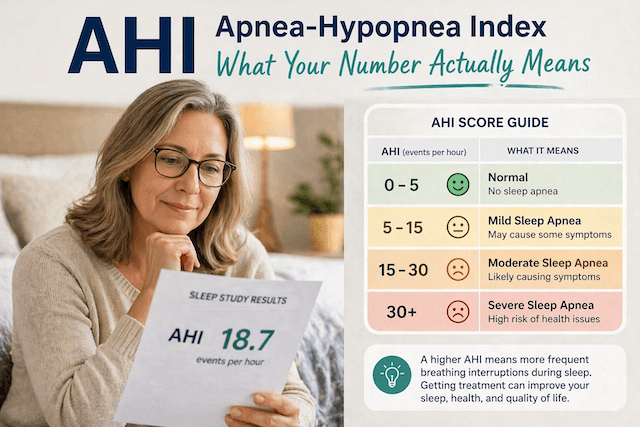
What I did not know was that my sleep was being broken apart hundreds of times a night by severe obstructive sleep apnea. When I was finally diagnosed, my apnea-hypopnea index was 51, which means my breathing was being interrupted dozens of times every single hour. I was not short on hours in bed. I was short on actual sleep. That distinction sits at the heart of everything on this page.
I want to be clear about who is writing this. I am a long term CPAP patient, not a doctor. My background is in computer science. What I can offer is the perspective of someone who lived chronic sleep deprivation for a long time without understanding the cause, and who has read a great deal about why it happens. If you want the full story of how my apnea was finally caught, I tell it properly over on living with sleep apnea. This page is about something narrower and, I think, more useful for a lot of people: how sleep deprivation and sleep apnea feed each other, and why you can be exhausted for years without realizing the two are connected.
What Sleep Deprivation Actually Is
Sleep deprivation simply means not getting the sleep your body needs to function and recover. Most adults need somewhere between seven and nine hours a night. Fall short often enough and the effects start to show up in your mood, your thinking, your body, and your health.
Deprivation comes in two broad shapes. Acute deprivation is the short stretch, the bad week, the run of late nights or early flights. You feel rough, you catch up, and you move on. Chronic deprivation is the one that quietly does damage. It is the ongoing shortfall that builds night after night until poor sleep becomes your normal and you forget what rested even feels like. The Sleep Foundation has a clear overview of how this plays out across the body in its rundown of the effects of sleep deprivation, and it is worth reading if you want the research view alongside mine.
Here is the part that took me far too long to understand. Sleep deprivation is not only about how many hours you spend in bed. It is also about the quality of those hours. You can be horizontal for eight solid hours and still wake up deprived if your sleep keeps getting fragmented before it can do its job. That is exactly what apnea does, and it is why my own exhaustion never made sense to me at the time. On paper I was sleeping enough. In reality I was barely sleeping at all.
What Causes It
For a lot of people, sleep deprivation comes down to lifestyle. Long work hours, shift work, screens late into the night, an irregular schedule, or a bedroom that is too bright, too warm, or too noisy. Stress and anxiety play a huge role too, because a racing mind is a poor companion at bedtime. Caffeine, alcohol, and certain medications all interfere with sleep in their own ways, and alcohol in particular is sneaky because it can knock you out while wrecking the quality of the sleep that follows.
Then there are the medical causes, and this is where my own experience sits. An underlying sleep disorder can quietly steal your rest while you do everything else right. You can have a sensible bedtime, a dark cool room, and a clean routine, and still wake up wrecked because something is interrupting your sleep at a level you cannot see or feel. For me, that something was apnea. For others it might be insomnia, chronic pain, or another condition entirely. The point is that not all sleep deprivation is a willpower problem. Some of it is a medical one.
How It Felt, and What the Symptoms Are
The symptoms of sleep deprivation are easy to list and easy to dismiss, which is part of the problem. The headline one is daytime sleepiness, the kind that has you fighting to stay alert when you should feel fine. There is the cognitive side, where focus, memory, and reaction time all slip. There is the mood side, where you become more irritable, more anxious, more flat. And there are the physical effects, from headaches to a weaker immune system to a higher risk of accidents simply because a tired brain reacts slowly.
I lived most of that list for years. The morning headaches in particular were a constant for me, and they were severe enough at times to tip into migraines. They only eased once I started treatment, which is a connection I did not expect and which I wrote about separately in my piece on sleep apnea and migraine headaches. The fog and the short fuse were harder to notice from the inside, because when you are chronically tired you slowly recalibrate to it. You assume the tired version of you is just who you are now.
Left unmanaged, chronic deprivation reaches past the daily symptoms. Research links it to a higher risk of heart disease, high blood pressure, type 2 diabetes, weight gain, and even cognitive decline over time. The cardiovascular side is especially well documented, and the Sleep Foundation has a useful summary of how sleep deprivation affects your heart. None of this is meant to scare you. It is meant to make the case that being chronically tired is not something to simply push through.
Where Sleep Apnea Comes In
So far this could describe deprivation from any cause. Now I want to connect it to the specific thing that was draining me, because the relationship between sleep apnea and sleep deprivation is closer than most people realize.
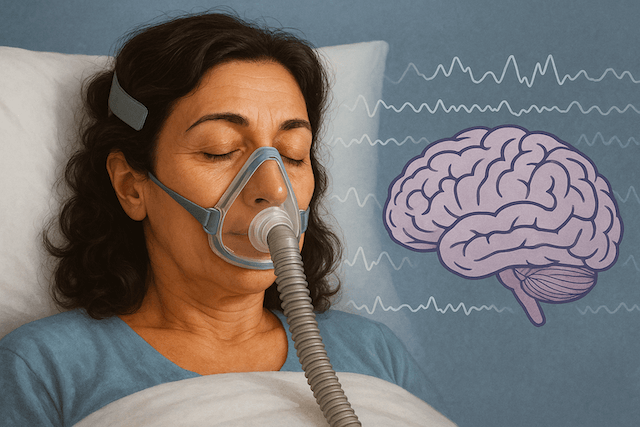
Obstructive sleep apnea is a disorder where your airway repeatedly collapses or narrows during sleep, briefly cutting off your breathing. Each event forces a small arousal as your body jolts itself back to breathing, often without you ever waking enough to remember it. These interruptions can happen a handful of times an hour in mild cases, or dozens of times an hour in severe ones like mine. Multiply that across a night and you get hundreds of tiny disruptions, none of which you are aware of, all of which are shredding your sleep.
That is the mechanism behind apnea causing deprivation. You are never allowed to settle into and hold the deep, restorative stages of sleep, because you keep getting yanked back out of them. Your time in bed looks normal. Your sleep does not. The result is the same daytime sleepiness, fog, and fatigue you would get from simply not sleeping enough, which is exactly why the two conditions are so easy to confuse.
The Overlap That Hides the Real Problem
This overlap is the trap I fell into. Sleep deprivation and sleep apnea share so many symptoms that, from the outside, they can look identical. Both leave you excessively sleepy during the day. Both blunt your focus and memory. Both sour your mood. Both raise your blood pressure and strain your heart over time.
If you are tired all the time and you assume it is your schedule or your stress, you may never think to question whether something is wrong with the sleep itself. I certainly did not. The honest way to tell the difference is not to guess from symptoms but to get assessed. A sleep study measures what is actually happening while you sleep, including your breathing and your oxygen levels, and it is the only reliable way to know whether apnea is the thing draining you. If you recognize yourself in any of this, it is worth reading through the common sleep apnea symptoms and taking them seriously rather than explaining them away the way I did.
The Vicious Cycle
What makes this pairing genuinely worth understanding is that it works in both directions. Apnea is not just a cause of deprivation. Deprivation can also make apnea worse, and the two can feed each other in a loop.
Untreated apnea fragments your sleep, which leaves you chronically deprived. Chronic deprivation, in turn, tends to drive weight gain by disrupting the hormones that govern hunger and fullness, which is well covered in the research and which I touch on in my piece on CPAP therapy and weight. Extra weight, particularly around the neck and throat, can narrow the airway further and make the apnea more severe. More severe apnea means more fragmented sleep, which means deeper deprivation, and around it goes. Each side quietly makes the other worse, which is one of the reasons untreated apnea tends to escalate rather than stay put.
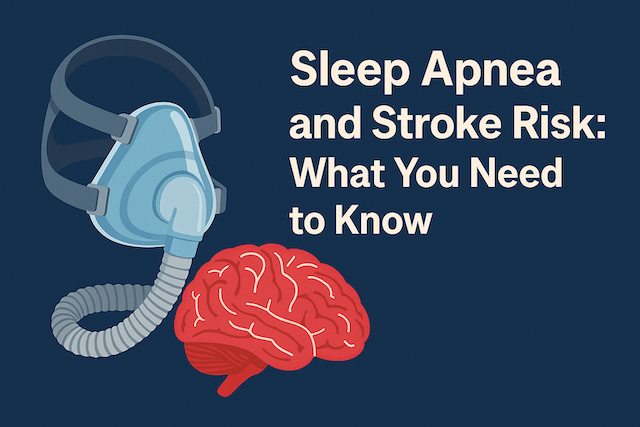
The combined health toll is heavier than either condition alone. Both strain the cardiovascular system, and together they push up the risk of serious outcomes. I have written separately about the link between sleep apnea and stroke risk, which is one of the more sobering reasons not to leave this untreated. The encouraging flip side is that breaking the cycle at any point helps. Treat the apnea and you protect the sleep. Protect the sleep and you take pressure off everything downstream.
What Actually Helped Me
For obstructive sleep apnea, the standard treatment is CPAP therapy, which uses a machine to deliver a steady stream of air that holds your airway open through the night. It sounds clinical and slightly off-putting, and I will not pretend the early adjustment was effortless. But it is the thing that gave me my sleep back.
I have used a ResMed AirSense 10 for the better part of a decade now, with a smaller travel machine I take camping and overseas so I never have to skip a night. Because I am a chronic mouth breather, a nasal setup was never going to work for me, so I run a full face mask. That combination is what works for my particular situation, and I go into the machines I rate in more detail in my guide to the best CPAP machines. The change once therapy settled in was hard to overstate. The fog lifted. The morning headaches faded. I stopped feeling like I was running on a permanent deficit.
The early weeks were the hard part, and I want to be honest about that rather than sell a frictionless story. Adjusting to a mask and to the pressure took patience, and there was a real mental hurdle in the beginning. If that is where you are, I put together everything I learned about getting past it in my guide to overcoming CPAP anxiety, and a separate one on troubleshooting common CPAP problems for the practical snags that come up along the way.
Treatment is also not only about the machine. Good sleep habits matter regardless of whether apnea is in the picture. A consistent schedule, less screen time before bed, and a dark, cool, quiet room all genuinely help, and they help more once the apnea itself is being managed. I gathered the approaches that made a difference for me in my guide on how to sleep better with sleep apnea. Limiting alcohol in the evening and avoiding sedatives helps too, since both relax the throat muscles in a way that can make apnea events more likely.
The Thing I Wish I Had Understood Sooner
If there is one idea I would hand to my earlier self, it is this. Being tired all the time is not a personality trait and it is not just the cost of a full life. If you are giving yourself enough hours in bed and you still wake up unrefreshed, foggy, and headachy day after day, that is a signal worth following rather than ignoring. For me, that signal was apnea quietly demolishing my sleep from the inside, and I spent far longer than I needed to attributing it to everything else.
Sleep deprivation and sleep apnea are tangled together in a way that is easy to miss precisely because their symptoms look the same. The good part is that the connection cuts both ways. Once I treated the apnea, the deprivation that had shadowed me for years finally lifted, and the rest of my health had room to recover. If any of this sounds like your own experience, please do not sit on it. Talk to a doctor or a sleep specialist and find out what is actually happening while you sleep. It is the single most useful thing I ever did.
⚠️ MEDICAL DISCLAIMER This blog provides general information only and is not a substitute for professional medical advice, diagnosis, or treatment. Sleep apnea is a serious condition, and CPAP equipment should be used under proper medical supervision. Always consult your doctor or sleep specialist before starting, stopping, or changing any therapy. I share personal experiences as a CPAP user, not as a medical professional. Individual results vary. For medical guidance, please consult a qualified clinician or the American Academy of Sleep Medicine (aasm.org).