What People With Sleep Apnea Are Really Saying on Reddit


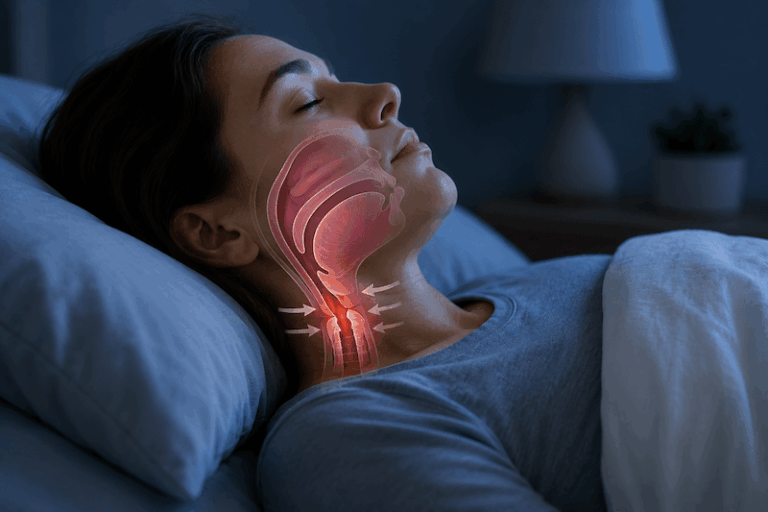
Search “sleep apnea” alongside “Reddit” often enough and a pattern shows up fast: people trust unfiltered accounts from other patients more than they trust another glossy product page. That makes sense. Sleep apnea is one of those conditions that sounds simple on paper — you stop breathing repeatedly in your sleep, you get a machine, problem solved — and turns out to be anything but simple once you’re actually living with it. The community discussions happening across forums and subreddits reflect that gap between the clinical explanation and the lived reality, and after more than a decade with this condition myself, I recognize almost everything in them.
The diagnosis spiral
A huge share of what gets discussed online comes from people who are newly diagnosed and overwhelmed. They’ve just had a sleep study, they’ve been handed an AHI number they don’t understand, and suddenly they’re being told to pick between a CPAP, a BiPAP, or an oral appliance with no real guidance on what any of that means day to day. I remember that exact feeling. Nobody hands you a plain-English explanation of what your numbers mean or what the first few weeks are actually going to feel like — you’re left to piece it together yourself, which is exactly why people turn to communities of other patients instead of another clinical brochure.
Mask and machine frustration is universal
If there’s one theme that comes up over and over, it’s mask problems. Leaks, red marks, claustrophobia, the sound of the machine, a partner who can’t sleep next to it — these are the unglamorous daily frictions that almost never make it into product marketing but dominate real conversation. It took me years and more mask styles than I’d like to admit to find a setup that actually worked for my face and my sleep position. That trial-and-error process is common, not a sign you’re doing something wrong, and it’s a big part of why so many people go looking for other patients’ experiences rather than trusting a single manufacturer’s recommendation.
Treatment options beyond CPAP
A steady stream of discussion centers on alternatives to CPAP — oral appliances, positional therapy, weight loss, surgery, and increasingly some of the newer non-surgical options entering the market. People are usually looking for a straight answer on whether these things actually work, and the honest answer is that it depends heavily on the severity and cause of the apnea. CPAP remains the most effective treatment for moderate to severe obstructive sleep apnea, but for mild cases or specific anatomical causes, other approaches can be reasonable to explore with a sleep physician. What people are really asking, underneath the specific treatment question, is whether they’re stuck with a machine forever — and the community conversation reflects a real hunger for anything that might mean they aren’t.
The testing and diagnosis anxiety
There’s also a recurring current of anxiety around the sleep study itself — worry about whether results will be accurate, whether a bad night’s sleep during the test will throw off the diagnosis, or whether it’s possible to somehow get a false negative and be told nothing is wrong when something clearly feels off. This is a real and understandable fear, especially for people who’ve spent months or years feeling exhausted without an explanation. Sleep studies, whether in a lab or at home, are generally reliable at detecting significant apnea, but night-to-night variation is real, and a single inconclusive test is not the end of the road if your symptoms persist.
The years before diagnosis
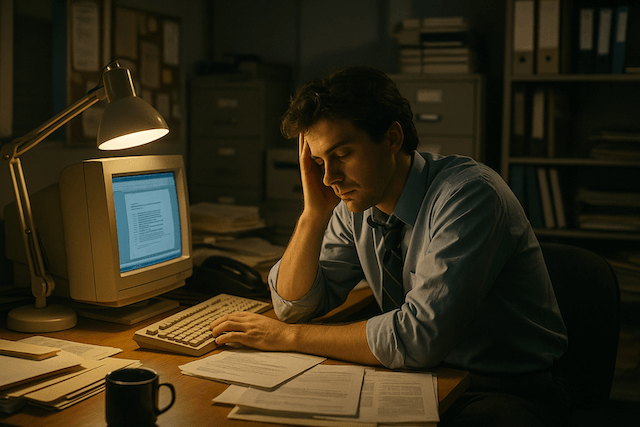
One of the most common threads running through these discussions isn’t about equipment or treatment at all — it’s people describing years of suspecting something was wrong before anyone took it seriously. Chronic tiredness gets written off as stress, or bad sleep hygiene, or just getting older, and it can take a genuinely dangerous moment, like nodding off at the wheel, before a doctor takes the complaint seriously enough to order a sleep study. That was close to my own experience. I had a near-miss on the motorway from daytime sleepiness before I was ever diagnosed, and reading how often that exact kind of story repeats itself in patient communities is part of what convinced me it needed saying out loud rather than left as an isolated bad memory.
What it does to a relationship
Sleep apnea rarely affects just one person in a bed. A huge amount of what gets discussed is really about the partner: the snoring that started it all, the separate bedrooms, the exhaustion of being kept awake by someone else’s breathing problem long before either person understood what was happening. I’ve got my own version of this story — a hostel room in Sydney back in 2001 where a stranger’s complaint about my snoring was the first real hint something was wrong, years before I did anything about it, and my wife eventually filming me sleeping because she couldn’t otherwise explain what she was seeing every night. Those moments tend to be what finally pushes someone toward a diagnosis, more than any symptom checklist ever does.
The cost of staying on treatment
Equipment cost and insurance friction come up constantly, and for good reason. Machines, masks, and replacement supplies aren’t cheap, and many insurers require documented compliance, often a minimum number of hours of use per night, before they’ll continue covering the equipment. That creates a strange dynamic where people are penalized for struggling with a treatment that’s already difficult to adjust to. It’s a legitimate source of frustration, and one of the more practical reasons people go looking for other patients’ experiences, because a lot of this financial and logistical detail simply isn’t covered anywhere in the standard diagnosis conversation with a doctor.
Does a deviated septum actually cause sleep apnea?
This question comes up often enough to be worth addressing directly. A deviated septum on its own is a structural issue with the wall between the nostrils, and while it doesn’t cause obstructive sleep apnea by itself, it can restrict airflow through the nose in a way that makes existing sleep apnea worse or makes CPAP therapy harder to tolerate, since many people breathe through their nose while using a mask. If nasal obstruction is making treatment difficult, it’s worth raising with an ENT alongside your sleep physician rather than assuming the two conditions are unrelated.
Do sleep apnea mouth guards actually work
Oral appliances, often described as mouth guards, come up as a recurring question from people hoping to avoid a CPAP machine altogether. They can be genuinely effective for mild to moderate obstructive sleep apnea by holding the jaw or tongue in a position that keeps the airway open, and for people who can’t tolerate CPAP, they’re a legitimate alternative worth discussing with a sleep specialist. They tend to be less effective for severe cases, though, which is worth knowing before treating them as a guaranteed replacement. I’ve gone into more detail on specific options in my best sleep apnea mouth guards rundown if that’s the path you’re considering.
Why I’ve started showing up in these spaces myself
Reading through these discussions is part of why I’ve recently started participating directly in communities like r/SleepApnea and r/CPAP under the handle u/byjeremysmith, rather than only writing about the condition from a distance on this site. The questions people are asking in real time are often more specific and more urgent than what fits into a general article, and I’d rather be part of that conversation than just another link that shows up in a search result. If you’re dealing with sleep apnea and spend any time in those communities, feel free to look me up.
Sleep apnea is a condition best understood through a mix of solid clinical guidance and honest accounts from people actually living with it. If you’re early in this process, know that the confusion, the mask trial-and-error, and the treatment questions you’re wrestling with are shared by nearly everyone who’s been through it, myself included.
⚠️ MEDICAL DISCLAIMER This blog provides general information only and is not a substitute for professional medical advice, diagnosis, or treatment. Sleep apnea is a serious condition, and CPAP equipment should be used under proper medical supervision. Always consult your doctor or sleep specialist before starting, stopping, or changing any therapy. I share personal experiences as a CPAP user, not as a medical professional. Individual results vary. For medical guidance, please consult a qualified clinician or the American Academy of Sleep Medicine (aasm.org).