Upper Airway Resistance Syndrome (UARS): What Can Be Done?

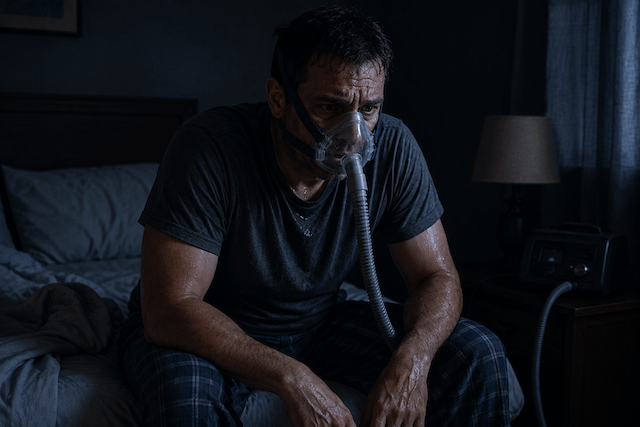
I should say this up front, because it shapes everything that follows. I have lived with severe obstructive sleep apnea for more than a decade, and my background is in computer science, not medicine. I am not a doctor. I have also never had upper airway resistance syndrome myself. My own diagnosis left almost no room for doubt. When my breathing was measured during sleep, the number came back high enough that the conclusion was obvious to everyone in the room. UARS is, in a strange way, the mirror image of that experience. It is the condition that slips quietly past the same kind of testing that flagged me in a single night.
That contrast is exactly why I think this topic is worth writing about carefully. A lot of people who feel exhausted, foggy, and unrested go and get checked, are told their results look normal or only borderline, and walk away with no explanation for how badly they feel. For some of those people, the answer is upper airway resistance syndrome. So here is what I have learned reading the research, kept in plain language, with the medical sources linked so you can go deeper.
What upper airway resistance syndrome actually is
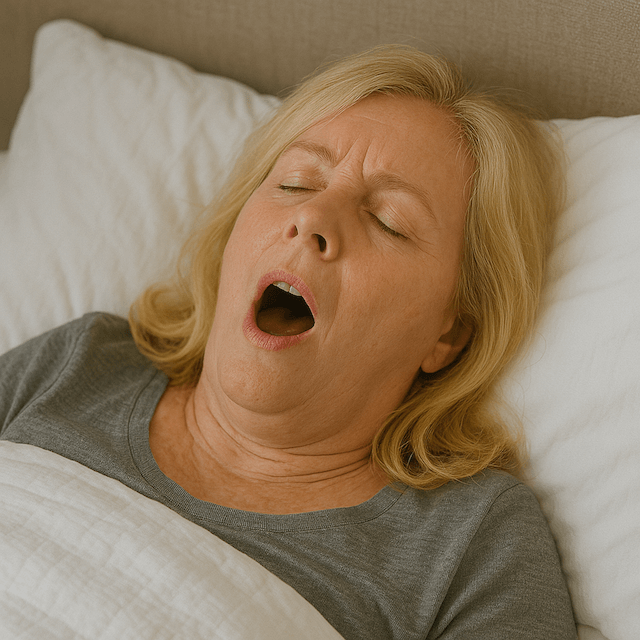
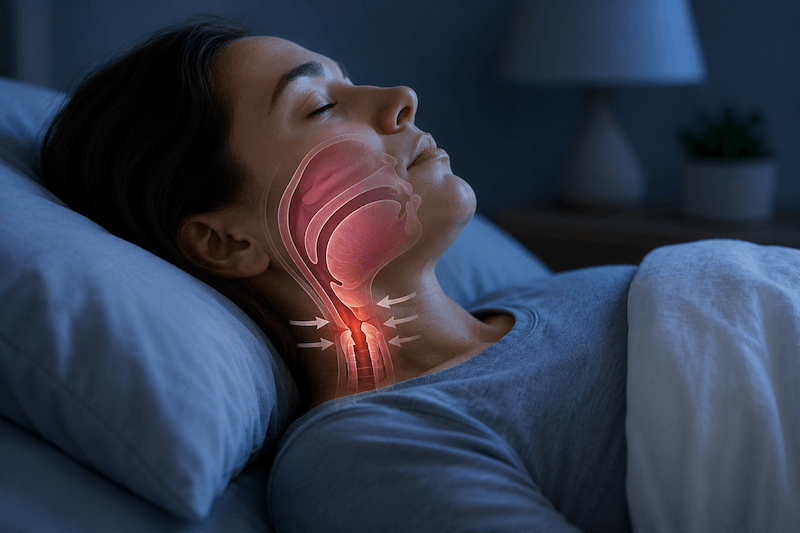
Upper airway resistance syndrome, usually shortened to UARS, is a sleep-related breathing problem. During sleep, the soft tissue at the back of the throat relaxes, and the airway narrows. It does not collapse completely, and it does not narrow far enough to stop airflow the way a full apnea does. Instead, the airway becomes tight enough that breathing in takes noticeably more effort. Your body senses that struggle and nudges you toward a lighter stage of sleep, or briefly wakes you, so you can take a stronger breath. Then you settle, the cycle repeats, and it can happen many times an hour all night long.
Those brief interruptions have a clinical name: respiratory effort-related arousals, often abbreviated to RERAs. A RERA is the key signature of UARS. It is a disturbance driven by the work of breathing against a narrowed airway, rather than by a measurable pause in breathing. Sleep medicine has historically treated snoring, UARS, obstructive sleep apnea, and central sleep apnea as points along one spectrum of sleep-disordered breathing, and UARS sits in the middle ground between ordinary snoring and full obstructive sleep apnea. The condition was first characterized at Stanford in the early 1990s, and even now there is no full agreement on whether it should count as its own distinct disorder or simply as a milder, earlier expression of the same underlying problem. You can read a clinical overview of the condition at the National Library of Medicine and a patient-facing summary from Stanford Health Care.
How UARS differs from obstructive sleep apnea
This is the part that trips people up, so it is worth slowing down on. With obstructive sleep apnea, the airway repeatedly closes off either partially or completely. Breathing stops or drops sharply for seconds at a time, and blood oxygen often falls with it. That oxygen drop is one of the things a sleep study is built to catch, and it is a big part of what made my own results so clear-cut.
UARS works differently. The airway narrows, and breathing becomes a fight, but the airflow usually does not fall far enough to register as an apnea or a hypopnea, and oxygen levels tend to stay in a normal range. Most people with UARS hold their oxygen saturation at or above the low nineties through the night. So the body is being disturbed over and over, sleep is being chopped into fragments, and yet the two measurements that scream apnea, the count of breathing pauses and the oxygen dips, can look reassuringly ordinary.
There is one more difference that matters in real life. Loud snoring is a classic flag for obstructive sleep apnea, the kind a bed partner notices and complains about. With UARS, snoring may be soft or absent entirely. That means the people around you, the very people who often push someone toward a diagnosis, may not have anything obvious to point at. Plenty of people with UARS arrive at a sleep clinic on the strength of their own exhaustion alone, with no dramatic story to tell.
The symptoms that tend to point to UARS
Because the breathing disturbances are subtle, the daytime consequences are what usually drive people to seek help. The most common complaints are unrefreshing sleep, fatigue that does not match how long you spent in bed, daytime sleepiness, and trouble concentrating or thinking clearly. Many people with UARS also describe chronic insomnia, both difficulty falling asleep and difficulty staying asleep, which can feel like the opposite of a breathing problem and sends people looking in the wrong direction.
Beyond the core picture, the research consistently links UARS to a cluster of symptoms that you might never connect to your breathing. These include morning headaches, frequent trips to the bathroom overnight, lightheadedness tied to lower blood pressure, anxiety, and a range of vague physical complaints that resemble what doctors sometimes call functional somatic symptoms. Some studies have even found that people with UARS report worse sleep quality than people with mild obstructive sleep apnea, despite their breathing measurements looking less severe on paper. If you have been chasing fatigue and brain fog for a long time and getting nowhere, this pattern is worth knowing about.
Why UARS is so often missed
Here is the heart of the problem, and it comes back to measurement. The standard yardstick for sleep-disordered breathing is the apnea hypopnea index, or AHI, which counts how many times an hour your breathing stops or drops substantially. UARS by definition keeps the AHI low, often under five events an hour, which is the same range a person without any breathing problem would show. If a report only looks at AHI and oxygen, UARS produces a result that reads as normal or, at worst, as mild apnea that does not seem to warrant much concern.
Detecting UARS requires looking for the subtler signals: the effort related arousals and the periods of restricted airflow that do not meet the apnea threshold. Those signals are harder to score, are not always captured well, and can be inconsistently interpreted even when the data is there. The result is a condition that is easy to overlook and easy to misclassify.
Testing setting matters too. An at home sleep test is built mainly to catch the bigger events, the apneas and the oxygen drops, and it can underestimate the more delicate disturbances that define UARS. A fuller study in a sleep lab, which records brain activity along with airflow and effort, is generally better suited to picking up the arousals and flow limitation that point to UARS. I went into my own testing already strongly suspected of having apnea, and my numbers confirmed it immediately. Someone with UARS can do everything right, complete the same kind of test, and still come away with a result that quietly understates what is actually happening.
Who tends to develop UARS
The typical UARS patient looks a little different from the stereotype of obstructive sleep apnea. Apnea is often associated with older age, higher body weight, and a larger neck. UARS shows up more frequently in younger adults, in women, and in people who are slim, which is part of why it gets dismissed. A person who is fit and not overweight does not match the mental picture many of us carry for a sleep breathing disorder, and that mismatch can delay the right diagnosis for years.
Anatomy plays a large role. Narrow airways, a small or set back lower jaw, a high arched palate, crowded oral structures, and the position of the tongue can all raise resistance to airflow. So can anything that blocks the nose. Nasal congestion, allergies, and structural issues such as a deviated septum force more effort into each breath and can tip a marginally narrow airway into trouble once the muscles relax in sleep. Family history and the way the face and jaw developed in childhood feed into all of this as well.
How UARS is treated
The encouraging news is that UARS is treatable, and many of the same tools used for obstructive sleep apnea apply here. The right choice depends heavily on the individual, on what is driving the resistance, and on what someone is willing to use night after night, which is a real consideration with any therapy you have to live with.
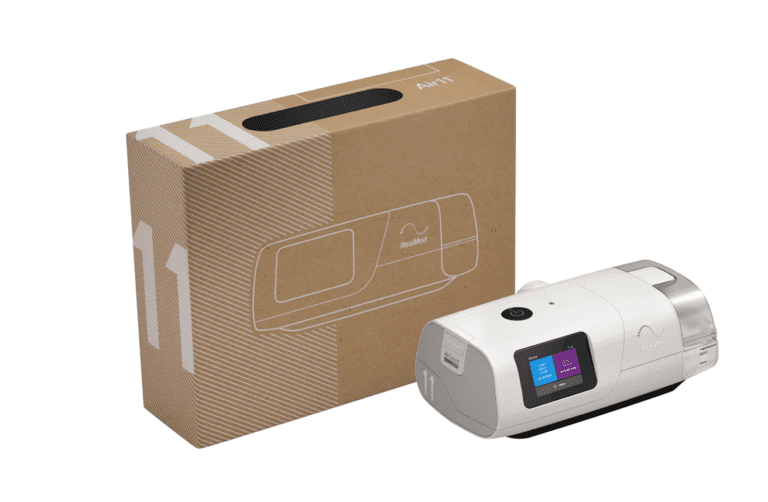
CPAP therapy, the approach I have relied on for more than a decade, is one option. A CPAP machine delivers a steady stream of pressurized air that splints the airway open, which removes the resistance that triggers the arousals. It can work well for UARS, though some people with the condition find the pressure harder to tolerate when their breathing problem feels less obviously severe to them in the first place. Comfort and the right pressure setting make a large difference, and that is true whatever the diagnosis.
Oral appliances are a common alternative, especially where the lower jaw or tongue position is part of the picture. A mandibular advancement device is a custom fitted dental appliance that holds the lower jaw slightly forward during sleep, which opens up the space behind the tongue and lowers airway resistance. These are generally well tolerated and are a popular choice for people who cannot get along with CPAP.
Treating the nose is often part of the plan, since nasal blockage is such a frequent contributor. That can mean managing allergies, addressing chronic congestion, or, where there is a structural problem, considering surgery to improve nasal airflow. Positional approaches help some people, because for many the narrowing is worse when sleeping on the back. Myofunctional therapy, which retrains the muscles of the mouth and throat, and in selected cases surgical options to widen or stabilize the airway, round out the range of possibilities. The point is that there is no single fix. A good sleep specialist will match the treatment to what is actually causing your airway to narrow.
A quick word on coding and why the label matters
One of the practical frustrations with UARS, and a question people search for directly, is how it is classified. UARS does not have its own clean, dedicated diagnostic code the way many conditions do. The major classification of sleep disorders has not historically treated it as a separate entity, and it tends to get folded in with broader sleep-disordered breathing diagnoses. That sounds like a paperwork detail, but it has real consequences. When a condition has no firm place of its own in the system, it is easier for it to fall through the cracks, harder to track, and harder for patients to get clinicians to take seriously. If you suspect UARS, it can help to talk about your symptoms and your effort-related arousals specifically, rather than relying on a single index number to tell the whole story.
When to talk to a doctor
If you are persistently tired, unrefreshed, and foggy despite spending enough time in bed, and especially if you have already been told that a sleep test came back normal or only borderline, UARS is a reasonable thing to raise with a sleep physician. The same is true if you have ongoing morning headaches, frequent night waking, or unexplained daytime sleepiness that nothing seems to fix. Pushing for a fuller evaluation, one that looks beyond the apnea count to the effort and flow limitation in your breathing, is a fair thing to ask for.
I will repeat the disclaimer I started with, because it matters most here. I am a patient who has lived with sleep apnea for a long time, not a clinician, and nothing on this page is medical advice. What I can tell you from my own years inside this world is that feeling exhausted with a normal-looking sleep study is a genuine and recognized situation, not something you are imagining. If that describes you, it is worth finding a sleep specialist who will keep looking. You can read more about my own experience on my living with sleep apnea page.
⚠️ MEDICAL DISCLAIMER This blog provides general information only and is not a substitute for professional medical advice, diagnosis, or treatment. Sleep apnea is a serious condition, and CPAP equipment should be used under proper medical supervision. Always consult your doctor or sleep specialist before starting, stopping, or changing any therapy. I share personal experiences as a CPAP user, not as a medical professional. Individual results vary. For medical guidance, please consult a qualified clinician or the American Academy of Sleep Medicine (aasm.org).