Can Sleep Apnea Be Cured? Ten Years On, Here’s My Honest Answer

When my wife finally convinced me to do a sleep study, the number that came back rattled me: an AHI of 51. That meant my breathing was stopping around once every minute, all night long. On the drive home from the clinic, the only question I could think to ask was the one every newly-diagnosed person asks: “Can this be cured?”
That was over a decade ago.
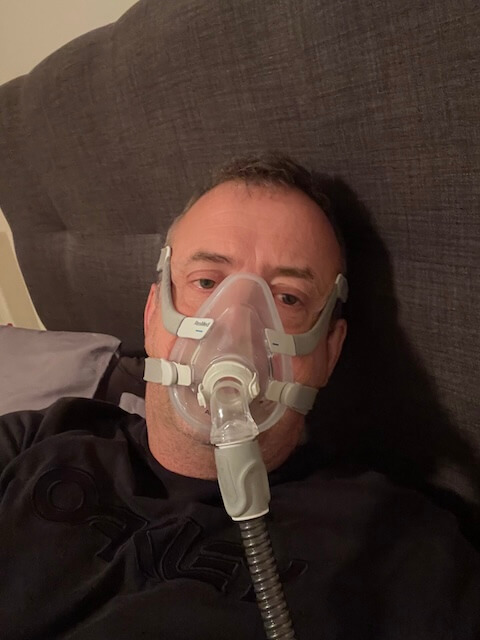
Since then I’ve lost 20 pounds, had one unrelated surgery, slept through multiple overseas trips with a travel CPAP in my carry-on, and worn a mask every single night. My AHI now sits around 4. I don’t get the crushing migraines that used to make me vomit. I don’t wake up exhausted. My wife no longer nudges me awake to check that I’m still breathing.
So is my sleep apnea cured?
No. Not in the way I meant when I asked that question all those years ago. But the distance between “cured” and “well-managed” has turned out to be much smaller than I feared — and the rest of this post is really about that distance.
The honest answer most doctors won’t give you this plainly
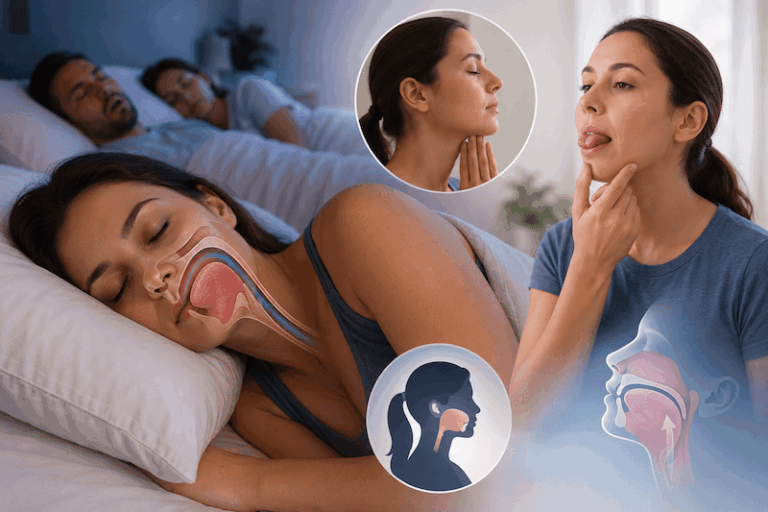
For the overwhelming majority of adults with obstructive sleep apnea, the condition cannot be permanently cured. It’s a structural problem — the way your throat, tongue, jaw, soft palate and airway interact when the muscles relax in sleep. Those structures don’t rebuild themselves.
In practice, that means if you put an adult with moderate or severe OSA to bed without any treatment, the apneas come straight back. Mine do, every time I fall asleep on the couch before I’ve put my mask on. I wake up with the trademark dry mouth, a dull headache, and the vague sense that I’ve been running a marathon in my sleep. The underlying condition hasn’t gone anywhere. It’s been patiently waiting for me to take my air pressure off.
According to the Mayo Clinic’s overview of obstructive sleep apnea, OSA is driven by a mix of factors most of us can’t change: neck circumference, the shape of the upper airway, family history, and the tendency for the soft tissue at the back of the throat to collapse during sleep. You can chip away at some of those — weight especially — but you can’t anatomically rebuild yourself.
The question people are really asking when they type “can sleep apnea be cured” into Google isn’t whether the diagnosis gets formally lifted. It’s “can I live a normal life without feeling like this?”
That answer is a much happier yes.
What “normal” actually looks like after ten-plus years
The first morning I woke up on CPAP was one of the strangest mornings of my adult life. No headache. No feeling of having been hit by a truck. No twenty-minute staring contest with the ceiling before I could convince myself to stand up. Nothing felt wrong, and I genuinely thought something must be wrong because of it.
That first AHI reading came in around 4 — down from 51. It has stayed there ever since.
I’m now on a ResMed AirSense 11, which has been the most reliable machine I’ve owned. I wear a ResMed F20 full face mask because I’m a mouth breather. I check the myAir app with my morning coffee the way other people check the weather. That’s it. That’s the entire ritual.
What I want someone newly-diagnosed to understand is how quickly the mask stops being a thing you’re aware of. For the first week I was hyper-conscious of it. By week three I missed it when I didn’t have it. Now I don’t think about it at all — which is, I think, the best measure of whether a treatment is working. Cured people don’t think about being cured either. They just live.
There’s a detail I can share only because I’ve been on therapy this long: my body now notices when I haven’t used CPAP. If I fall asleep on a flight without it, or doze off watching TV on the couch, I wake up the next morning and can feel within seconds that the machine wasn’t on. The dry mouth, the pressure behind the eyes, the flat mood — all back. It’s a funny kind of gift, actually. I used to feel that way every single morning and assumed it was just what mornings felt like.
What I tried to actually cure it (and what it taught me)
Before I accepted CPAP as a forever thing, I tried the things most people try. Here’s the honest tally.
Sleep position, nasal strips, avoiding alcohol, throat exercises. I’ve tried most of the natural remedies that show up in every “cure sleep apnea naturally” article. Side sleeping genuinely helps mild cases. Alcohol before bed makes everything worse — that one is absolutely true, and I’ve stayed off late-night drinks for years. Nasal strips did nothing measurable for me. Throat exercises (myofunctional therapy) have some legitimate evidence behind them for mild OSA, and if I had a milder case I’d probably pursue them seriously — the Stop Snoring and Sleep Apnea Program is the best structured approach I’ve come across if that’s the route you want to explore.
Losing weight.
This is me doing a 5km walk.
I dropped around 20 pounds through exercise and better eating, and I expected my AHI to fall with it. It didn’t — not meaningfully, anyway. My AHI on CPAP has stayed around 4, whether I’m at my lightest or carrying a few extra kilos after a trip away. That surprised me at the time, but it fits the research. The Sleep Foundation’s overview of weight and sleep apnea is clear that while weight loss can reduce OSA severity, weight loss alone rarely fully resolves moderate or severe cases. For people whose apnea is primarily driven by excess weight, a 10–15% drop in body weight can make a real difference. For people like me, whose airway anatomy is the main culprit, it helps general health without fixing the apnea. I’d still recommend losing the weight — just don’t bank on it as the cure.
Surgery. I’d had a septoplasty for a deviated septum years before I was ever diagnosed with sleep apnea. Did it help? Honestly, I don’t think it moved the needle — I still ended up with severe OSA. Some people do have surgery specifically for sleep apnea (UPPP, jaw advancement, tonsil removal), and for a subset of patients it works well. But the success rates vary, the recovery is real, and a meaningful number of people end up on CPAP afterwards anyway. I never pursued airway surgery because CPAP was working. I couldn’t see the case for elective throat surgery to escape something I’d already escaped.
The pattern I kept running into was this: the interventions that might cure mild sleep apnea weren’t enough for severe sleep apnea. An AHI of 51 is not a problem you position-sleep your way out of. I had to accept that, and once I did, everything got easier.
The treatments that come closest to a cure
A handful of approaches do come close to “cure” territory for the right patients, and it would be dishonest to write this post without mentioning them.
Inspire therapy is an implanted device that stimulates the hypoglossal nerve to keep the tongue forward during sleep. It’s not CPAP — no mask, no tubes, no air pressure. For the right candidates, it can get AHI down to CPAP-like numbers without wearing anything on your face. It is surgery, though, and it’s not suitable for everyone — there are BMI and anatomy requirements, and it’s generally reserved for people who can’t tolerate CPAP.
Zepbound (tirzepatide) became the first medication approved specifically for OSA in late 2024. It works through weight loss in patients with obesity, and for the right patients it can meaningfully reduce sleep apnea severity and in some cases achieve remission. It’s not a cure in the traditional sense either — if the weight comes back on, the apnea often does too — but it’s the closest pharmaceutical option we’ve ever had.
Bariatric surgery has reversed or significantly improved OSA in plenty of obesity-related cases. A big intervention with big outcomes for the right patient.
None of these were right for me. My CPAP was working, my anatomy doesn’t suit Inspire, I’m not obese, and the idea of swapping a nightly mask for permanent surgery I don’t need has never made sense. But if you’re reading this early in your journey and none of those options applies to you perfectly, at least now you have the map.
Why I stopped wanting a cure
Here’s the part I didn’t understand at 40-something, staring at an AHI of 51 and feeling sorry for myself.
A cure implies going back to how you were before. But how I was before was terrible. I just didn’t know it, because I’d been that way for years and assumed the fog and the headaches and the afternoon exhaustion were my personality. Untreated sleep apnea had taken more from me than I realised — energy, patience, mood, probably years off my cardiovascular life expectancy.
What CPAP gave me wasn’t a return to some earlier version of myself. It was a better version. I feel better now than I did in my 30s, and I can say that with a straight face because it’s simply true.
The inconveniences are small in the scale of a life. I spend about five minutes a day on maintenance. I replace my supplies on a sensible schedule. I pack a small travel machine when I fly. I’ve used it in hotels, tents, airports, guest rooms, Airbnbs in places with questionable power sockets. None of that is hard. It’s the price of admission to feeling well, and it’s a low price.
The advice I’d give my newly-diagnosed self
If you’ve landed on this page because you’re where I was over a decade ago — newly diagnosed, hoping for a cure, dreading a lifetime of mask-wearing — here’s what I’d tell you.
The chase for a cure can cost you years. I know people who spent five, six, seven years trying every natural remedy, losing weight, trying mouthpieces, and avoiding CPAP because the idea felt like surrender. Meanwhile, their hearts and brains were living through thousands more nights of oxygen drops than mine were. Don’t be that person. Get the treatment that’s proven to work, and pursue the cure questions alongside it, not instead of it.
CPAP is a much smaller deal than you think. The first mask you try probably won’t be the one you love. Try another. My full face mask wasn’t my first choice, but it turned out to be the right one for me. Pressure settings can be adjusted. Humidifiers and climate-controlled tubing solve most comfort complaints. The first week is the worst week, and it gets easier quickly.
The goal was never really a cure. The goal was to feel well, sleep well, live well, and not die of something preventable in my 50s. By that measure, my sleep apnea has been beaten for over a decade — and I don’t feel any less beaten for the fact that a technicality says otherwise.
If you have questions about living with sleep apnea long-term, CPAP therapy, or anything I’ve covered here, leave a comment below. Always happy to share what I’ve learned.
One last thing — if you haven’t been tested yet
A lot of people land on a post like this because they suspect something’s wrong but haven’t actually done a sleep study. If that’s you, please don’t leave it. Untreated sleep apnea is a cardiovascular and cognitive bill that compounds quietly for years, and you don’t feel it adding up until you get the diagnosis and start treatment.

You don’t need an overnight in a clinic to find out. The WatchPAT One is the at-home sleep test I recommend to anyone in that position — you sleep one night in your own bed with a small finger sensor, the data goes to a sleep physician, and you’ll have an answer in days rather than months. It’s the shortest possible path between “something feels off” and “I know what this is and here’s the plan.”
If I could go back and tell 2014-me one thing, it would be to get tested a year sooner. Don’t do what I did.
⚠️ MEDICAL DISCLAIMER This blog provides general information only and is not a substitute for professional medical advice, diagnosis, or treatment. Sleep apnea is a serious condition, and CPAP equipment should be used under proper medical supervision. Always consult your doctor or sleep specialist before starting, stopping, or changing any therapy. I share personal experiences as a CPAP user, not as a medical professional. Individual results vary. For medical guidance, please consult a qualified clinician or the American Academy of Sleep Medicine (aasm.org).