Stop Snoring and Sleep Apnea Program Review: An Honest Take

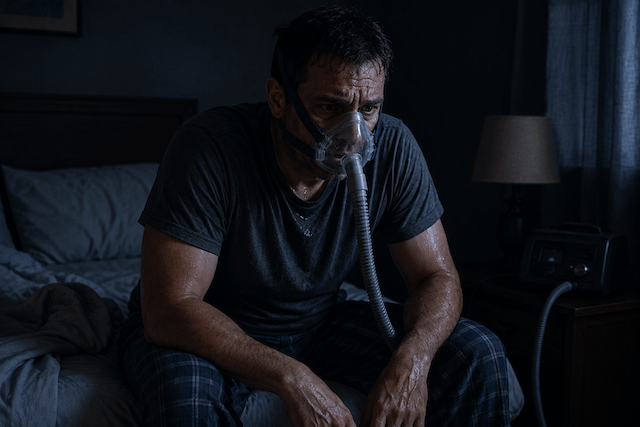
I’ve been sleeping with a CPAP on my face for more than a decade. Severe obstructive sleep apnea — the kind where you stop breathing dozens of times an hour and wake up feeling like you’ve been hit by a bus — has been my nightly reality since my thirties. So when people email me asking about Christian Goodman’s Stop Snoring and Sleep Apnea Program, my first instinct is always the same: healthy scepticism.
I’ve seen plenty of “natural cures” promoted to the sleep apnea community over the years. Most don’t survive five minutes of scrutiny. But a handful of them are grounded in real science and deserve a fair hearing, even from a CPAP lifer like me. After working through Goodman’s program and comparing it against the actual peer-reviewed research on airway exercises, I wanted to write the kind of review I wish I’d found when I first started digging.
If you’re searching for honest Christian Goodman sleep apnea reviews before handing over your card, this one is for you.
Who is Christian Goodman, really?
Let’s get this out of the way up front: Christian Goodman is not a doctor, a sleep physician, or a registered speech therapist. He’s a natural-health author and the founder of Blue Heron Health News, a publisher of digital health programs. He’s written on everything from high blood pressure to vertigo.
That matters because the credibility of a health program rests on two things — the person behind it and the science behind it. Goodman himself doesn’t have clinical credentials, so the entire weight falls on whether the techniques he promotes actually work. And that, thankfully, is a question we can answer by looking at the peer-reviewed literature rather than taking his word for it.
The core premise of his program is simple. Instead of relying on a CPAP machine or surgery, you spend a few minutes a day doing targeted breathing, tongue, jaw, and throat exercises. The theory is that strengthening the muscles around your airway makes them less likely to collapse while you sleep, which is what causes both snoring and obstructive sleep apnea events.
If you’re a CPAP refusenik, or you snore so loudly your partner is threatening to move to the spare room, that pitch lands. The real question is whether it works — and for whom.
What you actually get inside the program
The Stop Snoring and Sleep Apnea Program is a digital product. You pay once, you download a PDF guide, and you get access to a set of around 24 short exercises. There’s no app, no video course in the Netflix sense, no coaching — just the written program and a few supplementary guides.
The exercises themselves target four areas:
- Tongue exercises — things like tongue slides along the roof of the mouth, tongue push-ups, and sticking your tongue out and holding it
- Soft palate exercises — pronouncing drawn-out vowel sounds, which sounds ridiculous but actually activates the tissues that collapse during sleep
- Jaw and facial exercises — side-to-side jaw movements, resistance work with the cheeks
- Breathing routines — nasal breathing drills, humming, and paced breathing work
Goodman instructs you to perform the routine daily, starting with a core set and layering in more as you progress. Each session takes roughly 3–7 minutes. The guide suggests you’ll start noticing changes within a week or two, with more significant improvements at the 4–8 week mark.
That timeline matters, and we’ll come back to it. This is not a pill you take tonight and wake up cured.
What the actual research says
Here’s where Goodman’s program deserves more credit than most “natural” sleep programs get. The techniques he’s teaching are a rough consumer-level version of a genuine, evidence-backed clinical approach called myofunctional therapy, or oropharyngeal exercise therapy. Sleep physicians and speech-language pathologists have been studying it for more than 15 years.
The foundational paper is a 2009 randomised controlled trial by Kátia Guimarães and colleagues, published in the American Journal of Respiratory and Critical Care Medicine. Patients with moderate obstructive sleep apnea did about 30 minutes of daily oropharyngeal exercises for three months. By the end of the trial, their apnea-hypopnea index (AHI) dropped from 22.4 to 13.7 events per hour — roughly a 40% reduction — with improvements in snoring, neck circumference, daytime sleepiness and sleep quality. The control group barely changed.
That’s a genuinely meaningful result, and it’s been replicated since. A 2015 meta-analysis in the journal Sleep pooled multiple trials and found average AHI reductions of around 50% in adults doing myofunctional therapy, with even larger effects in children.
The Sleep Foundation, which is one of the more sensible consumer health authorities on sleep topics, gives a balanced summary of the evidence. Their own reviewers note that these exercises can meaningfully reduce snoring and improve mild-to-moderate OSA, and often work best when used alongside CPAP rather than instead of it.
So the science is real. What I’d push back on — gently — is the implication in much of Goodman’s marketing that this alone can replace CPAP for anyone, regardless of severity. That claim outruns what the evidence actually supports.
My honest experience working through the program
I came into this with two advantages most first-time buyers don’t have. One, I already know exactly how bad my apnea is because I’ve had multiple sleep studies and look at my CPAP data most mornings using OSCAR. Two, I’m on CPAP anyway, so I could test whether the exercises nudged anything without any risk to my treatment.
I worked through the exercises for about six weeks. The routine itself is easy — it’s a few minutes in the morning while I’m making coffee. The tongue work was harder than I expected; there’s a definite burn in muscles you didn’t know you had. The soft palate drills felt silly for about three days and then became autopilot.
What changed for me? Honestly, not my AHI. My severe apnea is anatomical and central enough that no amount of tongue push-ups is going to fix it. But two things did shift. My mouth felt less slack in the mornings — less of that drooly, dry feeling that I used to get. And my wife said my residual mask-off snoring (I sometimes pull it off in my sleep — a very sleep-apnea-blogger problem) was quieter than usual.
Is that worth the price of the program? Honestly, for me, at my level of severity, it’s a nice-to-have rather than a game-changer. But I can see exactly why someone with mild apnea or primary snoring would have a genuinely different experience. The mechanism is sound, and the effect is real; it just happens to be modest relative to the size of my problem.
Who this program is actually for
After going through it, I can say with more confidence than most reviewers exactly who should and shouldn’t buy this.
This is worth trying if you’re someone who:
- Snores loudly but hasn’t been diagnosed with sleep apnea, or has been told you have primary snoring
- Has mild obstructive sleep apnea (AHI between 5 and 15) and wants to try a non-device approach first, with your doctor’s approval
- Already uses CPAP but wants a complementary tool that may let you tolerate lower pressures over time
- Is exploring natural and non-device approaches to reversing sleep apnea before committing to long-term therapy
- Has tried or is considering other alternative treatments for sleep apnea and wants another low-cost tool in the kit
This is probably not right for you if you:
- Have severe sleep apnea (AHI over 30) and aren’t already on CPAP. Please, get on therapy. Exercises aren’t going to cut it.
- Expect immediate overnight results
- Can’t commit to daily practice for at least 4–8 weeks
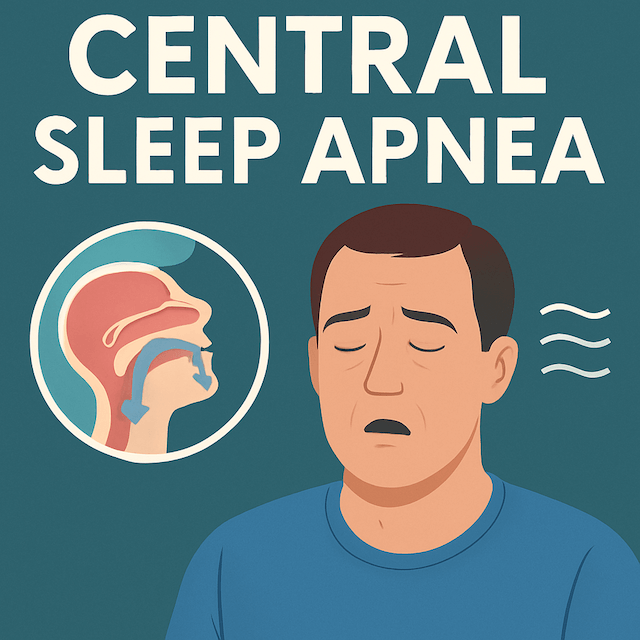
- Have central sleep apnea, since these are muscle tone exercises and central apnea is a brain-signalling issue, not an airway collapse issue
If you’re not even sure which bucket you’re in, take a step back first and read up on what obstructive sleep apnea actually is and get a proper diagnosis before spending on any program — Goodman’s or anyone else’s.
Can it replace CPAP?
For severe OSA like mine, no. I don’t think anyone being honest with the evidence would say otherwise. CPAP remains the gold standard because it physically holds the airway open every single night, from the first to the last event. No exercise program does that.
For mild OSA or primary snoring, though, the picture is different. There is a genuine case in the literature that consistent myofunctional therapy can bring mild apnea out of the treatment threshold or eliminate snoring entirely. That’s not marketing — that’s what randomised trials have shown.
The trap is in the middle. If you have moderate apnea and you’re using exercises as your sole treatment, you’re rolling the dice with your cardiovascular health, your daytime alertness, and your driving safety. Moderate OSA is still strongly linked to hypertension, stroke, and accidents. Please talk to your sleep doctor before choosing exercises over a prescribed therapy.
The angle most reviews miss: using it alongside CPAP
This is the part of the story that doesn’t get enough attention. A meaningful chunk of research on myofunctional therapy has looked at it as an adjunct to CPAP — not a replacement.
The logic is straightforward. Stronger airway muscles mean less airway collapse, which means you potentially need less air pressure to keep things open. Some CPAP users who commit to these exercises find, over a few months, that their auto-titrating machine starts delivering lower average pressures, and their residual AHI improves. Lower pressures generally mean better comfort, less aerophagia, and fewer mask leaks.
If you’re in that camp — already on CPAP but curious whether you could eventually bring your pressure settings down a notch — this program is genuinely worth a look. Combined with good mask hygiene, side sleeping, and techniques like mouth taping for sleep apnea if you’re a mouth-breather, you’re stacking small wins that compound.
The honest pros and cons
What I like:
- The exercises are rooted in real peer-reviewed research, not wishful thinking
- It’s a one-time payment with a 60-day refund window
- Takes less time per day than brushing your teeth
- Genuinely no risk of harm for healthy adults
- Works well as a complement to medical treatment
What I’m less sold on:
- The marketing implies broader effectiveness than the evidence actually supports
- No video component — some exercises would be clearer with visual guidance
- No personalised coaching or progress tracking
- If you have severe apnea, it’s not going to do the job on its own
- The sales page leans hard on emotional copy rather than studies
So, should you buy the Stop Snoring and Sleep Apnea Program?
If you want my honest bottom line, it’s this. Christian Goodman’s program packages up a legitimate, evidence-based technique — myofunctional therapy — and delivers it at a price point that’s a small fraction of what a certified myofunctional therapist would charge for the same guidance in person. That’s genuine value for the right buyer.
Just be realistic about what “the right buyer” means. If you’re a snorer or someone with mild sleep apnea, or a CPAP user looking for a complementary tool, it’s a sensible low-risk purchase. If you have severe OSA, please stay on your prescribed therapy. I do, every single night, and I’m not going anywhere without my ResMed.
If you’d like to learn more about the various non-CPAP approaches I’ve researched over the years, have a read of my guide to how to stop snoring for a broader overview before you decide.
⚠️ MEDICAL DISCLAIMER This blog provides general information only and is not a substitute for professional medical advice, diagnosis, or treatment. Sleep apnea is a serious condition, and CPAP equipment should be used under proper medical supervision. Always consult your doctor or sleep specialist before starting, stopping, or changing any therapy. I share personal experiences as a CPAP user, not as a medical professional. Individual results vary. For medical guidance, please consult a qualified clinician or the American Academy of Sleep Medicine (aasm.org).