My First Thoughts on Acupuncture for Sleep Apnea

When I was first diagnosed with sleep apnea, I focused on the standard treatments: CPAP, oral appliances, and lifestyle changes. Acupuncture honestly never crossed my mind.
As usual, for this article, I will say upfront before anything else: I’m not a doctor, and I have no medical training. Everything in this article is based on my own reading as a patient who has lived with severe obstructive sleep apnea for over a decade, not on any clinical expertise. Please treat it that way, and talk to a qualified doctor before making any decisions about your treatment.
With that said, acupuncture is something I get asked about fairly regularly by readers, and I’ve spent enough time looking into it to have a considered view. It’s not a topic I came to with much enthusiasm. When I was diagnosed in 2014 with an AHI of 51 and my sleep specialist made clear that I needed CPAP immediately, complementary therapies were genuinely not on my radar. I had a serious medical condition and it needed a serious treatment.
But I understand why people ask about acupuncture. CPAP works extraordinarily well when you use it, but the adjustment period is real, the equipment takes some getting used to, and there are people for whom the idea of a needle-free, mask-free approach to their sleep problem is genuinely appealing. So I looked into it properly, and here’s what I found.
What Acupuncture Actually Is
Acupuncture is a traditional Chinese medicine practice that involves inserting very fine needles into specific points on the body. The traditional explanation involves restoring the flow of energy, or qi, through the body. Western medicine tends to explain any effects through more conventional mechanisms: nerve stimulation, changes in circulation, reduction of inflammation, or the promotion of relaxation through the nervous system.
I’m not going to get into the philosophical debate about which framework is more accurate. What I’m interested in, as someone with sleep apnea, is a simpler question: does it do anything useful for the condition, and if so, for whom?
What the Research Suggested When I Read It
The honest answer I came away with is: possibly, for some people, with mild to moderate sleep apnea, as a complement to other treatment rather than a replacement for it.
The most specific piece of research I came across was a study published on PubMed which looked at patients with moderate obstructive sleep apnea and found a measurable reduction in AHI after a course of acupuncture treatment. That’s not nothing. AHI is the core measure of sleep apnea severity, and anything that moves it meaningfully in the right direction is worth taking seriously.
But I also read enough to understand the limitations. The studies that exist tend to be small. The results across different trials are inconsistent. There are methodological questions about how you design a proper control condition for acupuncture research, since it’s hard to give someone a genuinely convincing placebo needle. The consensus from what I read, summarised simply, is that there’s enough signal in the research to justify taking acupuncture seriously as a complementary option for mild to moderate cases, but nowhere near enough to recommend it as a standalone treatment for anyone with significant sleep apnea severity. The NHS position on acupuncture reflects this broader picture: it acknowledges some evidence for specific uses while noting that the evidence base is inconsistent across conditions.
For my own situation, with an AHI of 51 and blood oxygen dropping to 78 percent, acupuncture was never going to be a conversation worth having. CPAP was the only appropriate response to that level of severity and I knew it. But for someone with mild sleep apnea, or someone whose primary complaint is heavy snoring without a formally diagnosed disorder, the picture is different and acupuncture seems more plausibly useful.
Why People Consider It
Most people who ask me about acupuncture for sleep apnea are in one of a few situations. Some have mild apnea and are trying to find out whether they can avoid CPAP entirely. Some are already on CPAP but struggling with the adjustment and wondering whether acupuncture might help them tolerate it better by reducing anxiety and improving their ability to relax at bedtime. And some are just curious about natural approaches and want an honest assessment rather than either a dismissal or an oversell.
The first group, the people with mild apnea hoping to avoid CPAP, are the ones where acupuncture has the most plausible case. Mild sleep apnea, combined with other approaches like positional therapy, weight management where relevant, and reducing alcohol in the evenings, is a scenario where complementary options have room to contribute. For the second group, there’s actually some reasonable logic to the idea that acupuncture’s relaxation and stress-reduction effects might make the CPAP adjustment period more manageable for people who are finding anxiety a barrier.
What I’d push back on is the idea that acupuncture can replace CPAP for moderate or severe sleep apnea. The consequences of inadequately treated sleep apnea are serious enough, including cardiovascular risk, elevated stroke risk, and cumulative damage to brain function, that treating it inadequately on the basis of a preference for natural approaches is a genuinely risky decision. I’m not qualified to tell anyone what to do about their health, but as someone who read about this at length, that’s where I come down.
The Proposed Mechanisms
The explanations I came across for how acupuncture might help with sleep apnea, read as a layperson rather than a clinician, came down to a few things.
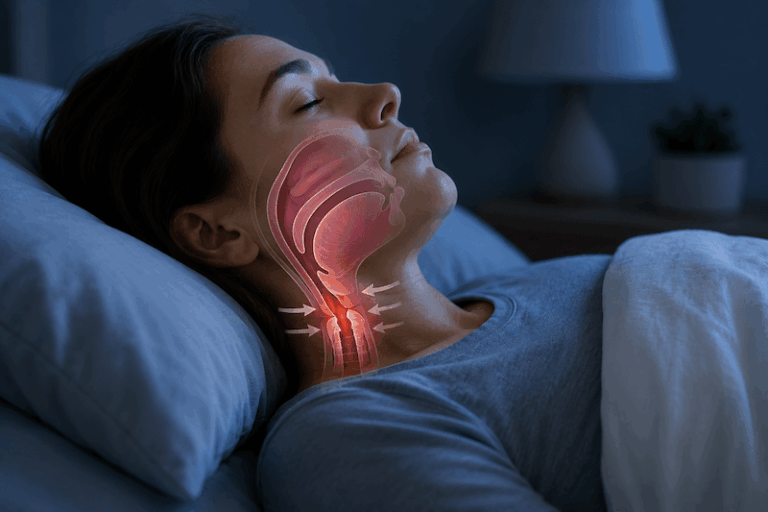
One was airway muscle tone. The idea is that certain acupuncture points may stimulate the muscles of the upper airway, potentially reducing the tendency for them to collapse during sleep. I found this the most interesting proposed mechanism because it goes directly at the physical cause of obstructive sleep apnea rather than just addressing symptoms.
Another was inflammation. OSA is associated with airway inflammation, and acupuncture has been proposed to have anti-inflammatory effects, though I read enough to know this is an area where the evidence is genuinely mixed and I wouldn’t want to overstate it.
The third was stress and relaxation. This one I found most credible in a general sense. Acupuncture does appear to reduce stress and promote relaxation in many people who try it, and better relaxation at bedtime is not a trivial benefit for anyone whose sleep quality is poor.
What to Expect If You Try It
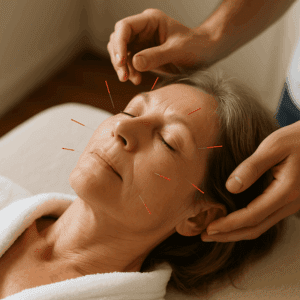
I haven’t personally had acupuncture so I’m drawing here on what I’ve read and what readers have described to me. The initial appointment typically involves a consultation about your health history and sleep, followed by the development of a treatment plan. Sessions involve needles being placed at specific points, often including the neck, face, chest, or limbs depending on the practitioner’s approach, and then a period of lying still for twenty to forty minutes. Many people find this deeply relaxing and some fall asleep during it.
Most practitioners suggest a course of six to twelve sessions before drawing conclusions about whether it’s helping. In the UK that represents a meaningful financial commitment since sessions typically run £50 to £80 each and aren’t routinely covered by the NHS for sleep apnea specifically.
The safety profile is generally considered good when you see a properly qualified practitioner. The most common side effects are minor and temporary, some soreness or bruising at needle sites. The main risk I’d flag isn’t physical, it’s the risk of using acupuncture as a reason to delay or avoid getting a proper sleep study and diagnosis, or worse, using it as a substitute for CPAP in a situation where CPAP is genuinely needed.
My Honest View
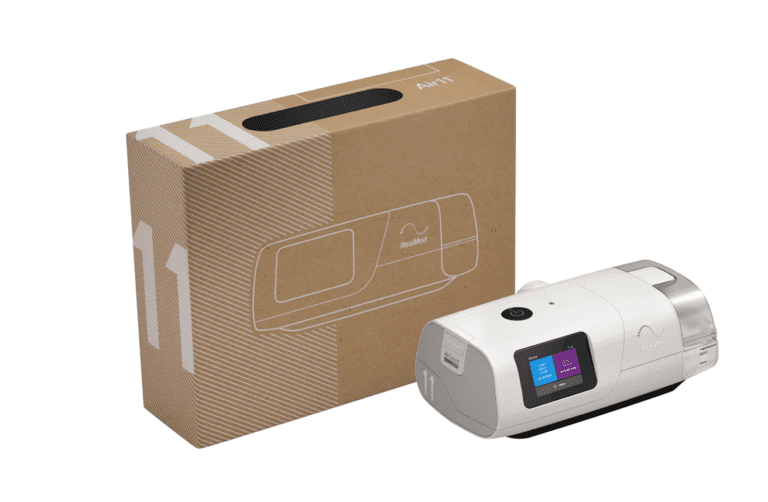
CPAP is my treatment, and it will remain my treatment. For my severity of sleep apnea there was never an alternative worth considering, and over a decade of using my ResMed AirSense 10 every single night has confirmed that the therapy works exactly as it’s supposed to. My AHI sits under 2. My blood pressure is normal. The migraines that were making my mornings miserable for years are gone.
But I don’t dismiss acupuncture the way some people in the sleep apnea community do. The research I found, read as a non-medical person trying to understand it rather than evaluate it professionally, suggests there’s something there for the right population. Mild to moderate cases, used alongside proven approaches rather than instead of them, with realistic expectations about what it can and can’t achieve.
If you’re considering it, the sensible path is to get properly diagnosed first so you know your actual AHI and severity, make sure any serious apnea is being treated appropriately, and then explore acupuncture as something that might complement your existing treatment rather than replace it. An at-home sleep test is a straightforward starting point if you haven’t been assessed yet.
And as always, talk to a qualified doctor rather than taking the word of someone on the internet who has merely read about this rather than trained in it.
⚠️ MEDICAL DISCLAIMER This blog provides general information only and is not a substitute for professional medical advice, diagnosis, or treatment. Sleep apnea is a serious condition, and CPAP equipment should be used under proper medical supervision. Always consult your doctor or sleep specialist before starting, stopping, or changing any therapy. I share personal experiences as a CPAP user, not as a medical professional. Individual results vary. For medical guidance, please consult a qualified clinician or the American Academy of Sleep Medicine (aasm.org).