Sleep Apnea and Erectile Dysfunction: How Are They Connected?

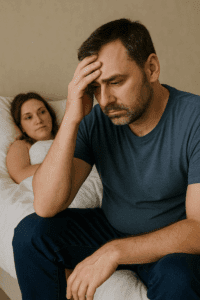
This is not an easy post to write. I’ve covered a lot of personal ground on this site because I think honesty is the only thing that makes a blog like this worth reading. But there are degrees of personal, and this topic sits near the top of that scale for most men, including me.
So I’ll say it plainly and get on with it: sleep apnea and erectile dysfunction are connected, the connection is well established, and yes, it has affected me. I’m writing about it because I know from the messages I receive that I’m far from alone, and because most of what’s written about this online is either too clinical to be useful or too optimistic to be honest. My background is in computer science rather than medicine, so what follows is what I have read, what I have lived, and what I have heard from other men. It is not medical advice.
Why sleep apnea affects sexual health
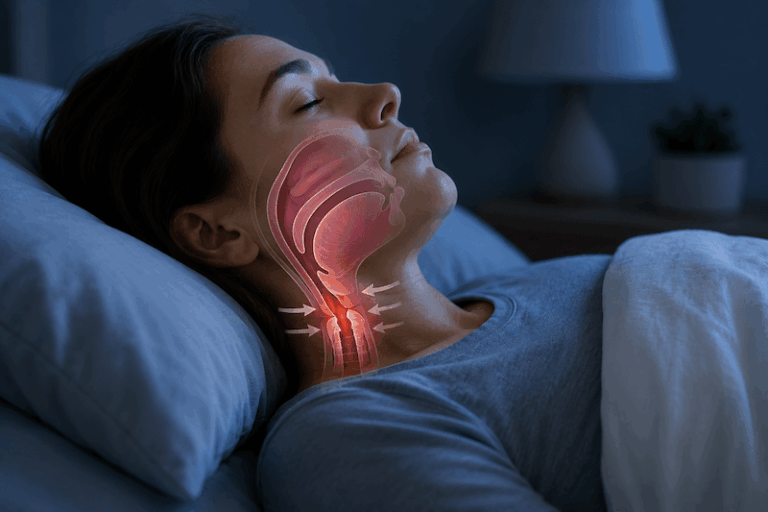
When your airway collapses repeatedly during sleep, your oxygen levels drop. Your body responds to each drop as a minor emergency, flooding your system with stress hormones and jolting you toward wakefulness, even if you never fully wake up and remember it. Do that dozens of times a night, every night, and the cumulative effect on your body is significant.
Erectile function depends on a few things working well together: good circulation, adequate testosterone, a nervous system that isn’t in permanent low-level crisis mode, and genuine restorative sleep. Untreated sleep apnea quietly undermines all of those. The oxygen drops damage blood vessel function over time. The disrupted sleep reduces the deep and REM sleep stages when testosterone production peaks. The chronic stress response keeps cortisol elevated, which, as I wrote about in my piece on mouth breathing, sleep apnea, and testosterone, directly suppresses testosterone. And the vascular strain that sleep apnea puts on the cardiovascular system reduces the quality of circulation throughout the body.
There is also a less obvious mechanism worth understanding. Healthy men typically have several spontaneous erections each night, most of them tied to REM sleep stages. These overnight erections are part of how penile tissue stays oxygenated and elastic. They are also a useful clinical marker, because when they disappear it usually points to a vascular or sleep architecture problem rather than a purely psychological one. Sleep apnea fragments REM badly enough that those overnight cycles can stop happening properly long before anything is obvious during the day.
None of this is subtle once you understand the mechanism. The surprise isn’t that sleep apnea causes erectile dysfunction. The surprise is how rarely the two get discussed together.
The research is clearer than most people realize
The link between OSA and ED is consistent across the research. A large review of studies found that men with sleep apnea are significantly more likely to experience erectile dysfunction than men without it, with the relationship driven primarily by the effects of oxygen deprivation and vascular damage. One commonly cited figure is that around 70% of men with untreated sleep apnea report some degree of ED, compared to roughly a third of men without apnea. I have no reason to doubt that from personal experience.
The mechanism that keeps coming up in the research is nitric oxide. This is the molecule that triggers the blood vessel dilation needed for an erection, and it’s the same pathway that ED medications target. Chronic low oxygen levels from sleep apnea reduce nitric oxide availability. So does mouth breathing, which bypasses the nasal passages where nitric oxide is produced. The two problems compound each other.
The CPAP side of the literature is encouraging on the whole, even if it isn’t uniform. A study at Walter Reed National Military Medical Center followed men newly diagnosed with OSA through six months of CPAP therapy and reported that the majority saw improvements in sexual function and satisfaction, with the strongest improvements in those who had erectile dysfunction at baseline. The American Academy of Sleep Medicine has a readable summary of those findings if you want the original source. Other randomized trials have been more cautious, finding gains in sexual satisfaction without dramatic improvements in standardized erectile function scores. Many men benefit. Some don’t. That nuance is usually flattened in marketing copy, but it matters a great deal if you happen to be one of the men still waiting for a result that hasn’t arrived.
What CPAP does and doesn’t do
Here’s where I want to be genuinely honest rather than just technically accurate.
The research on CPAP and erectile function is fairly encouraging in general. Studies have found that a meaningful proportion of men with OSA see improvement in erectile function after starting CPAP therapy, particularly after consistent use over several months. That’s a real finding and it’s worth knowing about if you’ve been avoiding treatment partly because you weren’t sure it would help in this area.
But it hasn’t been my experience. My CPAP compliance is solid, my sleep apnea is managed, and the therapy has genuinely transformed my life in ways I’ve written about extensively. The migraines are gone. The morning fog lifted. I have energy in a way I hadn’t for years. What it hasn’t done is resolve the ED, at least not to any degree I’d describe as significant.
I think it’s important to say that out loud because articles about this topic tend to lead with the positive findings and bury the nuance. The honest picture is that CPAP helps some men considerably in this area, helps others partially, and for some doesn’t make a noticeable difference. Bodies aren’t uniform and neither are outcomes. If you start CPAP and find it doesn’t fix this particular problem, that doesn’t mean the therapy isn’t working. It means you’re in the same position as a lot of other men, and there are other things worth looking at.
The other thing worth being honest about is that “compliant” doesn’t always mean “optimized.” Plenty of men hit the four hour Medicare adherence floor and assume their therapy is doing its full job, when in fact their leak is high or their residual events are still worth investigating. If your therapy is genuinely controlled, the rest of this article is the next conversation. If you aren’t sure, looking at your data properly is worth doing first. I have a separate write up on interpreting CPAP data that walks through what to look for.
What else is going on
ED is rarely caused by a single thing. Sleep apnea is a significant contributor but it exists alongside other factors that are often present in the same person.
Weight is a big one. The same excess weight that worsens sleep apnea also affects testosterone and circulation independently. Stress matters too, and not just the physiological stress of untreated apnea but the ordinary life kind. Depression and sleep apnea have a well documented relationship, and depression affects sexual function directly. Certain medications, including some commonly prescribed for blood pressure and mood, can cause ED as a side effect. Diabetes and hypertension, both of which are more common in people with OSA, are independent risk factors.
The Mayo Clinic’s overview of erectile dysfunction lays this out clearly, and it’s a useful reference if you want to see the full list in one place. The point isn’t that any single one of these is necessarily the answer. The point is that two or three of them stacked on top of untreated apnea is a much more common pattern than people realize, and untangling them takes more than one office visit.
I went through my own version of working through this list. The weight piece I’ve addressed over time and that made a difference, as I covered in the testosterone article. I had conversations with my doctor about medications. I looked at stress honestly. None of it produced a dramatic overnight change but the cumulative picture has shifted.
Having the conversation with your doctor
This is probably where a lot of men get stuck, myself included for longer than I’d like to admit. There’s something about this particular symptom that makes it feel more shameful than it has any reason to be. It’s a physiological problem with physiological causes. Your doctor has heard it many times before and will not be surprised or judgmental.
What’s worth raising is the full picture: your sleep apnea history, your CPAP usage, any other health conditions you have, the medications you’re on, and how long you’ve been experiencing the ED. That context helps a doctor work out whether this is primarily a sleep issue, a hormonal issue, a vascular issue, or some combination. Blood work to check testosterone is usually a sensible starting point. So is reviewing your CPAP data to make sure your therapy is actually doing what it should be.
A few specific questions worth bringing in with you, because they’re easy to forget once you’re in the room. Has my testosterone been measured recently, and if so, where did it sit? Are any of the medications I’m currently on known to contribute to ED? Are my blood pressure and cholesterol numbers where they should be? Is there a vascular workup that would be appropriate given my history? Should I see a urologist? These are not unusual questions. They’re the same questions any thoughtful primary care doctor would want to work through anyway, and asking them yourself often shortens the path.
If your sleep apnea isn’t as well controlled as you think, that’s worth addressing first. If it is well controlled and the problem persists, there are other treatment options worth discussing that have nothing to do with CPAP.
A note on the mental side of this
Something I don’t see discussed much is the way this kind of problem feeds on itself psychologically. Once you’ve had a few experiences that didn’t go as you hoped, the anticipatory anxiety around the next time can become its own obstacle. The physical problem and the mental response to it blur into each other and it becomes genuinely hard to separate them.
I’m not qualified to tell anyone how to deal with that, and I’m aware this post is about as far into personal territory as I go on this site. But I think it’s worth naming, because if you’re dealing with both the physical reality and the psychological weight of it, that’s a heavier load than either one alone. Talking to someone, whether that’s a doctor, a therapist, or a partner you trust, matters.
Sleep apnea already does enough damage to mental health without the added layer of suffering in silence about something that feels too private to mention.
What I’d suggest if you’re in this position
Get your sleep apnea treated if it isn’t already. That remains the most important thing, regardless of whether it resolves the ED directly. The cardiovascular risks of untreated OSA alone make treatment non negotiable, and there’s a reasonable chance CPAP will help with sexual function even if it isn’t guaranteed.
If you’re already on CPAP and things haven’t improved, get blood work done and have an honest conversation with your doctor about everything you’re experiencing. Don’t just mention the sleep apnea and leave the other thing unspoken. They need the full picture to help you properly.
Look at the other variables you can actually influence: weight, exercise, stress, alcohol, and medications. None of them is a quick fix, but all of them matter, and they compound over time in the right direction if you’re consistent.
And give it time. A large study following men over a full year of CPAP use found that improvements in erectile function continued to accumulate well beyond the first few months. If you’ve only been on therapy for a short while, the picture may still change.
I’m still working through my own version of this. It’s not resolved, and I won’t pretend otherwise. But knowing what’s causing it, having a doctor who’s aware, and not carrying it alone have made it more manageable than it was when I was just silently wondering what was wrong with me.
If that’s where you are right now, you’re not alone, and you’re not imagining it. It’s a real thing, and it’s worth taking seriously.
⚠️ MEDICAL DISCLAIMER This blog provides general information only and is not a substitute for professional medical advice, diagnosis, or treatment. Sleep apnea is a serious condition, and CPAP equipment should be used under proper medical supervision. Always consult your doctor or sleep specialist before starting, stopping, or changing any therapy. I share personal experiences as a CPAP user, not as a medical professional. Individual results vary. For medical guidance, please consult a qualified clinician or the American Academy of Sleep Medicine (aasm.org).