Best CPAP Nasal Masks for 2026

“This post contains affiliate links. I may earn a commission if you buy through these links at no extra cost to you. Read my Disclaimer for more details.”
I’ll be upfront: I don’t personally use a nasal mask. I’m a chronic mouth breather, so a full face mask has been the right tool for me for the better part of a decade. But nasal masks are the most popular CPAP interface in the world, and they’re often the first thing a sleep clinic will fit you with. So when readers email me asking which nasal mask is worth the money, I take it seriously enough to do the research properly.
This guide is the result of that research. It’s not a list of masks I’ve slept in. It’s a careful read of clinical guidance, updated 2026 picks from the Sleep Foundation and other expert reviewers, manufacturer specifications, and the patterns I keep seeing in the comments and emails from real users. My background is in computer science, not medicine, so always treat what follows as a starting point for a conversation with your doctor or DME provider, not a substitute for one.
My Top Picks at a Glance
If you already know you want a nasal mask, here are the four that have stayed at the top of expert lists for 2026. Selection guidance, fit advice, and troubleshooting follow further down the page.
ResMed AirFit N30
Best for minimalists and light sleepers
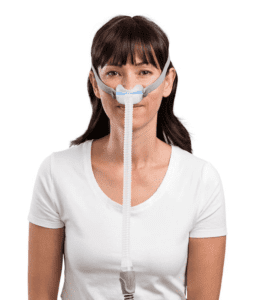
The AirFit N30 is one of the lightest masks on the market, weighing under two ounces. It uses a soft cradle cushion that rests just under the nose rather than covering it, with slim headgear that runs along the side of the face without crossing the cheeks. There’s no forehead support, no bridge contact, and no mask hardware in the field of view.
ResMed’s QuietAir vent technology diffuses exhaled air through a woven mesh, which keeps it quiet enough that bed partners rarely notice. The whole mask comes apart into three pieces, which makes daily cleaning straightforward.
The N30 is best suited to back and side sleepers using moderate pressures. If your prescribed pressure is on the higher end, you may find the small cushion struggles to maintain a seal under load.
Best for: side sleepers, first-time CPAP users, people who dislike bulky masks, and anyone whose partner is a light sleeper.
ResMed AirFit N30i
Best for active and combination sleepers
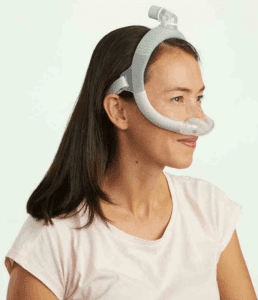
The N30i takes the under-the-nose cradle cushion of the N30 and combines it with a top-of-head hose connection. The air is routed up through hollow side rails to the cushion, which means the tube comes off the top of the head rather than the front of the face.
For people who turn over a lot, that single design choice is the difference between a mask that stays put and one that doesn’t. The hose tracks with the head, swiveling rather than pulling. Stomach sleepers in particular often find the N30i more livable than front-tube nasal masks. It’s also a popular pick for people who wear a beard, because the cushion sits in the gap between the nose and the upper lip rather than sealing against stubble.
Philips Respironics DreamWear Nasal Mask
Best for sensitive skin and a flexible fit
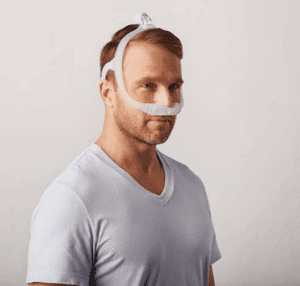
The DreamWear Nasal Mask consistently shows up on expert 2026 lists as a top pick for side and stomach sleepers. The frame is made of soft silicone rather than rigid plastic, and like the N30i, the hose connects at the top of the head with a swiveling joint.
Where the DreamWear stands apart is in the cushion options. It comes with four sizes (small, medium, medium wide, large), so finding a good fit is more forgiving than with masks that ship with two or three. The flexible silicone frame also means the mask is less likely to press into the cheeks when you sleep on your side.
A clarification worth making, because it confuses people: the DreamWear Full Face mask was part of Philips’ magnet-related labeling update in 2022. The DreamWear Nasal mask is a different product and was not part of that action. If you’ve read about the Philips recall and felt uneasy about the brand, the nasal version is unaffected.
Best for: sensitive skin, side and stomach sleepers, people whose face shape sits between standard cushion sizes, and anyone who finds rigid frames uncomfortable.
ResMed AirFit N20
Best for higher pressure settings
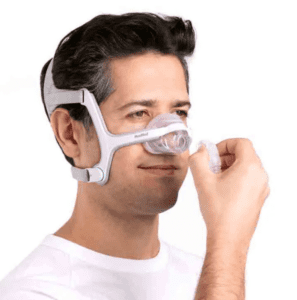
The N20 is the more traditional shape of the four. It’s a full nasal mask, with a cushion that covers the nose from the bridge down. The InfinitySeal cushion is engineered to flex with pressure, which is why this mask gets the nod for users on higher CPAP settings where a small cradle design might leak. If you’re not sure what your prescribed pressure is, my guide to CPAP pressure settings has a primer.
The headgear uses magnetic clips that snap into place at the bottom of the frame. Many people love this design because it makes putting the mask on and taking it off in the dark much easier. It’s the same reason it’s a frequent recommendation for users with arthritis or limited dexterity.
Important safety note about the magnetic clips. ResMed issued an updated safety notice in late 2023, and the FDA followed with a recall to update the labels in 2024. The magnetic clips on the AirFit N20 (and several other ResMed masks) should be kept at least 6 inches away from any implanted medical device that may be affected by magnets. That includes pacemakers, implantable cardioverter defibrillators, neurostimulators, cerebrospinal fluid shunts, and insulin pumps. Some metallic implants, such as certain valves, stents, aneurysm clips, and ocular implants, are also affected. The warning extends to anyone in close physical contact with the mask, which means a bed partner with one of these devices needs to be considered too. If any of that applies to you or someone you sleep next to, talk to your doctor and ask about non-magnetic alternatives before buying.
Best for: users with moderate to high prescribed pressures, glasses wearers (the low profile leaves room for frames), and people who want a stable, traditional nasal mask shape. Not recommended for users or bed partners with the implanted devices listed above.
What’s New in 2026: The AirTouch N30i
If you’re shopping new in 2026, there’s one more mask worth knowing about even though I’m not formally including it in the picks above. ResMed released the AirTouch N30i in late 2024, and it’s the first nasal mask with a fabric-wrapped frame and a ComfiSoft cushion that combines fabric with silicone. Reviewers consistently call out the soft, breathable feel and the way the cushion hugs the nose without leaving the pressure marks that silicone can.
The trade-off is that fabric needs more careful cleaning than silicone, the cushion has to be replaced more often (the manufacturer suggests every 30 days), and the mask is generally more expensive. If skin irritation has been your main problem with silicone nasal masks, this is the one to ask your DME about. It uses the same headgear and frame as the AirFit N30i, so the cushion is interchangeable.
What Is a Nasal CPAP Mask?
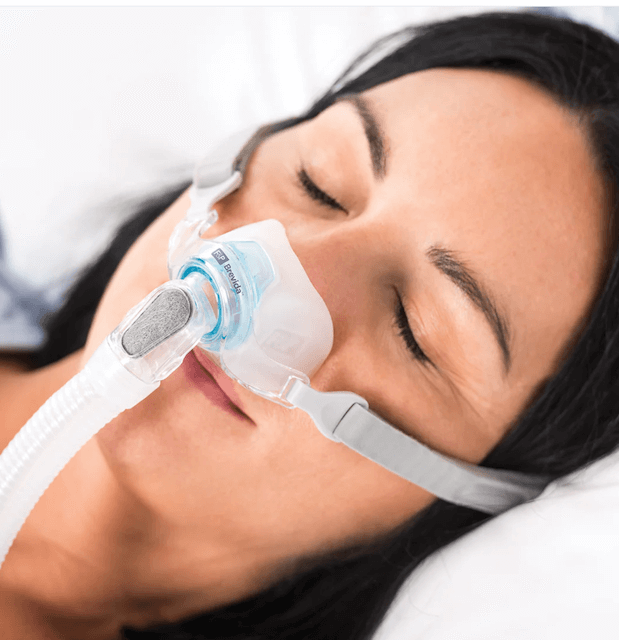
A nasal CPAP mask delivers pressurized air through your nose only. The mouth is left uncovered, which is part of why these masks feel less claustrophobic than full face designs.
Within the nasal category there are two main shapes. A traditional nasal mask seals around the outside of the nose, with a triangular cushion that runs from the bridge of the nose down to just above the upper lip. A nasal cradle, sometimes called a minimal contact nasal mask, sits below the nose and seals against the underside of the nostrils without covering the bridge. Cradle designs like the AirFit N30 and the DreamWear are popular because they leave the field of view completely clear and don’t press against the bridge of the nose.
Nasal masks are different from nasal pillow masks, which use small soft inserts that sit just inside the nostrils. If you want a deeper comparison of those two formats, I’ve written about that here: The Difference Between a Nasal Pillow and a Nasal Mask. And if you’re still weighing nasal versus full face, this guide walks through the trade-offs.
Why People Choose Nasal Masks
The big reason is comfort. Nasal masks have a smaller footprint, fewer straps, and less material against the skin. That matters more than people expect, especially in the first few months of CPAP, when even small irritations can be enough to send you back to sleeping without therapy.
Mayo Clinic lists nasal masks as a sensible default for people whose doctors have prescribed higher pressures and for those who move a lot in their sleep. The smaller frame means there’s less mask to dislodge as you change positions.
A few practical advantages keep coming up. There’s an unobstructed line of sight, which is good for reading or watching TV before sleep. Many models are very quiet, often quieter than full face masks, because there’s less venting volume to manage. Pressure points and red marks tend to be less of a problem because there’s simply less mask in contact with the skin. And several of the modern designs route the hose over the top of the head rather than down the front, which gives active sleepers more freedom of movement.
The catch, and it’s a real one, is that nasal masks only work if you can keep your mouth closed during the night. If your jaw drops open while you sleep, the pressurized air takes the path of least resistance and escapes out of your mouth. That’s a leak, and it tanks the therapy.
A Note for Mouth Breathers
If you’re a mouth breather, a nasal mask alone will probably not work for you. The pressurized air leaks out of your mouth, you wake up with a parched throat, and your CPAP data shows it. I know this territory well because it’s why I ended up on a full face mask in the first place.
Some people pair a nasal mask with a chin strap to keep the mouth closed. That can work, but it doesn’t work for everyone, and it adds a piece of gear that has its own fit and comfort issues. Mouth taping is another option some users explore, though it should only be done after a conversation with your sleep doctor.
If you’ve struggled with mouth leaks, I’ve written more about the options here: How to Stop Mouth Breathing With CPAP. And if a full face mask seems more honest for your situation, this is the page worth reading next: Best Full Face CPAP Masks.
How to Choose the Right Nasal Mask
There’s no single best mask. The right one depends on how you breathe, how you sleep, and what pressure your therapy needs.
Sleeping position matters more than people expect. Side sleepers tend to do best with low-profile cradle designs (N30, N30i) or flexible silicone frames (DreamWear) that don’t press into the pillow. Stomach sleepers usually need a top-of-head hose connection so the tubing doesn’t pull. Back sleepers have the most flexibility and can get away with almost any nasal mask.
Match the mask to your prescribed pressure. Cradle masks like the N30 and N30i are most comfortable at lower-to-moderate pressures. If you’re being treated above roughly 12 cm H2O, a more substantial cushion like the AirFit N20’s InfinitySeal is more likely to maintain a seal. Your doctor can confirm your number, and the Sleep Foundation’s notes on nasal masks cover this same threshold.
Get the cushion size right. The single most common reason a mask “doesn’t work” is that it’s the wrong size. Most masks ship with one cushion, but the manufacturer almost always sells fit packs that include the full range. If you can, get a fit pack rather than committing to a guess. ResMed and Philips both publish printable fit guides on their sites.
Look at the parts and the cleaning routine. Fewer parts means easier cleaning. A daily wipedown of the cushion and a weekly deep clean of the whole mask is the standard guidance. Cushions wear out and should be replaced every one to three months. Headgear typically lasts six to twelve months. If you want a deeper look at how to think about all of this, How to Choose a CPAP Mask walks through it.
Common Issues With Nasal Masks (and What to Do)
A few problems come up over and over again in reader emails. Most of them have fixes that don’t require a new mask.
If you wake up with a dry mouth, the air is escaping somewhere it shouldn’t. That’s almost always a sign that you’re breathing through your mouth at night. A chin strap is the first thing to try, and a humidifier setting bump can help in the meantime. If neither solves it, a full face mask is the honest answer. I’ve written more about this in CPAP Dry Mouth.
If the cushion is leaving red marks on the bridge or sides of the nose, the headgear is likely too tight. The instinct when you feel a leak is to crank the straps, but that usually makes the leak worse, not better. Loosen the straps until you can just slide a finger under, then re-seat the cushion.
If the mask is causing leaks every time you turn over, the issue is usually either the wrong cushion size or the wrong mask shape for your sleep position. A cradle mask with a top-of-head hose (N30i, DreamWear) is the standard fix for restless sleepers.
If the mask seems uncomfortable for the first few weeks, that’s normal, and it does usually get better. CPAP adjustment takes time, and the first month is often the hardest part of the whole therapy.
When a Nasal Mask Isn’t the Right Tool
I’ll say this plainly because it’s where I am personally. If you’re a mouth breather and a chin strap doesn’t fix it, a nasal mask isn’t going to give you good therapy no matter how much you spend on it. If you have chronic nasal congestion, a deviated septum that hasn’t been addressed, or seasonal allergies that block your nose for weeks at a time, a nasal mask will fight you every night that your nose isn’t clear. There’s a separate guide on the best CPAP mask for a deviated septum if that’s relevant.
The honest move in those situations is a full face mask. It’s not a downgrade. It’s just the right tool for the breathing pattern you have.
Final Thoughts
The nasal masks above keep showing up at the top of the expert lists for 2026 for good reasons. The AirFit N30 is the lightweight default, the N30i is the active-sleeper standard, the DreamWear is the soft-frame option for side and stomach sleepers, and the AirFit N20 is the workhorse for higher pressures, with the magnet caveat noted above.
If you’ve used one of these and have something to add (good or bad) please leave a comment below. The reader experiences in the comments are honestly the most useful part of this site, and they help the next person who lands on this page.
⚠️ MEDICAL DISCLAIMER This blog provides general information only and is not a substitute for professional medical advice, diagnosis, or treatment. Sleep apnea is a serious condition, and CPAP equipment should be used under proper medical supervision. Always consult your doctor or sleep specialist before starting, stopping, or changing any therapy. I share personal experiences as a CPAP user, not as a medical professional. Individual results vary. For medical guidance, please consult a qualified clinician or the American Academy of Sleep Medicine (aasm.org).