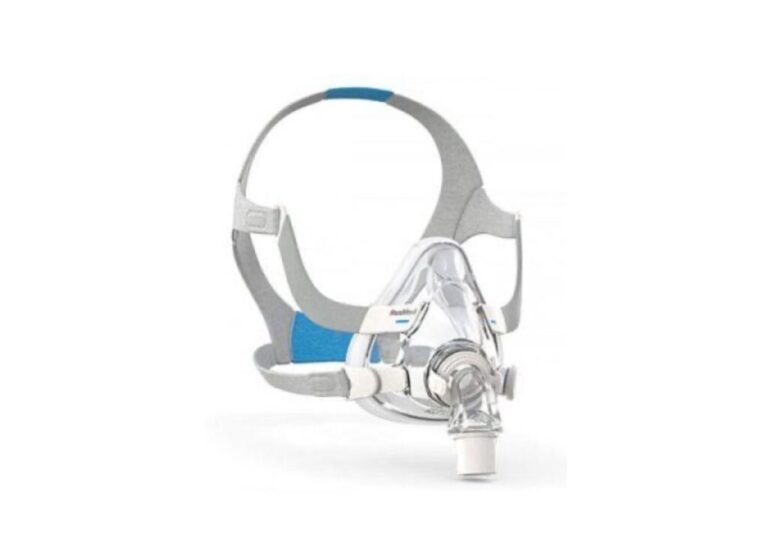
Best CPAP Mask for Beards: A Guide to Leak-Free Sleep

“This post contains affiliate links. I may earn a commission if you buy through these links, at no extra cost to you. Read my Disclaimer for more details.”

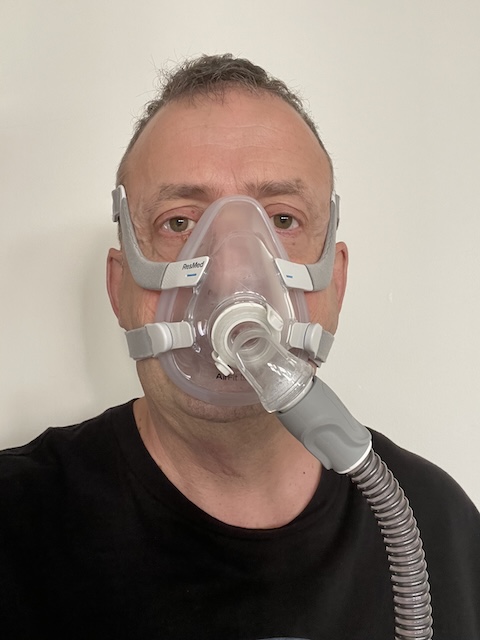
Yes, that’s me above!
I tried growing a beard once. It didn’t last.
The itching was the problem. Where my full face mask sat against new growth, it scratched. Every adjustment made it worse. After a few weeks I shaved it off and slept better that same night.
That’s the extent of my personal beard experience, and I want to be upfront about it. I’ve used CPAP for the better part of a decade, but I sleep clean shaven, and the only mask I’ve ever owned is the ResMed AirFit F20. So this guide isn’t a personal review of beard friendly masks. It’s a research guide built from product specs, mask design, and the patterns I’ve seen across years of reading CPAP forums and talking to other users.
Some background on me: my AHI was 51 at diagnosis. I have a computer science background, not a medical one, so nothing here is medical advice. If you have questions about your therapy, your sleep doctor or DME provider is who to ask.
The good news for you is straightforward. You can absolutely use CPAP with a beard. Plenty of men do, every night, with full beards, goatees, mustaches, and stubble. The mask choice and the routine around it just have to change a bit.
My Top Picks for Bearded CPAP Users
Best Overall: ResMed AirFit P10 Nasal Pillow Mask
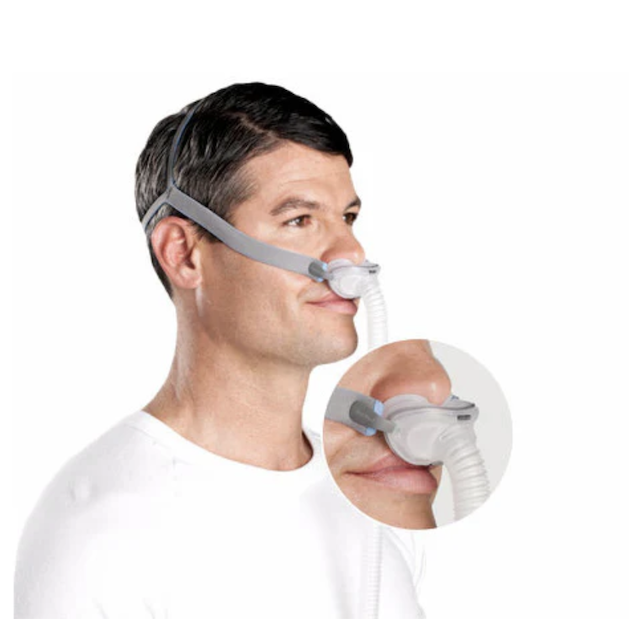
Here’s why nasal pillows lead this list: the seal happens inside the nostrils, not against the skin around them. That means it doesn’t really matter what’s growing on the rest of your face. A full bushy beard, a sculpted goatee, three week stubble. All the same to a P10.
The P10 itself is one of the lightest, simplest designs ResMed makes. It’s quiet. The split strap headgear is forgiving for beards because the straps don’t run across the chin or jaw the way full face mask straps do.
What works:
- The seal is inside the nostrils, so beard length and density don’t affect it
- Light enough that side and stomach sleepers usually get along with it
- Quiet enough that a partner shouldn’t hear it from across the bed
- Minimal headgear, less to tangle in facial hair
Where it falls down:
- You have to be a nose breather. If you sleep with your mouth open, you’ll need a chin strap or a different mask
- Chronic nasal congestion makes any nasal pillow harder to live with
- Higher pressure settings (above about 15 cmH2O) can be uncomfortable through pillows.
Best for New Users: ResMed AirFit N30i Nasal Mask
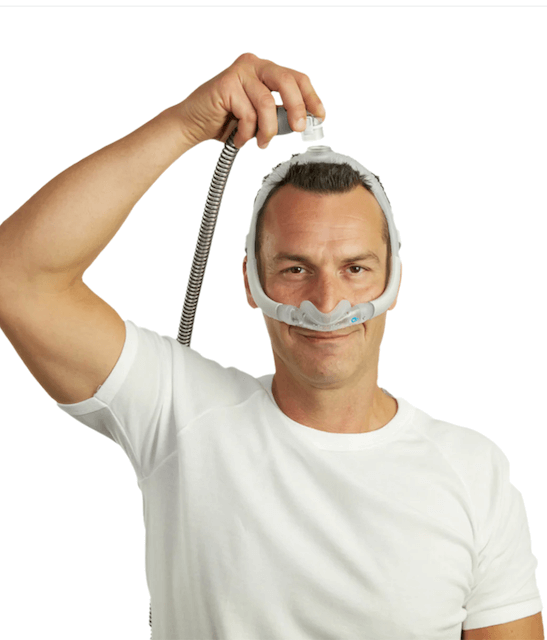
The N30i is a nasal cradle mask, which is a slightly different idea from pillows. Instead of pillows seating inside the nostrils, a small cushion sits underneath the nose and seals against the area between the nose and upper lip. The hose connects at the top of the head, which most side sleepers find more forgiving than a front mounted hose.
For a bearded user, the seal area is small and sits above where most beards grow. Mustaches are the only complication. If you have a thick mustache that grows down over the upper lip, the N30i is worth approaching cautiously.
What a lot of new users like about it: it feels less invasive than pillows for people who didn’t get along with pillows on first try, and the top of head hose means you can roll over without yanking on your face.
Best for Full Beards: Fisher & Paykel Solo Nasal Mask
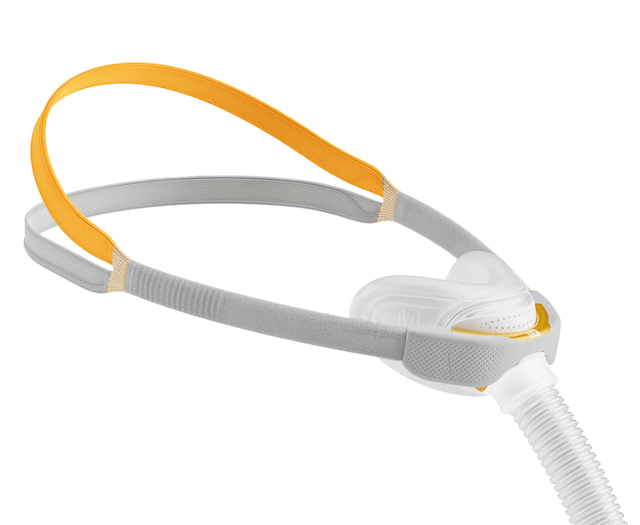
The Solo is a more traditional nasal mask, but with one feature worth flagging for bearded users: the headgear runs high on the cheekbones rather than along the jaw. That keeps straps out of beard territory.
It also has an AutoFit feature for one handed adjustment, which sounds gimmicky until you’ve spent a few minutes fiddling with both hands at 2 a.m. trying to chase down a leak.
Like all nasal masks, this one is for nose breathers. Mouth breathers will need a chin strap to make a nasal mask work, or they’ll need to look at a full face option instead.
Why Beards Complicate the Seal
CPAP works by pushing pressurized air through a mask into your airway, which holds the airway open through the night. The whole system depends on the mask creating a closed seal against your face. If pressurized air finds a way out, the air pressure reaching your throat drops, which means apnea events the machine should be preventing can slip through.
Facial hair, even well groomed beard hair, creates tiny channels between the cushion and the skin underneath. Air follows the path of least resistance. According to the Sleep Foundation’s guide to CPAP mask types, nasal pillow masks are generally easier for people with facial hair to seal effectively, because the seal happens inside the nostrils rather than against bearded skin.
When the seal goes, a few things tend to happen. The machine often compensates by ramping pressure up, which gets noisier. You might wake up with dry eyes from air blowing across your face. AHI can drift up. And the constant tweaking and re tightening through the night chews into the hours of actual sleep you’re getting. You can read more about why mask leaks matter for therapy in my piece on mask leak causes.
How Each Mask Type Performs With a Beard
There are three mask types you’re likely to consider, and they don’t all play with facial hair the same way.
Nasal pillow masks are the clear winner. The seal sits inside your nostrils, well away from any beard. Lightweight, quiet, minimal headgear. The limitations: nose breathing only, not great for very high pressures, and chronic congestion makes them hard to live with. The P10 is the standard, the P30i is worth a look if you want a top of head hose, and there are other options in my nasal mask roundup.
Nasal masks are a reasonable second choice. These cover the nose externally, with the seal sitting around the bridge and underneath the nostrils. Beard contact is minimal unless you have a heavy mustache. They’re better for users who couldn’t tolerate pillows and for slightly higher pressures.
Full face masks are the hardest type to make work with a beard. They cover the nose and the mouth, which means the seal runs across the lower face, prime beard territory. They’re not impossible, particularly with a memory foam cushion that conforms to facial contours rather than a hard silicone edge, but they take more work. The standard advice if you’re a mouth breather and bearded is to try a nasal pillow or nasal mask paired with a chin strap before committing to a full face mask. If you have to use a full face mask, my full face mask roundup walks through the options.
If you’re trying to decide between mask types in general, this nasal vs full face comparison goes through the tradeoffs in more depth.
What Actually Helps Bearded CPAP Users
The mask you choose is most of the answer, but a few habits make a real difference.
Beard Conditioning
Soft, conditioned facial hair flattens against a cushion much more cleanly than wiry hair does. Daily beard oil or balm, applied earlier in the day so it absorbs before you go to bed, is the basic move. Heavy oils right before bed are counterproductive. They migrate onto the cushion, which then needs replacing sooner, and they interfere with the seal anyway. If your beard is still oily at bedtime, wash it before you put the mask on.
You don’t need anything fancy. The cheap, well reviewed beard balms and oils on the shelf at the supermarket do the job. The point isn’t the brand. It’s that conditioned hair lays flat under a cushion and unconditioned hair stands up.
Don’t Over-Tighten
This is the most common mistake bearded CPAP users make. Tight straps don’t fix a leak through facial hair. They distort the cushion, create pressure points, leave strap marks, and often produce more leaks elsewhere on the seal because the cushion isn’t sitting flat. The Sleep Foundation’s mask fitting guide makes the same point: a properly fitted mask should feel comfortable when loose, and the air pressure itself helps form the seal once the machine is running.
The fitting routine that works best is to put the mask on while lying down, in your usual sleeping position, with the machine running. Standing in front of a mirror with the machine off doesn’t replicate the actual conditions you sleep in.
Mask Liners
Cloth liners sit between the cushion and your skin. For a bearded user they do two useful things at once: they smooth out the contact surface, flattening hair underneath, and they absorb facial oils that would otherwise wreck the seal. They’re cheap, they extend cushion life, and they’re one of the most underused accessories in CPAP. I’ve written more about mask liner options here.
Chin Straps for Mouth Breathers
If you’ve picked a beard friendly nasal or pillow mask but you breathe through your mouth, a chin strap keeps your mouth closed and lets the mask do its job. This combination, nasal pillows plus chin strap, is what a lot of bearded mouth breathers eventually settle on. Fair warning: it doesn’t work for everyone, particularly if you have a deviated septum or chronic congestion that makes nose breathing difficult.
Daily Mask Cleaning
Worth doing for everyone, more important with a beard. Beard hair traps oils and skin debris. Combined with a cushion that doesn’t get cleaned, you get faster cushion breakdown and a higher chance of skin issues like dermatitis. A daily wipe of the cushion with mild soap and water, and a fuller weekly clean of headgear and tubing, is the routine. Cleaning routine here.
Choosing by Beard Style
Different beards interact with masks differently, and a few patterns are worth knowing.
Full, thick beards. Nasal pillows. The P10 is the obvious starting point. If you absolutely need a full face mask because you’re a confirmed mouth breather and a chin strap doesn’t work for you, look at masks with memory foam cushions, which conform better to bearded skin than rigid silicone.
Goatees and chin beards. Almost any mask works because the beard is concentrated where most masks don’t seal. A nasal mask sits well above your beard area. A full face mask cushion runs along the jaw line at the bottom, which a goatee can interfere with, but only at one specific contact point, which is manageable with conditioning and a liner.
Mustache only. Nasal pillows, again, because they avoid the upper lip entirely. Nasal cradle masks like the N30i can also work if the mustache isn’t bushy enough to interfere with the under nose seal. Keep the mustache trimmed where it meets the mask.
Stubble or short beard. You have the most flexibility. Nasal pillows are still the easiest. Full face masks become workable, especially with a liner. Some users keep a short trimmed look specifically because it gives them a wider mask choice.
Common Problems and What to Try First
Persistent leaks. First check that the mask isn’t too tight. Then try a smaller cushion size if you’ve been borderline (counterintuitive, but a smaller cushion often seals better than a larger one). Add a mask liner. Replace the cushion if it’s been months. If none of that works, a different mask type is probably the answer. Tracking leak rate in your machine data or in OSCAR can help you see whether what you’re trying is actually moving the numbers.
Skin marks or irritation. Loosen the headgear. Add a liner. Look at your sleep position. If you’re side sleeping on the same side every night, a CPAP pillow with cutouts can take pressure off the mask. More on preventing strap marks here.
Beard tangling in headgear. Mask liners help. Choose minimal headgear designs (nasal pillows). For very long beards, tying or braiding before bed isn’t unreasonable.
Itching, like I had. If you’re growing a new beard, the worst of the itching usually passes in the first few weeks as hair softens. Daily conditioning helps. So does a liner that reduces friction. If it doesn’t ease up after a few weeks of trying these, it’s worth ruling out CPAP related dermatitis with a doctor.
What I’d Do Differently
Looking back at my own brief beard attempt, I gave up too fast. I didn’t try a beard balm. I didn’t try a mask liner. I was using a full face mask the whole time, which I now know is the hardest combination to make work with a beard.
If I were going to try again, I’d do it differently. I’d switch to a nasal pillow mask before I even started growing it, paired with a chin strap (I’m a mouth breather, so a chin strap is the price of moving to pillows for me). I’d buy a pack of mask liners from the start. I’d give it at least four weeks before deciding it wasn’t working, because the worst of the itching is supposed to pass in that window.
I’m not currently planning to test the theory. I’ve been on the F20 for the better part of a decade and I’ve gotten comfortable with it, and I’m thinking more about whether to upgrade to the AirSense 11 than about regrowing the beard. But the gear and the strategy that probably would have made it work for me are the same ones that work for the bearded CPAP users I read about and talk to.
Cost and Practical Notes
Beard-friendly masks aren’t more expensive than other mask types. Nasal pillows tend to run lower than full face masks. Mask liners are inexpensive, often under $30 for a multi-pack. Beard balm and oil are personal care products you’d be using anyway if you have a beard.
Insurance usually covers regular cushion replacements and a complete mask once a year or so, depending on the plan. Liners typically aren’t covered but they’re cheap enough that it doesn’t really matter. More on insurance and CPAP here.
Frequently Asked Questions
Can I use CPAP with a full beard?
Yes. Nasal pillow masks work well with beards of any length because they seal inside the nostrils rather than against the skin. The ResMed AirFit P10 is the most commonly recommended option for full-bearded users. Full face masks are harder but still possible with the right cushion and a good routine.
Do I need to shave my mustache?
Usually no. Nasal pillows avoid the upper lip entirely. With nasal masks or full face masks, keeping the mustache trimmed where the mask seals is usually enough. Heavy mustaches that grow well past the upper lip are the exception, and may need a small trimmed area where the mask sits.
What’s the best mask for a thick beard?
Nasal pillow masks, almost without exception. The ResMed AirFit P10 is the most widely used. The seal happens inside the nostrils, so beard thickness doesn’t enter into it.
Does beard oil affect the mask seal?
It can if you apply it close to bedtime. Apply earlier in the day so the oil absorbs. If your beard still feels oily when you put the mask on, wash it. Unabsorbed oil migrates onto the cushion, degrades the seal, and shortens cushion life.
Are there masks specifically designed for beards?
Not really. There aren’t masks marketed as “beard masks.” But nasal pillow masks and under-nose nasal masks are inherently more beard-friendly because of where their seal sits.
How long does it take to find the right setup?
Plan on a few weeks of adjustment, sometimes more. Most bearded users I’ve read about settle into their setup over four to six weeks, often after trying more than one mask. If something isn’t working after a couple of weeks, change one variable at a time: a liner, a different size, a different mask type.
Will my beard reduce my therapy effectiveness?
Only if it stops the mask from sealing. With a beard friendly mask and a basic routine around it, your AHI numbers and therapy hours can be as good as anyone’s. Track your data through your machine or OSCAR and watch for leak rate and AHI rather than guessing.
Can I use a full face mask with a goatee?
Yes, more often than not. Goatees concentrate facial hair on the chin, and most full face mask cushions only contact a small portion of the chin area. Conditioning and a liner usually close the gap. If it doesn’t work, a nasal mask plus a chin strap is the next thing to try.
A Last Thought
The thing I most want a bearded reader to take from this post: don’t give up on therapy because of the mask. Untreated sleep apnea is genuinely serious. I’ve written about some of the longer term risks here, and the short version is that the cardiovascular and cognitive effects are not worth choosing between.
You don’t have to choose. With a nasal pillow mask, a basic beard routine, and probably a liner, the vast majority of bearded CPAP users get to keep both their beards and their therapy. If you’re early in the process and struggling, switch the mask before you switch your face.
⚠️ MEDICAL DISCLAIMER This blog provides general information only and is not a substitute for professional medical advice, diagnosis, or treatment. Sleep apnea is a serious condition, and CPAP equipment should be used under proper medical supervision. Always consult your doctor or sleep specialist before starting, stopping, or changing any therapy. I share personal experiences as a CPAP user, not as a medical professional. Individual results vary. For medical guidance, please consult a qualified clinician or the American Academy of Sleep Medicine (aasm.org).