The Best CPAP Hose Covers: For Heated and Standard Tubing

“This post contains affiliate links. I may earn a commission if you buy through these links, at no extra cost to you. Read my Disclaimer for more details.”
After more than a decade on CPAP, I’ve learned that the small accessories often make the biggest difference in whether therapy feels like a chore or just a normal part of the night. A hose cover is one of those overlooked add-ons. It looks like a simple fabric sleeve, but for the right person, it quietly solves three problems at once: rainout, cold tubing, and the rattle of plastic against wood.
I’ll be straight with you. My own setup runs on a ResMed AirSense 10 with a full face mask, and I’ve been lucky on the climate side. My bedroom doesn’t get cold enough to trigger serious condensation, so I’ve never personally worn out a hose cover. But after years of reading the same complaints in CPAP forums and from readers of this blog, I went deep on what these covers actually do, which ones consistently come out ahead, and which features matter when you’re choosing one. This guide is the result of that research, written from the perspective of someone who’s spent more than a decade living with this equipment.
If you’re dealing with water gurgling in your tubing, cold air hitting your face on winter mornings, or that plastic clatter when your hose drags across the headboard, a good cover can fix all three for less than the cost of a single replacement hose.
If you’re dealing with water gurgling in your tubing, cold air hitting your face on winter mornings, or that plastic clatter when your hose drags across the headboard, a good cover can fix all three for less than the cost of a single replacement hose.
Quick comparison
| Cover | Best For | Material | Closure | Buy |
|---|---|---|---|---|
| SnuggleHose Fleece Cover | Most CPAP users | Fleece | Hook and loop | Check on Amazon |
| ResMed Zippered Tubing Wrap | ResMed AirSense and ClimateLine users | Nylon | Full-length zipper | Check on Amazon |
| MARS Wellness 6ft Wrap | Budget pick, universal fit | Fleece and polyester | Full length zipper | Check on Amazon |
Why a hose cover is worth considering
If you’ve never thought about your CPAP tubing, count yourself lucky. For a lot of users, the hose is the weakest link in the whole setup.
The most common complaint is rainout. When warm, humid air from your humidifier travels through cool tubing on its way to your face, the moisture condenses on the inside walls and pools. By 3 am, you might wake up to gurgling, splashing, or a mouthful of cold water. The Sleep Foundation guide to CPAP supplies notes that warming the tubing is one of the main ways to prevent this from happening, which is exactly what a hose cover is doing passively.
A hose cover doesn’t actively heat the tubing the way a heated hose does. It insulates it. By keeping the tubing closer to room temperature instead of cold to the touch, it slows down the condensation cycle that causes rainout in the first place. For people on standard unheated tubing, that can be a meaningful upgrade. For people who already have heated tubing, a cover adds a second layer of defense in cold bedrooms where the heated line alone isn’t quite enough.
Beyond rainout, covers handle a few other annoyances. They quiet down the rattle when tubing brushes against a headboard or nightstand. They keep the hose from feeling cold and clinical against the skin. And they make the whole setup look a little less like medical equipment, which matters more than you’d think when this thing sits next to your bed every night.
For the deeper science of why rainout happens and what causes it, I wrote a separate post at /cpap-rainout that walks through the physics in plain language.
1. SnuggleHose Fleece CPAP Hose Cover (best overall)
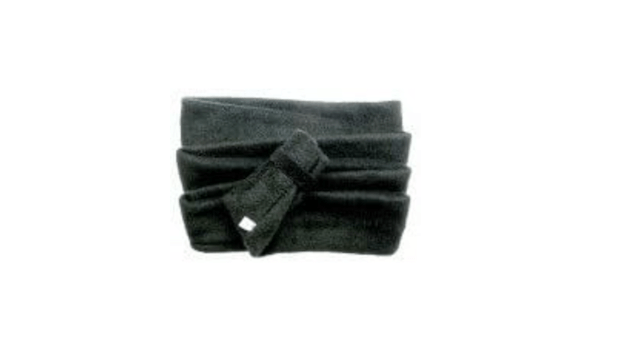
The SnuggleHose is the cover most CPAP users seem to land on first, and the reasons make sense once you look at it. It’s a fleece sleeve that slides over a standard 6 foot hose and fastens with hook and loop strips. The combination of soft fleece on both sides makes it warm against the skin and effective as an insulator, and the closure type means you can take it off in seconds for washing.
What stands out about this one:
- Genuine fleece insulation that does real work in cold bedrooms
- Updated hook and loop closure that holds its grip after repeated washing
- Hypoallergenic material, which matters if your skin is sensitive
- Sized to fit standard 6 foot CPAP hoses, including the AirSense 10 and 11 lines
Common feedback themes: a noticeable drop in condensation within the first week, and that the cover stays put through the night without bunching up. As with any new fleece product, expect a small amount of lint shedding in the first wash. That’s normal, not a defect.
If you’re new to hose covers and you don’t want to overthink it, this is the safe pick.
2. ResMed Zippered Tubing Wrap (best for heated tubing)
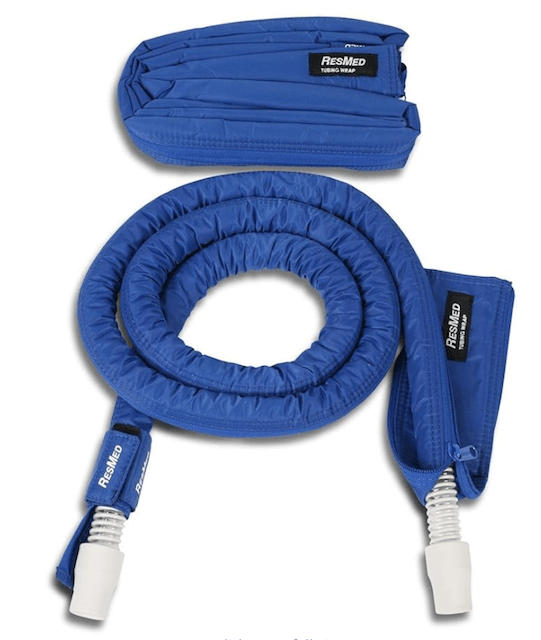
If you’re using a ResMed AirSense 10 or 11 with the ClimateLineAir heated tubing, this is the cover that comes up most often. It’s a zippered nylon sleeve sized to fit ResMed’s slightly thicker heated hose, and the full-length zipper makes it easy to wrap and unwrap without fighting the connectors at either end.
What stands out about this one:
- Sized for the dimensions of the ResMed heated and standard hoses
- Full-length zipper, which is faster to install than hook and loop
- Lightweight nylon that doesn’t add bulk to the line
- Machine washable
Common feedback themes: the zipper is the standout feature. Once it’s on, it stays put, and there’s no hook and loop to catch on bedding. The trade-off is that nylon doesn’t feel quite as plush against the skin as fleece, but most users don’t notice this once the cover is on the tubing rather than the mask itself.
This is the cover I’d point a ResMed user with heated tubing to first.
3. MARS Wellness CPAP 6ft Wrap (best budget option)

The MARS Wellness wrap is the option I’d suggest if you want to spend the least without ending up with something that falls apart in two months. It’s a fleece lined polyester wrap with a full-length zipper and a universal fit that works with most CPAP and BiPAP hoses, heated or standard.
What stands out about this one:
- Fleece interior, polyester exterior, which gives you both warmth and durability
- Universal fit covers most 6-foot hoses regardless of brand
- Zipper closure for easy installation and removal
- Generally, the lowest-priced of the three
Common feedback themes: it does the job at the price. Where it falls short is consistency. Some buyers report excellent insulation, others say the fleece feels thinner than they expected. A small number mention zipper issues over time. For the price, it’s a reasonable starting point if you want to test whether a hose cover actually helps you before committing more money.
Heated tubing or hose cover. Which do I actually need?
This is the question I get most often, so it’s worth answering directly.
A heated hose actively warms the air as it travels from the humidifier to your mask. It’s the more aggressive rainout solution, and if you’re on a ResMed AirSense 10 or 11, the ClimateLineAir heated tubing is the version most clinicians point to. But it costs more than a basic hose, and even with heated tubing some users still get rainout in cold bedrooms.
A hose cover insulates the tubing passively. It doesn’t add heat. It just slows down the rate at which warm humid air loses heat to the outside, which is enough to prevent condensation in many setups.
Here’s how I’d think about the combinations:
| Your current setup | What I’d suggest |
|---|---|
| Standard hose, no rainout problem | Skip the cover. You don’t need one. |
| Standard hose, occasional rainout | A fleece cover like the SnuggleHose is often enough. |
| Standard hose, frequent rainout in winter | Upgrade to heated tubing first. Add a cover if rainout still happens. |
| Heated hose, still getting rainout | Add a cover. Belt and suspenders works in cold rooms. |
| Heated hose, no rainout | A cover is optional. Worth it for noise reduction or aesthetics. |
If you’re not sure whether your tubing is heated, check the connectors. Heated tubing usually has copper colored ends and feels slightly thicker than standard tubing. If you’re shopping for the tubing itself rather than a cover, my best CPAP hoses guide is the better starting point.
Other ways to reduce rainout
If you’re dealing with rainout, a cover is one tool. There are a few others worth knowing, especially if you’d rather not spend any money before testing the basics.
The biggest lever is your bedroom temperature. Rainout gets worse as the gap between humid air inside the tube and cool air outside it grows. Even a small bump up in room temperature in the cooler months can make the problem disappear.
A few other things that work without buying anything:
Lower your humidifier setting one notch and see if the dryness is bearable. Many CPAP users overcompensate on humidity early on and then deal with rainout for years before realizing they could just dial it back.
Position your CPAP machine slightly below the level of your mattress. Gravity helps any condensation drain back toward the humidifier rather than running down the tubing into your mask.
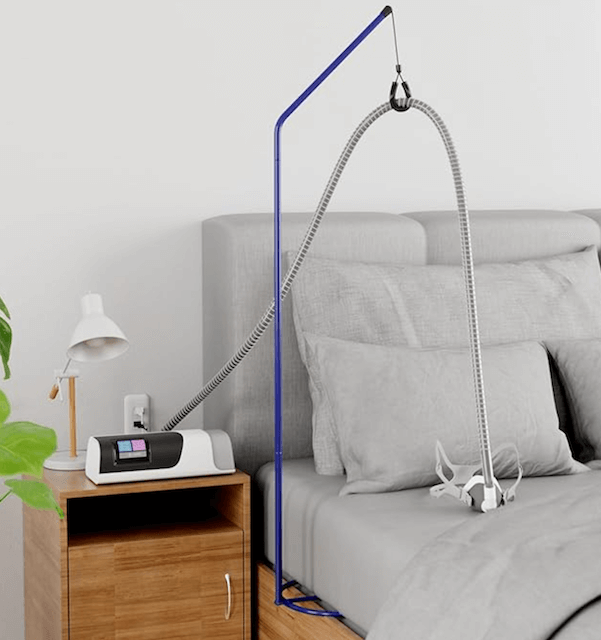
Use a hose holder or hose lift to keep the tubing elevated overnight. Water can’t pool in low spots if there are no low spots.
Hang your tubing over the bathroom door or a shower rod each morning to dry. This isn’t a rainout fix, it’s a hygiene one, but a dry hose at the start of the night is more comfortable than a damp one.
Wash your cover regularly. Most are machine washable on cold. Once a week is reasonable.
For the full walkthrough of rainout fixes and what’s actually happening inside your tube, my rainout post covers it in more depth than I can fit here.
How to pick the right hose cover
A few things to check before you click buy:
Tubing length. Most CPAP hoses are 6 feet. Some heated lines run a little longer. Measure yours if you’re unsure.
Tubing diameter. Heated tubing is usually thicker than standard tubing. A cover sized for a standard hose may be too tight on a heated line, and a cover sized for heated tubing may sag on a standard hose. Check the listing dimensions before ordering.
Closure type. Zippers are faster to put on and harder to misalign once installed. Hook and loop is more forgiving and easier to adjust if your hose isn’t a standard size, but it can occasionally catch on bedding.
Material. Fleece is the warmest. Nylon is lighter and dries faster. Polyester sits in the middle on both. Cotton breathes well but doesn’t insulate as effectively, which matters for a hose cover even though it doesn’t matter for clothing.
Washability. Look for “machine washable” on the listing. Hand washing six feet of tubular fabric is more annoying than it sounds.
Color. Sounds trivial. It isn’t. You’ll see this thing every morning. Pick something you don’t mind looking at next to your bed.
Frequently asked questions
Do CPAP hose covers actually stop rainout?
They reduce it, not always eliminate it. A cover insulates the tubing, which slows the temperature drop that causes condensation. If your rainout is severe and you don’t have heated tubing, a cover alone may not be enough. Pair it with a slightly warmer bedroom or a one notch reduction in humidity.
Can I use a hose cover with a heated hose?
Yes, and many people do. The cover acts as a second layer of insulation in cold rooms. Just check that the cover is sized for heated tubing dimensions, since some standard covers are too tight to fit comfortably over the thicker heated line.
How often should I wash a CPAP hose cover?
Roughly once a week. The cover sits close to your face and picks up skin oils, dust, and humidity over time. Most are machine washable on cold with mild detergent. Air dry to extend the lifespan of the closure, especially with hook and loop covers.
Will a hose cover affect my CPAP pressure?
No. The cover sits on the outside of the tubing. It doesn’t restrict airflow or interfere with how the machine senses pressure.
Are hose covers worth it if I don’t have rainout?
Probably not for the rainout benefit. But they do reduce noise from tubing brushing against your bed frame, and they make the hose feel less cold against the skin in the morning. If neither of those bothers you, save your money for mask liners or another accessory that solves a problem you actually have.
Do I need a different cover for an AirSense 10 versus an AirSense 11?
The hose dimensions are very similar between the two ResMed generations, so a cover that fits one usually fits the other. Just confirm whether your line is the standard hose or the ClimateLineAir heated version, since those have slightly different diameters.
Prefer to make your own?
A hose cover is one of the easier sewing projects in the CPAP accessory world. If you have basic supplies and 20 minutes, you can put one together for under $10.
What you’ll need:
- 6 to 7 feet of fleece or flannel, around 6 to 8 inches wide
- A long zipper or hook and loop tape
- Scissors
- A sewing machine, or fabric glue if you’d rather not sew
The basic steps:
- Lay your hose flat and measure its length. Add about an inch for seam allowance.
- Fold the fabric lengthwise with the inside facing out.
- Sew or glue the long edge closed, leaving the short ends open. If you’re using hook and loop, attach it along the edge instead of sewing it shut.
- Turn the cover right side out so the seam is hidden.
- Slide it over your tubing.
Fleece is the most popular DIY material because it doesn’t fray and it holds warmth. If you want the seam to look clean, sew it. If you just want the thing to work, fabric glue is fine. The CPAP police aren’t going to inspect your stitching.
The bottom line
A hose cover isn’t going to transform your CPAP therapy. But for the people who deal with rainout, cold tubing, or the constant rattle of plastic against wood, it’s one of those small upgrades that quietly makes the whole setup more livable.
If I were starting from scratch and had no idea which to buy, I’d grab the SnuggleHose first. It’s the most universal fit and the most consistent in user feedback. ResMed users on heated tubing are usually better served by the dedicated zippered wrap. And if you just want to test whether a cover helps you at all without spending much, the MARS Wellness option is hard to beat at the price.
For more on the underlying problem these covers solve, my rainout post walks through what’s happening inside the tube and what to do about it. If you’re earlier in your CPAP journey and trying to figure out which machine is right for you, I keep a running list at best CPAP machines.
Have you tried a hose cover, made your own, or solved rainout a different way? Drop a comment below. The more real-world feedback this post collects, the more useful it gets for the next reader.
⚠️ MEDICAL DISCLAIMER This blog provides general information only and is not a substitute for professional medical advice, diagnosis, or treatment. Sleep apnea is a serious condition, and CPAP equipment should be used under proper medical supervision. Always consult your doctor or sleep specialist before starting, stopping, or changing any therapy. I share personal experiences as a CPAP user, not as a medical professional. Individual results vary. For medical guidance, please consult a qualified clinician or the American Academy of Sleep Medicine (aasm.org).