Why Is My CPAP Gurgling? What It Means and How to Quiet It

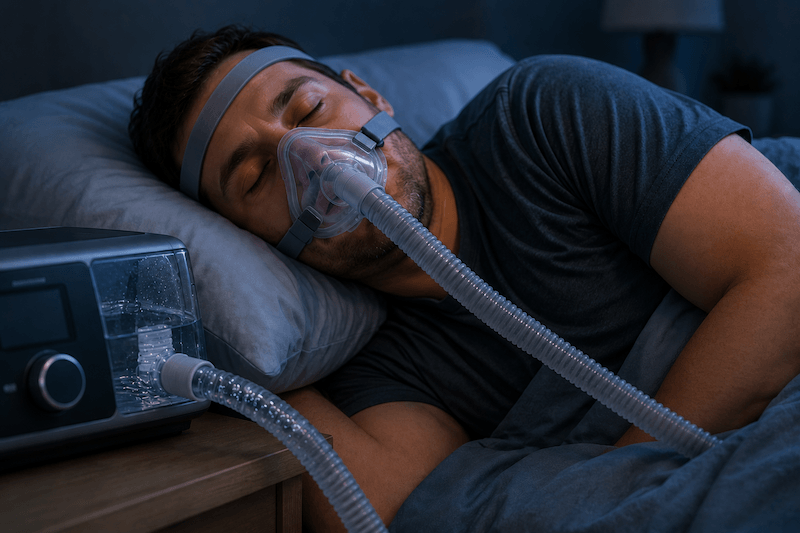
If you have ever been woken by a wet, bubbling sound coming from your hose or mask, you already know how strange it is. The machine that is supposed to help you sleep is suddenly making a noise like a fish tank. The good news, and I want to lead with this because it is the question everyone is really asking, is that a gurgling CPAP is almost never a sign that the machine is failing. It is a sign that there is water somewhere it should not be, and the air is bubbling through it on its way to your face.
Before I go further, a quick note on where I am coming from. My background is in computer science, not medicine. What I write here comes from living with severe obstructive sleep apnea and using CPAP every night for more than a decade, plus a fair amount of reading and tinkering with my own setup. Treat this as one patient’s troubleshooting notes, not medical advice. If anything here touches on your therapy pressure or your health, your doctor or equipment provider is the right person to confirm it.
What the gurgle actually is
A CPAP delivers a steady stream of pressurized air down the hose and into your mask. When everything is dry, that air moves silently. The moment liquid water collects anywhere along that path, the air has to push through it, and the result is the bubbling, gurgling, sometimes crackling sound you are hearing. Think of blowing through a straw into a glass of water. Same physics, smaller scale.
So the real question is not “why is my machine making noise” but “where is the water coming from.” Once you find the source, the fix is usually simple and cheap. There are a handful of common culprits, and I will go through them roughly in order of how often they turn out to be the problem.
The usual suspect: condensation in the hose
By a wide margin, the most common reason a CPAP gurgles is condensation, often called rainout. Your humidifier warms and moistens the air. As that warm, damp air travels down the hose and hits cooler tube walls, the moisture condenses back into liquid droplets, exactly the way a cold glass sweats on a warm day. Those droplets gather in the low points of the hose, and the airflow bubbles through them.
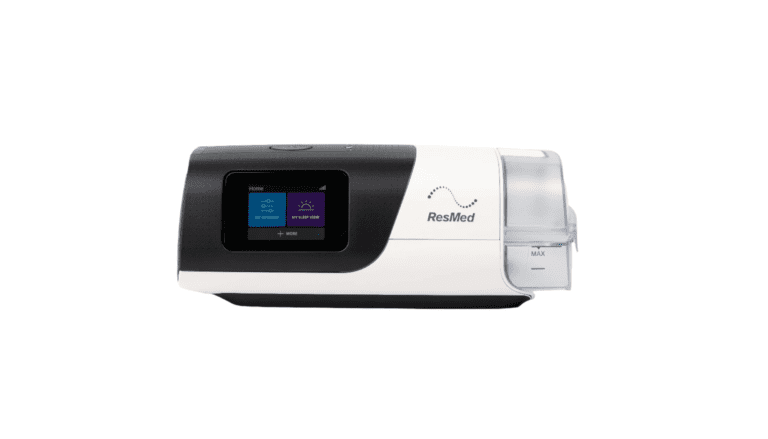
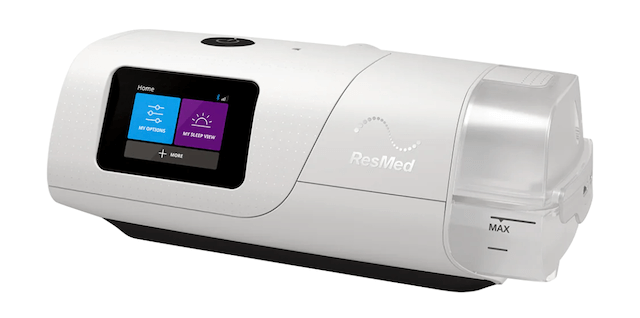
The maker of my own machine describes it plainly: when heated air cools in the tubing, it can reach the mask as water, and the condensation in the tube is what produces that gurgling sound. So if you are hearing the gurgle, condensation is the first thing to suspect.
Rainout has its own set of causes and a deeper set of fixes than I can fairly cover here without repeating myself, so I have written a full breakdown of why it happens and how to defeat it in my guide to CPAP rainout. The short version is that it comes down to three things working together: a generous humidifier setting, a cold bedroom, and a hose with no insulation. For what it is worth, the trigger for me has always been the cold room. I sleep better when it is cool, and a cool room is exactly the condition that turns humid air into water inside the tube.
An overfilled water chamber
The second thing I would check is your humidifier chamber. Every chamber has a maximum fill line, and it is there for a reason. If you fill past it, water can slosh up toward the air outlet, especially if you move the machine, bump the nightstand, or the machine sits at an angle. From there it gets pulled into the hose directly as liquid rather than as vapor, and you get a gurgle that has nothing to do with condensation.
The fix is as boring as it sounds. Fill to the line, not above it. If you tend to top it off generously before bed, ease back and see whether the noise disappears. While you are in there, make sure the chamber is seated properly and that the seal is intact, since a chamber that is not sitting flat can let water migrate where it should not.
How the machine and hose are positioned
Gravity is doing more work in your setup than you might think. If your machine sits higher than your head, any water that forms in the hose runs downhill toward you and pools near the mask. If the hose drapes down off the nightstand and then back up to your face, water collects in that dip and the air bubbles through it all night.
The simple habit here is to keep the machine lower than your mask, ideally on a nightstand at or below mattress height, so condensation drains back toward the humidifier instead of toward your face. Route the hose up and over the head of the bed rather than letting it sag in a loop on the floor. A lot of people solve their gurgling entirely with this one change, because it lets gravity move the water away from you instead of toward you. If you want your machine sitting at the right height to begin with, I have thoughts on the right surface for a CPAP that make this easier.
Water pooling in the mask itself
Sometimes the gurgle is not in the hose at all, it is right at your face. This shows up more with full face masks, which is what I use, simply because there is more enclosed space for moisture to collect. Condensation can bead up inside the cushion and around the elbow connector, and every breath pushes the air through it. If the sound seems to be coming from the mask rather than down the line, dry the cushion and the connector, check that the mask is not over humidified by the same rainout process described above, and make sure your seal is good. A poor seal can actually make people crank the humidifier higher to compensate for the dryness a leak causes, which feeds the whole condensation problem. If your mask is leaking as well as gurgling, my piece on why CPAP masks leak walks through how to chase that down.
What about a travel machine?
I get asked whether travel machines gurgle for the same reasons. They generally do not, because a compact travel unit like the one I take camping does not run a heated water tub the way a bedside machine does, so the big rainout mechanism mostly is not in play. If a travel setup makes any wet noise, it is usually ambient humidity or moisture left in the tubing from cleaning rather than a chamber full of warm water. I have written separately about how my travel machine compares to my main one if you are weighing one up.
The fixes you can try tonight
If you want to stop the sound before you go back to sleep tonight, here is the order I would work through:
- Lower your humidifier setting by one step. Less moisture in the air means less to condense.
- Drain the hose. Disconnect it, let the water run out, and reconnect.
- Check the chamber fill level and bring it down to the line if you overfilled.
- Reposition the machine so it sits lower than your head, and route the hose up over the headboard so it has no low dip to collect water.
Those four steps resolve the great majority of gurgling for most people, at least for the night. They are first aid, though, not a cure. If the noise comes back every time the room gets cold, you want a more permanent answer.
The permanent fixes
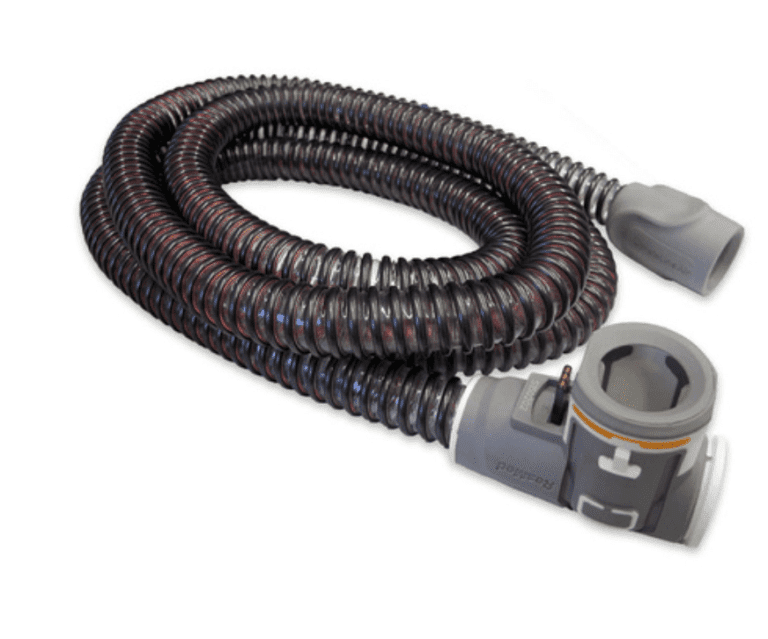
The single most effective long term solution is heated tubing. A heated hose keeps the tube walls warm along their whole length, so the air never cools enough to condense in the first place. It is the closest thing to a real cure for condensation gurgle, and most newer machines either include it or accept it as an add on. I go into how it works and which hoses fit which machines in my rundown on heated CPAP tubing.
If a heated hose is not in the budget, an insulated cover is the cheaper cousin. Wrapping the hose with a fleece sleeve slows the heat loss that drives condensation, and while it does not match a heated tube, it makes a real difference in a cold room for very little money. I have collected the ones I would actually buy in my guide to CPAP hose covers.
The third lever is the humidifier setting itself, and it is worth dialing in properly rather than just nudging it. The goal is the lowest humidity level that still keeps your nose and mouth comfortable, matched to how cold your bedroom actually gets. There is more detail on getting that balance right in my guide to the CPAP humidifier. Raising the bedroom temperature a degree or two helps too, since condensation is fundamentally about the gap between the warm air inside the tube and the cooler air around it.
A word on hygiene
There is one reason to take a gurgling machine seriously beyond the annoyance, and it is hygiene. Standing water in your hose, chamber, or mask is exactly the kind of warm, damp environment that bacteria and mold like. If you are getting regular condensation, you also want to be confident your cleaning routine is keeping up. The Sleep Foundation recommends washing the mask cushion, tubing, and humidifier chamber regularly with mild soap and water, then letting everything air dry fully before the next use, because the chamber in particular is the component most likely to grow something unpleasant. Emptying and rinsing the chamber every morning rather than letting water sit in it all day is a small habit that pays off. You can read their full routine in the Sleep Foundation’s CPAP cleaning guide.
When it is not the machine, and when to ask for help
I want to come back to the reassurance I started with. Gurgling is almost always water, and water in these volumes is a comfort problem, not a safety emergency. The amounts involved are small. What it can do, if you ignore it, is fragment your sleep, break your mask seal so your therapy pressure drops off, and leave you wondering whether CPAP is even working. That last part is the real cost, because the whole point of the machine is to treat your apnea, and a setup that keeps waking you up undermines that.
It is worth contacting your equipment provider if the gurgling persists after you have tried the steps above, if you are getting so much water that it reaches your airway in a way that makes you cough or sputter, or if the sound is genuinely different from a wet bubble, for example a grinding or whining that does not change when you drain the hose. A motor noise is a different problem from a water noise, and your provider can tell the difference. For a broader look at the other odd noises and quirks a machine can throw at you, I keep a running CPAP troubleshooting guide that covers more than just gurgling.
For everyone else, the takeaway is simple and a little freeing. The bubbling sound is not your machine dying. It is condensation, it is fixable, and most of the time you can quiet it down tonight and solve it for good with a warmer hose and a cooler humidifier setting. After more than a decade of this, the gurgle barely registers for me anymore, because I know exactly what it is and exactly what to do about it. You will get there too.
⚠️ MEDICAL DISCLAIMER This blog provides general information only and is not a substitute for professional medical advice, diagnosis, or treatment. Sleep apnea is a serious condition, and CPAP equipment should be used under proper medical supervision. Always consult your doctor or sleep specialist before starting, stopping, or changing any therapy. I share personal experiences as a CPAP user, not as a medical professional. Individual results vary. For medical guidance, please consult a qualified clinician or the American Academy of Sleep Medicine (aasm.org).