Sleep Apnea in Children: What Parents Should Know

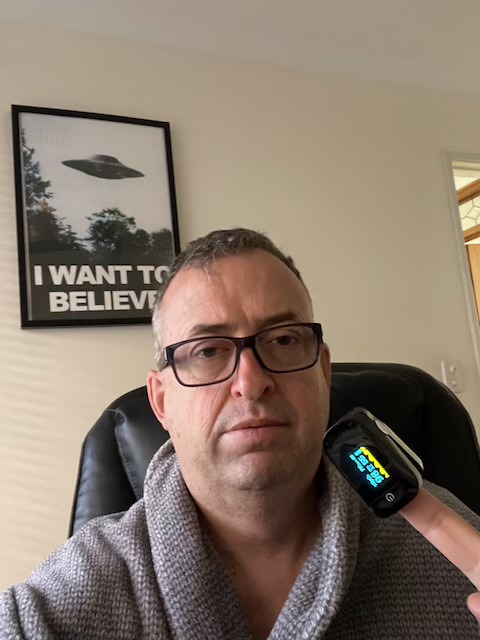
I write about sleep apnea from the perspective of someone who lives with it. I was diagnosed with severe obstructive sleep apnea more than a decade ago, my AHI at diagnosis was 51, and I have used a CPAP machine every night since. That experience is the lens through which I read research, talk to clinicians, and write this site.
It is also why I want to be careful about this particular page. Sleep apnea in children is not the same condition as the one I have. The causes are different, the presentation is different, the diagnostic thresholds are different, and the treatment is different. My background is in computer science, not medicine, and I have no clinical expertise in pediatric sleep medicine. What I do have is a layman’s working understanding of the condition, a strong reason to pay attention to how it shows up in research, and a sense that this is a topic where a lot of parents are missing early signs because nobody has explained what to look for in plain language.
This page is a research synthesis written for parents who want to understand the basics before they sit down with a GP or pediatrician. It is not a diagnosis tool, and it is not a substitute for medical advice. If anything here sounds familiar, the right next step is a conversation with a clinician.
Why children’s sleep apnea looks different from adult sleep apnea
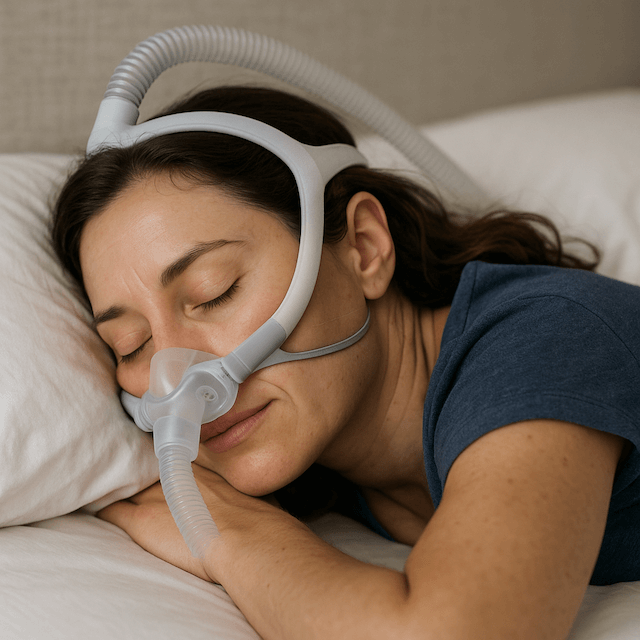
The image most people carry of sleep apnea is the adult version. A loud snorer who stops breathing, gasps, jolts awake, and feels exhausted in the morning. That is roughly the picture clinicians work with when an adult walks into a sleep clinic.
Children with obstructive sleep apnea often present nothing like this. Some snore loudly, some do not. Some have breathing pauses you can see and hear, some have subtler airflow disruptions that look more like effortful breathing than dramatic apnea. The body’s reaction to those disruptions is also less obvious. Adults respond to fragmented sleep by feeling sleepy and slow. Children frequently respond by becoming the opposite of sleepy: hyperactive, irritable, and difficult to settle.
The underlying cause is also different. In adults, sleep apnea is usually driven by some mix of anatomy, weight, reduced muscle tone in the throat during sleep, and the cumulative changes that come with age. In children, the most common cause by far is enlarged tonsils and adenoids, creating a partial obstruction in the upper airway. That single anatomical difference cascades through everything else about the condition. The assessment, the first-line treatment, and the typical outcome are all shaped by it.
This is one of the reasons resources written about adult sleep apnea, including most of what is on this site, are not the right place for parents to interpret what they are seeing in a child. The clinical framework is genuinely different, and it really does take a clinician who specializes in pediatric sleep medicine to read the situation properly.
The Cleveland Clinic estimates that obstructive sleep apnea affects somewhere between one and five percent of children, and is most common between the ages of two and six. That prevalence is not trivial, and the diagnosis is missed often enough that the American Academy of Pediatrics now recommends every child be screened for snoring at routine health visits.
The nighttime signs parents are most likely to notice
If a child has obstructive sleep apnea, the nighttime signs are usually the first thing parents pick up on, sometimes without realizing they are seeing a medical issue. Loud and persistent snoring, particularly on most nights rather than only during a cold, is the most common red flag. Snoring is not normal for children in the way it is sometimes treated. Habitual snoring on its own is enough to warrant a conversation with a doctor.
Other observations worth taking seriously include breathing that looks visibly labored or effortful, a child who consistently sleeps with their neck stretched into an unusual position to keep the airway open, heavy night sweating that is not explained by the room temperature, restless sleep with a lot of position changes, and a child who breathes through the mouth most of the night even when not congested. As a chronic mouth breather myself, I can say that mouth breathing during sleep is one of those things that becomes a habit and then becomes invisible. Parents often stop noticing it after a while. It is still worth flagging.
The observations that carry the most weight clinically are the ones most likely to alarm a parent in the first place. Visible pauses in breathing, audible gasping, snorting, or choking sounds during sleep, and any episode where the child seems to wake themselves up trying to breathe. If you have ever stood next to your child’s bed and felt that something was not right about their breathing, that instinct is worth taking to a doctor. It carries more clinical weight than people realize.
A useful exercise before any appointment is to write down what you have observed, how often, and for how long. The difference between “my child snores sometimes” and “my child snores most nights loudly, sleeps with the mouth open, sweats heavily, and I have watched them pause breathing on several occasions over the past few months” is the difference between an appointment that ends in reassurance and one that ends in a referral. Specificity is what gets things moving.
The daytime signs that get missed
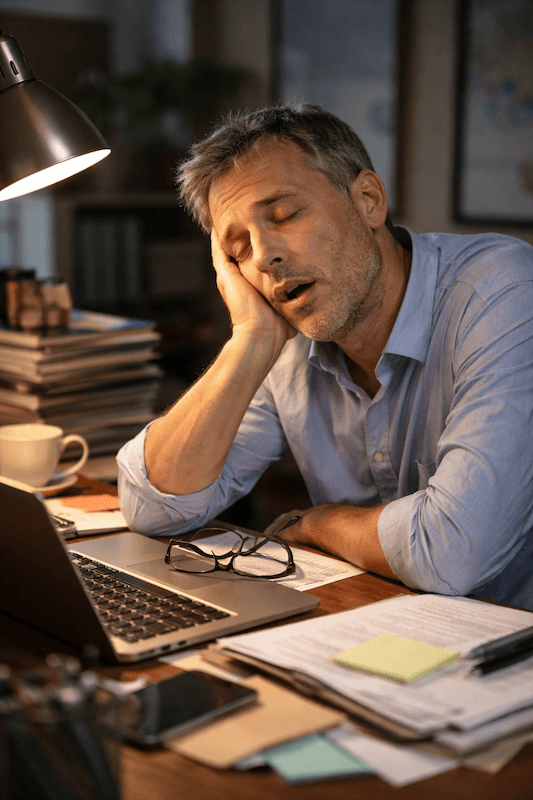
The daytime signs are where the condition most often gets misattributed. Adults with untreated sleep apnea usually present as exhausted, which is what raises the suspicion in the first place. Children with the same underlying problem frequently present as anything but tired.
The link between sleep disordered breathing and behaviors that look like ADHD is well established in the pediatric sleep literature. A child whose sleep is being repeatedly disrupted by breathing events is not going to sit quietly fighting to stay awake. They are going to be impulsive, irritable, distractible, and difficult to manage. Those behaviors get attributed to personality, parenting, or developmental issues long before anyone thinks to ask how the child is sleeping at night.
This is the underdiagnosis problem in a nutshell. A child whose nights look bad and whose days look like behavior problems is often treated as a behavior case. The breathing piece never enters the conversation. Parents and teachers describe the daytime symptoms, doctors respond to the daytime symptoms, and the nighttime cause goes unaddressed.
Declining school performance, mood swings, difficulty regulating emotions, and unusual irritability can all be downstream effects of chronically fragmented sleep. Not every child showing these signs has sleep apnea. But a child showing these signs in combination with the nighttime observations described above deserves to have the two sets of symptoms connected and discussed together, not treated as unrelated.
There is also a developmental dimension that pediatricians are specifically trained to look for. Growth hormone is released primarily during deep sleep. If deep sleep is being broken up by breathing disturbances, growth hormone output can be reduced, and that can show up as slower than expected growth. Cardiovascular changes and metabolic effects have also been documented in children with untreated obstructive sleep apnea. The condition does real work in the background, and it does it during years when the body and brain are forming. This is the core reason pediatric sleep medicine treats the condition with the seriousness it does, even in children with apparently mild events.
If you want a clinically grounded summary of how this disorder works mechanically, my page on obstructive sleep apnea covers the general framework. It is written about the adult version, but the basic concept of an airway repeatedly closing during sleep, oxygen levels dipping, and the brain rousing the body to resume breathing applies to children, too. The numbers and thresholds are different, but the mechanism is the same.
What a diagnosis actually involves
If a GP or pediatrician takes your concerns seriously, the typical next step is a referral to a pediatric sleep specialist, a pediatric pulmonologist, or in some cases an ENT, depending on what the initial assessment suggests is going on with the airway.
The diagnostic gold standard for children is overnight polysomnography in a hospital sleep lab. That is a full sleep study with trained staff monitoring breathing, oxygen saturation, brain activity, muscle activity, and sleep stages through the night. Parents stay with the child throughout. In practice, families consistently report that the experience is less intimidating than it sounds. The child sleeps in a regular bed in a room set up for the purpose, the equipment is non-invasive, and the staff are used to working with kids.
Home sleep tests are increasingly common for adult diagnosis. They are not typically used for children. The reason is partly that the data they produce is harder to interpret in pediatric cases, and partly that the clinical thresholds are different enough that a full lab study is the safer call. The numbers that would mark a mild adult case can be clinically significant in a developing child. A pediatric sleep specialist interprets the same data using different criteria than a general sleep clinic, which is one of the reasons the right referral pathway matters.
If you want to understand the framework pediatricians are working from, the American Academy of Sleep Medicine has a readable summary of the 2012 AAP clinical practice guideline on childhood obstructive sleep apnea, and the Cleveland Clinic’s pediatric sleep apnea page covers the clinical picture in plain language. Reading both will give you a much sharper sense of what your child’s clinician is looking for and why.
The AHI, or apnea hypopnea index, is the standard measure of how often breathing is disrupted per hour of sleep. My page on what your AHI number actually means goes through the concept in detail, with the caveat that pediatric thresholds are stricter than the adult ones. Anatomical contributors like a recessed jaw can also play a role in some children, and the micrognathia and obstructive sleep apnea page covers that piece of the picture for parents whose child has been flagged for a structural cause.
What treatment looks like at a high level
I am deliberately not going to walk through specific treatment recommendations here. What the right approach is for a given child depends on the child’s age, the severity of the events, the specific cause of the obstruction, weight, growth, and other factors that need clinical judgment from someone who has actually examined them. Those decisions belong with a pediatric specialist.
What I can say at a high level is that the AAP guideline names adenotonsillectomy, the removal of the tonsils and adenoids, as the first-line treatment for most cases of childhood obstructive sleep apnea, because enlarged tonsils and adenoids are the most common cause. For many children, that single intervention resolves the problem. For children whose sleep apnea persists after surgery or who are not surgical candidates, CPAP therapy is sometimes used. Weight management is part of the picture for children whose obstructive sleep apnea is driven primarily by obesity. The full options space, and the order in which clinicians think about them, is discussed in more depth on my sleep apnea surgery page, though that page is mostly written about adult cases.
The thing parents most want to hear, which the research generally supports, is that outcomes for children who are properly diagnosed and treated are usually very good. Many children see meaningful improvements in sleep, behavior, school performance, and growth once the breathing issue is addressed. The earlier the problem is caught, the less time the child spends in fragmented sleep during years when development is most affected by it.
If your concerns get dismissed
One thing worth saying clearly. Pediatric sleep apnea is underdiagnosed. Brief GP appointments are not always set up to handle a multi-month pattern of nighttime observations and daytime behaviors that may or may not be connected. If you raise concerns and they are waved off without a referral, and your instinct is still telling you something is wrong, asking for a second opinion or specifically requesting a referral to a pediatric sleep specialist is entirely reasonable.
The same principle that helps in the first appointment helps in the second one. Write your observations down. Note the frequency of snoring and how it has changed over time. Describe what the breathing looks like, including any pauses, gasps, or choking sounds. Note daytime behavior, school performance, mood, and whether teachers have raised concerns. Note how long this pattern has been going on. A doctor presented with a concrete, dated record of observations has a much harder time concluding there is nothing to investigate than one who is given a vague worry.
Some of the same observational habits that adults use to understand their own sleep apnea apply here. Adults often find that paying attention to the signs and symptoms of sleep apnea helps them make a clearer case to a clinician. The same is true for parents advocating for a child. Knowing what the clinical framework is, and being able to describe what you have seen in terms that map onto it, makes a real difference.
If your instinct is telling you something is not right about how your child is sleeping, that instinct is worth following. The cost of being wrong and getting reassurance is one appointment. The cost of being right and not pursuing it accumulates over years.
⚠️ MEDICAL DISCLAIMER This blog provides general information only and is not a substitute for professional medical advice, diagnosis, or treatment. Sleep apnea is a serious condition, and CPAP equipment should be used under proper medical supervision. Always consult your doctor or sleep specialist before starting, stopping, or changing any therapy. I share personal experiences as a CPAP user, not as a medical professional. Individual results vary. For medical guidance, please consult a qualified clinician or the American Academy of Sleep Medicine (aasm.org).