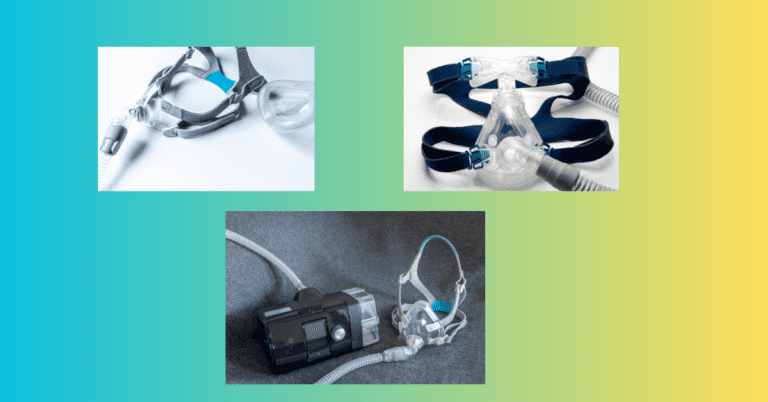
Best CPAP Mask for Deviated Septum: A 10-Year User’s Guide


I remember a party trick from my younger days. I would grab someone’s cigarette and show everyone that I could puff smoke out of one nostril. They would ask how I did it, and I would say, “It takes practice.”
It did not take practice. My septum was so badly deviated that one nostril was almost completely blocked. The smoke had nowhere else to go.
I eventually had septoplasty to straighten things out. The surgery helped my daytime breathing a lot, and for the first time I could move air through both nostrils while exercising. What it did not do was fix my snoring. Not even slightly.
It took a sleep study to explain why. I had severe obstructive sleep apnea with an AHI of 51. The deviated septum was part of the picture, but the real problem was my throat collapsing during sleep, and no amount of nasal surgery was ever going to fix that. That is when I started CPAP therapy, more than a decade ago, and that is when I learned that having both a deviated septum and sleep apnea makes choosing a mask its own particular puzzle.
One quick note before we get into it. I am not a doctor. My background is in computer science. Everything here is what I have learned as a long-term patient and from reading the research, not medical advice. For the clinical side of your situation, your sleep specialist is the right person to talk to.
If you want the deeper background on how a crooked septum and apnea actually relate, I dug into that in can a deviated septum cause sleep apnea. For this guide, I want to focus on the mask.
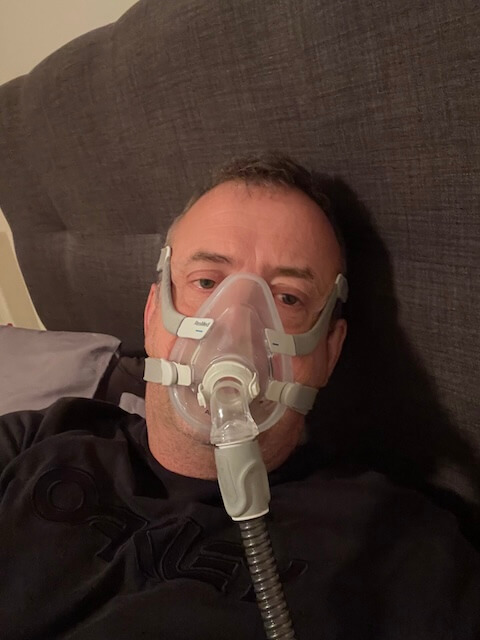
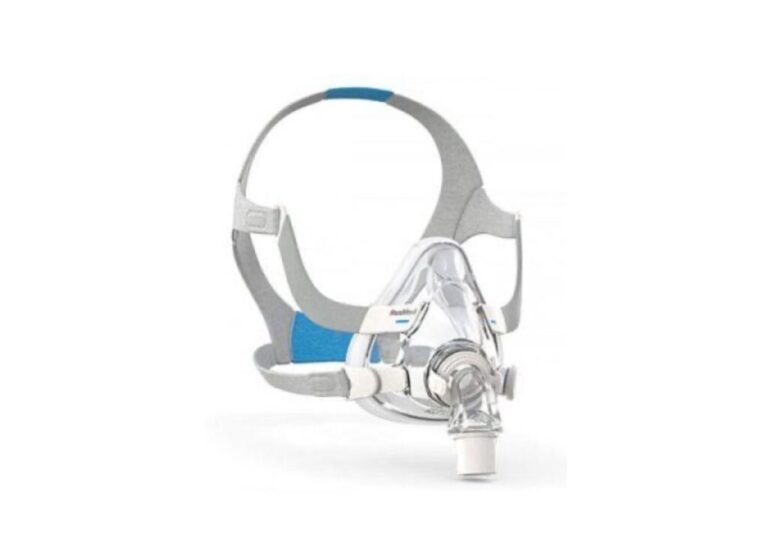
1. ResMed AirFit F20 Full Face Mask, my own mask
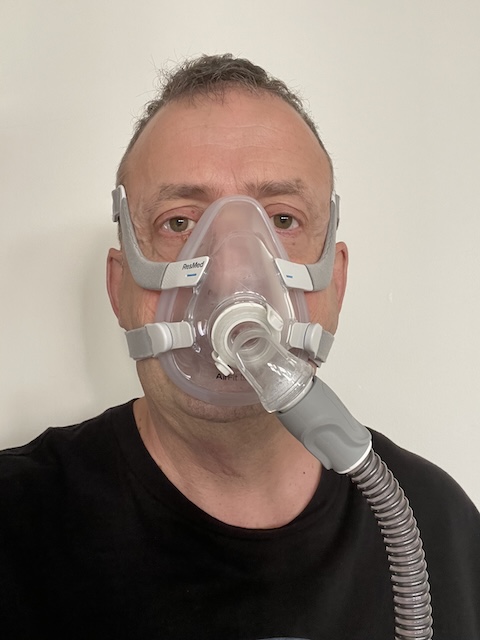
That is me, modelling the ResMed AirFit F20.
The F20 uses what ResMed calls an InfinitySeal cushion, which inflates slightly as pressure builds and settles into the shape of your face. When your nasal anatomy is asymmetric, which it tends to be with a deviated septum, that adaptable seal is exactly what you want. One side of your nose can sit a little differently from the other and the cushion still finds its seal.
The cushion itself is soft and does not dig into the bridge of the nose, which matters if you have lingering tenderness or inflammation from surgery. For me, the practical wins are simple. The magnetic clips let me attach the headgear in the dark without fumbling, and the quick release elbow makes a midnight trip to the bathroom painless. My AHI sits consistently around 4 on this mask, and in all these years I have never had a strong reason to switch.
It is not a small mask. If you are used to something minimal, the F20 can feel bulky at first, and back sleepers tend to get along with it better than dedicated side sleepers. Those are honest trade-offs, and for me the reliability has been worth it.
There is also a memory foam version, the ResMed AirTouch F20. It is the same mask with a foam cushion in place of silicone. Users who find silicone tricky on sensitive or post-surgery skin often report the foam molds more forgivingly to an uneven nose. The catch is that foam cushions wear out faster and need replacing more often than silicone, so there is an ongoing cost to weigh. I have not used the AirTouch myself, so I am passing that along as something worth knowing rather than something I have tested.
If you want the long version of my experience with this mask, I wrote a full ResMed AirFit F20 review.
2. Philips Respironics DreamWear Full Face, researched, not worn

The DreamWear takes a different approach. The cushion sits under the nose rather than over the bridge, so there is very little contact with the part of the nose that tends to be sore after surgery. The hose connects at the crown of the head instead of the front of the face, which gives you a lot more room to move and is the feature side sleepers tend to rave about, since the tube does not get pinned or yank the mask loose when you roll over. Despite the minimal nose contact, it still covers the mouth, so you keep the full face flexibility a mouth breather needs.
From the feedback I have read, the honest downsides are that some people find it leaks more than a traditional full face cushion, the frame can press on the upper lip for certain face shapes, and it can take longer to dial in the fit. It is also less of a natural choice at very high pressures. I have not slept in one, so treat this as a researched summary rather than a personal verdict.
3. Fisher & Paykel Evora Full Face, researched, not worn
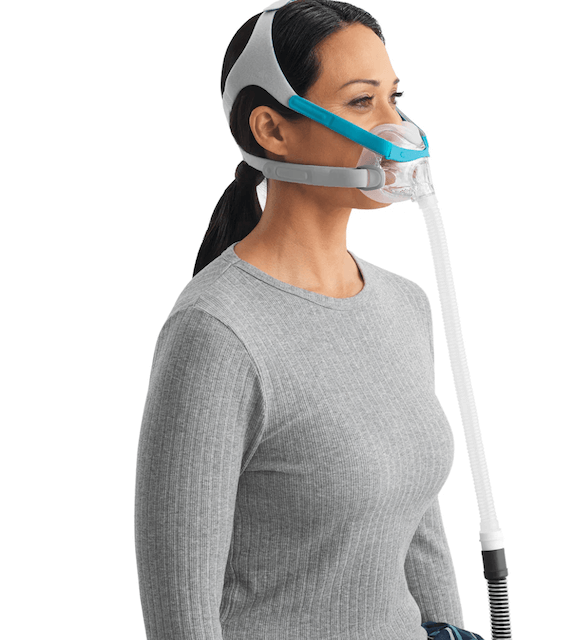
The Evora is the compact option. It aims to give you full face coverage without the bulk, which appeals to people who find a standard full face mask too heavy or closed in. It uses a rolled seal cushion that adapts to the contours of your face, and that flexibility is helpful when your nose is not symmetrical. The CapFit headgear slips on like a cap, so there is very little fiddling with straps, which is a genuine quality-of-life feature when you are half asleep.
The trade-off with a smaller seal is that fit has to be more precise, because there is less surface area to forgive a slightly off position. Some users also find it too minimal and prefer more structure, and replacement parts are not as easy to find as ResMed’s. Again, this is research and user feedback rather than my own time in the mask.
The Three at a Glance
| Mask | Seal type | Hose position | Best suited to |
|---|---|---|---|
| ResMed AirFit F20 | Full silicone (or foam, AirTouch) | Front | Reliable all round seal |
| Philips DreamWear | Under the nose hybrid | Top of head | Side sleepers |
| Fisher & Paykel Evora | Compact rolled seal | Front | Lighter, less bulk |
Why a Deviated Septum Complicates Mask Fit
A deviated septum changes the geometry of your nose, and often the airflow through it, in a way that is not symmetrical. That has two knock on effects for CPAP. The seal has to cope with a face that is a little uneven, and the air moving through a partly obstructed passage is more prone to drying things out and stirring up inflammation. Choose your mask and your accessories with both of those in mind and most of the common problems take care of themselves.
It is worth saying that the nose really does matter here. One large nine year cohort study found that people with a deviated septum were diagnosed with obstructive sleep apnea at several times the rate of people without one, and that the risk dropped meaningfully after septoplasty. The nose is the front door of your airway, and when it is restricted it makes everything downstream harder, which is part of why nasal obstruction shows up so often in the snoring and apnea literature.
Getting the Fit Right
Fit is where most of the frustration lives, and a deviated septum adds a layer to it. A few things have made the difference for me and show up again and again in CPAP communities.
Start by trying the cushion sizes rather than assuming. Most masks come in small, medium and large, and your instinct about which you need is often wrong. With an uneven nose, the size that seals well on one side may be slightly off on the other, so test what you can. A handful of people with asymmetric noses experiment with mixing cushion sizes to favor the wider nostril. Manufacturers do not officially support that, so I mention it only as something people try, not as a recommendation.
Position the mask lower than feels natural. A common mistake is riding the mask high to line it up with a crooked septum. You will usually get a better seal by settling it around the base of the nose, where the structure is more consistent, rather than pressing it into the narrowest part of the passage.
Let the headgear be a little uneven if it needs to be. There is no rule that both sides must be tightened identically. If your septum leans one way, a touch more tension on one side can even out the seal. What does not work is cranking everything tight to chase a leak, which almost always makes the leak worse. The old line in CPAP circles holds up: if it is too tight, it is not right.
Use the mask fit feature if your machine has one. Most modern CPAP machines can run a quick seal test before therapy. Put the mask on, start the test, move your head around, and adjust until the machine stops complaining. It takes a minute and saves a lot of trial and error.
Then give it time to settle. When you first switch the machine on, the cushion inflates and reshapes itself against your face as pressure builds. Resist the urge to start tweaking straight away. Let it sit for a few minutes, then make small adjustments if you still need to.
Troubleshooting the Common Problems
If you are leaking from one nostril, that is classic deviated septum behavior, and it is usually the wider side. Nudging the mask slightly toward the leaking side, going up a cushion size, or moving to a mask with less direct nose contact can all help.
If you are getting pressure or soreness on the bridge of your nose, especially after surgery, look at masks that touch the bridge less, loosen the headgear a notch, which often relieves a pressure point rather than worsening it, and consider gel pads on the spots that rub. The foam cushion on the AirTouch version of the F20 is also designed to spread pressure more evenly than silicone.
If air is escaping around your mouth even with a full face mask, check that the bottom of the cushion is sitting properly on your chin and that you have not over-tightened the top straps, which can lift the lower seal away from your face. Sometimes a size up on the cushion solves it. A chin strap is a last resort rather than a first move.
If CPAP seems to be making you more congested, that is a known thing, and it is where humidification earns its keep. Warm, moist air, heated tubing to stop condensation, and a saline rinse before bed all reduce the inflammation that a narrow passage is already prone to. A full face mask also gives you the option of simply breathing through your mouth when your nose is having a bad night.
And if you cannot find a comfortable position, remember the mask shapes your sleep as much as your pillow does. The top mounted hose on something like the DreamWear suits side sleepers, while a more traditional front connection tends to suit back sleepers. I go deeper into this in my guide to the best CPAP masks for side sleepers.
The Accessories That Actually Matter
The mask is the headline, but a few extras make a real difference when your nose is the weak link.
Heated humidification is not optional for me. Dry air through a partly blocked passage causes inflammation, and inflammation narrows the passage further, which is a loop you do not want to start. My ResMed AirSense 10 has the humidifier built in, and I run it fairly high all year given how dry it gets here in Western Australia, nudging it up further in winter. Heated tubing is the natural partner to it, keeping condensation, the dreaded rainout, from pooling in the hose.
A CPAP pillow is the other quiet hero. An ordinary pillow shoves against the mask and breaks the seal as you move. A pillow with cutouts gives the mask somewhere to go, which matters even more if you sleep on your side. I rounded up the options in my guide to the best CPAP pillows.
Beyond that, a saline spray before bed helps clear and moisten the passage, especially in allergy season, and thin mask liners can take the edge off friction and soak up the facial oils that shorten cushion life, as long as they do not wrinkle and create new leaks. A chin strap helps some mouth breathers keep the jaw closed, though I do not use one myself.
My Honest Take
I am not going to pretend there is a shortcut. Finding the right setup with a deviated septum takes some trial and error, and what works for my face may not work for yours. That is normal, and it is not a sign you are doing anything wrong.
If I had to hand someone a starting point, it would be this. Begin with a full face mask. Even after a successful septoplasty, the freedom to breathe through your mouth removes a whole category of problems, and it is the reason a chronic mouth breather like me has never looked back from the F20. If you are a committed side sleeper, look hard at the top mounted hose designs first. Do not skip the humidification, because with an obstructed nose it is doing real work. And watch your numbers. Your machine records your AHI, your leak rate and your hours, and those figures will tell you whether your mask choice is pulling its weight long before you consciously notice. If you want help reading them, I walk through it in AHI explained.
Give yourself a fair adjustment period too. The first nights can feel strange or even claustrophobic, and that settles. Stick with it before you judge it. For me, the payoff was enormous: an AHI that fell from 51 to around 4, the snoring gone, and sleep that finally did its job. A deviated septum contributed to my apnea, but it never stood in the way of treating it, and it does not have to stand in the way of yours.
If you are still untangling the snoring, the surgery and the apnea, the same way I had to, I told that whole story in why my septoplasty did not fix my snoring. It is also worth understanding the wider picture of what actually causes snoring, and if you are still weighing mask styles in general, my comparison of nasal versus full face masks and my roundup of the best full face CPAP masks both go broader than this page. And for the bigger therapy picture, start with how to sleep better with sleep apnea.
References
Yeom SW, Chung SK, Lee EJ, et al. Association between septal deviation and OSA diagnoses: a nationwide 9-year follow-up cohort study. Journal of Clinical Sleep Medicine. 2021;17(10):2099-2106. https://www.ncbi.nlm.nih.gov/pmc/articles/PMC8494085/
Georgalas C. The role of the nose in snoring and obstructive sleep apnoea: an update. European Archives of Oto-Rhino-Laryngology. 2011;268(9):1365-1373. https://pmc.ncbi.nlm.nih.gov/articles/PMC3149667/
⚠️ MEDICAL DISCLAIMER This blog provides general information only and is not a substitute for professional medical advice, diagnosis, or treatment. Sleep apnea is a serious condition, and CPAP equipment should be used under proper medical supervision. Always consult your doctor or sleep specialist before starting, stopping, or changing any therapy. I share personal experiences as a CPAP user, not as a medical professional. Individual results vary. For medical guidance, please consult a qualified clinician or the American Academy of Sleep Medicine (aasm.org).