Can Sleep Apnea Cause Seizures: What the Research Shows

Sleep apnea has been part of my life for more than a decade. My diagnosis was severe obstructive sleep apnea with an AHI of 51, and I have used a CPAP machine with a full face mask ever since. I write about apnea from the perspective of a long term patient, not a clinician. My background is in computer science rather than medicine, and seizures are a topic outside my personal experience entirely. Everything that follows is built on published research rather than lived experience.
If you are reading this, you are probably in one of two places. Either you have epilepsy and you are wondering whether sleep apnea could be making your seizures worse, or you have sleep apnea and you have noticed something at night that you are trying to make sense of. Both are worth taking seriously, and the answer the medical literature gives is a careful one. Sleep apnea has not been proven to directly cause seizures in people who do not already have a seizure disorder. But in people who do, untreated apnea can make seizures harder to control, and the relationship runs in both directions.
Let me walk through what the research shows, what the proposed mechanisms are, and what it might mean if you suspect you have both conditions.
The short answer
Sleep apnea is not currently considered a direct cause of seizures or epilepsy. According to the Sleep Foundation, repeated drops in oxygen and frequent sleep disruptions can place stress on the brain and nervous system, potentially lowering the threshold for seizure activity in some people. That stress is the mechanism researchers focus on, and it matters most for people who already have a tendency toward seizures.
A more accurate framing is this. Sleep apnea does not flip a switch and trigger seizures in healthy brains. It creates conditions during sleep that can make a brain already prone to seizure activity more vulnerable. That distinction matters because it changes how seriously you should take apnea if you have epilepsy, and it changes what kind of treatment progress is realistic to expect.
How sleep apnea and seizures are connected
To understand why these two conditions sit so close to each other, it helps to know what each one does to the brain.
Obstructive sleep apnea is the kind I have. The airway collapses during sleep, breathing stops for seconds at a time, and the body reacts by partially waking you up to restart the breath cycle. In severe cases this can happen dozens of times per hour. Each event causes a dip in blood oxygen, a spike in carbon dioxide, and a small surge of stress hormones. The brain never gets to settle properly into the deep, restorative phases of sleep.
A seizure, by contrast, is a burst of abnormal electrical activity in the brain. Epilepsy is the most common cause, but seizures can also be triggered by acute factors like sleep deprivation, certain medications, fevers in children, or severe oxygen loss.
The overlap point is exactly what you would expect. Sleep apnea repeatedly delivers oxygen drops, sleep fragmentation, and physiological stress. Those are the same factors that lower the seizure threshold in people who already have epilepsy. The two conditions also share a few common risk factors, including obesity, age, and cardiovascular disease, which is part of why they show up together so often.
What the data actually shows
The numbers in the published research are striking enough to be worth quoting carefully.
Studies cited by the Sleep Foundation suggest that around a third of people with epilepsy also have obstructive sleep apnea. Cleveland Clinic researchers, including epilepsy and sleep specialist Dr. Nancy Foldvary-Schaefer, have reported a prevalence closer to 40 percent in people living with epilepsy. Either way, the two conditions occur together far more often than chance would predict.
The treatment data is even more interesting. A Cleveland Clinic study published in Epilepsy and Behavior in 2014 found that patients with both epilepsy and OSA who used positive airway pressure therapy were dramatically more likely to see their seizure frequency cut in half, compared with patients whose apnea went untreated. The odds ratio reported was high enough that researchers called it the strongest evidence to date that treating apnea can improve seizure control. Foldvary-Schaefer and her colleagues have presented further data in the years since, consistently pointing in the same direction.
That is not the same as saying CPAP is a seizure treatment. It is not. But for people who already use antiseizure medication and still have breakthrough seizures, untreated sleep apnea is now considered a modifiable risk factor worth screening for.
How apnea may worsen seizure activity
Researchers have proposed several overlapping mechanisms. None of these are fully settled, but they show up consistently in the literature.
The first is intermittent hypoxia, which is the medical term for the repeated oxygen dips that define obstructive sleep apnea. When oxygen levels fall and rise dozens of times each night, brain tissue is exposed to oxidative stress and inflammation. Over time, this kind of stress is thought to alter how brain cells handle electrical signaling, which may make seizure activity more likely in a brain already predisposed to it.
The second is sleep fragmentation. Sleep apnea breaks up sleep at the level of individual cycles, which prevents the brain from spending enough time in REM and deep sleep. REM sleep in particular is associated with reduced seizure risk, so losing it night after night may remove a natural protective factor.
The third is autonomic and cardiovascular instability. Each apnea event triggers a small surge of sympathetic nervous system activity, causing blood pressure spikes and heart rhythm irregularities. Over years, that pattern contributes to cardiovascular disease, and it may also produce subtle changes in the nervous system that affect seizure thresholds.
A fourth mechanism, less well established, involves the shifting balance of brain chemicals that calm or excite neural activity. Disrupted sleep is known to push that balance in directions that can favor abnormal electrical activity, although how much of this is specifically attributable to apnea versus general sleep loss is still being worked out.
Sleep apnea, seizures, and SUDEP risk
This is the part that motivates a lot of the current research. SUDEP stands for sudden unexpected death in epilepsy. It is rare in absolute terms but is one of the most serious risks people with epilepsy face, and it almost always happens during sleep.
Cleveland Clinic researchers have specifically looked at whether sleep apnea is associated with elevated SUDEP risk. The pattern that emerges is concerning. Higher AHI scores and more severe nighttime oxygen drops correlate with higher scores on a validated SUDEP risk index. The implication is not that apnea causes SUDEP directly, but that severe untreated apnea may compound the underlying risks that make SUDEP more likely.
This is one of the strongest practical arguments for screening epilepsy patients for sleep-disordered breathing. The intervention, CPAP therapy, is already well understood and widely available. If it can reduce the most catastrophic risk associated with epilepsy, that is a meaningful outcome.
Can sleep apnea cause seizures in people without epilepsy?
This is the question I think most apnea patients quietly want to ask. If I have severe sleep apnea, am I going to develop a seizure disorder?
The honest answer is that the evidence does not currently support a direct causal pathway. Most people with sleep apnea, even severe untreated apnea, will not develop epilepsy. The dominant pattern in the research is that apnea exacerbates an underlying tendency toward seizures rather than creating one.
There is one wrinkle worth knowing about. In older adults, some research has linked nocturnal hypoxia and untreated obstructive sleep apnea with what is called late-onset epilepsy, which refers to seizures that develop for the first time later in life, often after age 60. Late-onset epilepsy is associated with vascular risk factors, and untreated apnea sits on that list alongside high blood pressure and stroke. So while sleep apnea is not currently considered a cause of epilepsy in the general population, it does belong on the list of modifiable risk factors that may matter as people age. That is one more reason to take diagnosis and treatment seriously regardless of seizure history.
When apnea events look like seizures
Anyone researching this topic will eventually run into a confusing overlap. Sleep apnea can cause physical events at night that look superficially like seizures but have a different underlying cause.
Severe oxygen drops can produce what are sometimes called hypoxic events, which include muscle jerks, brief stiffening, or unusual movements as the brain reacts to low oxygen. These are not epileptic seizures and they will not show up as seizures on an EEG. But to a bed partner watching from across the room, they can be alarming.
There are also documented cases where what was initially diagnosed as nocturnal seizures turned out to be severe sleep apnea producing movement events triggered by arousals. The appropriate response is not to assume the worst, but to get a proper diagnostic evaluation. If you or your partner have witnessed something concerning at night, this is worth raising with a sleep specialist or neurologist rather than trying to interpret it from a blog post.
Symptoms worth paying attention to
For someone trying to figure out whether sleep apnea is part of their picture, the warning signs are well established. Loud habitual snoring, gasping or choking sounds during sleep, witnessed pauses in breathing, morning headaches, dry mouth on waking, daytime sleepiness that does not improve with more time in bed, and unrefreshing sleep are the core list.
For someone with a known seizure disorder, those same symptoms are worth a specific conversation with the treating neurologist. Sleep apnea is significantly underdiagnosed in epilepsy populations, partly because both conditions can produce overlapping daytime symptoms like fatigue, brain fog, and difficulty concentrating. It is easy to attribute everything to the seizures or the antiseizure medication and miss the apnea sitting underneath.
I have written elsewhere about sleep apnea and brain fog, which covers the cognitive piece in more detail. The signs to watch for are similar across both conditions, which is part of why the overlap goes unnoticed.
Getting evaluated
The diagnostic process for sleep apnea is the same whether or not seizures are part of the picture. The gold standard is an overnight sleep study, called polysomnography, which measures breathing, oxygen levels, brain waves, heart rhythm, and muscle activity simultaneously.
For people with suspected mild apnea and no other complicating factors, a home test can be a reasonable first step. I have written about the at home sleep apnea test option separately. For people with epilepsy, however, an overnight study at a sleep lab is generally preferred, because it captures more detail about brain activity during the events.
If you are working with both a neurologist and a sleep physician, ask whether they want the studies coordinated. The combined picture is more useful than either alone.
What treatment usually looks like
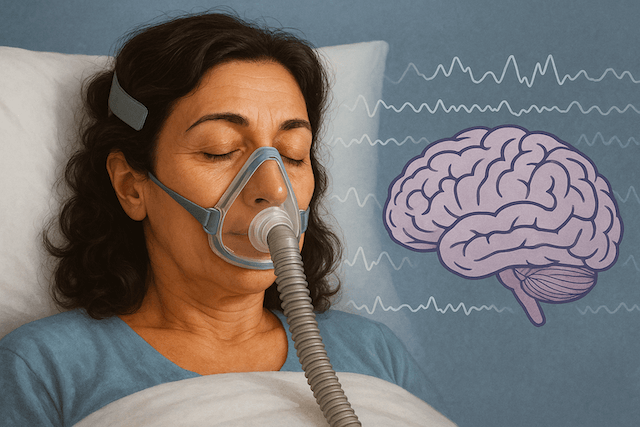
For obstructive sleep apnea, the standard initial treatment is positive airway pressure therapy, almost always delivered as CPAP. The machine pushes a steady stream of pressurized air through a mask, holding the airway open and preventing the collapses that cause apnea events.
I use a ResMed AirSense 10 at home and a ResMed AirMini for travel. The AirSense 10 has been my main machine for the better part of a decade. As a chronic mouth breather, I use a full face mask. None of that is a recommendation for anyone else, because the right setup depends on your anatomy, your apnea pattern, and your tolerance for different equipment styles. It is just the answer to the question of what I personally use.
If you are starting CPAP therapy, the early weeks can be hard. I have written about staying consistent with CPAP therapy because adherence is the part most people underestimate. The benefits, including any potential effect on seizure control, depend on actually using the machine every night, not just on having one.
For people with both apnea and epilepsy, the treatment plan should be coordinated between specialists. CPAP does not replace antiseizure medication. It is added to the existing plan as a way of removing one modifiable factor that may be making seizure control harder than it needs to be.
Lifestyle support
Treatment of the apnea itself is the main intervention. Beyond that, the standard sleep hygiene principles apply, and they overlap heavily with what neurologists already recommend for seizure control.
Maintaining a regular sleep schedule, getting enough total sleep, avoiding alcohol close to bedtime, treating any contributing nasal congestion, and keeping bedroom conditions consistent are all worth doing. None of these are a substitute for medical treatment of either condition. They are supportive measures that make the medical treatment more likely to work. Side sleeping, where tolerable, often reduces apnea severity compared with sleeping on your back, and weight management can also reduce the severity of obstructive apnea over time.
Practical steps if you suspect both conditions
If you have epilepsy and have not been screened for sleep apnea, raise it at your next neurology appointment. The Epilepsy Foundation and several major sleep medicine societies now treat apnea screening as part of standard epilepsy care, particularly in people whose seizures are not well controlled. A simple questionnaire can flag whether further testing is warranted.
If you have sleep apnea and have noticed unusual nighttime events, jerks, prolonged confusion on waking, or anything that has a partner concerned, ask your sleep physician whether a referral to neurology is appropriate. Most of these events turn out to be tied to apnea, but ruling out a seizure disorder when there are real concerns is worth doing properly rather than guessing from search results.
If you have neither condition diagnosed but think one or both might be present, start with the more obvious symptoms. Sleep apnea is by far the more common condition. Work with a sleep physician or your primary care doctor to investigate it first. If unusual movements or events at night persist after apnea is treated, that is the moment to escalate to neurology.
The bottom line
Sleep apnea does not directly cause seizures in people who would not otherwise have them. What it does, in people who already have epilepsy or a tendency toward seizures, is create the conditions that make seizure activity more likely. Repeated oxygen drops, fragmented sleep, and the cardiovascular strain that goes with severe untreated apnea all push the brain in a direction that lowers the seizure threshold.
The treatment evidence runs in the other direction. Treating obstructive sleep apnea with CPAP is associated with meaningful reductions in seizure frequency for people with both conditions. It does not replace antiseizure medication, and it does not work overnight. But it removes one of the few modifiable factors known to interfere with seizure control, and that alone makes it worth the effort.
If you are reading this because something has not added up about your sleep, your seizures, or both, the next step is a conversation with the right specialist. A sleep study is a small investment in clarity, and so is a coordinated plan between sleep medicine and neurology if both are involved. The science here is not perfectly settled, but it is settled enough to act on.
For more on the broader picture of sleep apnea risks, you might find can sleep apnea cause brain damage and sleep apnea and cardiovascular health useful as companion reads.
⚠️ MEDICAL DISCLAIMER This blog provides general information only and is not a substitute for professional medical advice, diagnosis, or treatment. Sleep apnea is a serious condition, and CPAP equipment should be used under proper medical supervision. Always consult your doctor or sleep specialist before starting, stopping, or changing any therapy. I share personal experiences as a CPAP user, not as a medical professional. Individual results vary. For medical guidance, please consult a qualified clinician or the American Academy of Sleep Medicine (aasm.org).