SleepImage Ring Review: A Long Term CPAP User’s Honest Look

I want to be upfront about what this page is and isn’t before we go any further. I have not worn a SleepImage ring. I’m a long-term CPAP user with severe obstructive sleep apnea, and my background is in computer science rather than medicine. What I can do is read the published research carefully, set it next to my own experience as someone who has lived with sleep apnea diagnostics for over a decade, and give you a clear picture of what this device is, what the data shows, and where it might fit.
If you came here hoping for “I wore one for a week and here’s how it felt,” you won’t find that. If you want to understand what the FDA actually cleared, what the validation studies actually measured, and whether this is something worth asking your doctor about, that’s what this page is for.
Why I started looking at finger-worn sleep tests in the first place
My own diagnosis happened more than ten years ago. The in-lab polysomnography that produced my AHI of 51 was a miserable night. Electrodes glued to my scalp. Wires across my chest. A nasal cannula. A chest strap that made any normal sleeping position essentially impossible. I barely slept three hours, but they got enough data to send me home with severe obstructive sleep apnea on the chart and a CPAP prescription within a few days. You can read more about that experience on my living with sleep apnea page if you’re curious.
That experience left me with strong opinions about how much room exists to make sleep apnea diagnosis less awful. Finger-worn devices like the SleepImage ring are an obvious step in that direction. The basic question is whether a single sensor on a finger can produce a clinically useful diagnosis without the full sensor array of a sleep lab. The published evidence so far is genuinely interesting, with real limits worth understanding before you or your doctor put weight on the result.
What the SleepImage ring actually is
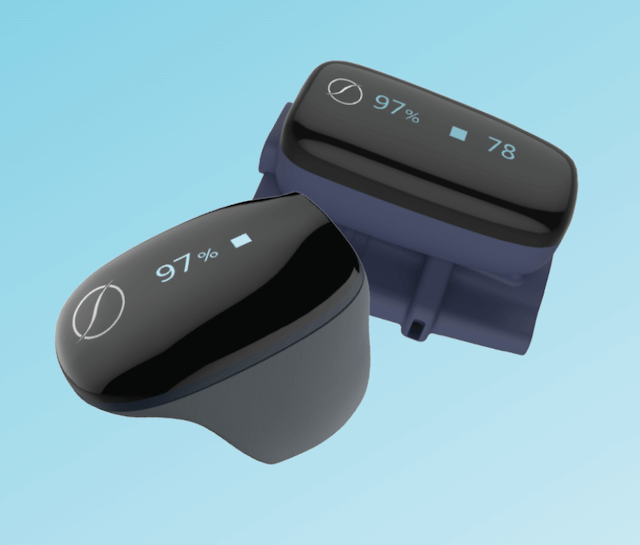
The SleepImage ring is a prescription medical device cleared by the U.S. Food and Drug Administration in 2019, under 510(k) clearance K182618. It is not a consumer wearable in the same category as an Oura ring, an Apple Watch, or a Fitbit. Those devices can describe your sleep at a general level, but they are not validated or cleared for diagnosing sleep apnea. The SleepImage system is. The FDA cleared it for adults and children as young as two for the diagnosis and management of sleep-disordered breathing.
Physically, it is a small finger-worn ring with a single optical sensor. You wear it overnight, and it streams data via Bluetooth to a smartphone app, which then uploads to a clinician portal in the cloud. Your doctor reviews the report, can edit any auto-scored events, and discusses the result with you afterward.
The ring is rechargeable and has no consumables. That detail matters more than it sounds. Most traditional home sleep apnea tests are single-use devices with disposable parts, which builds in an assumption of one or two nights of recording. The SleepImage system is designed for repeat use, including multi-night testing and ongoing monitoring after treatment starts. For a condition that varies as much from night to night as sleep apnea does, that is a meaningful design choice.
The technology underneath: cardiopulmonary coupling
The analysis method behind the device is called cardiopulmonary coupling, usually shortened to CPC. It was developed by Dr. Robert Joseph Thomas at Harvard and his collaborators back in 2005, originally using ECG signals. The basic idea is that during sleep, your heart rate variability and your breathing patterns synchronize in characteristic ways, and disordered breathing disrupts that synchronization in patterns the algorithm can recognize.
The SleepImage ring captures six data channels through that single optical sensor: peripheral arterial tone, pulse rate, pulse rate variability, blood oxygen saturation, breathing changes (tidal volume variability), and movement. The system runs the CPC analysis on those signals together and produces what it calls the sAHI, a SleepImage-specific apnea-hypopnea index that is intended to be comparable to the AHI you would get from a sleep lab.
Two practical things follow from this. First, the device can in principle distinguish obstructive sleep apnea from central sleep apnea, since CPC patterns differ between the two. That distinction matters clinically, because the treatments differ. Second, because the ring is reading autonomic-nervous-system signals continuously rather than discrete respiratory events alone, the same data can produce a sleep quality index alongside the apnea numbers. That is a different kind of output than older home sleep tests provided.
What the validation data actually shows
This is the part I care about most, and the part that gets glossed over in most reviews of this device.
The most direct validation study to date is Lu et al., published in Biomedical Engineering Letters in 2023. Researchers at the Charité University Medicine sleep center in Berlin had 39 patients wear the SleepImage ring at the same time as a full overnight polysomnography. They then compared the ring’s sAHI against the manually scored PSG-AHI from the same night.
The headline result is a strong correlation between the two measurements (r = 0.89, P < 0.001). The areas under the ROC curve were 1.00 at an AHI threshold of 5, 0.90 at a threshold of 15, and 0.98 at a threshold of 30 events per hour. In plain language: the ring did very well at detecting whether a person had OSA at all, did well at flagging severe OSA, and did reasonably (though less perfectly) at the moderate threshold.
The limitations matter though, and the authors acknowledge them clearly. Only two of the 39 patients had an AHI under 5, the threshold that means “no sleep apnea.” That means the study cannot really tell us how good the ring is at correctly ruling out people who do not have apnea. The sample size is small. All the data was collected in a sleep lab, not at home, which is the device’s actual intended use environment. And the participants skewed older, largely male, and most were obese. So the result is encouraging, but it is a first-pass validation in a controlled setting, not the final word.
The same authors compared the SleepImage ring’s performance against three other PPG-based ring devices reported in the published literature: the Belun Ring, the Circul Ring, and the Morpheus Ox. Each of those devices shows its own balance of sensitivity and specificity. Across the entire category of ring-based sleep apnea testing, no device has yet been validated at the scale of decades of polysomnography studies. They are all newer technologies with smaller datasets behind them. The SleepImage ring’s performance in the Lu paper compared favorably within that group, but it is worth keeping the broader picture in view.
What this means in practice is straightforward. If you are someone with significant symptoms suggestive of moderate to severe OSA, a SleepImage ring overnight is likely to identify the problem. If your case is borderline, milder, or complicated by other conditions, the ring alone may not be enough, and your doctor should know that going in.
Why the device interests me as a current CPAP user
For someone newly suspected of sleep apnea, the obvious appeal is comfort. Sleeping in your own bed, wearing one ring on a finger, is a fundamentally different experience from a sleep lab night. I would not have hesitated to take a multi-night ring test instead of the in-lab study I actually had.
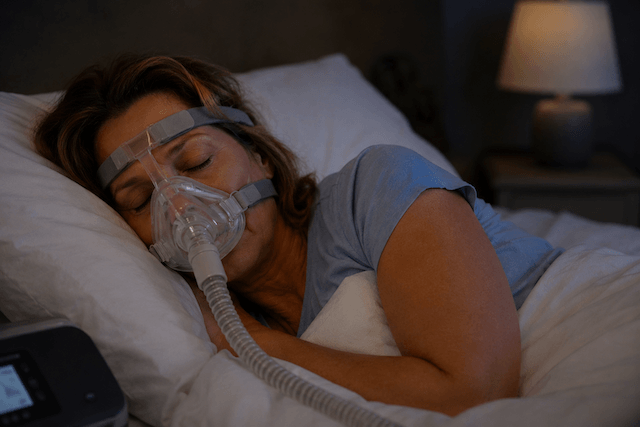
For me as a long term CPAP user, the more interesting use case is treatment monitoring. The SleepImage ring is one of the few diagnostic tools that can be worn while you also have your CPAP mask on. There is no breathing hose to thread, no chest strap, no nasal cannula competing for your face. You wear the ring and use your CPAP normally. That makes it possible, in principle, to measure how well your therapy is actually controlling residual events on a given night.
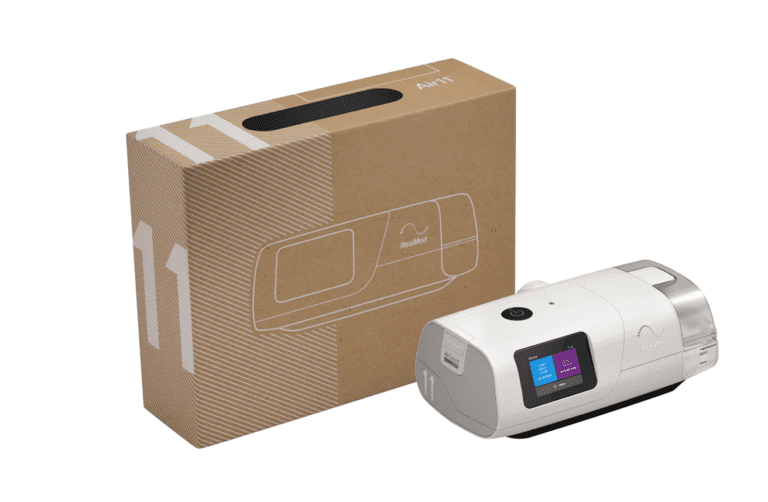
I track my own data through my AirSense 10 already. The on-board AHI estimate from a CPAP machine is informative, but it is calculated by the machine itself from flow data, not by an independent sensor measuring your physiology. A SleepImage ring run alongside a CPAP night is closer to a second-opinion measurement. That is a real use case, especially for anyone whose machine is reporting low numbers but who still feels tired during the day.
I have not pursued this route myself. My current setup is controlling my apnea well, and I would want to talk to my own doctor before adding another diagnostic layer. But it is the part of the technology that genuinely interests me, and I would not rule it out in the future.
Who the SleepImage ring is and isn’t a fit for
For people with symptoms suggesting straightforward obstructive sleep apnea, no major cardiopulmonary comorbidities, and no other suspected sleep disorders, a SleepImage ring test is a reasonable tool. For current CPAP users wanting to verify their treatment is doing its job, it is a useful addition to what your machine reports.
It is not the right test for everyone. If your doctor suspects complex or mixed sleep apnea, significant central sleep apnea, periodic limb movement disorder, narcolepsy, REM sleep behavior disorder, or seizure activity during sleep, you need full polysomnography. Body position is not measured by the ring, so positional sleep apnea may not show up as cleanly as a doctor would like. And if you have unstable cardiovascular or respiratory disease, the ring’s limited monitoring scope means an attended sleep study is usually the safer choice.
You also need access to a provider who uses the system. The SleepImage ring is prescription-only and is not something you order online. Sleep specialists, some primary care physicians, and a growing number of dentists involved in sleep medicine are the typical providers. Costs vary by clinic and insurance plan, and unlike a consumer wearable there is not a single sticker price you can quote. If a clinic near you offers it, that is a question worth asking them directly.
How it compares to other home sleep tests
If you are weighing home sleep tests against each other rather than choosing between a home test and a lab study, the SleepImage ring sits in the same broad category as devices like the WatchPAT One and the ResMed ApneaLink Air. I have written separately about the WatchPAT One and the ApneaLink. The WatchPAT One is built around peripheral arterial tone with a single-use disposable wrist unit. The ApneaLink Air uses a nasal cannula and a chest belt. The SleepImage ring is the most minimalist of the three on the body, with the trade-off that it is measuring slightly different signals.
There is no single best home sleep test. There is the test that matches what your doctor is trying to learn, the test your insurance will cover, and the test the providers near you actually use. If a clinician recommends a SleepImage ring for your situation, the published validation data is solid enough that I would not push back on the choice for a straightforward OSA workup.
Honest takeaways
The SleepImage ring is a real medical device with FDA clearance, a published validation study showing strong agreement with polysomnography for OSA detection, and a use model that fits real life better than a sleep lab. The cardiopulmonary coupling technology behind it has been published on for nearly two decades. The ability to do multi-night testing without consumables is a meaningful improvement over single-use home sleep tests.
That said, the validation evidence is still relatively early. Sample sizes in ring-based sleep apnea studies are small compared to the decades of data behind in-lab PSG. Specificity at the “no apnea” threshold is not well established. And no published study I have seen has measured how the ring performs in the home environment where it is actually used, as opposed to in a sleep lab next to a polysomnography setup.
If your doctor offers a SleepImage ring test and you are a reasonable candidate for it, I would say yes. If you have already been diagnosed with sleep apnea and are looking for a way to monitor your CPAP treatment more rigorously, it is worth asking about. If your symptoms suggest something more complicated than straightforward OSA, you probably need a full sleep lab study, and a ring is not going to change that.
I will happily revisit this page if I ever wear one myself. Until then, this is what I can tell you honestly from reading the data.
Frequently asked questions
Can I buy a SleepImage ring without a prescription?
No. It is a prescription medical device that you can only access through a healthcare provider who uses the SleepImage system. Sleep clinics, some primary care physicians, and a growing number of dentists working in sleep medicine are the typical providers.
How accurate is the SleepImage ring compared to a sleep lab study?
The published validation study by Lu et al. (2023) found a correlation of 0.89 between the ring’s sAHI and the manually scored PSG-AHI in 39 patients. It performed especially well at detecting OSA generally and at flagging severe cases. It is a good tool for the right patient, but in-lab polysomnography remains the standard for complex cases or when other sleep disorders need to be ruled out.
Can I wear it while using CPAP?
Yes. That is one of the genuinely useful features. The ring sits on your finger and does not interfere with any type of CPAP mask. Some clinicians use it specifically to verify that CPAP therapy is controlling residual apnea events.
Does it detect central sleep apnea?
The cardiopulmonary coupling analysis can distinguish obstructive from central patterns. If your doctor specifically suspects central sleep apnea or a mixed picture, talk to them about whether home testing alone is sufficient or whether you need an in-lab study.
How many nights should I test?
That decision sits between you and your doctor. The rechargeable design and lack of consumables make multi-night testing practical. Sleep varies considerably from night to night, so more than one night usually produces a more reliable picture.
How is this different from an Oura Ring or an Apple Watch?
FDA clearance for medical diagnosis is the difference. Consumer wearables are not validated or cleared for diagnosing sleep apnea, no matter how detailed their dashboards look. The SleepImage system is medically cleared for that specific purpose, with the regulatory and clinical scrutiny that comes with it.
Where can I find a provider who uses it?
Ask your sleep specialist, your primary care physician, or any sleep-focused dentist in your area. Not every provider uses this system. If you are already working with a sleep clinic, the easiest path is to ask whether they offer it or can refer you to a clinic that does.
References
- Lu M, Brenzinger L, Rosenblum L, et al. Comparative study of the SleepImage ring device and polysomnography for diagnosing obstructive sleep apnea. Biomedical Engineering Letters. 2023;13(3):343-352. PubMed link
- U.S. Food and Drug Administration. SleepImage System 510(k) Clearance, K182618. FDA database link
- Thomas RJ, Mietus JE, Peng CK, Goldberger AL. An electrocardiogram-based technique to assess cardiopulmonary coupling during sleep. Sleep. 2005;28(9):1151-1161. PubMed link
- Kapur VK, Auckley DH, Chowdhuri S, et al. Clinical practice guideline for diagnostic testing for adult obstructive sleep apnea: an American Academy of Sleep Medicine clinical practice guideline. Journal of Clinical Sleep Medicine. 2017;13(3):479-504. PubMed link
⚠️ MEDICAL DISCLAIMER This blog provides general information only and is not a substitute for professional medical advice, diagnosis, or treatment. Sleep apnea is a serious condition, and CPAP equipment should be used under proper medical supervision. Always consult your doctor or sleep specialist before starting, stopping, or changing any therapy. I share personal experiences as a CPAP user, not as a medical professional. Individual results vary. For medical guidance, please consult a qualified clinician or the American Academy of Sleep Medicine (aasm.org).