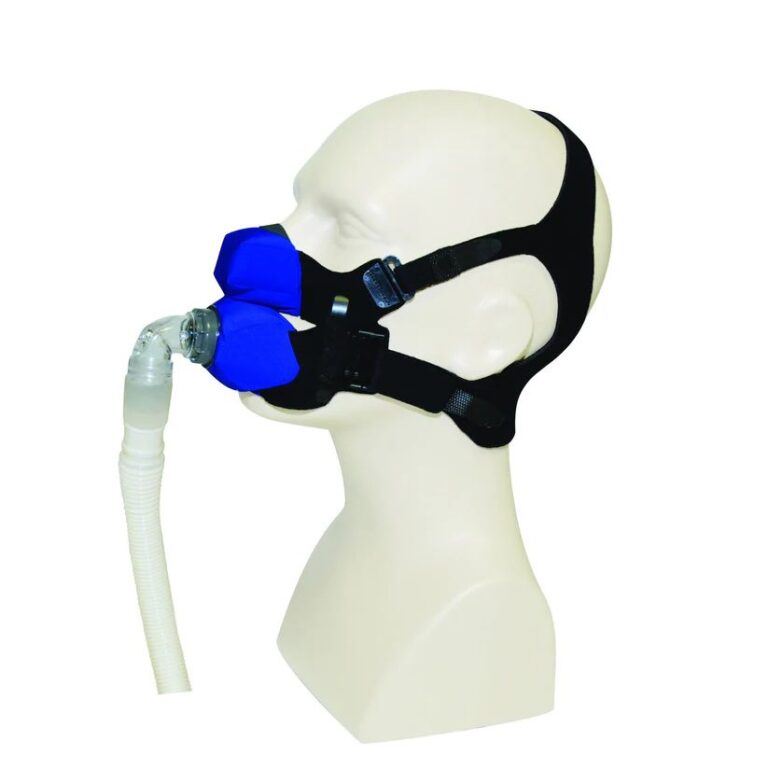
Best CPAP Chin Straps: My top picks for 2026

“This post contains affiliate links. I may earn a commission if you buy through these links at no extra cost to you. Read my Disclaimer for more details.”
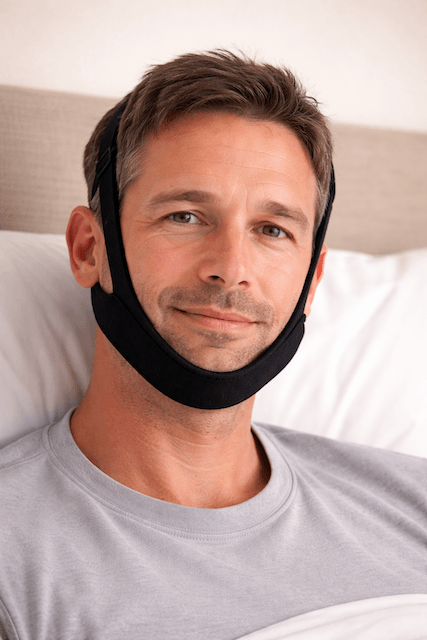
I’ve been on CPAP therapy for more than a decade, and I’m a chronic mouth breather. Those two facts on their own are usually enough to send someone shopping for a chin strap. In my case the answer ended up being a full face mask, but the question of whether to add a chin strap to your setup is one of the most common ones I get asked, and it deserves a careful answer rather than a quick affiliate pitch.
Let me say upfront that I do not personally wear a chin strap. I tried to solve the mouth breathing problem at the mask level instead, which has worked well for me. So the recommendations below are based on research, manufacturer specifications, and what real CPAP users are reporting, not on a stack of straps I’ve slept in myself. I’d rather be straight with you about that than pretend otherwise. Where I can speak from experience is the underlying problem a chin strap is trying to solve, and I’ll spend a fair amount of this post on that, because the strap itself is only useful if it’s solving the right problem for you.
If you’re waking up with a parched mouth, your partner is hearing air leak around the edges of a nasal mask, or your therapy data is showing high leak rates, a chin strap is one of the cheapest things you can try before you commit to switching mask styles. It can also be one of the most disappointing if your situation isn’t a good fit for it. Read past the product reviews before you click buy.
Top CPAP Chin Strap Recommendations
🥇 Sunset Comfort Chin Strap
Best Overall
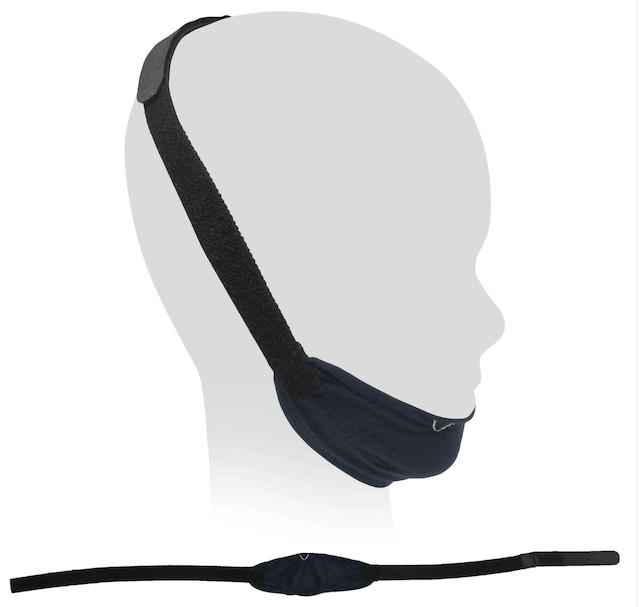
The Sunset Comfort Chin Strap is the option I’d point most first time buyers toward. The design is straightforward: a single, padded loop that runs under the chin and around the back of the head, fastened with adjustable Velcro. There’s nothing exotic about it, which is exactly what you want in a chin strap. Complicated multi strap rigs tend to fight you all night.
What stands out from the user feedback is how often people mention the fabric. It’s lightweight and breathable, which matters more than it sounds. A chin strap sits on your skin for seven or eight hours, sometimes against the same spots your mask straps already touch. A heavy or rough material will leave marks and irritate skin over time. Buyers consistently report that this one is gentle enough to wear nightly.
Compatibility is broad. It’s designed to work with nasal masks and nasal pillow masks, which are the two mask types that actually need a chin strap. (You don’t need one with a full face mask, and we’ll get to why.) For more on those mask categories, see my guide to the best CPAP nasal masks.
Key features:
- Single loop, easy to adjust with Velcro
- Lightweight, breathable fabric
- Compatible with nasal and nasal pillow masks
- Around $12.99 at the time of writing
Where to buy: I’d recommend Sleep Doctor over Amazon for this one. They specialize in CPAP gear and their support team can actually help if sizing is wrong or you need a different option. I’ve partnered with them because the customer service is genuinely good.
What buyers report: Most reviews emphasize comfort and adjustability. People moving from a problem of waking up with a dry mouth to sleeping through the night without that issue is the dominant theme. A common note is that it takes a few nights to find the right Velcro tension. Too tight and your jaw aches in the morning, too loose and your mouth still falls open at 3 am. The fix is small, incremental adjustments rather than yanking it down hard on night one.
A smaller group of reviewers mention that they wanted to avoid switching to a full face mask and the chin strap let them stay with a mask they already liked. That’s a legitimate use case. Mask preference is personal, and if your nasal mask is otherwise comfortable, adding a $13 strap is much cheaper than buying a new mask system.
🥈 Atavyst Anti-Snoring Chin Strap
Best for mouth leaks
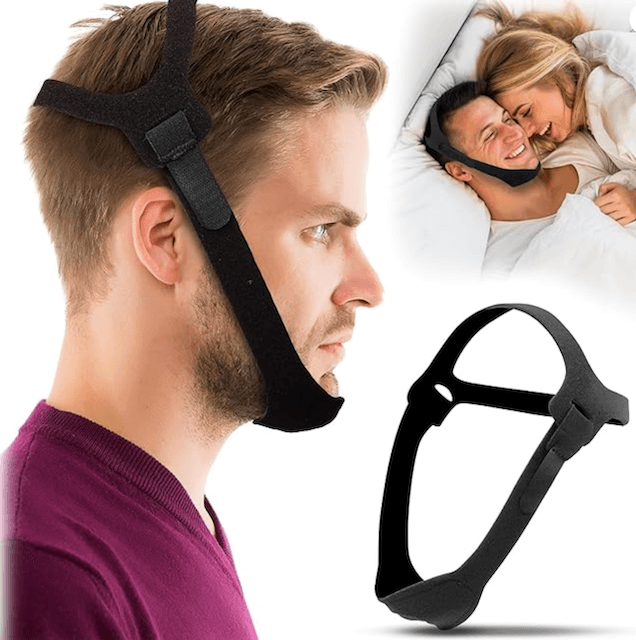
The Atavyst is a step up in material and a step different in design. It’s made from neoprene rather than the lighter fabric Sunset uses, which gives it more structure and a firmer hold. If your jaw drops far open at night, a softer strap can stretch enough to let your mouth open anyway. The neoprene resists that.
It’s marketed as an anti snoring product as much as a CPAP accessory, which is a useful clue. The same mechanism that keeps your mouth closed for snoring (jaw stabilization) is the mechanism a CPAP user needs. The Velcro fastening is wider on this one and the wrap covers more of the chin, so the contact area is bigger. Some users like that, others find it warm. Neoprene is less breathable than woven fabric.
Key features:
- Neoprene construction, firmer hold than fabric straps
- Wide Velcro fastening for personalized fit
- Designed to work alongside CPAP masks without interference
- Around $18.95 at the time of writing
- Backed by a refund policy if it doesn’t fit
Where to buy:
What buyers report: Feedback is more split on this one than on the Sunset. The people who like it really like it, especially those who described their previous chin straps as too flimsy. A firmer strap with neoprene gives a more confident hold and that’s what they’re after. Reports of the strap eliminating snoring and reducing dry mouth are common.
The negative reviews tend to cluster around fit. Heads come in different sizes and a wide neoprene strap is less forgiving than a thin Velcro one. If you have a smaller head or face, this one can run loose. If you have a larger head, the Velcro range may not be quite enough. Read the sizing notes carefully and use the refund policy if it doesn’t seat properly. A chin strap that doesn’t fit your skull isn’t doing anything except annoying you all night.
The other point worth noting is that some buyers still wake up with a dry mouth even when the strap holds the jaw closed. That’s not a fault of the strap, it’s a sign the underlying issue is something else, usually mask fit or insufficient humidification. More on that below.
What Is a CPAP Chin Strap, Really?
A CPAP chin strap is a soft band that wraps under your chin and around your head. The single job it has is to keep your jaw from falling open while you sleep. That’s it. It doesn’t generate pressure, it doesn’t deliver air, it doesn’t replace any part of your CPAP setup. It’s a mechanical assist for one specific problem: an open mouth during therapy.
Why does an open mouth matter? When you’re using a nasal mask or nasal pillow mask, your CPAP is pushing pressurized air into your nose. If your mouth falls open, that pressurized air takes the path of least resistance and flows right out through your mouth. You lose pressure, the therapy gets less effective, you wake up with the desert in your throat, and your AHI numbers can creep upward. The Sleep Foundation has a clear explainer on the mechanics if you want to read further: Sleep Foundation: CPAP Dry Mouth.
This is why mouth leaks aren’t just a comfort issue. They’re a therapy issue. If you’ve ever wondered why your data looks worse than how you feel, or how you can be wearing your mask all night and still feel groggy, mouth leaks are one of the first places to look. My post on why CPAP masks leak goes deeper on the diagnosis side.
The Chin Strap vs Full Face Mask Decision
This is the choice every nasal mask user with mouth breathing eventually faces, and it’s where I’ll speak from my own experience.
A chin strap is the cheaper, less intrusive intervention. You keep your existing mask, you keep your existing routine, you add a $15 piece of fabric. If it works, you’ve solved the problem for less than the cost of a movie ticket and a popcorn. That’s the appeal, and for plenty of people it does work.
A full face mask is the more reliable intervention but it’s a bigger change. The mask covers both your nose and your mouth, which means it doesn’t matter whether your mouth falls open at night. The seal is around the perimeter of your face rather than just your nose, so any mouth breathing happens inside the mask and the pressurized air still reaches your airway. You don’t need a chin strap with a full face mask. The mouth open problem is solved by design.
I went the full face mask route. I’m a chronic mouth breather, and I wanted a setup that didn’t depend on me sleeping in a particular way to work. A chin strap requires that the strap stays positioned correctly all night, that the Velcro doesn’t loosen, that your jaw cooperates. A full face mask just works regardless of what your jaw does. For me that was the right tradeoff.
There are reasons people pick the other path. Full face masks are bulkier, they have more contact with your face, they can be harder to fit if you have a beard or unusual facial geometry, and some people feel claustrophobic in them. If your nasal mask is otherwise great and the only problem is mouth leaks, trying a chin strap first is the sensible cheap experiment. If it doesn’t work after a couple of weeks, you’ve lost $15 and gained information. My comparison guide on nasal vs full face CPAP masks goes through this decision in more detail, and if you’ve already concluded the full face route is for you, the best full face CPAP masks post covers what’s worth looking at.
Will a Chin Strap Actually Work for You?
Honest answer: it depends on why your mouth is opening at night. Chin straps work well when your jaw is dropping passively because the muscles relax during sleep. They work poorly, or not at all, when there’s an underlying breathing reason your mouth is opening, like nasal congestion or a deviated septum. If you can’t breathe through your nose, your body will find a way to breathe through your mouth, and a strap that physically forces your jaw closed can leave you fighting for air or simply unable to fall asleep.
A rough rule of thumb:
A chin strap is likely to help if you breathe through your nose comfortably during the day, your nasal mask is otherwise sealing well, and you wake up with a dry mouth or hear about leaks from your partner. The strap is just keeping your jaw from doing something it does involuntarily at night.
A chin strap is probably not the answer if you have chronic congestion, allergies, a deviated septum, or you’re already a daytime mouth breather. In that case the mouth opening is a symptom of an upstream problem and forcing the jaw closed is treating the wrong thing. A full face mask, an ENT consult, or addressing the congestion directly will get you further.
If you’re not sure which camp you’re in, the cheap experiment with a chin strap is still reasonable, but go in with a deadline. Two weeks of honest effort. If it’s not working by then, move on rather than spend months blaming the strap or yourself.
Fitting and Wearing a Chin Strap Properly
Most chin strap complaints come down to fit. A few things I’d suggest if you’re new to one:
Start with the strap looser than you think you need. The instinct is to cinch it down hard so the mouth absolutely cannot open. The result is a sore jaw and a headache by morning. You want enough tension to keep the jaw resting closed, not enough to clamp it shut against muscle pull.
Position the under-chin pad on the soft tissue under your jawbone, not on the bone itself. If the strap is sitting on bone, it will slide off the bone toward the soft tissue at some point during the night, which loosens the whole assembly.
Adjust the strap before you put your CPAP mask on, then put the mask on over the top. Reverse order makes it harder to get the chin strap properly seated without disturbing your mask seal.
Give it three to five nights before you judge it. The first night with anything new on your face is usually a bad night. Your sleep is light, you’re hyperaware of the new object, and you’ll wake up grumpy. By night four or five, you’ve adapted enough to know whether it’s actually working.
If you also struggle with mask anxiety in general, my post on overcoming CPAP anxiety covers some of the early adjustment patterns I went through.
Common Mistakes
Wearing it too tight. This is the most common error and it produces real consequences: jaw soreness, TMJ aggravation, morning headaches. Tight does not equal effective.
Treating it as a snoring fix when the snoring is sleep apnea. A chin strap can reduce snoring, which sometimes leads people who haven’t been diagnosed to think they’ve solved their problem. They haven’t. Snoring quieter and breathing properly are different things, and untreated sleep apnea will keep harming you regardless of how quiet you’ve become. If you snore heavily, get tested.
Buying based on color or brand recognition rather than fit. Most chin straps look similar in product photos. The differences are in material, width, and head circumference range. Read the sizing chart.
Ignoring underlying nasal issues. If you can’t breathe through your nose, no chin strap is going to fix that. Allergy management, nasal sprays where appropriate, and ENT consultation come first.
Cleaning and Care
Chin straps are simple to keep clean and that’s worth doing. Skin oils and sweat build up, the Velcro starts to lose grip, and the fabric starts to smell. A weekly wash extends the strap’s life significantly.
Fill a bowl or sink with warm water and a small amount of mild soap or baby shampoo. Submerge the strap and gently work the soap through the fabric for a minute or two. Let it soak for ten to fifteen minutes to loosen oils. Rinse thoroughly under clean water until no soap remains. Squeeze out the excess water gently rather than wringing, which can deform the strap. Lay flat or hang to air dry, away from direct heat or sunlight.
Skip the washing machine, the dryer, bleach, and harsh detergents. None of them play well with elastic and Velcro. A quick wipe with a damp cloth between weekly washes is fine if you notice oil buildup sooner.
For more on broader CPAP cleaning routines, the same principles apply across most accessories. The hygiene is less about killing bacteria with strong chemicals and more about consistent, gentle, regular cleaning.
When to Stop and Switch Masks
Give a chin strap a real trial. Two weeks at minimum, with reasonable adjustments along the way. If after that you’re still waking up with mouth leaks, dry mouth, or your therapy data isn’t improving, the chin strap isn’t the answer for you and the next step is a different mask.
That’s not a failure. It’s information. Some people have jaw mechanics, sleeping positions, or nasal anatomy that just don’t suit a chin strap. Continuing to fight a tool that isn’t working is more frustrating than acknowledging it and moving on. A full face mask costs more than a chin strap, but if it works on the first night and keeps working, the math is straightforward.
There’s also a third path worth knowing about: mouth taping. It’s a smaller, lighter intervention than a chin strap and some people find it more comfortable. I’ve written about mouth taping for sleep apnea separately. It’s not for everyone and it has its own caveats, but it’s an option in the toolkit.
Final Thoughts
CPAP chin straps are one of the cheapest, lowest stakes experiments you can run on your therapy. For the right person they’re a quiet fix that ends months of dry mouth and air leaks for the price of a takeout meal. For the wrong person they’re frustrating, ineffective, and a stepping stone to a different mask anyway.
Of the two I’d recommend, the Sunset Comfort Chin Strap is the better starting point for most people: lighter material, simpler design, lower price. The Atavyst is the better choice if you specifically need a firmer hold and a fabric strap hasn’t worked. Both are inexpensive enough that trying one isn’t a serious financial risk.
Whatever you decide, be honest with yourself about what’s actually causing your mouth to open at night. The strap is a mechanical fix for a mechanical problem. If the underlying issue is congestion, anatomy, or therapy pressure, no strap will solve it and you’re better off addressing the real cause.
If you’ve tried a chin strap and it didn’t help, or you’ve decided to skip ahead to a full face mask, my best full face CPAP masks and best CPAP masks for mouth breathers guides are where to go next. And if dry mouth is your real complaint, my CPAP dry mouth post breaks down all the angles, not just the strap angle.
⚠️ MEDICAL DISCLAIMER This blog provides general information only and is not a substitute for professional medical advice, diagnosis, or treatment. Sleep apnea is a serious condition, and CPAP equipment should be used under proper medical supervision. Always consult your doctor or sleep specialist before starting, stopping, or changing any therapy. I share personal experiences as a CPAP user, not as a medical professional. Individual results vary. For medical guidance, please consult a qualified clinician or the American Academy of Sleep Medicine (aasm.org).