Best CPAP Machines for 2026: Recommendations from a Ten-Year User

“This post contains affiliate links. I may earn a commission if you buy through these links at no extra cost to you. Read my Disclaimer for more details.”
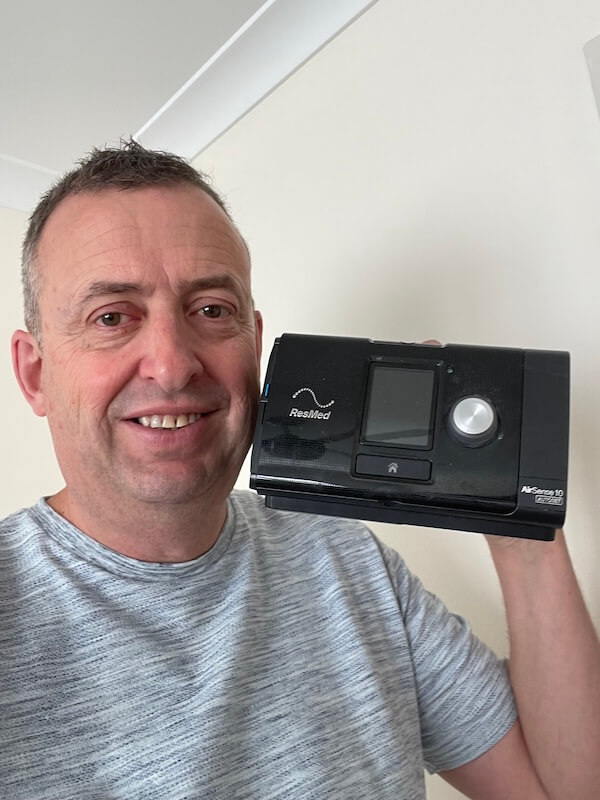
I’ve been sleeping with a CPAP machine every single night since 2014. My diagnosis was severe — AHI of 51, blood oxygen dropping to 78 percent, and daily migraines that would put me in a darkened room for hours. The morning after my first night on CPAP, I woke up without a headache for the first time in years. I’ve used the machine every night without exception, and I’ll use it for the rest of my life without hesitation.
That context matters for this page, because there are a lot of CPAP roundups written by people who have never used a machine. This one isn’t. My daily driver is the ResMed AirSense 10, which I’ve used for over ten years. I own the AirMini for travel and have taken it across Europe and on long-haul flights. I hear from readers constantly about what’s working and what isn’t. What follows is what I actually recommend, and why.
Quick Picks
| Your situation | My recommendation |
|---|---|
| Best overall | ResMed AirSense 11 AutoSet |
| Best value / proven workhorse | ResMed AirSense 10 AutoSet |
| Best for travel | ResMed AirMini AutoSet |
| Best for noise-sensitive couples | Luna G3 Auto CPAP |
🥇 ResMed AirSense 11 AutoSet — Best Overall
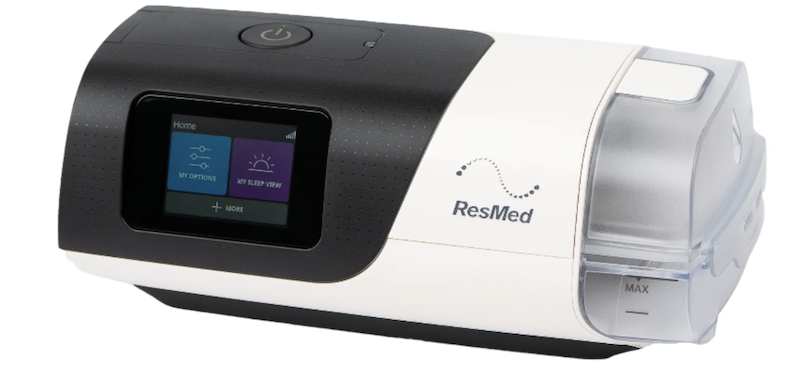
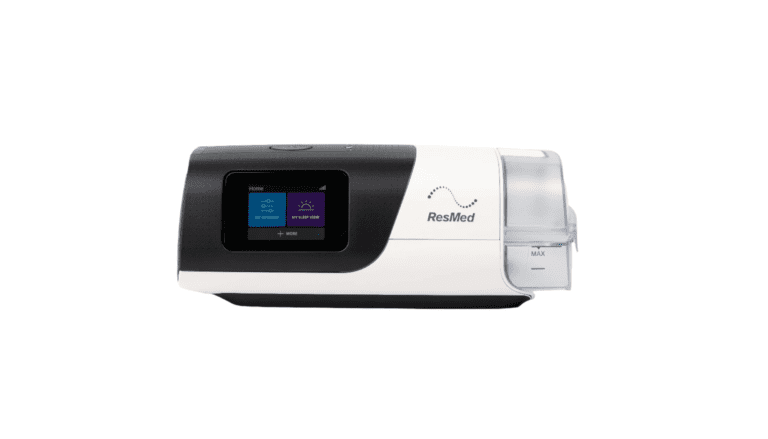
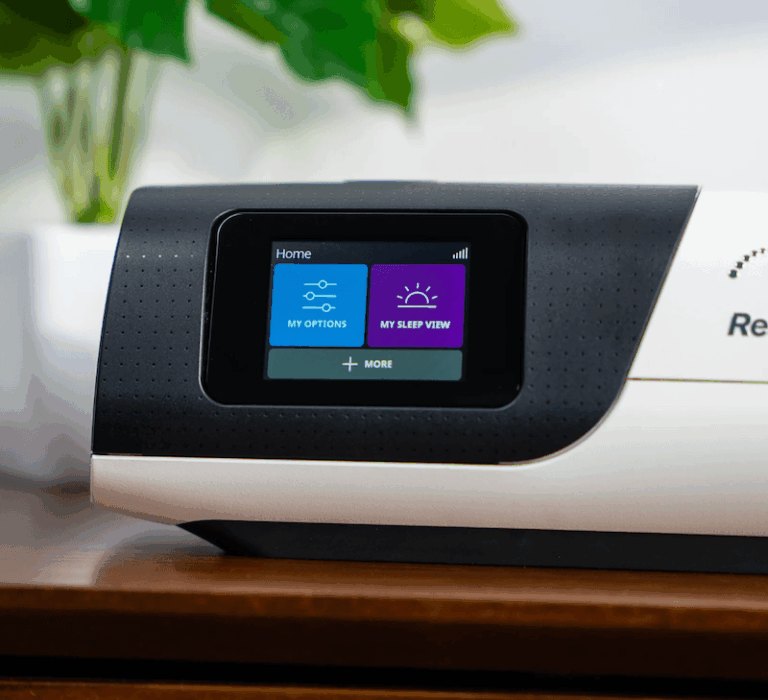
The AirSense 11 is the current flagship from ResMed, who make the machines that most sleep physicians reach for first. I use the previous generation AirSense 10 myself, and the 11 improves on it in every meaningful way — a touchscreen interface, a more refined AutoSet algorithm, and an upgraded version of the MyAir app integration that I rely on every morning to check my therapy data.
The features that matter most on any CPAP are auto-adjusting pressure, a heated humidifier, and ramp functionality. The AirSense 11 has all three and executes all three well. The AutoSet algorithm adjusts your pressure in real time based on what’s happening with your breathing, which matters because your needs change night to night depending on sleep position, congestion, alcohol, and stress. A fixed-pressure machine can’t adapt. Auto-adjusting is the modern standard and worth paying for.
The MyAir app gives you a nightly score out of 100 covering your AHI, mask seal, and usage hours. I’ve found that seeing your data every morning changes your relationship with compliance — it becomes something you’re actively engaged in rather than something you’re just enduring. That’s not a trivial benefit during the adaptation period when most people give up.
If you’re buying your first CPAP or upgrading from an older machine, this is where I’d start.
🥈 ResMed AirSense 10 AutoSet — Best Value
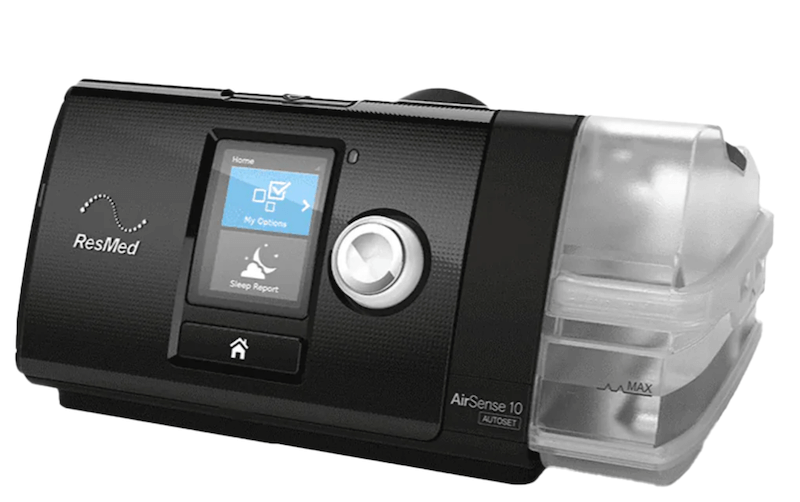
This is the machine on my bedside table. I bought it in 2014 and it’s still running without issues. That’s over ten years of nightly use, and I’ve never had a mechanical failure.
The AirSense 10 uses the same AutoSet algorithm as the 11 — the therapy itself is equivalent. What you’re giving up in choosing the 10 over the 11 is the touchscreen (the 10 has buttons and an LCD screen), some refinements to the app coaching features, and a slightly older design. If those things matter to you, spend the extra money on the 11. If you want the same clinical performance for less, the 10 is the smarter purchase.
My nightly AHI runs between 1.2 and 1.8 on this machine. My mask leak rate is consistently in the excellent range. I average just over seven hours of use per night. For a machine that’s been running since 2014, that’s a track record I’d put against anything on the market.
ResMed AirMini AutoSet — Best for Travel
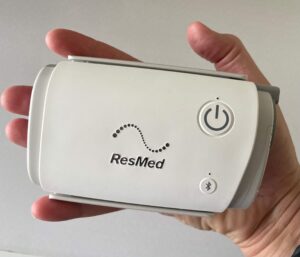
I bought the AirMini for a three-week trip to Europe and it changed how I think about travel. Before I had it, every trip involved anxiety about flying — specifically about the window on long-haul flights when I knew I needed to sleep but couldn’t without my machine. The AirMini fits in the palm of your hand, goes in a carry-on without any issue, and uses the same AutoSet algorithm as my home machine.
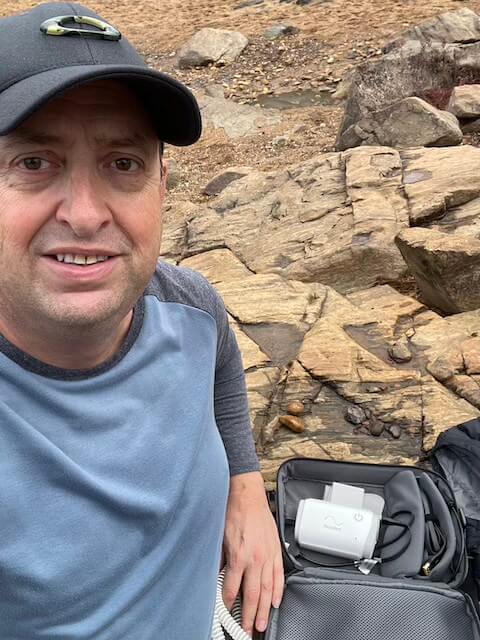
I’ve used it on twelve-plus flights, in eight countries, in hotels and Airbnbs, and one memorable night in a hostel in Lisbon. My AHI while travelling runs slightly higher than at home — around 2 to 3 rather than my usual 1 to 2 — but that’s still well-controlled therapy. The waterless HumidX humidification isn’t quite as effective as my heated humidifier at home, but it’s good enough that I’ve never had a problem night.
Two genuine limitations worth knowing: it’s slightly louder than my AirSense 10, which my wife noticed in hotel rooms, and it only works with specific ResMed masks. If you use a non-ResMed mask at home, you’ll need to switch for travel. For me, using the AirFit F20 on both machines, that’s not an issue.
Would I buy it again? Without question. I’ve read about my travel adventures with it in more detail in my AirMini review if you want the full picture.
Luna G3 Auto CPAP — Best for Noise-Sensitive Couples
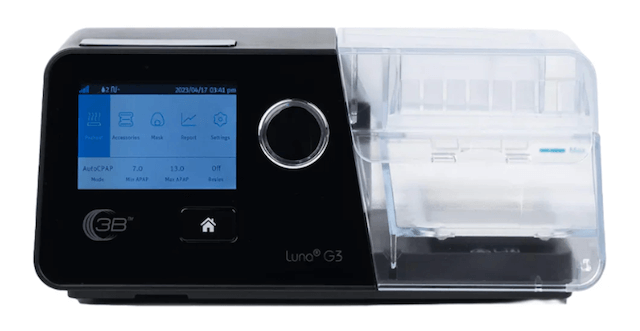
The Luna G3 comes from 3B Medical and runs at 26 decibels — quieter than a whisper, and measurably quieter than the AirSense 10’s 30 decibels. That four-decibel difference is noticeable in a shared bedroom, and for couples where the machine noise is a genuine issue, it matters.
I haven’t personally used the Luna G3 — I’m deep in the ResMed ecosystem and have no reason to switch — but it comes up regularly in the communities I follow when noise is the primary concern, and the reports are consistently positive. The auto-adjusting pressure and heated humidifier are both solid. The main trade-off compared to ResMed is the data tracking: the Luna G3 uses an SD card rather than a smartphone app, which is less convenient if you like monitoring your therapy the way I do.
At the $600 to $850 price range, it also represents excellent value for what you’re getting. If your partner is losing sleep over the sound of your machine and you don’t care about app connectivity, this is the answer.
How to Choose
The single most important thing I’ve learned from ten years of CPAP use is that the machine matters less than the mask. A premium machine with a poorly fitting mask is worse than a budget machine with a perfect seal. Don’t spend all your energy comparing machines and then grab the first mask that ships with your order. Get properly fitted and be prepared to try a few before you find what works.
Beyond that, here’s how I’d think about the decision. If you want the best available technology and app experience, get the AirSense 11. If you want equivalent therapy for less, get the AirSense 10 — it’s what I use and I have no complaints after a decade. If you travel regularly and have been avoiding sleeping on planes, get the AirMini as a second machine once you’re settled at home. If bedroom noise is the friction point in your relationship, the Luna G3 solves that specifically. If budget is the constraint, the SleepStyle does the job.
A few things worth knowing about auto-adjusting pressure, because it comes up in every conversation I have with new users: fixed-pressure machines prescribe one pressure for every night regardless of what’s happening. Your breathing needs vary based on sleep position, nasal congestion, alcohol, stress, and dozens of other factors. Auto-adjusting machines track what’s actually happening and respond in real time. The therapy is meaningfully better, and every machine on this list is auto-adjusting. Don’t buy a fixed-pressure machine to save money.
On insurance: most plans cover 80 to 100 percent of CPAP costs after your deductible, including the machine, mask, and ongoing supplies. Call your insurer and ask specifically about durable medical equipment coverage before paying out of pocket. If you’re on Medicare, Part B covers 80 percent. If cost is genuinely the barrier, ask your DME about payment plans — almost all offer them.
One More Thing
If you’ve landed on this page because you’ve been diagnosed and you’re trying to figure out where to start, I want to say something directly: the adaptation period is hard, and almost everyone struggles in the first few weeks. The claustrophobia is real. The air pressure feels strange. You’ll probably rip the mask off in the night a few times before you get through the whole night.
My first night lasted about six minutes. By week three, I was sleeping through. By month two, I couldn’t imagine not using it. The first morning I woke up without a migraine — after years of waking up with one every single day — I just lay there for a while processing the fact that my head didn’t hurt. That was ten years ago and it hasn’t hurt since.
Get the machine. Get through the adaptation. It’s worth it.
- ResMed AirSense 11 — Premium Choice
- ResMed AirSense 10 — Best Value
- ResMed AirMini — Travel
- Luna G3 — Quietest
⚠️ MEDICAL DISCLAIMER This blog provides general information only and is not a substitute for professional medical advice, diagnosis, or treatment. Sleep apnea is a serious condition, and CPAP equipment should be used under proper medical supervision. Always consult your doctor or sleep specialist before starting, stopping, or changing any therapy. I share personal experiences as a CPAP user, not as a medical professional. Individual results vary. For medical guidance, please consult a qualified clinician or the American Academy of Sleep Medicine (aasm.org).