ASV Machines Review: An Honest Guide for a Narrow Market

“This post contains affiliate links. I may earn a commission if you buy through these links, at no extra cost to you. Read my Disclaimer for more details.”
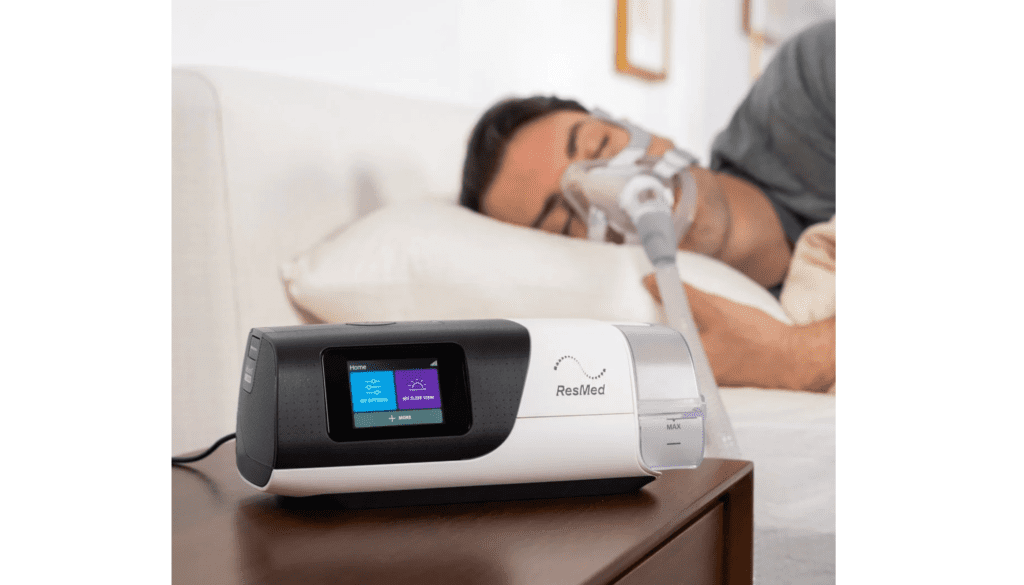
If you’ve landed on this page, you’re probably not here by accident. ASV — Adaptive Servo-Ventilation — is a specialist therapy, prescribed for central sleep apnea, complex sleep apnea, or treatment-emergent central apnea that hasn’t responded to standard CPAP. Most sleep apnea patients never need it. If you do, you’ll have been directed here by a sleep specialist after a proper diagnostic workup, and you’ll already understand that this isn’t a machine you pick off a shelf.
I want to be upfront about my position before going further. I use CPAP therapy — a ResMed AirSense 10 — for severe obstructive sleep apnea, and it works well. I haven’t needed to move to ASV and hope I never do. But I’ve spent years in the sleep apnea community, I understand the ResMed ecosystem thoroughly from the inside, and I’ve researched ASV machines in depth because many of my readers have been prescribed them. What follows is my honest assessment of what’s actually available in 2026 — and why the field is narrower than you might expect.
The State of the ASV Market Right Now
There’s something worth knowing before you start comparing specs: the ASV machine market is essentially a two-horse race right now, and both horses belong to the same stable.
Philips Respironics, which made the DreamStation ASV, has been working through a major recall since 2021 covering millions of CPAP, BiPAP, and ASV devices due to a degrading foam component. As of early 2026, they are no longer selling devices in the US market, their patient portal has closed, and the FDA has categorised elements of the recall at Class I — the most serious level. The DreamStation ASV is not a machine I can in good conscience, point you toward, regardless of its technical merits before the recall.
That leaves ResMed as the dominant — effectively the only — manufacturer of clinically available ASV devices for most patients. They make two: the AirCurve 10 ASV and the newer AirCurve 11 ASV. Both are excellent machines. The choice between them comes down to your priorities around data access, interface comfort, and budget. I’ll work through both in detail below.
If you want deeper context on what ASV is and how it differs from CPAP and BiPAP, my full comparison guide covers the clinical landscape in plain language.
🥇 ResMed AirCurve 11 ASV — Best Overall
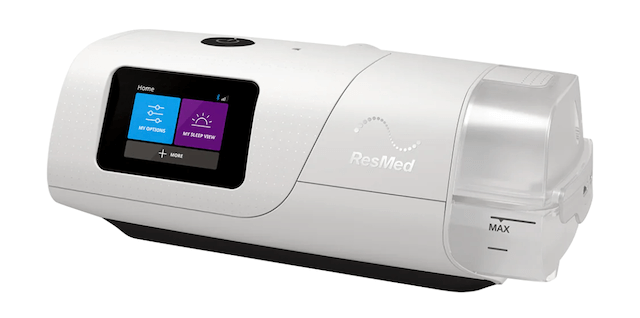
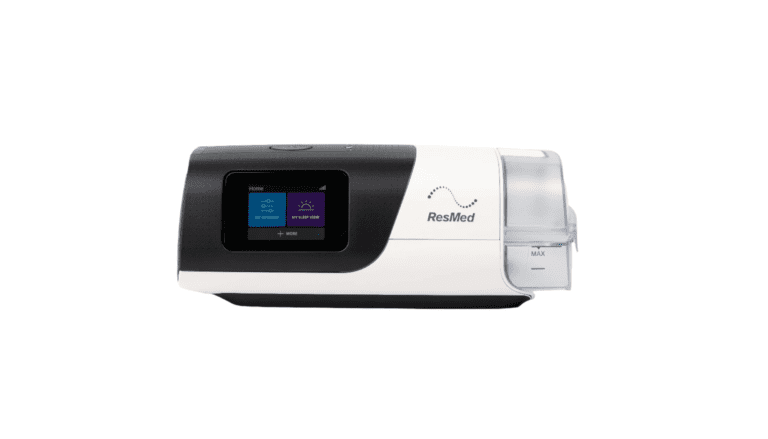
The AirCurve 11 is ResMed’s current flagship ASV machine and the one I’d point most people toward if budget isn’t the deciding factor. It builds on the well-established AirCurve 10 platform but adds meaningful improvements in interface, data integration, and the responsiveness of its algorithm.
The core of what makes any ASV machine work is how quickly and accurately it responds to changes in your breathing. The AirCurve 11 monitors your respiratory patterns at a very high frequency — effectively breath by breath — and adjusts its pressure support to prevent both apneas and over-breathing in real time. For complex or central apnea, that responsiveness is the whole point.
What I particularly appreciate about the AirCurve 11 from a user perspective — and this is relevant even though I’m not an ASV user myself — is the data ecosystem it sits within. The myAir app and AirView platform, which I use every morning with my AirSense 10, give you and your sleep specialist a genuinely detailed picture of what’s happening overnight. For ASV users, where the therapy is more complex and the need for ongoing clinical oversight is greater, that data access isn’t just a nice feature — it’s clinically important. Your specialist can review your nightly data remotely and make informed decisions about your therapy without requiring you to come in for every check.
The machine includes a built-in heated humidifier, which I’d consider essential rather than optional for anyone using positive airway pressure therapy long-term. The touchscreen interface is intuitive and significantly easier to navigate than older dial-and-button designs. Software updates deliver over the air, so the machine stays current without manual intervention.
The honest downsides: the AirCurve 11 is expensive, and it requires a prescription — as all ASV machines do. It’s also more machine than someone with straightforward OSA needs, which is why it’s not a first-line recommendation. But for its intended use case, it’s the best available option.
My recommendation: If you’ve been prescribed ASV and your specialist agrees the AirCurve 11 is appropriate for your diagnosis, this is where I’d start.
Read my full ResMed AirCurve 11 ASV review
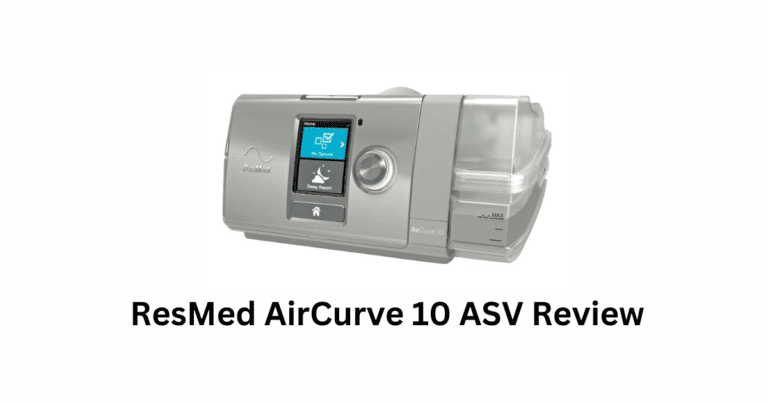
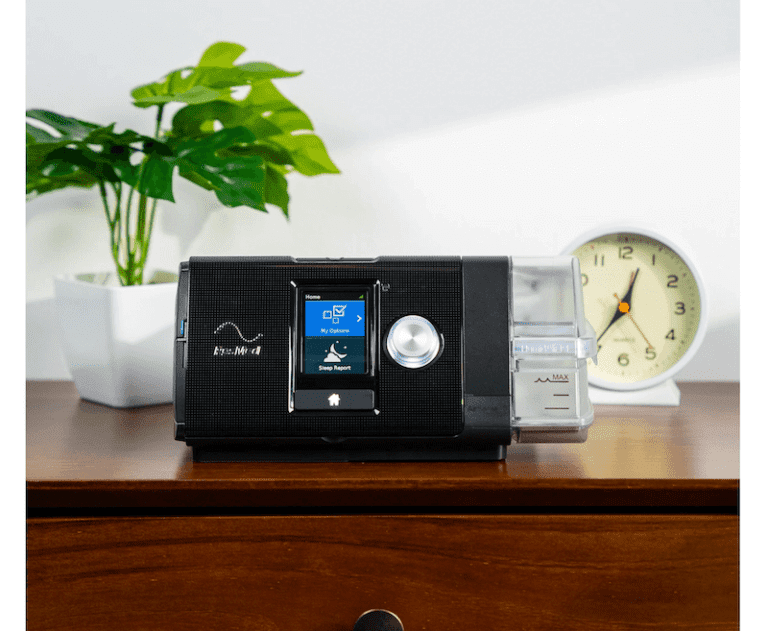
🥈 ResMed AirCurve 10 ASV — Best Value
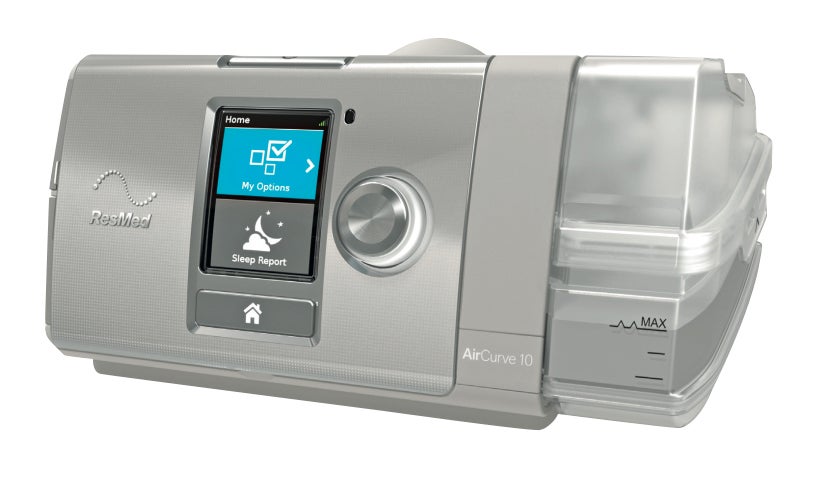
The AirCurve 10 ASV has been the clinical workhorse of ASV therapy for years, and its longevity is itself a recommendation. It runs the same fundamental ASVAuto algorithm as its successor, meaning the core therapeutic function — the real-time breathing analysis and adaptive pressure support — is essentially equivalent. It treats central and complex sleep apnea effectively, it integrates with AirView for remote monitoring, and ResMed’s build quality means it’s a reliable machine that holds up to nightly use.
Where it concedes ground to the AirCurve 11 is in the user-facing elements. There’s no touchscreen — you navigate with a dial and buttons, which takes a little more getting used to but functions perfectly well once you’ve learned the menus. App support through myAir is more limited for patient-side tracking, though your sleep specialist can still access your data through AirView. There are no over-the-air updates, so the firmware is static from purchase.
The practical implication of these differences is that if you’re someone who wants to be closely involved in monitoring your own therapy data night-to-night — as I am with my AirSense — the AirCurve 11’s patient-facing data tools are meaningfully better. If you mainly want the therapy to work and you’re happy to leave the data review to your specialist at periodic appointments, the AirCurve 10 does the same core job at a lower price.
It’s also worth noting that the AirCurve 10 has a longer track record at this point. There’s a substantial body of clinical experience with it, and your sleep specialist is more likely to be deeply familiar with its outputs. For some patients and some clinics, that familiarity matters.
My recommendation: A strong choice if you’re budget-conscious or if your specialist has a preference for the platform they know best.
Read my full ResMed AirCurve 10 ASV review
Which One Should You Choose?
The honest version of this decision is simpler than most comparison articles make it look.
If your sleep specialist has a preference, go with that. They’re managing your therapy data and clinical outcomes — their familiarity with a machine’s readouts is worth more than the difference in interface quality or app features.
If the decision is genuinely yours to make, and you want to be actively involved in tracking your own nightly data the way I track mine, the AirCurve 11’s myAir integration is worth the additional cost. If you’re primarily looking for proven, reliable therapy without the premium price, the AirCurve 10 delivers that.
What I’d caution against is prioritising price to the point of considering machines that aren’t currently available from reputable suppliers, or that carry unresolved safety concerns. ASV is a prescription therapy for a serious condition. The machine needs to work correctly, be supported by its manufacturer, and be serviced and monitored properly. Both ResMed options meet that standard. In the current market, they’re the ones I’m comfortable recommending.
Sleep Doctor, who I’ve partnered with for purchasing links on this page, are one of the most reputable online suppliers in the sleep apnea space and carry both machines. They have licensed sleep specialists available for questions, which matters for a device at this level of complexity.
A Note on Who Actually Needs ASV
Because this is a therapy that’s genuinely unfamiliar to most people — including many CPAP users — it’s worth being direct: if you have a diagnosis of straightforward obstructive sleep apnea and CPAP is controlling your events, you almost certainly don’t need ASV and shouldn’t be seeking it out.
ASV is for central apnea — where the problem is the brain not reliably signalling the body to breathe — or for complex apnea where central events are occurring alongside obstructive ones. It’s also sometimes indicated when CPAP triggers treatment-emergent central events in a patient who started with OSA. These are all situations where a sleep specialist has reviewed your event-type data and determined that CPAP or BiPAP isn’t the right tool.
There’s also an important contraindication: ASV is not recommended for people with heart failure and a significantly reduced ejection fraction. If you have cardiac complications alongside your sleep apnea, that conversation with a cardiologist and sleep specialist together is essential before ASV is considered.
If any of this is raising questions about whether your current therapy is the right one, the place to start is understanding your CPAP data and then a proper conversation with your sleep specialist — not a machine upgrade.
⚠️ MEDICAL DISCLAIMER This blog provides general information only and is not a substitute for professional medical advice, diagnosis, or treatment. Sleep apnea is a serious condition, and CPAP equipment should be used under proper medical supervision. Always consult your doctor or sleep specialist before starting, stopping, or changing any therapy. I share personal experiences as a CPAP user, not as a medical professional. Individual results vary. For medical guidance, please consult a qualified clinician or the American Academy of Sleep Medicine (aasm.org).