ResMed AirSense 10 AutoSet Review: This Machine Saved My Life

“This post contains affiliate links. I may earn a commission if you buy through these links, at no extra cost to you. Read my Disclaimer for more details.”
I want to be upfront before you read another word. I am not a sleep doctor, a respiratory therapist, or a medical professional of any kind. My background is in computer science. Everything below is the perspective of one patient who has been using a ResMed AirSense 10 AutoSet for more than a decade. Treat it as one person’s experience, not medical advice.
That out of the way, let me say what I actually think of this machine, because I do not want to be coy about it. When I was diagnosed with severe obstructive sleep apnea, my AHI was 51. At that level, left untreated, the long term picture is not a friendly one. Heart, brain, and stroke risk all sit higher than they should, and you do not get most of those risk years back once they have ticked by. The machine my sleep specialist prescribed, the ResMed AirSense 10 AutoSet, is the reason I am still here writing this years later, with my health intact and my mornings no longer a write-off. When people say a CPAP saved their life, I understand the phrase from the inside. In my case, I genuinely believe it did.
After more than a decade of nightly use, this machine has stopped feeling like a piece of medical equipment to me. It is more like a quiet companion. It sits on the bedside table. It comes on every trip. It has been camping. It has been within arm’s reach every night for so long that I notice the few times I am away from it the way you notice an old friend not being in the room.
This is the review I wish I had read when I was newly diagnosed and trying to work out what I was getting into. No breathless drama, no spec-sheet bullet points pretending to be a review, just an honest account of what it is actually like to live with this machine night after night, year after year.
What the AirSense 10 AutoSet actually is
The AirSense 10 AutoSet is an automatic positive airway pressure device, more commonly called APAP. The big distinction from a fixed pressure CPAP is in that “Auto” part. Instead of blowing the same pressure at you all night, the machine senses what is happening in your airway and adjusts breath by breath. If you roll onto your back and your airway gets sloppy, pressure climbs. When things settle, it eases off.
There is a good plain-English explainer on the Sleep Foundation site if you want the deeper background on how APAP devices work.
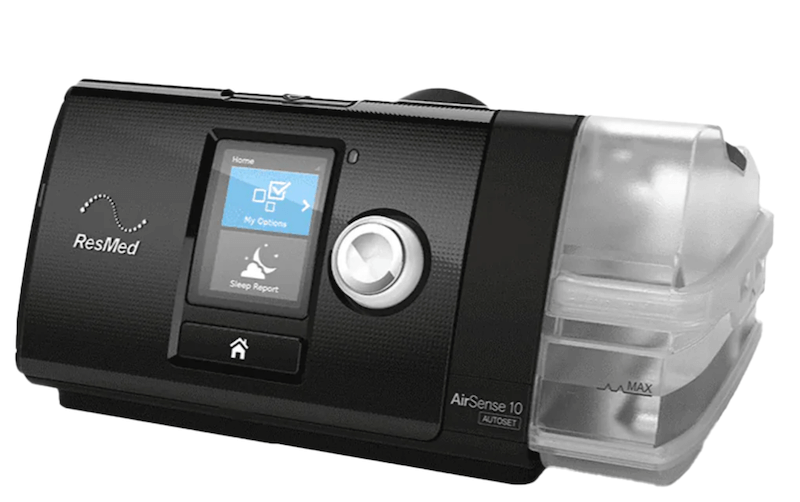
The version I use sits on the bedside table, runs off mains power, and has an integrated heated humidifier built into the front. I pair it with a ResMed AirFit F20 full face mask because I am a chronic mouth breather, and a nasal-only mask was never going to keep me sealed.
That is the entire kit. One machine. One mask. Heated tubing. Nothing else.

The first weeks, honestly
The first night was hard. The mask felt strange against my face, the airflow felt foreign, and my brain spent the first few hours convinced I could not breathe out properly even though I obviously could. I have written about that adjustment period in more detail in how to overcome CPAP anxiety and your first night with CPAP, so I will keep it brief here.
The relevant point for this review is that none of the early difficulty was the machine’s fault. The AirSense 10 has a ramp feature that starts at a gentle pressure and works up to your therapeutic range over a configurable window. That helps. The humidifier helps too. But your nervous system still needs time to accept the basic premise, which is that you are now sleeping with a small fan attached to your face for the foreseeable future.
By the end of the first couple of weeks, the strangeness had faded into the background. By a month or two in, putting the mask on at night was about as remarkable as putting on socks.
What AutoSet feels like in practice
You do not really notice the machine working most of the time, and that is the point. When I am half awake and roll onto my back, I can sometimes feel the pressure climb a little before I drift off again. When I am side sleeping with a clear airway, the pressure stays low and exhaling against it feels easy.
Compared to a fixed pressure CPAP, the experience is more forgiving. I am not getting blasted with full pressure on the nights I do not need it, and on the nights I do (a head cold, lying on my back, anything that makes the airway less cooperative), the machine quietly compensates without my involvement.
For someone newly diagnosed who has not had pressure dialed in yet, an auto-adjusting machine takes a lot of guesswork off the table. Your prescribed range gives the device room to find what your airway actually needs on a given night, rather than asking a clinician to pick one number and hope it covers every situation.
Humidification
The integrated HumidAir chamber is one of the things I would not give up. CPAP delivers air that has been pressurized and run through filters, and without humidification it dries out your mouth, your throat, and your sinuses surprisingly quickly. The AirSense 10 lets you choose a humidity level, and you can pair it with heated tubing (ResMed’s ClimateLineAir) to keep the air warm all the way to the mask. That stops condensation pooling in the hose. Rainout, that gurgling sound of water moving in the tube, is not pleasant when it wakes you up.
I always use distilled water in the chamber. Tap water leaves mineral deposits that build up over time and shorten the life of the chamber and the heating element.
EPR and exhaling against pressure
This is one feature it took me a while to appreciate. Expiratory Pressure Relief, or EPR, drops the pressure briefly when you breathe out so you are not pushing against the full therapeutic level on every exhale. Without it, exhaling can feel like an active effort. With it, breathing out feels close to natural.
EPR has a few intensity settings. Worth experimenting with, ideally in conversation with whoever manages your therapy, because too much EPR for someone who needs higher pressures can let breathing events sneak through.
The MyAir app and the data side
ResMed publishes a free app called MyAir that connects to the machine and gives you a nightly summary. Hours of use, mask fit, how your AHI looked, how often you took the mask off. It is gamified, with a score out of one hundred, and that has its place. New users tend to find the daily feedback motivating.
For people who want more depth than the official app offers, the AirSense 10 stores detailed data on the SD card you can pull from the side of the machine and load into OSCAR, a free open-source program that visualizes the breath by breath data the machine records. As someone with a computer science background, I went through a phase of staring at OSCAR charts. Eventually I stopped, because the trends were stable and obsessing over individual nights was making me sleep worse, not better. Worth knowing the option is there if you ever want to investigate something specific.
Noise
Quiet enough that my wife sleeps through it. That is the practical test that matters in our house, and it has held up for years. The bedroom is not silent (no machine moving air ever is), but the AirSense 10 produces a soft, steady airflow sound rather than anything mechanical or whiny.
For comparison, my untreated snoring used to wake her up regularly. The machine does not. That is the entire noise review, in the only terms that matter to a couple sharing a bed.
What more than a decade of nightly use has taught me
This is the part long term users can offer that fresh reviewers cannot.
The AirSense 10 has been a steady part of my routine for the better part of a decade. It has gone with me on camping trips, including the kind where you have to plan out battery power because there is no mains supply. It has gone on international flights as a medical device, which airlines and security have always handled without much fuss as long as I had it visible and accessible. It has sat on hotel bedside tables in different countries, and a cheap travel adapter has always been enough to handle local power.
Like any medical device, it is not magic. It is a machine. Filters need changing. The water chamber needs cleaning. Heated tubing eventually needs replacing. The basic discipline is small but real, and the replacement schedule is not a marketing scam. Letting parts go too long actually does affect therapy quality.
I am currently weighing whether to upgrade to the AirSense 11. Not because the AirSense 10 has stopped doing its job, but because the 10 is now an older generation of the platform, and I am thinking about where I want to be in a few more years.
Who this machine actually suits
The AirSense 10 AutoSet is a sensible default for an adult newly diagnosed with obstructive sleep apnea, especially if you have a varying pressure need or you do not yet know exactly where your therapeutic pressure should sit. The auto algorithm gives the prescriber room to set a range and let the device do the work, which is more forgiving than picking a single fixed pressure and hoping it covers every position and every night.
It is also a reasonable choice if you are upgrading from an older machine that does not have integrated humidification, modern data, or auto pressure adjustment. The comfort gap between an early generation CPAP and the AirSense 10 is large.
Where it is less of a fit:
If you have central sleep apnea rather than obstructive, this is not your machine. Central apnea often requires bilevel or ASV therapy, and the AirSense 10 is not designed for that.
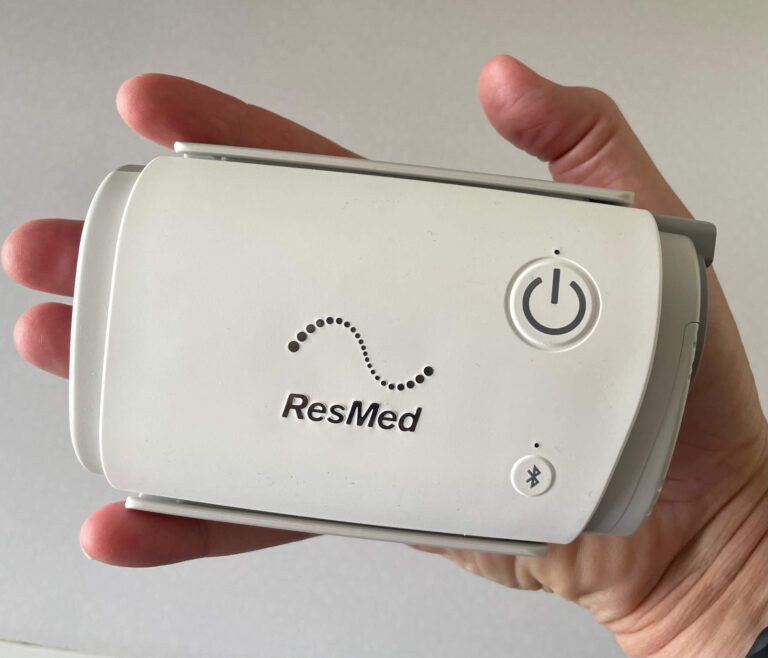
If you travel constantly and need something tiny in your bag, the AirSense 10 is not a travel CPAP. It fits in a carry on, but it is not pocket size. Frequent flyers tend to either accept the bulk or buy a separate dedicated travel device.
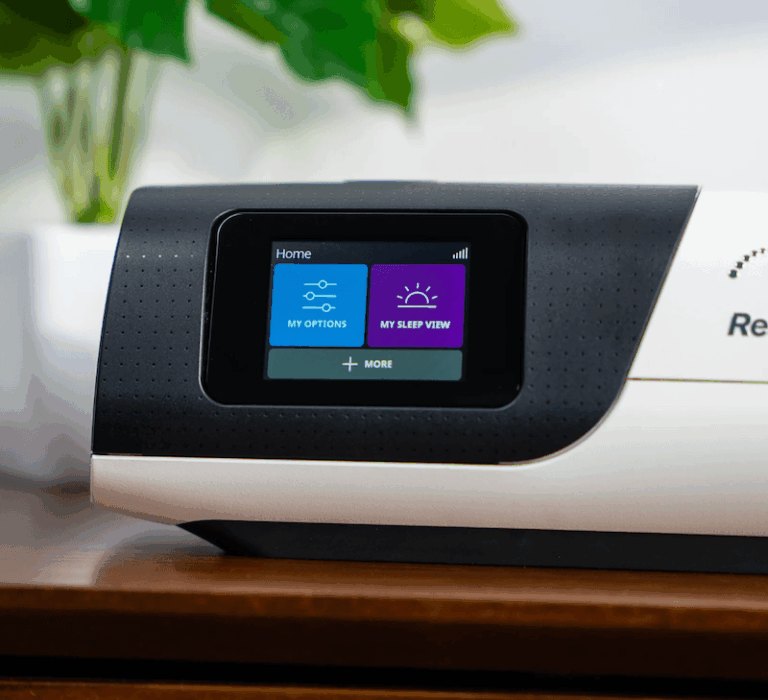
If you specifically want the latest model with a touchscreen and the newer ResMed app experience, the AirSense 11 is the current generation.
AirSense 10 versus AirSense 11, briefly
Therapeutically, the two machines are very similar. The AutoSet algorithm, the pressure range, the integrated humidification, EPR, all of that carries over. The 11 has a touchscreen and a refreshed industrial design, plus a different app experience and somewhat more connected features.
If you are comparing the two on price, and you can find an AirSense 10 from a reputable supplier, it is hard to argue the 10 is the wrong choice. If you want the platform ResMed will be supporting longest into the future, the 11 is the obvious pick. I have a full AirSense 11 review if you want to weigh up the differences in more depth.
The small problems I actually had, and what helped
These are the issues I have personally run into. Not a comprehensive list of every CPAP complication, just what came up for me.
Mask leaks at night, especially when I rolled toward the side of the bed. The fix was less about the machine and more about not over-tightening the mask. Counter intuitively, a too-tight mask deforms the cushion and breaks the seal. I cover this in more depth in why does my CPAP mask leak.
Dry mouth in colder weather. Bumping up the humidity setting and using heated tubing took care of it.
Rainout in the hose. Same fix. Heated tubing is the answer.
If you find yourself with a problem the basics do not solve, the Mayo Clinic has a useful overview of the most common CPAP problems and their fixes that is worth a read. For anything that does not resolve quickly, the right move is to talk to whoever manages your therapy rather than adjust settings yourself.
Would I buy this machine again
If I could put myself back in the chair in front of the sleep specialist on diagnosis day, with severe obstructive sleep apnea and a long road ahead, I would be glad to start with this machine. It is mature technology. The algorithm works. The humidification is built in. The data is accessible. The noise level lets a partner sleep next to it without complaint.
None of that is exciting marketing copy, and that is exactly the point. For a piece of medical equipment you depend on every night for years on end, “boring and reliable” is what you actually want.
If you are still working out which machine fits your situation, my best CPAP machines roundup covers the broader landscape.
Frequently asked questions
Do I need a prescription to buy a ResMed AirSense 10?
In the United States and most other regulated markets, yes. CPAP machines are prescription medical devices, and you should have had a sleep study and a pressure prescription before buying. Some online sellers will ship without one, which is not a path I would recommend. Without proper titration, you are guessing at a setting that affects your breathing all night.
Will the AirSense 10 work with my existing mask?
The AirSense 10 uses a standard tubing connection that fits all major mask brands. I use a ResMed AirFit F20 full face mask, but nasal masks and nasal pillow masks from other manufacturers also work with it. Choosing the right mask style matters more than most newcomers realize, and it is worth reading how to choose a CPAP mask before you commit.
How long do these machines last?
Long enough that I am still on one years later, but I am not going to put a specific number on it. Insurers in many countries replace CPAP machines on a roughly five year cycle, which is a useful planning horizon. The most common point of attention across the lifetime of any CPAP is not the device itself, it is the consumables: filters, water chambers, tubing, mask cushions all have replacement schedules.
Is the AirSense 10 still worth buying if the AirSense 11 is on the market?
If you find a good price from a reputable supplier and you do not specifically want the latest generation, yes. The therapy delivered by the two is very close. The 11 is the right pick if you would rather buy into the newer model that ResMed will be building on for longer.
Can I travel with it?
Yes. I have flown internationally with mine many times. Airlines treat CPAP machines as medical equipment, which generally means they do not count against your carry on allowance, and security staff are familiar with them. The power supply works on a wide voltage range, so an inexpensive plug adapter is enough for most countries.
⚠️ MEDICAL DISCLAIMER This blog provides general information only and is not a substitute for professional medical advice, diagnosis, or treatment. Sleep apnea is a serious condition, and CPAP equipment should be used under proper medical supervision. Always consult your doctor or sleep specialist before starting, stopping, or changing any therapy. I share personal experiences as a CPAP user, not as a medical professional. Individual results vary. For medical guidance, please consult a qualified clinician or the American Academy of Sleep Medicine (aasm.org).