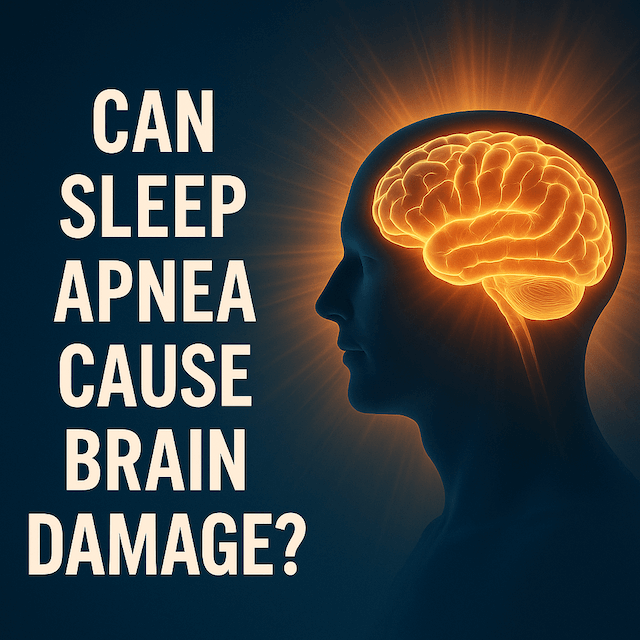
Can Sleep Apnea Cause Headaches? A Patient’s Honest Answer


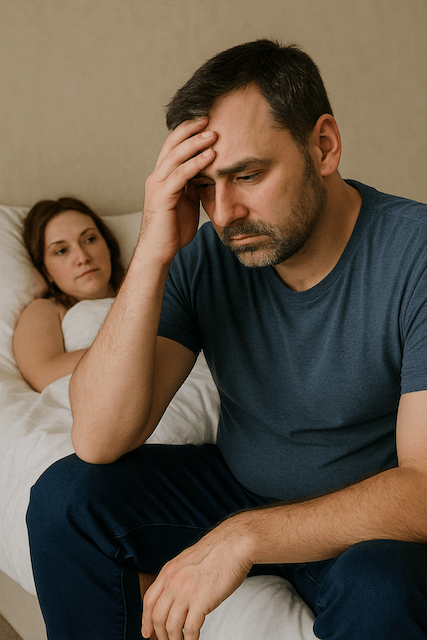
For years, the first thing I felt every morning was not the alarm. It was the pressure behind my eyes. A dull, heavy ache that sat across the front of my head and took half the morning to lift. I assumed it was dehydration, or stress, or simply the way mornings felt for a man in his forties. It did not occur to me that the headaches and the snoring and the bone-deep exhaustion were all the same problem wearing different masks.
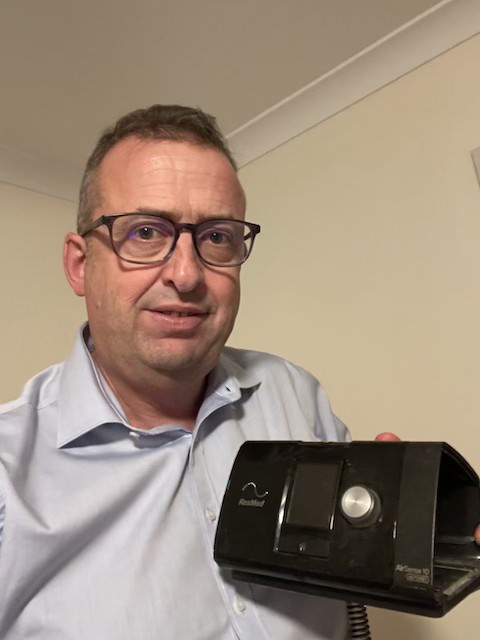
They were. I have severe obstructive sleep apnea, and at diagnosis my apnea-hypopnea index was 51, which means my breathing was being interrupted roughly fifty times an hour while I thought I was resting. Once I started CPAP therapy, the morning headaches faded. That is the short version of a longer story, and it is the reason I get a lot of email from readers asking the same question: can sleep apnea actually cause headaches, or are the two things just keeping each other company?
Before I go further, the disclaimer I put on everything here. My background is in computer science, not medicine. I am a patient who has lived with this condition for more than a decade, not a doctor. What follows is what I have learned from my own treatment and from reading the research, and it is meant to help you ask better questions, not to replace a conversation with a clinician who can actually examine you.
The short answer: yes, and there is a name for it
Sleep apnea can cause headaches, and the connection is well documented enough that the condition has its own recognized headache type. The most common form is the morning headache, the kind that greets you the moment you wake and usually eases over the following hour or two.
This is not a fringe symptom. Mayo Clinic lists morning headaches among the daytime signs of obstructive sleep apnea, right alongside excessive daytime sleepiness, waking with a dry mouth, and trouble focusing. When I read that list now it reads like a transcript of my own pre-treatment life. At the time, I had each of those symptoms and connected none of them to a breathing problem I could not see.
So if you are waking up with a headache more days than not, and especially if you also snore, feel unrefreshed after a full night in bed, or have been told you stop breathing in your sleep, the headache is worth taking seriously. It may be the most visible edge of something happening every night while you are unconscious.
What a sleep apnea headache actually feels like
People search for what a sleep apnea headache feels like because it does not match the dramatic image many of us have of a headache. It is rarely the worst pain of your life. It is more insidious than that.
In my experience, and consistent with how the research describes it, a sleep apnea headache tends to show up on both sides of the head rather than one. It is a pressing or squeezing sensation more than a sharp stab. It is present the moment you wake rather than building through the day. And, importantly, it fades. Within thirty minutes to a few hours of getting up, moving around, and breathing normally again, it lifts on its own. That is part of why it is so easy to dismiss. By mid-morning you feel human again, you forget it happened, and the next morning you start the cycle over without ever asking why.
That self-resolving quality is also a clue about the cause. A headache that arrives with the morning and leaves once you are upright and breathing well is behaving like a headache driven by something that happens during sleep and stops when sleep does.
Why does sleep apnea cause headaches in the first place
This is the part that finally made the whole thing click for me, because it is mechanical and it makes sense.
When you have obstructive sleep apnea, the soft tissue at the back of your throat collapses and blocks your airway over and over through the night. Each time that happens, airflow stops. Your blood oxygen level drops and carbon dioxide builds up because you are not clearing it the way you would with normal breathing. The Sleep Foundation explains that these repeated drops in oxygen are a major reason people with the condition wake up with head pain (Sleep Foundation: morning headaches).
Two things flow from that. First, rising carbon dioxide causes the blood vessels in and around your brain to widen. That dilation is widely thought to be a direct trigger for the throbbing or pressing feeling you wake up with. Second, every one of those breathing interruptions yanks you partway out of deep sleep, even if you never remember waking. By morning you have not actually rested. Fragmented, low-quality sleep is a headache trigger in its own right, separate from the oxygen story.
Put simply, your brain spends the night under a low-grade form of stress that you sleep right through, and the headache is the bill that arrives at dawn. Fix the breathing, and in most cases you fix the cause of the headache rather than just medicating the symptom.
How common are these headaches
Common enough that researchers have put numbers to it. In one study of patients evaluated for sleep apnea, around 29 percent reported morning headaches, a figure the Sleep Foundation cites when discussing the link. Other clinical sources put the range somewhere between 10 and 30 percent of people with untreated obstructive sleep apnea, compared with a much smaller share of the general population.
I share these figures with the same caveat I apply to everything: a statistic is a description of a group, not a diagnosis of you. Plenty of people with sleep apnea never get the headaches at all, and plenty of headaches have nothing to do with breathing. The number is useful only as a reason to take the possibility seriously, not as proof of anything in your particular case.
Sleep apnea headache versus migraine: they are not the same thing
This is where I want to be careful, because the two get tangled together constantly and they are genuinely different.
A classic sleep apnea morning headache is usually felt on both sides of the head, is a dull pressure, arrives on waking, and clears within a few hours. A migraine is a different animal. Migraines are often one-sided, can come with nausea and sensitivity to light, sound, and smell, and can last anywhere from hours to days rather than fading by mid-morning.
The relationship between the two is real but more complicated than a straight line. Treating sleep apnea has been shown to reduce migraine frequency and severity in people who have both conditions, which suggests the disordered breathing can act as a trigger or aggravator. But sleep apnea is not thought to simply manufacture migraines out of nothing in someone who would never otherwise get them.
I have written about my own experience with the migraine side of this separately, because it deserves its own space rather than a paragraph buried in a general article. If migraines are your main concern, that is the piece to read: sleep apnea and migraine headaches. For the purposes of this article, the practical point is that if you wake with one-sided, severe, or long-lasting headaches, especially with nausea or visual changes, that is a pattern to bring to a doctor rather than to file under ordinary morning fog.
The other headaches sleep apnea can be tangled up with
Morning headaches are the headline, but they are not the only type that gets associated with disordered sleep. Tension-type headaches, the steady band of pressure around the head, show up in this population too, and the relationship is partly about the poor sleep itself rather than the oxygen drops specifically. Some people also experience headaches that wake them in the night. The specific label matters less than getting the underlying breathing problem identified, because when your sleep is being shredded night after night, your head is one of the first places that registers the damage.
“But my headaches started after I got a CPAP”
This is a different question and an important one, because it comes up a lot from people who are new to therapy and understandably alarmed when treatment seems to make things worse.
A headache that began after you started CPAP is usually not the same thing as a sleep apnea headache. The most common culprit is swallowed air. If your pressure is set higher than you need, or you are swallowing air through the night, it can collect in your stomach and gut and lead to bloating, burping, and a headachey, off feeling in the morning. This has a name, aerophagia, and I have written about it in more detail because it trips up so many new users: aerophagia and sleep apnea.
Other CPAP-related causes include sinus pressure from the airflow, a mask strapped down too tightly, or simply the adjustment period as your body gets used to a machine breathing with you. None of these mean CPAP is the wrong treatment. They usually mean a setting, a mask fit, or a humidification detail needs tuning, which is a conversation for whoever manages your therapy. The fix is adjustment, not abandonment.
I am a chronic mouth breather and use a full face mask for that reason, and the early weeks of therapy take some getting used to no matter who you are. If you are in that adjustment window, give it time and ask for help with the settings rather than concluding the machine is the enemy.
What actually helped me
I want to be honest about what I can and cannot speak to here. I can tell you what happened in my own treatment. I had morning headaches for years before diagnosis; they were part of the daily background noise of being quietly sick, and after I started CPAP therapy they faded along with the worst of the brain fog and exhaustion. I monitor my therapy every night through the myAir app, and my treated numbers sit in a well-controlled range now. The headaches are not a feature of my mornings anymore.
The lever that moved everything was treating the apnea itself, not treating the headache. Painkillers managed a symptom and bought me a functional morning, but they did nothing about the cause, because the cause was happening in my throat at three in the morning. CPAP addressed the cause. That is the pattern the research describes too: when the breathing is fixed, the apnea driven headaches tend to resolve, often within the first stretch of consistent therapy.
If you want the fuller arc of how I got from undiagnosed and exhausted to where I am now, that journey lives on its own page: living with sleep apnea. I keep it there rather than retelling it everywhere, because the diagnosis story is one story and this article is a different job.
When to stop guessing and see a doctor
Here is the practical takeaway, the thing I would want a friend to walk away with.
If you wake up with headaches regularly, do not just keep reaching for the painkillers and hoping. Recurring morning headaches are one of the more recognizable warning signs of obstructive sleep apnea, and they are especially worth investigating if you also snore, feel exhausted despite a full night in bed, wake gasping or choking, or have a partner who has noticed you stop breathing in your sleep. My own wife was central to me finally taking the snoring seriously, and partners often spot this long before the person living with it does.
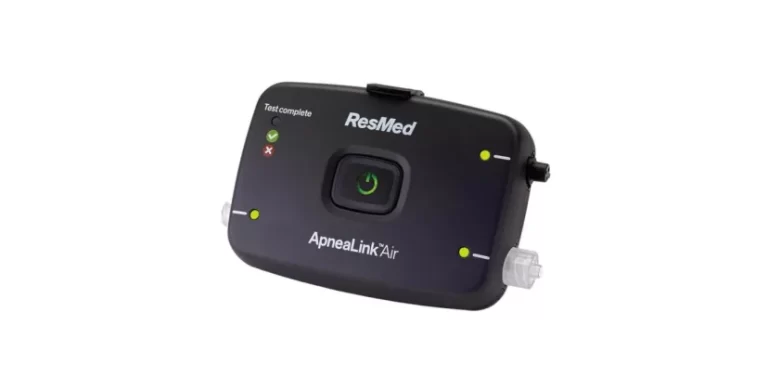
The good news is that finding out is far easier than it used to be. A home sleep apnea test can often be done in your own bed, and your doctor can walk you through whether that or a fuller study makes sense for your situation. If you are not sure whether your symptoms even add up to apnea, I put together an honest self-assessment here: do I have sleep apnea. And if you want to understand the condition itself before talking to anyone, start with obstructive sleep apnea.
A headache that vanishes by lunch is easy to ignore. I ignored mine for a long time. What I did not understand was that the same nightly oxygen drops causing the headache were also working on my heart and my concentration and my mood. The headache was the symptom I could feel. It was not the most important thing happening. If yours has a pattern, treat it as the signal it might be, and get the breathing looked at.
⚠️ MEDICAL DISCLAIMER This blog provides general information only and is not a substitute for professional medical advice, diagnosis, or treatment. Sleep apnea is a serious condition, and CPAP equipment should be used under proper medical supervision. Always consult your doctor or sleep specialist before starting, stopping, or changing any therapy. I share personal experiences as a CPAP user, not as a medical professional. Individual results vary. For medical guidance, please consult a qualified clinician or the American Academy of Sleep Medicine (aasm.org).