Circadiance SleepWeaver Anew Review

“This post contains affiliate links. I may earn a commission if you buy through these links, at no extra cost to you. Read my Disclaimer for more details.”
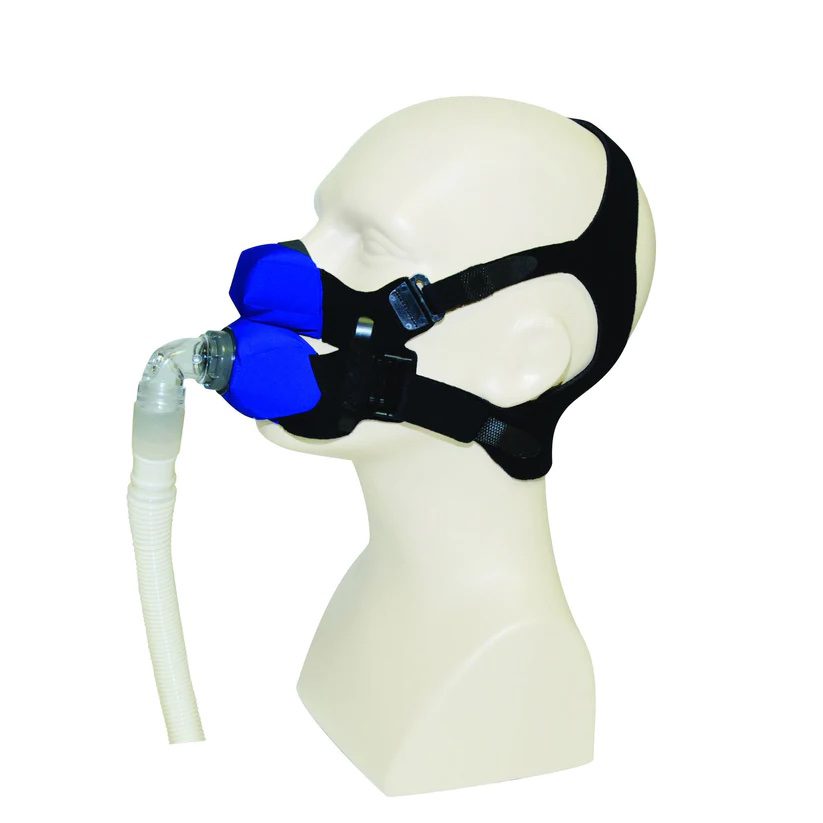
First things first. Before the first paragraph does any persuading. I have not slept in the Circadiance SleepWeaver Anew. I am a patient who has worn a full face mask every night for more than a decade, and this review is the result of research rather than a personal trial. I am not a doctor, and nothing here is a substitute for advice from the clinician who manages your therapy. What I can offer is the perspective of someone who lives inside a full face mask and a chronic mouth breathing habit, reading this product the way I read anything I am thinking about putting on my own face.
That perspective matters for this particular mask, because the Anew is built for people like me. It is a full face design that covers both the nose and the mouth, which is the only category that works when you breathe through your mouth at night. If you are weighing it up, I want you to walk away knowing what it actually is, who it seems to fit, where the reported weak spots are, and which questions I would still want answered before trusting it with a full night.
What the SleepWeaver Anew actually is
Most CPAP masks seal against your face with a silicone cushion. The SleepWeaver line from Circadiance, a Pennsylvania manufacturer, does something different. Instead of silicone, the Anew uses a cloth interface made from a blend of polyester, nylon, and elastane. The fabric is designed to be soft and moisture wicking, and it inflates gently as pressurized air passes through it. So rather than a firm cushion pressing inward, you get a fabric pocket that fills with air and forms its seal that way.
The Anew is a full face mask, which in CPAP terms means it covers both the nose and the mouth. It uses a dual chamber design, with one section over the nose and one over the mouth. The idea behind splitting it into two chambers is to hold a seal without forcing you to crank the headgear down tight. The straps run around the ears with a band that stretches across the top of the head, and the tubing connector at the front has an elbow that swivels a full 360 degrees, so you can route the hose up toward the headboard or down toward the foot of the bed depending on how you sleep.
It is offered in more than one size, and Circadiance publishes a printable fit guide so you can size yourself before ordering. Like every complete CPAP mask, it requires a prescription. A kit includes the cloth mask interface, the adjustable headgear, and the swiveling elbow connector. Replacement parts, including the headgear and the cloth interface itself, can be bought separately without a prescription once you are set up.
If you want to understand where this sits among the other options, I have written separately about the difference between nasal and full face masks and put together a wider look at the best full face CPAP masks. The short version is that full face masks are the standard recommendation for mouth breathers, because they keep delivering air even when your mouth falls open. The Sleep Foundation lays this out plainly in its overview of CPAP mask types, noting that full face masks are ideal for mouth breathers and those with chronic congestion. That is the whole reason a mask like the Anew exists.
The cloth seal, and why it caught my attention
I will admit this mask interests me more than most, and the reason is personal rather than technical. After this many years in a silicone full face mask, I wake up with strap marks pressed into my face, and part of my morning routine is moisturizing the lines the headgear leaves behind. So when a manufacturer says the cloth interface is gentler on skin and less likely to leave red marks, that is the claim I read twice.
The reviews I found support that comfort angle. Users tend to describe the fabric as pleasant against the skin and report that it does not leave the marks or cause the irritation that firmer cushions can. If you struggle with skin irritation or dermatitis from your mask, or if you are someone who is forever fighting the lines a mask presses into your face, a fabric interface is at least worth understanding, because it changes what is touching you all night.
Here is where my honesty has to outrun my curiosity. A looser, fabric based seal is a genuinely different proposition from the snug silicone seal I have relied on, and I do not know how it would behave for me. I run a full face mask precisely because my mouth opens at night and the seal has to stay put through that. Comfort that comes at the cost of a reliable seal is not comfort I can use. So while the cloth idea appeals to the part of me that is tired of strap marks, I would not assume it holds up under a mouth breather’s pressure until I had tested it myself across several nights.
Fit, seal, and the learning curve
The most consistent theme across user feedback is that the Anew takes time to get right. Because the cloth fits more loosely than a molded cushion, and because you have to position your nose and mouth correctly inside their separate chambers, people report a real adjustment period before the mask seals well for them. Several reviews note that if you do not get your face seated properly in the two chambers, the mask is prone to leaking.
That tracks with everything I understand about masks in general. Leaks are the thing that quietly wrecks therapy, and they are usually a fit problem before they are a hardware problem. I have written a longer piece on why a CPAP mask leaks and how to chase down the cause, and the short lesson is that a mask which demands careful positioning will reward patient people and frustrate impatient ones. The Anew appears to sit firmly in that camp. If you are not willing to spend a few nights learning how the fabric wants to sit, this is probably not the mask for you.
The other reported drawback is noise. Despite exhalation vents that are meant to keep the sound down, some users describe the Anew as fairly noisy in practice. I cannot confirm that from experience, and noise tolerance is intensely personal, but it is worth flagging if you sleep lightly or share a bed with someone who does.
Who it seems to suit
Pulling the reporting together, the Anew lines up well for a specific kind of person. If you dislike the feel of silicone against your face, the cloth interface is the entire selling point. If you breathe through your mouth at night, the full face coverage is doing the job a nasal mask cannot. And if you have sensitive skin that reacts to firmer cushions, a soft fabric that wicks moisture is a reasonable thing to try.
It suits you less well if you want a sleek, low profile mask that disappears on your face, since this is a larger fabric design. It suits you less well if you need a genuinely quiet mask. And it suits you least of all if you are not prepared to invest time in dialing in the fit, because the loose cloth seal is not a put it on and forget it arrangement.
If you are still working out which style is right for you in the first place, rather than comparing specific models, I would start with how to choose a CPAP mask and my roundup of the best CPAP masks for mouth breathers. Mask choice is one of the biggest levers on whether you actually stick with therapy, and it is worth getting deliberate about.
Cleaning and upkeep
The maintenance story is different from what I am used to, and not in a bad way. Circadiance recommends washing the mask daily in the sink with a small amount of dish soap, and the cloth interface is machine washable as long as you use a detergent without bleach. Everything needs to air dry fully before you put it back together.
I clean my own mask cushion every morning with warm soapy water and do a deeper clean weekly, so a daily wash is already part of my rhythm. A fabric that can go in the machine is genuinely appealing on that front. The one practical wrinkle I would plan around is drying time. Cloth holds water differently from silicone, and if you wash it in the morning you want to be sure it is bone dry by the time you need it that night. People who travel or who only own one mask should think that through before committing.
Compatibility, pressure range, and humidification
On the technical side, the Anew is built to play nicely with most setups. It uses a standard 22 millimeter cuff connection, which means it works with the common run of CPAP, APAP, and bilevel machines, though it is always worth confirming against your specific device since some manufacturers want their own masks. It accommodates pressure settings from 4 all the way to 30 cm H2O, a wide enough band to cover essentially any prescription. It is also compatible with heated tubing and with a humidifier, both of which carry the same standard connector.
That last point matters to me personally, because I run humidification every night at home and would not give it up. Knowing the Anew works with a humidifier rather than against one is the kind of detail I check first, not last.
Cost, trial, and warranty
On price, I will stay qualitative, because I think precise figures age badly and vary by where you shop. Full face masks tend to be the most expensive mask category, simply because they are larger and use more material than nasal or nasal pillow styles. Within that category, the Anew sits toward the affordable end rather than the premium end, which is a point in its favor given that it asks you to gamble a few nights on learning the fit.
The trial and warranty terms reduce that gamble. Circadiance offers a 30-day guarantee that extends to third-party retailers, so if the mask does not work for you, you can return it within that window for a refund. The mask also carries a 90-day limited warranty covering workmanship and material defects. For a product whose main risk is a fit learning curve, a real return window is exactly the safety net you want.
A quick word on the rest of the SleepWeaver line
If the cloth concept appeals but a full face mask is more than you need, Circadiance makes the same fabric in nasal versions. The SleepWeaver Elan, 3D, and Advance are all nasal masks that cover the nose only, which Circadiance positions as better suited to people who breathe through their nose or who have facial hair that interferes with a full face seal. I have no firsthand experience with any of them, and as a committed mouth breather they are not options I can use, but they are worth knowing about if your breathing pattern is different from mine.
How I would think about it next to my own mask
For honesty’s sake, my daily driver is the ResMed AirFit F20, a silicone full face mask, and it is the only mask I have ever owned. So I am not coming to the Anew as a neutral party. I am coming to it as someone whose silicone mask works but leaves marks, wondering whether fabric would be kinder to my face.
If I were shopping today, I would treat the Anew as a legitimate experiment rather than a sure upgrade. The comfort reports and the gentle skin story are real draws for anyone dealing with irritation. The unknowns for me are whether the looser cloth seal would hold through a night of mouth breathing the way my current mask does, and whether the noise reports would bother me. The 30 day guarantee is what would make me willing to find out, because it lets you answer those questions on your own face instead of taking anyone’s word for it, mine included.
If you have obstructive sleep apnea and you are mask shopping, the most useful thing I can tell you is that the right mask is the one you will actually wear every night. You can read more about obstructive sleep apnea if you are earlier in this process, but once you are choosing hardware, comfort and seal are everything, and they are deeply individual. The SleepWeaver Anew is a credible option in the mouth breather category, with a genuinely different feel and a return window generous enough to let you test it without much downside.
⚠️ MEDICAL DISCLAIMER This blog provides general information only and is not a substitute for professional medical advice, diagnosis, or treatment. Sleep apnea is a serious condition, and CPAP equipment should be used under proper medical supervision. Always consult your doctor or sleep specialist before starting, stopping, or changing any therapy. I share personal experiences as a CPAP user, not as a medical professional. Individual results vary. For medical guidance, please consult a qualified clinician or the American Academy of Sleep Medicine (aasm.org).