Living with Sleep Apnea: My Journey


The first night in a Sydney hostel, I stuck a nasal strip across my nose, dripped some eucalyptus oil down my throat that burned on the way down, and went to sleep, hoping for the best.
I woke up to someone yelling.
“Hey mate, do you realise how bloody loud you snore?”
The whole room was glaring at me. One guy had his pillow over his head. Another had moved his mattress to the hallway.
I mumbled an apology, grabbed my backpack, and walked out at 6 am to find a hotel. It cost me three nights’ worth of hostel money for a single night in a tiny room with a flickering light and a toilet that barely flushed. But at least I could snore in peace.
I was 32. I should have seen a doctor. Instead, I assumed I was just one of those unlucky people with loud snoring. Annoying, but not dangerous.
I was wrong about that for another ten years.
The Years I Didn’t Know
I’ve apparently been a loud snorer since my twenties. I say apparently because you don’t hear your own snoring. But people let you know about it. Roommates would joke about it. Girlfriends would complain. My brother once recorded me on his phone and played it back the next morning. It sounded like a chainsaw trying to start.
I laughed it off every time.
The snoring I could dismiss. What was harder to dismiss, eventually, were the migraines. Not little ones. Crushing, debilitating migraines that made me want to lie in a dark room and not move. At first, once every few weeks. Then weekly. Then multiple times a week.
They followed a pattern. I’d wake up feeling like someone was squeezing my skull in a vice. Vision would blur. Nausea would hit, and sometimes I’d spend the morning vomiting. The only thing that helped was lying completely still in a pitch-black room with a cold cloth over my eyes.
A whole day. Gone. Just lying there, waiting for it to pass.
I was in my early forties now. Living in Western Australia. Life looked decent on paper. I’d met the woman who would become my wife. I had a job. I was healthy, or so I thought.
My wife was patient at first. But after months of this, even she was worried. How do you build a life with someone knocked out by mysterious migraines several times a week? I’m genuinely amazed she stayed. I’m more amazed she married me.
“You need to see someone,” she kept saying.
I kept putting it off. Stress, I told myself. Dehydration. Bad posture. Screen time. Anything but something serious.
Then one morning I woke up and couldn’t get out of bed. The headache was so intense I genuinely thought I might be having a stroke. My wife called in sick for me and sat next to the bed.
“Promise me you’ll get tested,” she said.
I promised.
The Test That Changed Everything
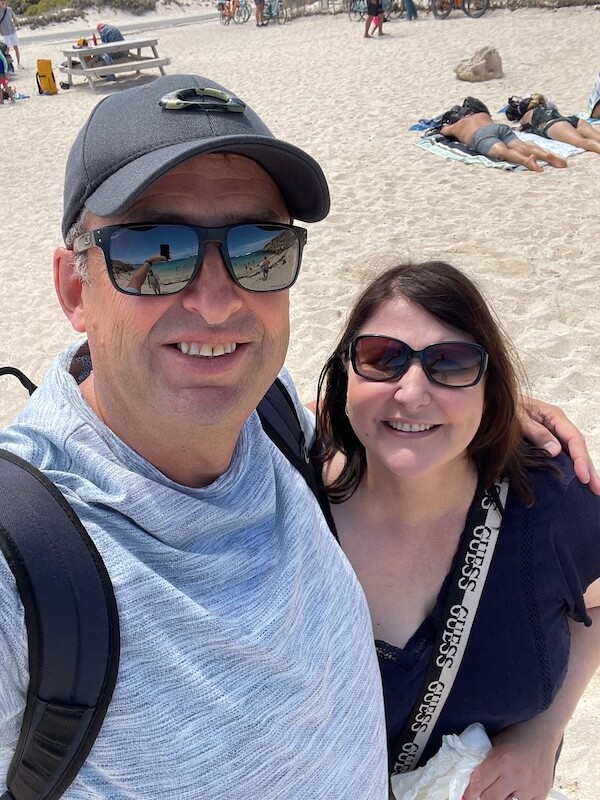
I ordered a home sleep study. Back then, it wasn’t as simple as the tests are now. They mailed me a clunky device with sensors and wires. I had to strap a band around my chest, clip something to my finger, and stick sticky pads on my face. I looked like a low-budget science fiction character.
I slept terribly that night, partly because of all the equipment, but mostly because I was nervous. What if they found something serious? What if they found nothing at all, and I was just stuck with the migraines forever?
A week later, the results came back.
Severe obstructive sleep apnea. AHI of 51.
I had to Google what AHI meant. Apnea-Hypopnea Index: how many times per hour you stop breathing or have significantly reduced airflow. Normal is under 5. Severe is 30 or above.
Mine was 51.
I stared at the report. More than once a minute, every hour, all night, every night, for years. My brain had been starved of oxygen. My heart had been working overtime trying to keep me alive. My body had been in a constant state of emergency while I slept, and I’d had absolutely no idea.
Suddenly, everything made sense. The snoring. The fatigue. The migraines. Even Sydney, years earlier. Those men in the hostel hadn’t just been hearing snoring. They’d been hearing me gasp and choke for air.
I felt a strange mix of relief and fear. Relief that there was an answer. Fear about what came next.
Meeting My New Bedtime Companion

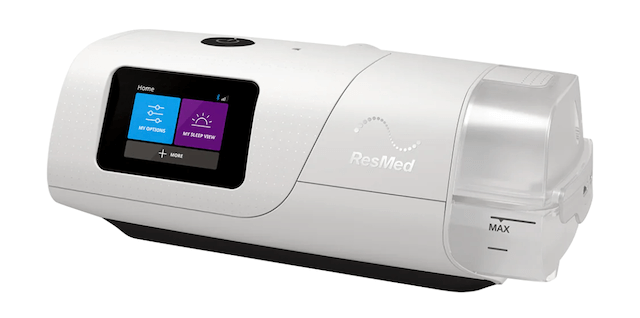
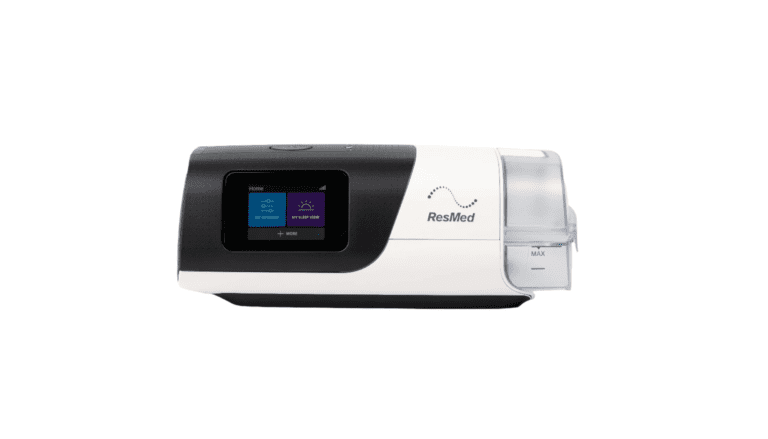
The sleep specialist’s solution was a CPAP machine. Continuous Positive Airway Pressure. A machine that blows air through a mask into your nose or mouth, keeping your airway open so you don’t stop breathing. Simple concept. Not exactly simple to live with.
When it arrived, I unpacked it like it was some kind of alien artifact. The machine itself, about the size of a toaster. A long tube. And the mask.
I held it up to my face. It covered my nose and mouth, with straps going around my head.
How the hell am I supposed to sleep in this?
That first night was rough. I lay down, strapped the mask on, turned the machine on. Air blasted into my face immediately. It felt like sticking my head out of a car window on the highway. I yanked the mask off.
I tried again. Made it about thirty seconds before feeling like I was suffocating. Off came the mask.
Third try. I forced myself to keep it on. I focused on breathing slowly. In through the nose, out through the nose. The pressure was intense, but I started to adjust. After what felt like an hour, probably ten minutes, I drifted off.
I woke a few hours later in a panic. My heart was pounding. It felt strained, like it was working too hard. I ripped the mask off and lay there in the dark.
The next morning I called the sleep centre. The pressure was too high. They lowered it. That night was better. Not comfortable, but better. The tornado in my face was now more like a strong breeze.
By the end of the first week, something happened that I wasn’t prepared for.
I woke up without a headache.
The first time in months, maybe years, that I woke up feeling normal. Not great, not energised, just normal. No crushing pain. No nausea. No dark room required.
I nearly cried.
Ten Years Later
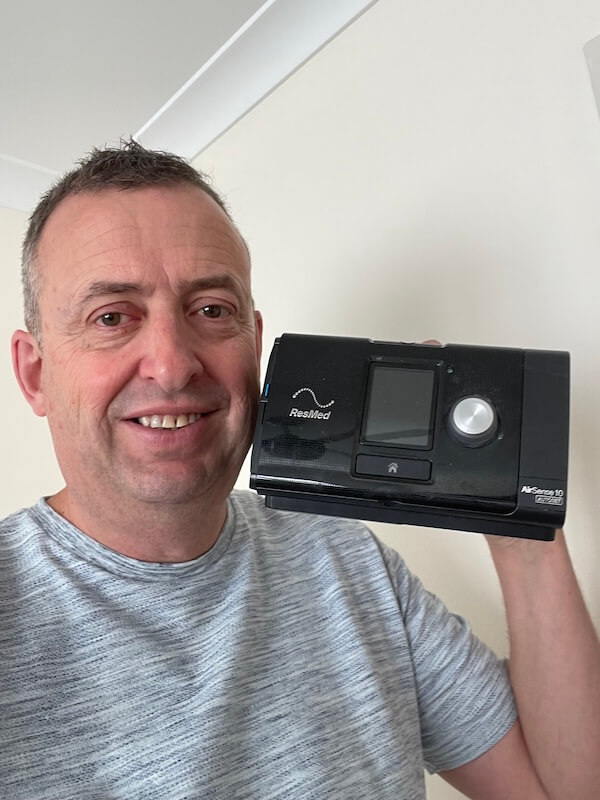
I’m 57 now, and the CPAP machine on my bedside table has been there every night for over a decade. Not the same machine, the motor bearings gave out after five years and it started making an awful howling noise, but the same idea. Every night, without exception, I strap on the mask and turn it on. It’s as automatic as brushing my teeth. I don’t think about it anymore. I don’t resent it. It’s just what I do.
Living with it isn’t glamorous. There’s maintenance. Every morning, I rinse the mask and dry it, refill the humidifier with distilled water. Once a week, I rinse the tube. Every few months I replace the filter. Every six months or so I buy a new mask because the cushion stretches and starts leaking. It sounds like a lot. It takes less time than making breakfast.
The social adjustments took longer to get used to.
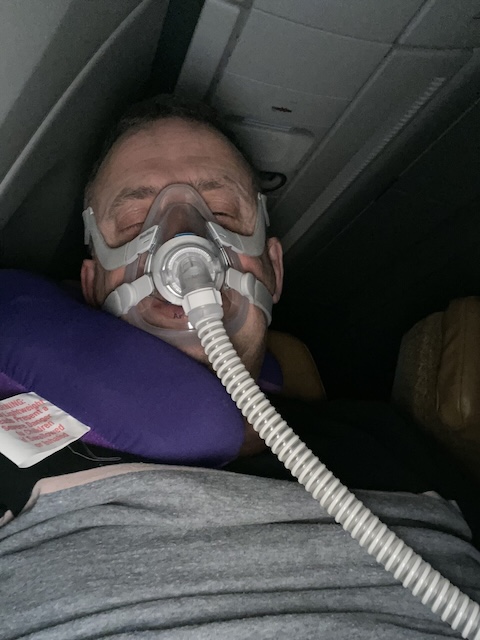
Travelling is so much easier now. I bought a travel CPAP so I can sleep on planes without annoying my fellow passengers.
The Colleague
There’s one moment from the past decade that has stayed with me more than most.
I was talking to a woman I’d worked with for a few months. We were chatting about something completely unrelated when she made an offhand joke about her ex-boyfriend using a CPAP machine.
“God, that thing was so annoying. The noise, the mask, it was awful.”
There was a pause. I could have let it go.
“I use one too,” I said.
Her face changed immediately. The laugh died. She looked embarrassed.
“Oh my God, I’m so sorry, I didn’t mean—”
“It’s fine,” I said, and I meant it. “It keeps me alive.”
That’s when I knew I’d made peace with it. Not in spite of needing it, but because of what it does. If wearing a machine on my face every night means I get to wake up, see my wife, go to work, travel, live: I’ll wear the mask.
What I’ve Learned
I’m not a doctor or a sleep specialist. I’m just a person who spent years ignoring a problem, finally got tested, and started treatment that changed his life.
The migraines are gone. Not reduced, not managed: gone. I wake up next to my wife feeling rested. I have energy to actually use the day I’ve been given. Before the CPAP I was surviving. Now I’m living.
If you’re reading this because you snore loudly, wake up exhausted, or have unexplained morning headaches: get tested. Don’t wait ten years like I did. The home sleep tests available now are nothing like the wired contraption I strapped myself into. You wear a device on your wrist for one night and mail it back. That’s it.
If you’ve just been diagnosed and you’re staring at a CPAP machine wondering how you’ll ever sleep with it: give it time. The first week is difficult. The first month is an adjustment. By three months it becomes part of the furniture. I know people who still haven’t made that journey because they gave up in week two, and I understand why. I nearly did. But the life on the other side of the adjustment period is worth every difficult night to get there.
And if someone makes fun of your CPAP, or you feel embarrassed about needing it, remember that you’re using medical equipment to keep yourself alive. That’s not something to be ashamed of.
Where I Am Now
This is me at the Roman Baths in Bath, England.

I’m standing there, fifty-something years old, travelling with my wife, feeling good. No headaches. No crushing fatigue. Just a normal day in a beautiful place.
I couldn’t have done this ten years ago. I’d have been too exhausted, too worried about the next migraine, too depleted to be present for any of it.
The CPAP machine sitting in the hotel room that night is part of why I’m in that photo. Part of why I can enjoy it.
⚠️ MEDICAL DISCLAIMER This blog provides general information only and is not a substitute for professional medical advice, diagnosis, or treatment. Sleep apnea is a serious condition, and CPAP equipment should be used under proper medical supervision. Always consult your doctor or sleep specialist before starting, stopping, or changing any therapy. I share personal experiences as a CPAP user, not as a medical professional. Individual results vary. For medical guidance, please consult a qualified clinician or the American Academy of Sleep Medicine (aasm.org).