Why Does My CPAP Make Me Burp? And How to Fix It

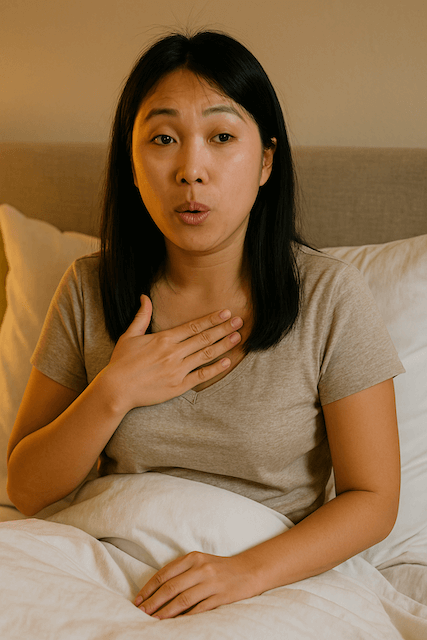
Most CPAP users go their entire therapy without ever burping in the morning. A meaningful minority do not. They wake up bloated, uncomfortable, sometimes embarrassed, and convinced something is wrong with them or their machine. The medical name for what is happening is aerophagia, which means “air swallowing.” The pressurized air your CPAP is pushing past your soft palate to keep your airway open is meant to travel into your lungs. Some of it ends up in your stomach instead, and your body deals with the surplus the way it always does. You burp.
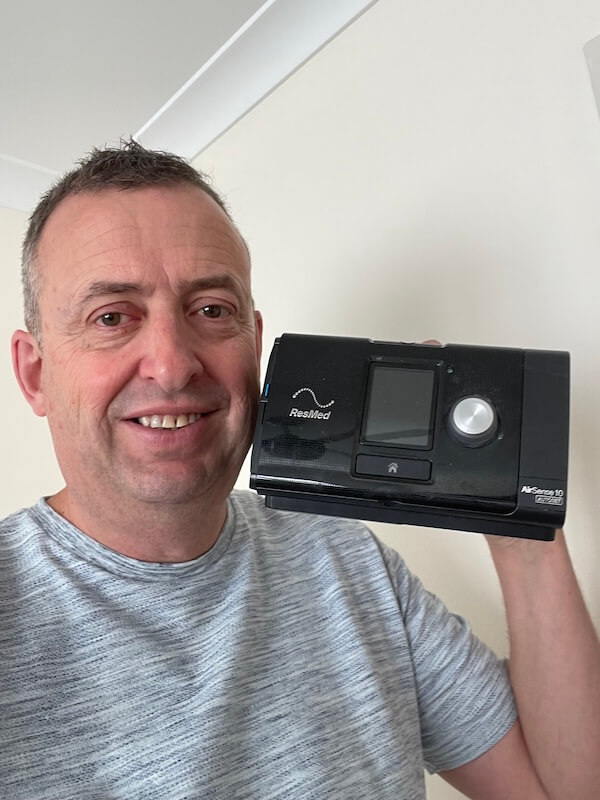
Before going further I want to be honest with you about my position here. I have used a ResMed AirSense 10 with a full face mask for the better part of a decade, and I have never had this side effect. That is luck more than skill, and it is the reason this article reads more like a researched clinical guide than a personal story. Everything that follows is drawn from peer reviewed studies, sleep medicine clinics, and the work of doctors who have actually treated this. I have done my best to translate it into something useful for the person who has just woken up bloated for the third morning in a row, wondering whether CPAP is worth it.
It is worth it. Untreated obstructive sleep apnea is a far more serious problem than aerophagia. The good news is that for most people, this is a fixable issue, and most of the fixes do not involve giving up CPAP.
What is actually happening when you burp after using CPAP
Your airway and your esophagus share real estate at the back of your throat. The soft palate, the tongue, and the muscles around the upper esophageal sphincter decide which way air goes when you breathe. When you are awake and upright, your body manages this almost without thought. When you are asleep, those muscles relax. That relaxation is part of what causes obstructive sleep apnea in the first place: the airway collapses inward and breathing stops.
CPAP solves the airway collapse by sending a steady stream of pressurized air down through the soft palate and into the lungs. But because the muscles surrounding the esophagus also relax during sleep, a portion of that pressurized air can slip past the upper esophageal sphincter and travel down into the stomach. There is no obvious sensation when this happens. You are asleep. The air builds up in the stomach and small intestine over the course of the night, and by morning the pressure has to go somewhere. It comes back up as belching, or stays trapped lower down and produces bloating, abdominal discomfort, and flatulence.
The Sleep Foundation summary on aerophagia, which is medically reviewed, explains the mechanism in similar terms and notes that estimates of how many CPAP users experience symptoms vary considerably. Some studies put the rate as low as 7 to 8%. Others, using broader definitions that include occasional symptoms, put it as high as 50%. The honest answer is that this is a common but not universal side effect of therapy.
For a broader explainer on the underlying condition that is not specific to the burping symptom, the companion piece on aerophagia and sleep apnea on this site covers more ground. The rest of this article focuses specifically on burping: why CPAP causes it, how to think about the research, and what to actually do about it.
Why some users get this and others do not
You can have two people with similar sleep apnea, similar pressure prescriptions, and similar masks, and only one of them ends up burping every morning. Researchers have done a reasonable job of figuring out which factors raise the risk.
A 2024 observational study of 753 CPAP and BiPAP users by Fukutome and colleagues ran a multivariate analysis and found two factors significantly increased the odds of CPAP related aerophagia. Higher prescribed pressure raised the odds by about 24% per unit of pressure. Existing gastroesophageal reflux disease, more commonly known as GERD, raised the odds by about two and a half times. Curiously, higher age and higher body mass index were slightly protective in their data, possibly because of changes in the lower esophageal sphincter or in how pressure distributes through the chest cavity. The study’s main practical takeaway is that pressure and reflux are the two largest drivers.
Other studies have added context. A 2025 questionnaire study from Helsinki tracking more than 2000 patients (Hillamaa and colleagues) reported a similar pattern. A 2017 randomized crossover trial published in the Journal of Clinical Sleep Medicine (Shirlaw and colleagues) compared fixed CPAP to auto adjusting CPAP in patients with aerophagia symptoms and found the auto adjusting machine reduced symptoms without losing sleep apnea control. I will come back to that one shortly.
For now, the practical point is that if your prescribed pressure is on the higher end, or if you also deal with reflux or heartburn, the probability that CPAP is causing your burping goes up substantially.
The reflux connection deserves its own section
This is the angle that gets the least attention in standard CPAP advice, and it is probably the reason the typical fix list (lower the pressure, check the mask) does not always work.
In 2013, a research group at Sir Charles Gairdner Hospital in Nedlands, Western Australia, published a study in the Journal of Clinical Sleep Medicine showing that CPAP users with aerophagia symptoms had significantly more nighttime gastroesophageal reflux symptoms than CPAP users without aerophagia. The proposed mechanism is straightforward. Swallowed air distends the stomach. Stomach distension triggers what gastroenterologists call transient lower esophageal sphincter relaxations, which is exactly what it sounds like: the valve at the top of the stomach briefly opens. When that happens, stomach contents (including air, but sometimes liquid) can travel back up into the esophagus. Belching is one response. Heartburn is another.
The connection works in both directions, which complicates things. People who already have GERD, even mild GERD, are more likely to develop aerophagia on CPAP. And aerophagia, in turn, can worsen reflux. A 2008 study by Watson and Mystkowski matched 22 CPAP users with aerophagia to 22 controls and found the aerophagia group had significantly higher rates of GERD symptoms and were significantly more likely to be using GERD medications.
What this means for you, the burping CPAP user, is that the answer might not lie entirely in your CPAP settings. If you also get heartburn, especially at night, treating the reflux is part of the fix. That might mean diet changes (smaller meals before bed, avoiding alcohol close to bedtime, avoiding the foods you know trigger your reflux). It might mean over the counter antacids in the short term. For some people it might mean a conversation with your GP about a proton pump inhibitor. None of that is a CPAP recommendation. It is a digestive health recommendation that happens to interact with your CPAP therapy in a way that matters.
Pressure settings: the first lever to look at
The most common cause of CPAP-induced burping is pressure that is genuinely higher than your airway needs. This is not a critique of your sleep specialist. Pressure prescriptions are a best estimate based on a titration study, and bodies change over time. Weight loss, sinus surgery, and seasonal changes in nasal congestion can all shift how much pressure you actually require to keep your airway open through the night.
If you suspect pressure is the issue, the right move is to email or call your sleep clinic and ask for a review. Do not adjust the clinical menu yourself. Modern machines including the AirSense 10 and AirSense 11 lock those settings for a reason: getting the pressure wrong in the other direction means your sleep apnea events come back, which is the problem you started CPAP to solve in the first place.
The EPR feature on the AirSense 10 is worth knowing about
This is the setting that the standard advice column on aerophagia almost always misses. ResMed’s AirSense 10 (and the newer AirSense 11) include a comfort feature called Expiratory Pressure Relief, abbreviated EPR. With EPR enabled, the machine drops your pressure by 1, 2, or 3 cm H2O when you exhale, then ramps it back up to your prescribed pressure when you inhale. The clinical reason it exists is to make exhaling against pressure feel less like work. The side benefit, for people prone to aerophagia, is that less air is being pushed past your soft palate during the half of each breath cycle when you are not actively trying to draw air in.
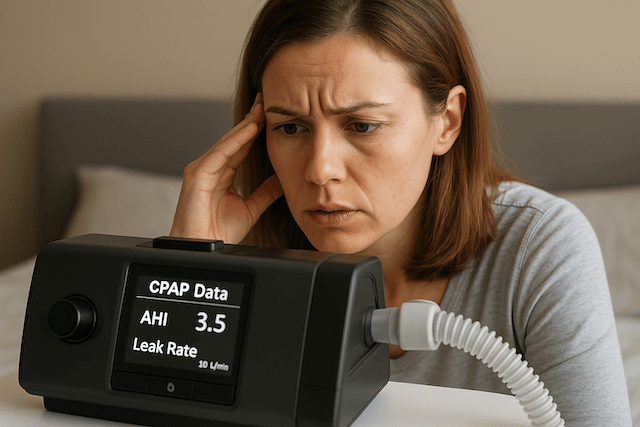
EPR sits in the comfort menu rather than the clinical menu, so on most AirSense 10 setups it can be turned on without requiring a prescription change. That said, the right move is still to ask your sleep clinic before changing it. Some prescriptions are written assuming EPR is off, and turning it on effectively lowers your average therapy pressure, which can affect your AHI (apnea hypopnea index) overnight. A clinic review takes a phone call, and most clinics will give you guidance over the phone for a comfort feature like EPR rather than asking you to come in.
APAP and BiPAP as alternatives
For people whose burping does not resolve with EPR or a small pressure adjustment, the next conversation is about the type of therapy machine. A standard fixed-pressure CPAP delivers a single pressure all night. An APAP, or auto-adjusting CPAP, monitors your breathing and adjusts pressure up and down as needed, which means you spend much of the night at a lower pressure than your peak prescribed level.
The Shirlaw study mentioned earlier (2017, Journal of Clinical Sleep Medicine) is worth revisiting on this point. The researchers ran a randomized crossover trial comparing fixed CPAP to auto-adjusting CPAP in subjects with aerophagia symptoms. The auto-adjusting arm reduced the average pressure delivered, reduced aerophagia symptoms, and did not compromise sleep apnea control. For someone who is already on a fixed pressure CPAP and getting burping, that is a meaningful trial result to bring to your sleep clinic. The AirSense 10 AutoSet, which is the version I use, runs in auto-adjusting mode by default.
BiPAP, or bilevel positive airway pressure, is the next step. It delivers a higher pressure on inhalation and a lower pressure on exhalation, with a wider gap between the two than EPR offers. BiPAP is sometimes used specifically for patients who cannot tolerate CPAP due to pressure side effects, including aerophagia. I have not personally used BiPAP, so what I can tell you is what the literature says: it is a recognized escalation pathway when CPAP and APAP have not worked, and it requires a separate prescription and machine.
Mask considerations
This is where I have to be careful, because I have only ever used one mask: a full face mask, given that I am a chronic mouth breather. So I cannot tell you, from experience, that switching mask styles fixes the problem.
What the research suggests is interesting. The Sleep Foundation, drawing on work by Genta and colleagues from 2017, notes that nasal masks may produce less aerophagia than full face masks. The reasoning has two parts. Full face masks tend to require slightly higher pressures to get the same effective therapy, because they cover more surface area and have more potential for leak. And the act of breathing through both nose and mouth offers two pathways for air to reach the esophagus rather than the lungs.
If you are a nose breather, or someone who could become a nose breather with treatment for nasal congestion, a nasal mask or nasal pillow style mask is worth a conversation with your supplier or sleep clinic. If you are a mouth breather like me, switching to a nasal mask is not a simple substitution. You would need to address the mouth breathing first, sometimes with a chin strap, sometimes with allergy or sinus treatment, sometimes through other means. I would not change masks on aerophagia grounds alone without a clinician involved.
Sleep position and head elevation
One of the simpler interventions is mechanical. If you sleep on your back with your head flat on the pillow, gravity is doing nothing to keep air in your stomach from being pushed up by the pressure of CPAP, and nothing to discourage swallowed air from traveling further down into the small intestine.
Two adjustments are worth trying, neither of them controversial. The first is sleeping on your side rather than your back. This positions the esophagus and stomach so that the path to the intestines is less of a downhill slide for swallowed air, and it has the additional benefit of reducing the airway collapse that drives obstructive sleep apnea in the first place. If you are not already a side sleeper with CPAP, it can take a few weeks of habit building, and a CPAP friendly pillow helps.
The second is elevating your upper body. A wedge pillow or an adjustable bed frame that lifts your head and shoulders by a small amount uses gravity in your favor: stomach contents and swallowed air are less likely to travel back up into the esophagus, and the pressure differential between mask and stomach is less aggressive. This is one of the standard non drug recommendations for nighttime reflux, which is part of why it tends to help aerophagia too.
Behavioral and lifestyle factors
There are a handful of habits that increase the air you swallow during the day, which carries over into how primed your gut is when you put on the mask at night. Carbonated drinks are the obvious one. Chewing gum, drinking through straws, eating quickly, and talking while eating all increase background air swallowing. None of these will be the entire cause of CPAP burping on their own, but they stack with the CPAP contribution and are worth looking at if you are already symptomatic.
Anxiety also plays a role in some users, particularly in the early weeks of CPAP therapy. People who are anxious about the mask or the pressure can develop a habit of gulping or shallow rapid breathing as they fall asleep, which directly increases air swallowing. This is one of the few cases where the answer is not mechanical: getting comfortable with CPAP, sometimes with a few sessions wearing the mask while awake during the day, can reduce the anxious gulping that contributes to morning bloating.
Humidification deserves a mention. A dry mouth and dry throat can prompt unconscious swallowing during sleep, which adds to the air load. The heated humidifier built into the AirSense 10 is exactly there for this reason. If yours is turned off or set to a very low level and you are getting symptoms, turning it up by a step or two is worth trying.
Supragastric belching: a different problem with similar symptoms
This one is worth knowing about because it can masquerade as aerophagia and waste a lot of CPAP troubleshooting time.
Supragastric belching is a separate condition where air is gulped or sucked into the esophagus and then immediately released back out without ever reaching the stomach. The pattern looks identical from the outside: someone burping repeatedly. But the air never actually goes down to the gut, so the bloating, flatulence, and lower abdominal discomfort that come with true aerophagia are absent. Supragastric belching is generally considered a behavioral disorder, often associated with stress or anxiety, and it does not respond to CPAP pressure changes because CPAP is not really the cause.
If you are burping a lot but not bloated, not particularly gassy, and not uncomfortable lower in the abdomen, it is worth raising this with your doctor. The treatment pathway is different: speech pathology and behavioral therapy rather than CPAP adjustment.
When to escalate to a doctor
For most people, the burping resolves with one or two of the adjustments above, generally within a couple of weeks of making the change. If yours does not, or if any of the following apply, please involve a doctor rather than continuing to troubleshoot on your own.
The Cleveland Clinic notes that aerophagia is generally a clinical diagnosis based on at least two months of symptoms, so if it has been going on for longer than that you are well within the territory where a medical evaluation is appropriate. Severe abdominal pain, vomiting, blood in stool, or a noticeably distended abdomen are all reasons to be seen sooner rather than later, because they can signal something other than aerophagia. Heartburn or reflux symptoms that started or worsened around the time you began CPAP are worth raising because the GERD interaction described earlier may be active.
Stopping CPAP because of burping is something I want to specifically discourage. The risk profile of untreated obstructive sleep apnea (cardiovascular disease, stroke, daytime impairment, increased mortality) is far worse than the discomfort of aerophagia, even severe aerophagia. The way out is through, with a clinician helping you adjust the therapy until it works.
What I have not covered
I have deliberately not given a list of recommended mask brands or specific product picks in this article. The right mask depends on your face shape, breathing pattern, and pressure prescription, and I have only personally tested one mask over many years. The companion piece on aerophagia and sleep apnea covers the broader topic if you want additional context.
I have also not given specific pressure numbers (no “try 9 cm H2O instead of 12”) because pressure is prescribed individually and the right number depends on your AHI, your weight, your airway anatomy, and how your body responds. The number you should be at is a question for your sleep clinic, not a number to pull from a blog.
Closing thoughts
Burping with CPAP is annoying, sometimes embarrassing, and occasionally enough to make people give up on therapy. It is also one of the more solvable side effects of treatment. In most cases the fix is some combination of pressure review, an EPR adjustment, attention to reflux if relevant, sleep position change, and time. The minority of cases that do not respond to those adjustments usually do well on APAP or BiPAP. A small number turn out to be supragastric belching or a primary GERD problem, and those need their own treatment pathway.
What you should not do is grit your teeth through it, and what you also should not do is stop CPAP. Both of those are losing strategies. Talk to your sleep clinic, work through the levers methodically, and give each change a couple of weeks before deciding whether it helped.
⚠️ MEDICAL DISCLAIMER This blog provides general information only and is not a substitute for professional medical advice, diagnosis, or treatment. Sleep apnea is a serious condition, and CPAP equipment should be used under proper medical supervision. Always consult your doctor or sleep specialist before starting, stopping, or changing any therapy. I share personal experiences as a CPAP user, not as a medical professional. Individual results vary. For medical guidance, please consult a qualified clinician or the American Academy of Sleep Medicine (aasm.org).