How Does a CPAP Machine Work: Meet my Life Changing Device!

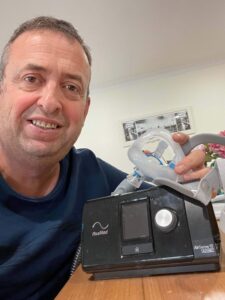
I have had a machine humming beside my bed every single night for more than a decade. When I was first diagnosed with severe obstructive sleep apnea—my AHI came back at 51, which put me well into the “severe” category—I was handed a device, shown how to fill the water chamber, and sent home. Nobody really explained the engineering behind it. What was this thing actually doing while I slept?
Understanding how a CPAP machine works changed my relationship with therapy. It went from “medical equipment I have to tolerate” to “the mechanism keeping my airway open all night.” That shift made me a better, more consistent user. It also made me better at troubleshooting when things went wrong.
I’m a computer science graduate, not a clinician, so what follows is a patient’s explanation of the mechanics, not a medical tutorial. If you have questions about whether CPAP is right for you or what settings to use, that conversation belongs with your sleep doctor.
With that said, let’s get into how this thing actually works.
What CPAP Stands For (and Why It Matters)
CPAP is short for Continuous Positive Airway Pressure. Each word in that name is doing real work.
Continuous means the machine delivers pressure throughout your entire breath cycle, both when you inhale and when you exhale. This is different from BiPAP, which uses two separate pressure levels—one for inhaling, one for exhaling. More on that distinction shortly.
Positive means the air pressure is above atmospheric pressure. The machine is not just moving air; it is actively pushing it, creating a pressurized column that holds your airway open.
Airway Pressure is the goal. The machine is not treating your lungs or your breathing muscles directly. It is treating the airway itself—specifically the soft tissue in your throat that collapses during sleep and blocks the passage of air.
Put it together, and you have a device that continuously delivers pressurized air to prevent your throat from collapsing while you sleep. That is the whole mechanism, in one sentence. Everything else is details about how it accomplishes that.
Why the Airway Collapses in the First Place
To understand what CPAP does, it helps to understand what happens without it.
In obstructive sleep apnea, the muscles that normally hold your throat open relax too much during sleep. The soft palate, the base of the tongue, and the walls of the pharynx can all collapse inward, partly or completely blocking the airway. When that happens, you stop breathing. Your blood oxygen drops. Your brain registers the threat, rouses you just enough to restore muscle tone and restart breathing, and then you fall back asleep. The whole cycle can happen dozens or even hundreds of times per night, and most people have no conscious memory of it.
At my worst, this was happening 51 times per hour. Every hour. All night. I woke up exhausted every morning and had no idea why.
The CPAP solution is elegant in its simplicity. Instead of trying to strengthen those muscles or hold the tissue in place mechanically, it uses air pressure. A column of pressurized air in your airway acts like a pneumatic splint. As the Sleep Foundation explains, the pressurized air gently stents open the relaxed tissue to hold space for normal breathing. The soft tissue cannot fall because it is being held open by the air.
The Core Components of a CPAP Machine
Every CPAP machine has the same fundamental architecture, even if the design differs between brands and models.
The Motor and Blower
The heart of the machine is a small electric motor driving a blower turbine. This is what generates the pressurized air. The motor runs continuously through the night, which is why you hear that consistent low hum. The pressure it generates is measured in centimeters of water pressure (cmH2O), and the typical therapeutic range is somewhere between 4 and 20 cmH2O, with most people landing in the middle portion of that range. Your sleep doctor prescribes your specific pressure based on your titration study or APAP data.
The Filter
Before that air reaches you, it passes through one or more filters. Most machines have a disposable fine filter that catches dust, pollen, and other particles. Some also have a reusable foam filter for larger debris. These need regular replacement or cleaning—a clogged filter means the motor is working harder and the air quality going into your lungs is lower. I swap my disposable filter monthly as part of my regular maintenance routine.
The Humidifier
Most modern CPAP machines have an integrated heated humidifier. This adds moisture to the pressurized air before it travels through the tubing to your mask. Without humidification, the constant airflow dries out the membranes in your nose, mouth, and throat. Dry mouth, nasal irritation, and nosebleeds are common complaints from people who skip the humidifier. I use distilled water in mine—tap water leaves mineral deposits over time and can introduce contaminants.
The humidifier level is adjustable. How high you run it depends on your climate, your sensitivity, and whether you are getting rainout—the condensation that forms inside the tubing when warm, humid air meets a cooler surface and turns back to liquid. Heated tubing solves most rainout problems by keeping the air warm along the full length of the hose.
The Tubing
A flexible hose connects the machine to your mask. Standard tubing is about six feet long, which gives most people enough range to shift position during the night. If you use heated tubing, there is an additional heating element embedded in the hose wall.
The Mask
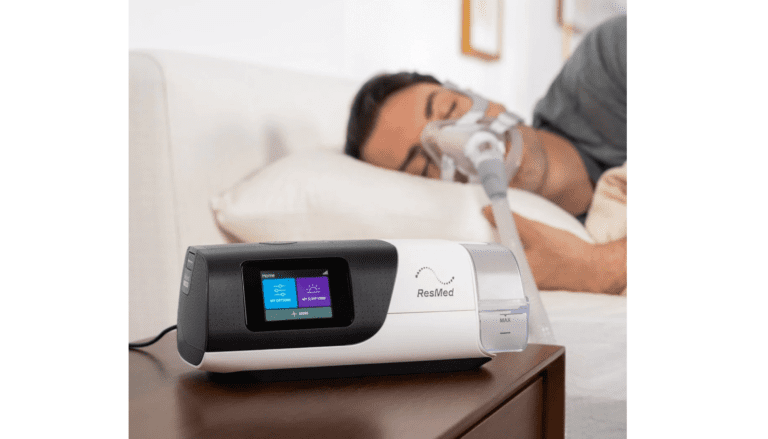
The mask is where the therapy actually meets your face. It delivers the pressurized air to your airway and creates a seal that maintains the pressure. The mask you choose has a significant effect on comfort and compliance. There are three main mask types: full face masks that cover both nose and mouth, nasal masks that cover just the nose, and nasal pillow masks that sit at the entrance to the nostrils. Because I am a chronic mouth breather, a full face mask is the only option that works for me. I use the ResMed AirFit F20 and have used it since I started therapy. For a broader look at your options, see my guide to best CPAP masks for mouth breathers.
How the Air Gets From the Machine to Your Airway
When you turn the machine on, the motor spins up and begins generating pressurized air. That air is pulled through the filter, passes through the humidification chamber where moisture is added, travels along the tubing, enters the mask, passes through the mask’s internal port, and flows into your nose and mouth.
That pressurized air fills your upper airway. Because the pressure is above atmospheric, it pushes outward against the walls of the pharynx. The soft tissue cannot collapse inward against that pressure. Your airway stays open. You breathe normally throughout the night.
What you experience subjectively is a steady, gentle flow of warm, humid air. Most people find it strange at first and natural after a few weeks.
Auto CPAP: How It Adjusts During the Night
Standard CPAP delivers a fixed pressure, the same level all night. Auto CPAP, often called APAP, works differently. It uses sensors to monitor your breathing patterns continuously and adjusts pressure in real time based on what it detects.
The machine is looking for signs of airway instability: snoring, flow limitation, hypopneas, and apneas. When it detects resistance or collapse beginning, it raises the pressure. When your breathing is stable and unobstructed, it can lower the pressure to a comfortable minimum. The result is that you receive the minimum pressure needed to maintain your airway at any given moment rather than a fixed pressure calibrated for your most demanding scenario.
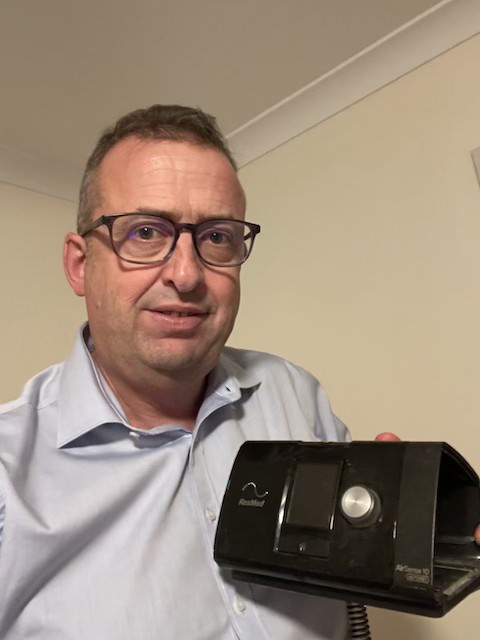
My ResMed AirSense 10 operates in auto mode. On nights when I am congested or sleeping on my back, the pressure will be higher. On better nights, it is lower. I can see that variation in my data the next morning through the myAir app, and in more detail through OSCAR software if I want a full picture of what happened overnight.
For a deeper explanation of how the algorithms work, see my dedicated piece on how auto CPAP works.
CPAP vs BiPAP vs ASV: The Key Differences
CPAP is the most common form of positive airway pressure therapy, but it is not the only one. Here is how the main types differ.
Standard CPAP
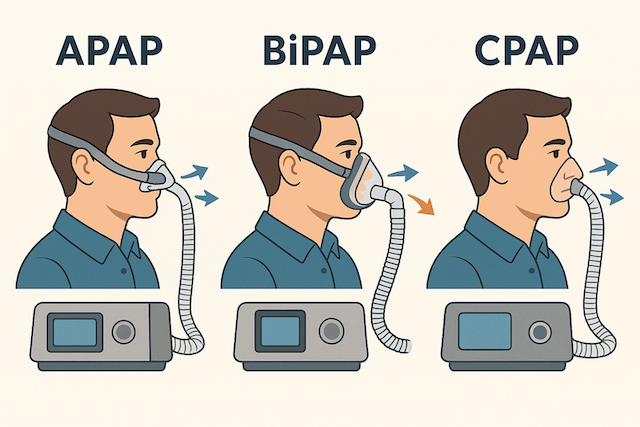
Delivers a single fixed pressure throughout the breath cycle. The pressure is the same whether you are inhaling or exhaling. Simple, reliable, and effective for most people with uncomplicated obstructive sleep apnea.
Auto CPAP (APAP)
Delivers variable pressure within a prescribed range, adjusted breath by breath based on detected airway resistance. Better suited to people whose pressure needs vary across the night or across different sleep positions. Most modern machines sold as CPAP machines are actually capable of running in auto mode.
BiPAP (Bilevel Positive Airway Pressure)
Uses two separate pressure levels: a higher pressure for inhalation (IPAP) and a lower pressure for exhalation (EPAP). This makes it easier to breathe out against the machine, which matters for people who find exhaling against continuous CPAP pressure uncomfortable. BiPAP is also used for central sleep apnea and some respiratory conditions that go beyond obstructive apnea. See my full comparison of CPAP vs BiPAP if you want to understand when each is appropriate.
ASV (Adaptive Servo-Ventilation)
ASV machines are the most complex type, designed specifically for central sleep apnea and Cheyne-Stokes respiration. They monitor your breathing pattern on a breath-by-breath basis and actively adjust pressure and timing to stabilize it. These are specialized machines prescribed in specific clinical situations, not a general upgrade from CPAP.
For most people with obstructive sleep apnea, standard CPAP or auto CPAP is the appropriate starting point. The differences between APAP, BiPAP, and CPAP are worth understanding if you want to have an informed conversation with your doctor about which is right for you.
The Features That Actually Matter
Modern CPAP machines come with a range of features. Some are genuinely useful; others are mostly marketing. Here are the ones worth paying attention to.
Ramp
The ramp function starts the machine at a low pressure and gradually increases to your prescribed setting over a set period, typically 15 to 45 minutes. The idea is that you fall asleep while the pressure is comfortable and only reach full therapeutic pressure after you are already out. I use this every night. Getting blasted with full pressure the moment I press start is not a recipe for falling asleep quickly.
Expiratory Pressure Relief (EPR / Flex)
Different brands call this different things—ResMed uses EPR, Philips used C-Flex—but the function is the same: the machine briefly reduces pressure during exhalation. Breathing out against continuous air pressure feels unnatural until you are used to it. Pressure relief softens that sensation. It does not reduce therapeutic effectiveness when set appropriately.
Data Recording and Connectivity
This feature matters more than most new users realize. Modern machines record detailed data about every night of therapy: hours used, events per hour, leak rate, pressure over time, and more. That data is used by your doctor to check your therapy is working, by your insurer to confirm compliance, and by you to understand what is happening while you sleep.
My machine syncs to the myAir app, which gives me a simplified daily score. For people who want to dig into the underlying data, OSCAR is a free open-source tool that lets you see everything the machine recorded.
Humidifier Level and Heated Tube Compatibility
Already covered above, but worth flagging as a feature to look for when choosing a machine. The combination of a heated humidifier and a heated tube gives you the most control over moisture and the best protection against rainout and dryness.
What the Machine Cannot Do
A CPAP machine is highly effective for obstructive sleep apnea. There are a few things it does not do, and it is worth being clear about them.
It does not cure sleep apnea. The airway still collapses when you take the mask off. Therapy only works while the machine is running. That is why consistency matters so much: skipping nights means your airway is collapsing uncontrolled again.
It does not work for central sleep apnea in the same way. Central sleep apnea is a problem with the brain’s breathing signals, not with airway obstruction. CPAP addresses obstruction. Central apnea typically requires more specialized therapy.
It requires a seal to function. If your mask leaks significantly, the therapeutic pressure cannot be maintained at your airway. Mask fit is not just a comfort issue; it is a functional requirement. If you are getting high leak rates in your data, the therapy may not be working as well as it should. My guide on why CPAP masks leak covers the most common causes and fixes.
How I Use My Machine
I have been on CPAP for more than a decade and I have settled into a routine that works. This is not a template—your setup will depend on your own equipment and preferences—but it might give you a concrete picture of what daily CPAP use actually looks like.
My machine is a ResMed AirSense 10, my second one. The first ran for several years before a motor bearing failure. The AirSense 10 sits on my nightstand with the heated tube connecting to my AirFit F20 full face mask. I fill the chamber with distilled water every night. In the morning, I wash the mask cushion. Once a week, I do a more thorough cleaning of the mask, headgear, and tubing. Before I travel, I pack my ResMed AirMini, which uses a waterless humidification system and is small enough to go in carry-on luggage. I have used it in Italy, Spain, and elsewhere.
Every morning I check the myAir app to see how the night went. If my event count is higher than normal, I think about what might have caused it—congestion, alcohol the night before, sleeping position, a mask that shifted. Most nights, everything looks fine.
That is what successful CPAP therapy looks like in practice: unremarkable. You wear the mask, you sleep, the machine does its job, and you wake up having actually rested.
Common Questions
Do I need to use it every night?
Yes. Your airway anatomy does not change while you sleep without the machine. The therapy only works when the machine is running. Missing nights is not “giving yourself a break”; it is allowing the untreated condition to run again. The cardiovascular and sleep quality benefits of CPAP depend on consistent use. See how to stay consistent with CPAP therapy if that is something you struggle with.
How long does a CPAP machine last?
Manufacturers typically rate machines for about five years of regular use. Real-world longevity varies depending on maintenance and how well the motor holds up. My first AirSense 10 ran for several years before failing. My current one is going strong. More on CPAP machine lifespan here.
Can I use tap water?
Technically the machine will run, but the minerals in tap water accumulate in the humidifier chamber and can promote bacterial or mineral buildup over time. Distilled water is inexpensive and the right choice. There are also situations—travel, for example—where you may want to run the machine without water entirely, which is fine for short periods.
What if I find the pressure uncomfortable?
This is worth discussing with your doctor rather than adjusting on your own. Some people find fixed pressure easier to tolerate in auto mode. The ramp and expiratory pressure relief features help most people. If you are genuinely struggling with pressure intolerance, there are also alternative machine types worth asking about. See my overview of CPAP pressure settings.
What if I can’t tolerate CPAP at all?
Some people genuinely struggle in the early weeks. CPAP anxiety is real and common. Most tolerance issues are solvable with the right mask, the right settings, and some patience. For people who truly cannot make it work after a genuine effort, there are alternative treatments worth exploring with a sleep specialist.
Do I need a prescription?
Yes. CPAP machines are regulated medical devices. You will need a sleep study to confirm the diagnosis and establish the appropriate pressure, and a prescription to purchase the machine through most suppliers. An at-home sleep test is often sufficient to get started.
Where to Go From Here
Understanding how CPAP works is the foundation. From there, the practical questions are about choosing equipment, building habits, and knowing what to do when something goes wrong.
If you are just getting started, the most useful next steps are:
- How to use a CPAP machine — the practical setup guide
- Your first night with CPAP — what to expect
- Best CPAP machines — what is available and how to choose
- Best CPAP masks — finding the right interface for your face and breathing style
- How to clean a CPAP machine — keeping the equipment safe and effective
If you are running into problems with existing therapy, troubleshooting CPAP problems is a good place to start.
The machine is not complicated once you understand what it is doing. It takes room air, pressurizes it, adds moisture, and delivers it to your airway to prevent your throat from collapsing while you sleep. Everything else—the settings, the features, the mask types, the data—is built around making that core function work as well as possible for as many different people as possible.
After more than a decade of sleeping with one, I still think it is a genuinely elegant solution to a genuinely serious problem.
⚠️ MEDICAL DISCLAIMER This blog provides general information only and is not a substitute for professional medical advice, diagnosis, or treatment. Sleep apnea is a serious condition, and CPAP equipment should be used under proper medical supervision. Always consult your doctor or sleep specialist before starting, stopping, or changing any therapy. I share personal experiences as a CPAP user, not as a medical professional. Individual results vary. For medical guidance, please consult a qualified clinician or the American Academy of Sleep Medicine (aasm.org).