How to Camp With a CPAP Machine: What I’ve Learned Over Five Years

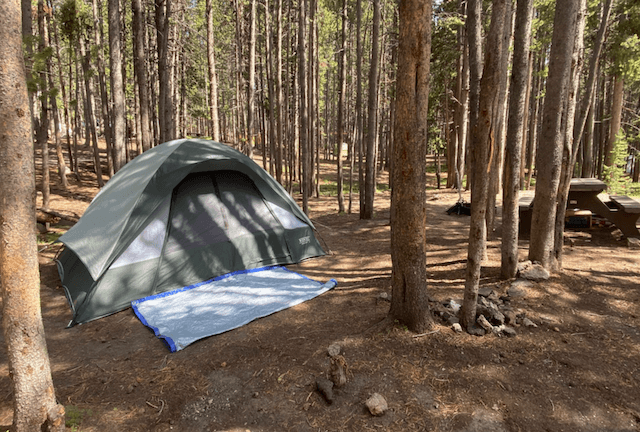
When I started camping again after my sleep apnea diagnosis, I nearly talked myself out of it before I even tried. The logistics seemed overwhelming: no power points, no controlled environment, sleeping on the ground in a tent. It felt incompatible with a machine that needed to run all night every night.
I’m glad I pushed past that. Some of my best nights of sleep in the past five years have been in a tent, under the stars, with my CPAP running perfectly off a battery. The Kimberley, the Snowy Mountains, and coastal campsites along the Great Ocean Road. Sleep apnea hasn’t stopped any of it.
But getting to that point required figuring out a few things the hard way. This is what I know now.
Why You Can’t Just Skip Therapy
I want to get this out of the way first because I know the temptation is real. It’s a weekend. You’re in a beautiful spot. The machine feels like a hassle. Surely one night won’t hurt.
On an early trip, I tried exactly that after my power solution failed. I woke up more times than I could count, gasping each time. The next morning I was so foggy I couldn’t safely drive us home. My wife had to. That experience ended any debate about whether skipping therapy was a reasonable option.
Sleep apnea doesn’t take nights off just because you’re camping. Your airway still collapses. Your oxygen still drops. And the cumulative effect of even one bad night follows you through the next day in ways that affect everyone around you, not just yourself. Getting the power solution right isn’t optional. It’s the whole problem to solve.
The Power Problem
For camping at a powered site, the whole thing becomes simple. An extension cord, a surge protector to handle any voltage fluctuations from the campground supply, and you’re sorted. I bring a fifty-foot cord because outlet placement at campsites is rarely convenient, and it gives me the freedom to position my tent for views or shade rather than proximity to a power box.
Unpowered camping is where it gets interesting, and where the right gear makes all the difference. The short answer is that you need a dedicated CPAP battery with enough capacity to last your trip, and ideally a way to recharge it during the day.
I’ve tested several setups over the years. The things that matter when choosing a battery for CPAP camping are capacity, charging flexibility, and whether it handles temperature extremes, which matter a lot when you’re camping in Australia. A battery that performs well in a 22-degree bedroom doesn’t necessarily perform the same at 40 degrees in the outback or near freezing in the highlands. My current setup handles both without issue, and I’ve detailed my specific recommendations on my CPAP battery review page if you want to go deeper on the options.
The rough maths for capacity: without humidification, a typical CPAP draws somewhere between 30 and 50 watts per hour, depending on pressure settings. With humidification running, that can double. A battery with around 900 to 960 watt-hours of capacity will give you somewhere between five and fifteen nights of therapy, depending on how you use it. For weekend trips without humidification, you barely touch the available capacity. For week-long trips with humidification running, you’ll want to supplement with solar.
The Solar Option
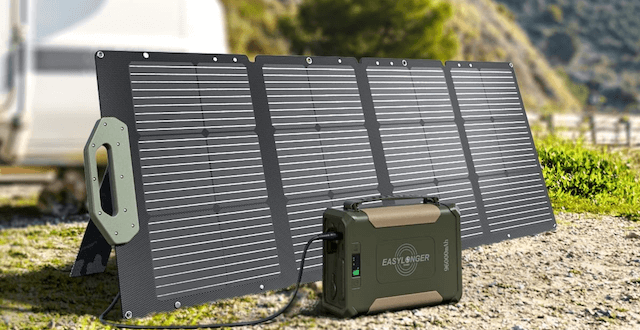
For anything longer than two or three nights off-grid, a solar panel changes the equation entirely. Instead of rationing battery capacity and doing anxious mental arithmetic each morning, you just set the panel up after breakfast, leave it in the sun while you explore, and by late afternoon, you’ve replaced most of what you used the night before.
The practical minimum for CPAP recharging is a 100 to 110-watt panel. Smaller panels charge too slowly to be useful. I use a foldable design that packs flat in the car and can be angled toward the sun throughout the day. On a clear outback day with five or six hours of direct sun, I have more than enough to cover a night’s use. Even on patchy days, I get a meaningful top-up.
The combination of a high-capacity battery and a solar panel is what makes extended remote camping genuinely stress-free rather than a constant power management exercise. Once I had both sorted, the camping experience stopped feeling like a logistical challenge and started feeling like actual camping.
Travel CPAP vs Home Machine
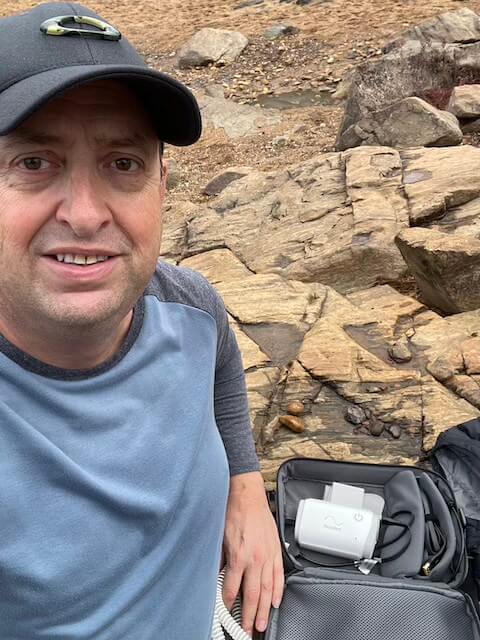
If you’re serious about camping with CPAP, it’s worth having a travel machine. I use the ResMed AirMini for any trip away from home, and it has been the single biggest upgrade to my camping setup.
The power efficiency advantage is significant. The AirMini draws considerably less power than a home machine, which directly translates to more nights per charge. The compact size means it takes up barely any space in my pack. And the HumidX waterless humidification system is genuinely useful for camping because it provides some moisture without requiring distilled water, which is one of the more annoying logistics of camping with a conventional humidifier.
My home machine stays at home. The AirMini handles everything else.
The Distilled Water Problem
If you do want humidification beyond what the HumidX provides, you need distilled water, and you need to plan for it. Regular water, even filtered water from a clean stream, leaves mineral deposits in the humidifier chamber and potentially creates issues you don’t want to breathe from.
For weekend trips, I just bring it from home in sealed bottles. For longer trips, I plan my route through towns and resupply at pharmacies or supermarkets. For extended remote trips where that isn’t practical, I skip liquid humidification entirely and use a saline nasal spray before bed instead. It’s a reasonable compromise and eliminates the logistics entirely.
Don’t use natural water sources in your humidifier. Even if it’s safe to drink, it’s not suitable for the chamber.
Sleeping in a Tent With a Full Face Mask
I use an AirFit F20 full face mask, and camping has required some adjustment compared to sleeping in a bed at home.
On a firm camping mat I’ve found I need slightly looser headgear than usual. The harder surface changes how the mask sits on my face, and too-tight straps on a firm surface lead to pressure marks by morning. On an air mattress it’s the opposite: the bounce and movement needs slightly firmer adjustment to maintain the seal when I turn over.
I always bring a CPAP pillow even when camping because the cutaway design prevents the mask from being displaced when I shift position in the night. On unfamiliar sleeping surfaces this matters more than it does at home. It’s one of those things that feels like a small detail until you’ve had your mask pushed sideways at 2am and spent ten minutes readjusting half-asleep.
Hose management in a tent is worth thinking about. I use a simple clip attached to the tent ceiling that suspends the hose above me. It stops the tube dragging across my face and reduces the chance of rolling onto it in the night.
Cold Weather and Condensation
I’ve camped in temperatures down to about minus two degrees Celsius, and cold weather creates a specific problem for CPAP users: condensation. When warm humidified air travels through cold tubing, the moisture condenses and you end up with cold water pooling in the mask. If you’ve ever experienced this you’ll know how unpleasant it is.
Heated tubing solves this properly by keeping the air warm through its journey to the mask. It draws more power, but if you have good battery capacity that’s a manageable trade-off. The alternative is insulating the tube: wrapping it in a fleece cover or running it inside your sleeping bag does reduce condensation meaningfully.
In cold weather I also keep the battery pack inside the tent rather than outside. Cold significantly reduces lithium battery performance, and in sub-zero temperatures you can lose a quarter or more of rated capacity. Keeping it warm preserves the capacity you need.
The other cold weather tip is to warm the mask itself before putting it on. Silicone and plastic straight from a cold tent are miserable against your face. I stick the mask inside my sleeping bag for a few minutes before settling in. Small thing, genuine improvement.
Hot Weather Camping
Heat presents different problems. In the outback I’ve camped in temperatures well above forty degrees, and the main concerns are battery performance and machine protection.
Batteries don’t like sustained heat any more than they like sustained cold. I keep mine in the shaded part of the tent or in the car with windows cracked when I’m not using it. I never leave it in a sealed hot vehicle in direct sun.
In dry heat I skip humidification entirely. Trying to humidify the air in extreme heat drains the battery much faster than necessary and doesn’t deliver the benefit it would in moderate conditions. Instead I use a saline spray before bed and accept slightly drier air. It works fine.
The machine itself should be stored away from direct sunlight. I keep it in a light-coloured protective case inside the tent, away from the sides that get direct sun in the afternoon.
Altitude
If you’re camping in the mountains, worth knowing that CPAP pressure delivery is affected by altitude. Modern machines including the AirMini automatically compensate for altitude changes up to around 2,600 metres, which covers the vast majority of Australian camping destinations. If you’re on an older machine without automatic altitude compensation, check your manual for the adjustment setting.
For most alpine camping in Australia this isn’t something you’ll need to think about. For high altitude international trips it’s worth checking with your sleep specialist beforehand.
Cleaning on the Road
Deep cleaning isn’t practical while camping. What is practical is a daily wipe of the mask cushion and frame with CPAP wipes, a check of the tubing, and keeping everything off the tent floor where moisture and grit accumulate.
I pack two or three wipes per day of camping. I keep all my CPAP equipment on a small waterproof mat inside the tent rather than directly on the ground. And I do a full wash of mask parts and tubing when I get home.
In dusty conditions like outback camping, I change filters more frequently than I would at home. Dust gets into everything, and your machine is no exception. Bringing three or four spare filters on a longer trip costs nothing and avoids a problem.
Gear That Makes It Work
For anyone wanting to kit up for CPAP camping, the pages where I’ve done the detailed research are:
My CPAP battery reviews cover the best options at different capacity levels and price points, including solar-compatible setups for longer trips. My travel CPAP review goes into detail on the AirMini and why it’s become my standard for any trip away from home. For mask comfort on unfamiliar surfaces, my CPAP pillow recommendations and mask liner reviews cover what actually helps. And for managing condensation and temperature, my hose cover page is worth a look before any cold-weather trip.
Start Simple
If you’ve never camped with CPAP before, don’t make your first trip a week in the remote bush. Start with a powered campsite where you can plug in, get used to sleeping in a tent with the machine, and figure out your mask adjustments on unfamiliar surfaces. Then try an unpowered site with vehicle access. Then extend from there.
Each step teaches you something about your setup that the previous step didn’t reveal. By the time you’re heading somewhere genuinely remote, you’ll know exactly what your system does, how long your battery actually lasts with your particular settings and humidification choices, and what your weak points are.
The planning does become routine. After a few trips it’s just part of how you prepare, like packing food or checking tyres. And the payoff, waking up properly rested in a beautiful place, having slept well rather than grinding through a bad night, is more than worth the extra preparation it takes to get there.
Sleep apnea didn’t end my camping. It just changed how I pack.
⚠️ MEDICAL DISCLAIMER This blog provides general information only and is not a substitute for professional medical advice, diagnosis, or treatment. Sleep apnea is a serious condition, and CPAP equipment should be used under proper medical supervision. Always consult your doctor or sleep specialist before starting, stopping, or changing any therapy. I share personal experiences as a CPAP user, not as a medical professional. Individual results vary. For medical guidance, please consult a qualified clinician or the American Academy of Sleep Medicine (aasm.org).