ASV vs BiPAP vs CPAP: A CPAP User’s Guide to the Differences

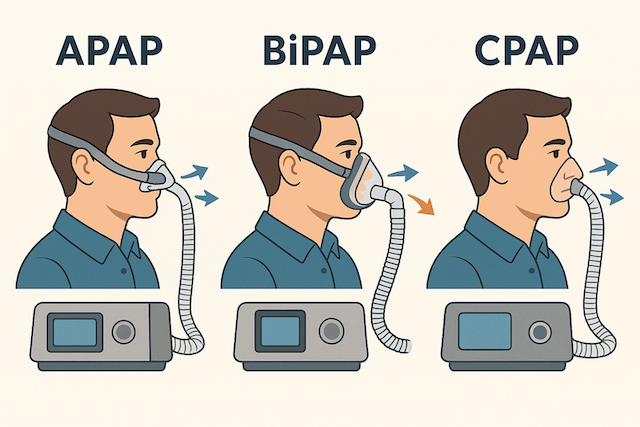
When I was first setting up my CPAP machine in 2014, my sleep specialist mentioned almost in passing that if the therapy didn’t work out, there were other options. BiPAP. ASV. More specialised machines. I nodded and didn’t ask what any of them meant, because I was too preoccupied with the mask sitting in front of me and the prospect of wearing it every night for the rest of my life.
Over a decade on, I understand the landscape much better. I’m still on CPAP — the AirSense 10 with a full face mask, every night without exception — and it works well for my obstructive sleep apnea. But I’ve spent years reading about the other therapies, talking to people in the CPAP community who’ve moved between them, and getting a much clearer picture of why they exist and who they’re actually for.
This is what I wish someone had explained to me clearly in the beginning: not a clinical textbook rundown, but a practical guide from someone who lives with positive airway pressure therapy and understands the question you’re probably asking, which is some version of “do I have the right machine?”
Why There Are Multiple Therapy Types
They all share the same basic principle — pushing pressurised air through a mask to keep your airway open during sleep — but they solve different problems. The machine you need depends on the nature of your breathing disorder, not just its severity.
Obstructive sleep apnea, which is what I have, is a mechanical problem. During sleep, the muscles and soft tissue in my throat relax and my airway collapses. CPAP prevents that by maintaining a constant air pressure that physically props the airway open. It’s simple, effective, and for most people with OSA it’s all they’ll ever need.
But not everyone’s breathing disorder is mechanical. Some people’s brains intermittently stop sending the signal to breathe at all. Some people have a mix of both. Some people’s OSA is severe enough that the pressure required to keep their airway open is so high that exhaling against it is genuinely uncomfortable. These are the situations where BiPAP and ASV come in — not as upgrades, exactly, but as tools designed for different problems.
Quick Comparison Table: CPAP vs BiPAP vs ASV
| Feature | CPAP | BiPAP | ASV |
|---|---|---|---|
| Pressure Type | Constant | Inhale/Exhale split | Real-time adaptive |
| Best For | Obstructive Sleep Apnea | OSA + pressure intolerance | Complex or Central Sleep Apnea |
| Comfort | Basic | Better | Best (fully responsive) |
| Cost | $ | $$ | $$$ |
CPAP: The Starting Point for Most People
CPAP delivers one constant pressure throughout the night — the same whether you’re inhaling or exhaling, lying on your back or your side, in light sleep or REM. That single pressure is set after a titration study to be the lowest level that reliably prevents your airway from collapsing.
For straightforward obstructive sleep apnea, this is the right tool. It’s the most widely prescribed, the most researched, and the most affordable. The mask options are extensive, the machines are well-developed, and the data tracking — particularly on modern ResMed devices through the myAir app — gives you and your specialist a detailed picture of how your therapy is performing night to night.
The main limitation is exactly what makes it simple: one pressure for everything. For people whose airway needs vary significantly across sleep positions or sleep stages, or who need a relatively high pressure to control their apnea, breathing out against a constant strong airstream can feel effortful and uncomfortable. That discomfort is one of the most common reasons people struggle with CPAP adherence, and it’s one of the main clinical reasons for considering BiPAP. My best CPAP machines guide covers the current options if you’re still at the equipment selection stage.
BiPAP: Two Pressures Instead of One
BiPAP — bilevel positive airway pressure — solves the exhalation problem by splitting the pressure into two separate settings. IPAP (inspiratory positive airway pressure) is the higher pressure delivered when you breathe in, sufficient to keep your airway open. EPAP (expiratory positive airway pressure) is the lower pressure when you breathe out, which makes exhaling feel far more natural.
The Sleep Foundation’s guide to BiPAP explains the three modes available — spontaneous, timed, and spontaneous-timed — and when each is appropriate. In practice, most BiPAP users run in spontaneous mode, where the machine senses your breathing and switches between pressures automatically.
BiPAP is typically prescribed in a few specific situations. The most common is when someone needs a high CPAP pressure to control their OSA — often somewhere above 15 cmH₂O — and finds exhaling against that level of continuous pressure so uncomfortable that they can’t maintain therapy. The two-level approach makes the same effective treatment significantly more tolerable.
Beyond that, BiPAP is often the right choice for people with conditions beyond simple OSA: obesity hypoventilation syndrome, COPD alongside sleep apnea, neuromuscular disorders that affect breathing, or situations where the airway needs support on both the inhalation and exhalation sides. These are conditions where a single constant pressure isn’t adequate for what the body needs overnight.
I haven’t used BiPAP myself, but I’ve spoken to enough people in the sleep apnea community who have moved from CPAP to BiPAP to know that for the right person it can be genuinely transformative — particularly if high pressure was causing aerophagia (air swallowing) or the kind of chest pressure that was making compliance impossible. If you’re at that point, it’s worth having a specific conversation with your specialist about whether BiPAP is appropriate rather than continuing to struggle with a CPAP setting that doesn’t suit you. My BiPAP machines guide covers the main options currently available.
ASV: The Most Complex Tool
Adaptive Servo-Ventilation is a different category again. Where CPAP and BiPAP work with preset pressure levels, ASV uses an algorithm to analyse your breathing pattern in real time and adjust the support it provides breath by breath. If you stop breathing, it intervenes. If your breathing becomes irregular, it responds. It’s a much more active form of therapy than either of the others.
ASV is primarily indicated for central sleep apnea — the type where the brain intermittently stops signalling the body to breathe — and for complex or mixed sleep apnea where central events are occurring alongside obstructive ones. It’s also sometimes used for treatment-emergent central sleep apnea, which is the phenomenon where starting CPAP therapy paradoxically triggers central events in people who were originally diagnosed with purely obstructive apnea.
The important nuance here — and it’s one the original version of this article didn’t address — is that ASV is not appropriate for everyone with central apnea. There is a specific contraindication for people with heart failure and a reduced ejection fraction below 45%, based on trial data that found increased cardiovascular mortality in that population. The AASM’s 2025 clinical practice guidelines on central sleep apnea treatment reflect this in their updated recommendations. It’s why ASV requires a specific specialist diagnosis and careful assessment rather than being a general upgrade from CPAP. If you’re in this category, that conversation with your sleep physician is essential rather than optional.
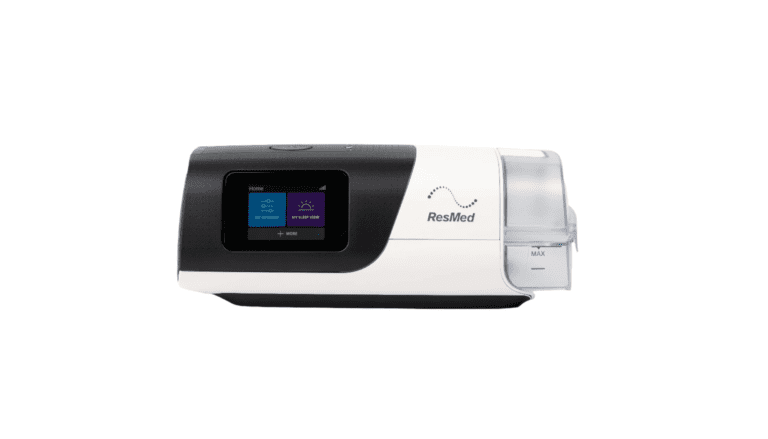
For people who do meet the criteria for ASV, the ResMed AirCurve 11 ASV is the current leading device. It’s substantially more expensive than either CPAP or BiPAP, and the ongoing data monitoring it requires is more intensive — but for the right patient, it can resolve apnea events that neither of the simpler therapies can address.
How to Know Which One Applies to You
The honest answer is that you can’t determine this yourself from a comparison article, and you shouldn’t try. The distinction between obstructive and central events isn’t something you can read from your symptoms — it requires sleep study data. Someone who feels like CPAP “isn’t working” might have undertreated obstructive apnea, might have developed treatment-emergent central apnea, or might simply have a mask that’s leaking. These look similar from the outside but have completely different solutions.
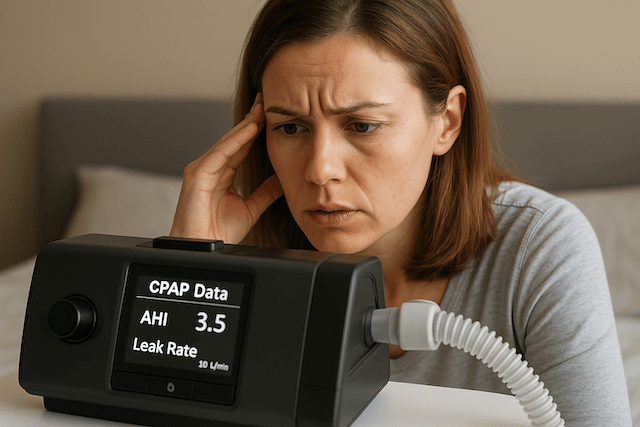
What I would say is this: if you’re on CPAP and your events per hour are consistently above 5 despite a well-fitting mask and appropriate pressure, that’s worth a proper investigation rather than an assumption that you need a different machine. Check the events per hour guide first and make sure the basics are ruled out. If your data is showing significant central events, or if your specialist has mentioned complex or mixed apnea, then the BiPAP and ASV conversation becomes relevant.
And if CPAP feels physically intolerable — not just uncomfortable in the early weeks, which is normal, but genuinely unworkable after a proper adjustment period — BiPAP is the natural next conversation to have. The therapy existing is only useful if you can actually use it every night, and there’s no virtue in struggling with a tool that isn’t right for you when better-suited alternatives exist.
My experience with CPAP over ten-plus years is that it works, but getting there required an early pressure adjustment, ongoing attention to mask fit, and accepting that some nights are going to be harder than others. That’s all true of any PAP therapy. The machine type matters, but the consistency with which you use it matters just as much.
⚠️ MEDICAL DISCLAIMER This blog provides general information only and is not a substitute for professional medical advice, diagnosis, or treatment. Sleep apnea is a serious condition, and CPAP equipment should be used under proper medical supervision. Always consult your doctor or sleep specialist before starting, stopping, or changing any therapy. I share personal experiences as a CPAP user, not as a medical professional. Individual results vary. For medical guidance, please consult a qualified clinician or the American Academy of Sleep Medicine (aasm.org).