What is ASV? Adaptive Servo-Ventilation Explained

If you have landed on this page, there is a good chance a sleep doctor recently used the term ASV and you walked away with more questions than answers. Adaptive Servo-Ventilation is not a therapy most people have heard of. It sits a step beyond the CPAP machines that get talked about everywhere, and it is prescribed for sleep apnea that behaves differently from the common obstructive kind.
I want to be upfront about where I am writing from. I was diagnosed with severe obstructive sleep apnea more than a decade ago, and I have used a CPAP machine every night since. CPAP changed my life, and I write about that experience honestly. ASV is a different machine for a different problem, and I have never used one. So please treat this page as a researched explainer rather than a personal review. Where my own CPAP experience is useful for comparison I will say so, and where it is not I will point you to the research and to your sleep team, who are the people who should be making this decision with you. My background is in computer science, not medicine.
With that said, let us take the lid off Adaptive Servo-Ventilation and look at what it actually is.
What Adaptive Servo-Ventilation Actually Is
ASV is a form of positive airway pressure therapy, the same broad family that CPAP and BiPAP belong to. All of these machines deliver pressurized air through a mask to keep your breathing steady during sleep. What sets ASV apart is how it decides what pressure to deliver.
A CPAP machine holds one steady pressure all night. It is designed for obstructive sleep apnea, where the airway physically collapses and a constant cushion of air props it back open. That is the problem I have, and a fixed pressure handles it well.
ASV is built for a different problem. It is prescribed mainly for central sleep apnea and related breathing patterns, where the pauses do not come from a blocked airway at all. They come from the brain briefly failing to send the signal to breathe. A fixed pressure cannot fix that, because there is nothing to prop open. The breathing simply stops and starts.
To address that, ASV constantly watches how you are breathing and adjusts its support as you go. It reads your breathing rate, the depth of each breath, and how regular the pattern is, then changes its pressure to match. When your breathing slows or pauses, the machine gently steps in and delivers a supported breath. When your own breathing is steady, it backs off and lets your body do the work on its own. The idea is targeted support that appears only when you need it and stays quiet when you do not.
How ASV Differs From CPAP and BiPAP
It helps to picture the three therapies as points on a scale of how much the machine adapts to you.
CPAP is the simplest. One pressure, set by your clinician, delivered steadily from the moment you put the mask on until you take it off. It does not monitor your breathing and it does not change. For straightforward obstructive sleep apnea that is exactly what is needed, and it is what I have relied on for years.
BiPAP, sometimes written as bilevel, adds a second pressure. It delivers a higher pressure when you breathe in and a lower one when you breathe out, which can make therapy more comfortable for people who find a single high pressure hard to exhale against, and it is used for some breathing conditions beyond obstructive apnea. But those two pressure levels are still set in advance. The machine is not reading your breathing minute by minute and rewriting its plan.
ASV goes further than both. It does monitor your breathing continuously, and it does rewrite its plan in response, breath by breath. That responsiveness is the whole point of the machine, and it is also why ASV is reserved for the more complex breathing patterns rather than handed out for ordinary obstructive apnea. If you want a closer side by side look, I have written a fuller comparison of ASV against BiPAP and CPAP.
How ASV Works in Plain Terms
The short version is that ASV learns your breathing pattern and then defends it.
When you first start, the machine takes a reading of what normal, settled breathing looks like for you. From then on it compares each breath against that picture. If it detects that a breath is missing or far too shallow, which is what a central apnea or a central hypopnea looks like, it delivers a measured amount of pressure support to carry you through that breath. As soon as your own steady rhythm returns, it eases back off.
That constant small adjusting is what people mean when they describe ASV as dynamic. A CPAP machine is a steady wall of air. An ASV machine is closer to a quiet partner that pays attention and only assists on the breaths that need assisting. If you want the engineering level detail, there is a separate article on how ASV works that goes deeper than I will here.
Who ASV Is Prescribed For
ASV is a specialized therapy, not a general one, and it is prescribed for a fairly narrow set of conditions.
The main one is central sleep apnea, where the brain intermittently stops signaling the body to breathe. It is also used for complex sleep apnea, sometimes called treatment emergent central apnea, which is the situation where someone starts CPAP for obstructive apnea and central events appear or persist that the steady pressure does not resolve. And it has historically been associated with Cheyne-Stokes respiration, a cyclical pattern of breathing that gradually rises and falls and is often linked to heart failure.
That last group deserves real care, because the picture there has changed, and it leads directly into the most important section on this page.
An Important Safety Note: ASV and Heart Failure
ASV is genuinely effective at controlling central apnea. That part has never been in dispute, and large trials have confirmed it suppresses central events well. But effectiveness at controlling apnea is not the same thing as improving health outcomes, and that distinction matters enormously here.
In 2015 a large study called SERVE-HF, which randomized more than 1,300 patients, tested ASV in a specific group: people with symptomatic chronic heart failure whose hearts pump with reduced strength, measured as a left ventricular ejection fraction of 45 percent or below, and who had predominantly central sleep apnea. The expectation going in was that treating their central apnea would help. The result was the opposite. For that at risk population there was a meaningfully higher risk of cardiovascular death among patients on ASV compared with control patients who were not on ASV therapy.
Following those results, ResMed issued a field safety notice and the American Academy of Sleep Medicine alerted clinicians. The contraindication was later narrowed to patients with symptomatic, chronic heart failure with reduced left ventricular ejection fraction of 45 percent or below and moderate to severe predominant central sleep apnea. Device manuals were updated to reflect it. You can read the full AASM safety notice on ASV and heart failure for the precise clinical wording.
There are two things I want you to take from this. The first is why a sleep doctor will look at your heart before prescribing ASV. This is not paperwork. Before starting a patient on ASV, the guidance is to assess for heart failure, and if its symptoms are present, to objectively measure ejection fraction to see whether the patient falls into the higher risk group. ASV is never a therapy to select for yourself, and any source that suggests ASV is broadly good for heart failure is out of date.
The second thing is that this contraindication is specific, and it is worth being precise rather than alarmed. The SERVE-HF results apply to central sleep apnea associated with heart failure, and they do not tell us about other forms of central sleep apnea, such as central apnea related to opioids, other medical problems, treatment emergent central apnea, or primary central sleep apnea. ASV remains an appropriate and effective therapy for many people. The point is simply that whether it is right for you depends on details about your heart that only proper testing can reveal, which is exactly why it is prescription only.
What an ASV Titration Study Involves
Before you are prescribed ASV, you will usually go through a titration study. This is an overnight sleep study where your breathing is monitored while a technician gradually adjusts the ASV settings to find the level of support that controls your events without being more than you need.
It serves two purposes. It confirms that ASV actually resolves your particular breathing pattern, and it establishes the settings your machine will use at home. Because ASV is adjusting itself constantly anyway, the titration is less about pinning down one fixed number and more about confirming the therapy is a good match and setting sensible boundaries for it to work within. If the idea of a titration study is new to you, I have written a separate explainer on what CPAP titration involves that covers the general process, most of which applies here too.
Which Machines Offer ASV Therapy
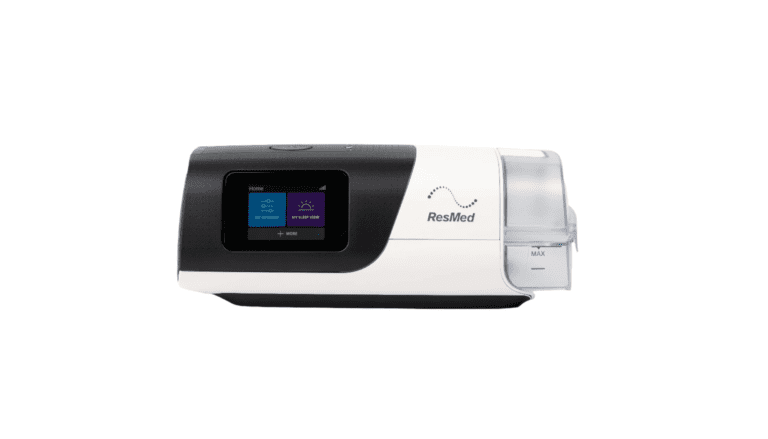
The ASV market is small, and ResMed is the dominant maker. Their current model is the AirCurve 11 ASV, which uses ResMed’s algorithm for central and complex apnea, includes a humidifier, works with heated tubing, and records detailed therapy data that you and your clinician can review.
I have not used the AirCurve 11 ASV, so I am not going to pretend to review it from experience. What I can tell you is that it is the machine most people in the United States will be prescribed if ASV is recommended for them. If you want a closer look at the device itself, I have a dedicated AirCurve 11 ASV write up, and there is also a broader overview of ASV machines if you want to see how the options compare.
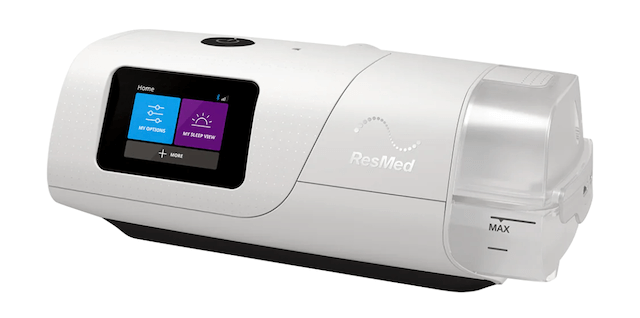
A practical note: ASV machines are dispensed against a prescription, so the path to one runs through your sleep clinic and a titration study, not through a checkout page. The link above is there so you can see the current model if it has already been recommended to you, not as a suggestion to choose the therapy yourself.
What It Is Like to Sleep With ASV
This is the part of the page where I have to be honest about the limits of what I can tell you. I use CPAP, not ASV, so I cannot describe the feel of ASV from my own nights. What follows is drawn from how the therapy is described by clinicians and manufacturers, and from the general experience documented in the research, rather than from personal use.
The most consistent theme is that ASV feels more variable than CPAP. With my CPAP, the airflow is a steady, predictable presence, and after the first few weeks I stopped noticing it. ASV is described differently, because the machine is actively adjusting. People commonly report that in the first nights the pressure changes feel noticeable, since the machine is responding to each breath rather than holding one level. That sensation is usually described as fading once the body adjusts to it.
The general advice for those first nights mirrors the advice for any PAP therapy. A ramp setting, which lets the pressure build gradually as you fall asleep, tends to make the start of the night easier. Mask fit also matters, perhaps more than with CPAP, because a mask that seals well under a steady pressure can be challenged by pressure that keeps shifting, so a stable, well fitting mask is worth getting right. And as with CPAP, the realistic expectation is that the first week or two is an adjustment period rather than an instant transformation.
Where ASV is appropriate and the underlying central apnea is well controlled, the documented outcomes are encouraging. ASV is effective at reducing central events, supporting steadier oxygen levels through the night, and cutting down the awakenings that fragment sleep. If you want to see what that looks like in practice once you are on therapy, the article on ASV therapy data tracking explains how to read what your machine records.
Common Side Effects and How They Are Managed
ASV is generally tolerated well, but like any PAP therapy it has a few side effects worth knowing about, none of which are unique to ASV.
Some people find the pressure changes uncomfortable at first, which is usually eased by the ramp feature and by giving therapy time to become familiar. Aerophagia, the swallowing of air that can leave you bloated, sometimes appears and is typically addressed by fine tuning the expiratory pressure settings, which is a conversation for your clinician rather than something to adjust yourself. Dry mouth and nasal irritation are common across all PAP therapy and are usually managed with humidification and a good mask fit. As a chronic mouth breather myself, I will add that dry mouth is one of the more solvable problems in this whole field once humidification is set up properly.
If a side effect is persistent or genuinely bothering you, that is information your sleep team wants, not something to push through quietly. The settings exist to be tuned.
How ASV Is Covered by Insurance and Medicare
ASV is generally covered by Medicare and by most private insurers, but the bar is set higher than it is for CPAP, which reflects how specialized the therapy is.
Coverage usually depends on three things being documented. You need a confirmed diagnosis of central or complex sleep apnea. There usually needs to be evidence that simpler therapy such as CPAP or BiPAP did not adequately resolve your events. And a titration study generally needs to show that ASV does control them. Where medical necessity is established along those lines, most carriers will cover the device, though the exact requirements vary between insurers and change over time, so your clinic and your provider are the reliable source for what your specific plan needs.
Final Thoughts: Is ASV Right for You?
If your sleep study has shown central or complex apnea, and especially if CPAP left you still waking up unrested, ASV may well be the therapy that finally fits the problem. It is a genuinely capable machine, and for the right person it can be the difference between dragging through the day and feeling like yourself again.
But ASV is not a machine to talk yourself into. It is prescription only for good reasons, the heart failure safety findings being the clearest of them, and the right answer for you depends on testing and on a clinician who knows your full picture. My honest advice, as someone who has lived with PAP therapy for a long time but never used ASV specifically, is to treat this page as background that helps you ask better questions, and to let your sleep team make the call with you.
If you want to keep reading around the topic, the articles on how ASV works, ASV therapy data tracking, and the future of ASV technology go further in their own directions.
⚠️ MEDICAL DISCLAIMER This blog provides general information only and is not a substitute for professional medical advice, diagnosis, or treatment. Sleep apnea is a serious condition, and CPAP equipment should be used under proper medical supervision. Always consult your doctor or sleep specialist before starting, stopping, or changing any therapy. I share personal experiences as a CPAP user, not as a medical professional. Individual results vary. For medical guidance, please consult a qualified clinician or the American Academy of Sleep Medicine (aasm.org).