The Best BiPAP Machines: My Top Three Picks

“This post contains affiliate links. I may earn a commission if you buy through these links, at no extra cost to you. Read my Disclaimer for more details.”
Finding the right BiPAP machine matters more than most people realise when they’re first prescribed one. These aren’t impulse purchases — they’re going to be on your nightstand every night for the better part of a decade, and the difference between a machine that suits you and one that doesn’t is the difference between therapy you stick with and therapy you quietly abandon at two in the morning.
I use CPAP myself — a ResMed AirSense 10 — so I haven’t personally slept with any of the machines on this page. I want to be straight about that. But I’ve been deep in the sleep apnea world for over a decade, I know the ResMed ecosystem inside out from the user side, and I’ve done extensive research on BiPAP options through the clinical literature and the CPAP community. What I’ve put together here is the most honest assessment I can give of what’s genuinely worth your money in 2026.
The short version: there are three machines worth considering. Two are ResMed AirCurve devices — the newer 11 series and the older but still excellent 10 — and the third is the Luna G3 from 3B Medical, which earns its place as a solid budget alternative. Philips Respironics, who made the DreamStation BiPAP, are still working through their recall situation and aren’t selling in the US market. That simplifies the landscape considerably.
If you need a refresher on what BiPAP actually is and who it’s for before diving into the machines, my CPAP vs BiPAP vs ASV guide covers all of that in plain language.
🥇 1. ResMed AirCurve 11 VAuto — Best Overall
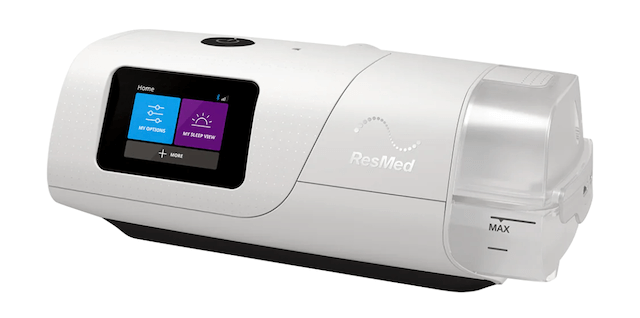
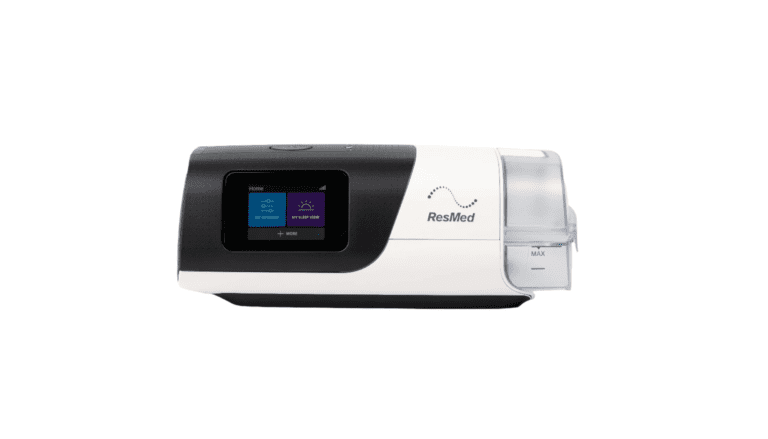
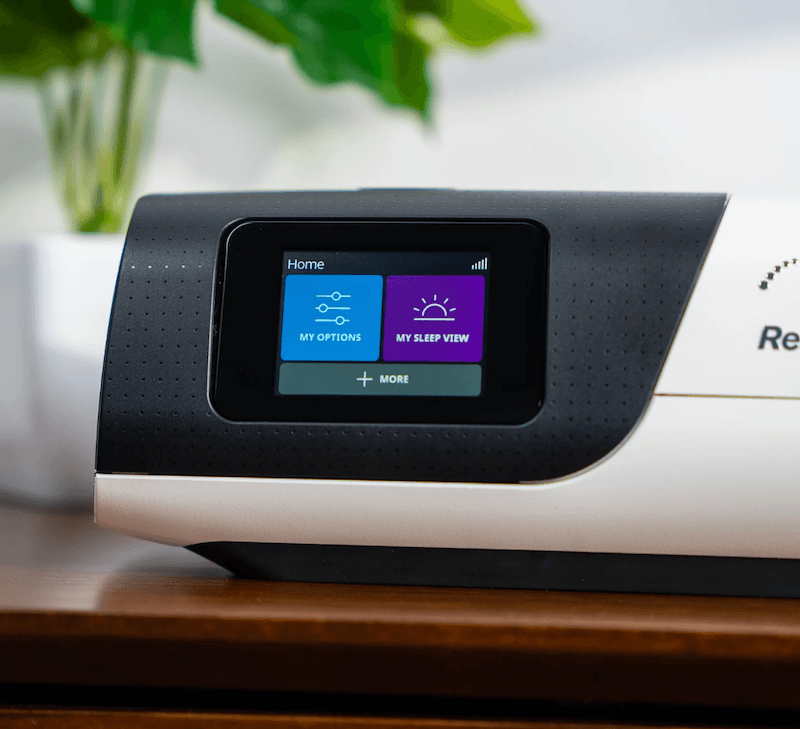
The AirCurve 11 VAuto is the machine I’d point most people toward in 2026 if they’ve been prescribed bilevel therapy and budget isn’t the overriding factor. It’s ResMed’s current-generation BiPAP, launched in late 2024, and it brings everything that made the AirCurve 10 VAuto excellent — the auto-adjusting bilevel algorithm, the integrated humidifier, the myAir data ecosystem — and upgrades it with a touchscreen interface, full myAir app support, including Care Check-In and the Personal Therapy Assistant, and over-the-air software updates.
The core function of any VAuto machine is auto-adjusting bilevel pressure: the IPAP (pressure when you inhale) is higher, enough to keep your airway open, while the EPAP (pressure when you exhale) drops to as low as 4 cmH₂O, making breathing out feel natural rather than like you’re pushing against resistance. For people who moved to BiPAP because CPAP pressure was intolerable on exhalation, that EPAP floor is what makes therapy sustainable.
What the AirCurve 11 adds over its predecessor is primarily on the user-facing side. The touchscreen is genuinely easier to navigate than dial-and-button interfaces, which matters at midnight when you’re half asleep and trying to adjust something. The full myAir integration — the same app I use with my AirSense — gives you a daily sleep score, nightly event data, and personalised coaching tips that respond to what your machine actually recorded. For anyone who wants to be engaged with their own therapy data the way I am, that’s not a minor convenience; it’s a meaningful part of the therapy experience.
The built-in HumidAir heated humidifier is standard, and the optional ClimateLineAir 11 heated tubing takes it to Climate Control Auto mode, which handles temperature and humidity adjustments automatically through the night. I use this combination on my AirSense and the difference in comfort — particularly in winter — is significant.
Best for: People newly prescribed bilevel therapy who want the best available data tools and the most comfortable long-term experience. Also, the right choice for anyone upgrading from an older BiPAP who wants myAir integration.
The honest downside: It’s expensive, and the AirCurve 11 series uses its own ClimateLineAir 11 tubing that isn’t backwards compatible with older ResMed accessories. If you’re upgrading and have existing heated tubing, factor that into the cost.
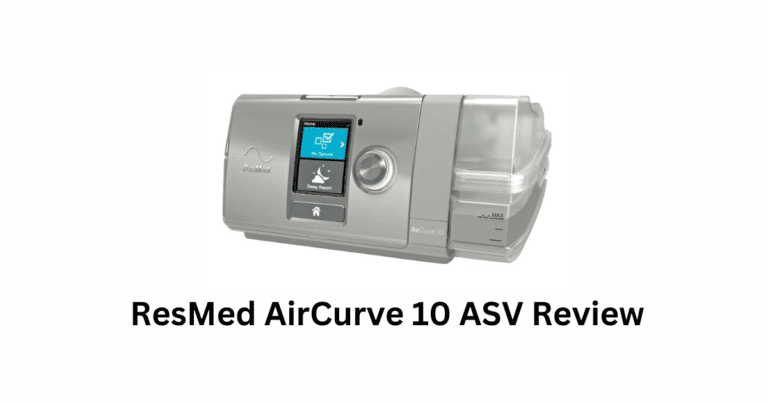
🥈 2. ResMed AirCurve 10 VAuto — Best Proven Option
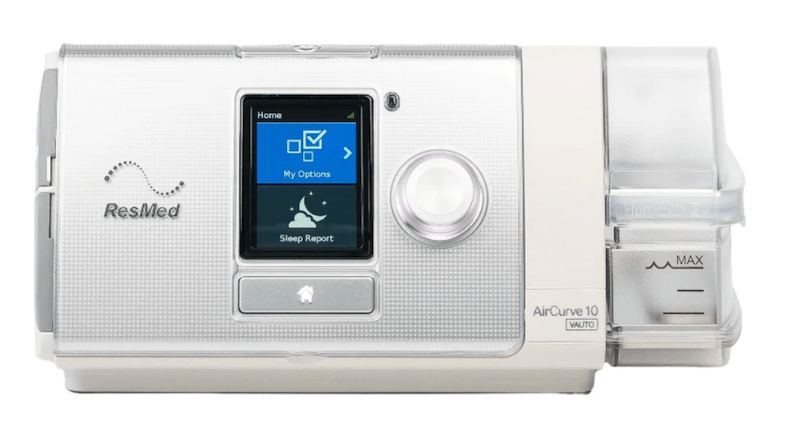
The AirCurve 10 VAuto has been the clinical standard for auto-adjusting bilevel therapy for years, and it’s still very much worth considering — particularly if you’re watching your budget, your sleep specialist knows it well, or you simply don’t need the latest interface features to get excellent therapy.
The fundamental therapy engine is the same VAuto algorithm: auto-adjusting bilevel pressure that responds to your breathing needs across the night, EPAP down to 4 cmH₂O, integrated HumidAir humidifier with ClimateLineAir heated tubing compatibility. It also connects to myAir, though with more limited patient-side features than the 11 series — your specialist can still access your full data through AirView for remote monitoring, but the coaching and daily scoring tools on the patient app are less developed.
The interface is the main functional difference you’ll notice compared to the 11. There’s no touchscreen — you navigate with a dial and buttons — which takes a few nights to feel intuitive but works perfectly well once you know the menus. One real-world advantage: the AirCurve 10’s accessories are widely available and inexpensive, and its water tub is dishwasher safe and shared across the AirSense 10 and AirCurve 10 family.
Worth noting: the AirCurve 10 VAuto is for obstructive sleep apnea where high pressure or CPAP intolerance is the issue — not for central or complex apnea, which requires ASV therapy. If your prescription specifically indicates central events, see my ASV machines guide instead.
Best for: People whose sleep specialist recommends it specifically, budget-conscious buyers who don’t want to pay the premium for the 11 series, and anyone who prefers a machine with a long track record and a mature accessory ecosystem.
The honest downside: The interface feels dated next to the AirCurve 11, and the patient-side myAir experience is less rich. If you want to actively track your own data night-to-night, the 11 is the better investment.
🥉 3. Luna G3 BiPAP 25A — Best Value

The Luna G3 from 3B Medical sits at a meaningfully lower price point than either ResMed option, and for the right person it’s a genuinely good machine — not a compromise you’ll regret.
It’s a fixed-pressure bilevel rather than auto-adjusting, meaning you have separate IPAP and EPAP settings prescribed by your specialist, and the machine delivers those pressures consistently rather than adjusting dynamically through the night. For people whose apnea is well-characterised and whose pressure needs are stable, fixed bilevel is entirely appropriate and clinically equivalent to VAuto in terms of therapeutic outcome.
Where the Luna G3 punches above its price is in comfort features: the integrated heated humidifier includes a preheat function that warms the water chamber before you start therapy, heated tubing comes included rather than sold separately, and the ramp time is adjustable up to 60 minutes — more flexibility than most machines offer if you take a while to fall asleep at pressure. Noise is rated at 26 dBA, which is genuinely quiet, and the SD card plus cellular data upload makes sharing compliance data with your sleep specialist straightforward.
The tradeoffs compared to ResMed are real: no auto-adjusting pressure, a smaller app ecosystem, and less brand recognition among sleep specialists who may not be as familiar with its data outputs. If your clinic uses AirView to monitor patients remotely, that workflow doesn’t apply to the Luna G3.
Best for: Budget-conscious patients with a stable, well-characterised BiPAP prescription whose specialist is comfortable with fixed bilevel therapy and who don’t need the full ResMed data ecosystem.
The honest downside: No auto-adjusting pressure means it won’t respond to nights when your needs vary — which for some people matters and for others never does. Worth discussing with your specialist before choosing.
Which One Should You Choose?
The honest version: let your prescription and your specialist guide this decision more than any review article can.
If you’ve been prescribed bilevel therapy because CPAP pressure was intolerable, and your specialist hasn’t expressed a preference for a specific machine, the AirCurve 11 VAuto is the one I’d start with. The combination of auto-adjusting pressure, full myAir integration, and the touchscreen interface makes it the best long-term therapy partner — particularly for someone who wants to stay engaged with their data the way I stay engaged with mine on the CPAP side.
If the AirCurve 11 is outside your budget, the AirCurve 10 VAuto delivers the same core therapy at a lower price, with the main sacrifice being interface quality and app features rather than therapeutic effectiveness.
If cost is the primary constraint and your specialist agrees that fixed bilevel is appropriate for your situation, the Luna G3 is a legitimate choice with real strengths in comfort features and value.
What I’d steer away from is treating the price difference between the ResMed options as the dominant factor. These machines will be with you for five to seven years. The cost delta spread across that period is small compared to the difference in daily usability, data access, and the likelihood that you’ll actually stick with therapy long enough to benefit from it.
⚠️ MEDICAL DISCLAIMER This blog provides general information only and is not a substitute for professional medical advice, diagnosis, or treatment. Sleep apnea is a serious condition, and CPAP equipment should be used under proper medical supervision. Always consult your doctor or sleep specialist before starting, stopping, or changing any therapy. I share personal experiences as a CPAP user, not as a medical professional. Individual results vary. For medical guidance, please consult a qualified clinician or the American Academy of Sleep Medicine (aasm.org).