CPAP Dry Eyes: What’s Really Causing Them, and How I’d Fix Them


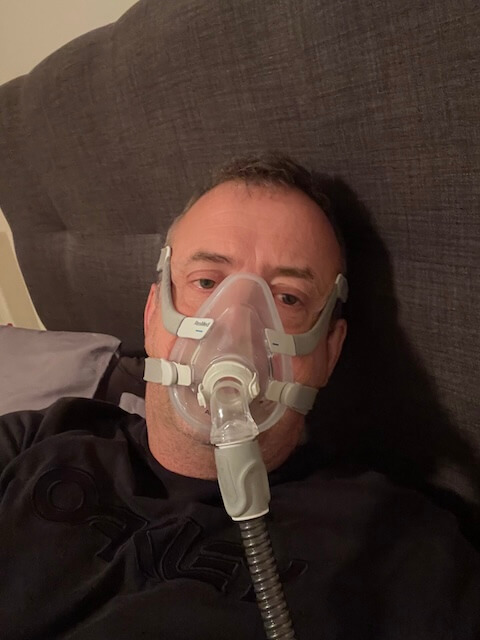
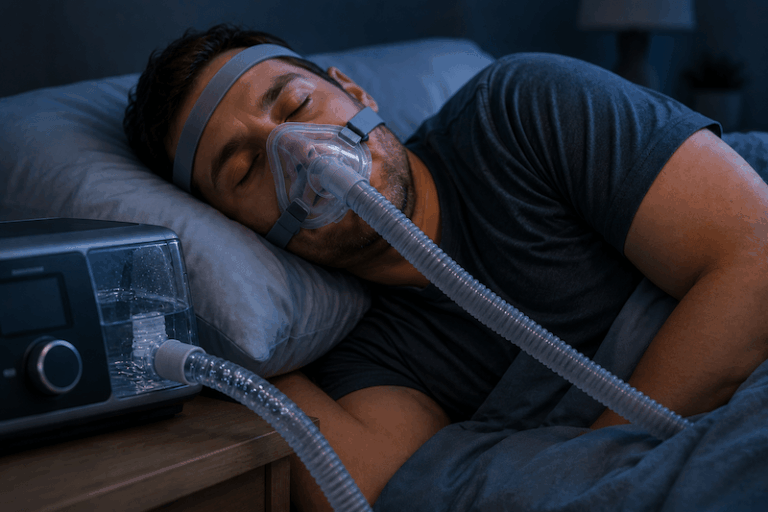
First, a disclosure. I have used CPAP therapy for more than a decade after being diagnosed with severe obstructive sleep apnea, and I have never personally experienced CPAP related dry eye. I wear a full face mask because I am a chronic mouth breather, which is interesting in this context. A full face mask is the configuration most often associated with eye irritation in the research literature, yet my own tear film has stayed quiet. That is one anecdote, not a study, and it is the only firsthand voice I can offer on this particular symptom.
What follows is a research based guide. I write it as someone who has lived inside CPAP therapy long enough to know what mask leaks feel like in the rest of the face, who has talked with sleep doctors over many years, and who has spent a lot of time reading the clinical literature on CPAP side effects. The science on dry eyes from CPAP is reasonably well documented. The fixes are mostly mechanical. Stop the airflow from reaching your eyes, and add back the moisture that escaping air strips away.
What CPAP Dry Eyes Actually Are
Dry eye is not a single condition. It is a category of problems that share a common feature. The tear film that coats the front of the eye becomes unstable, either because too little tear fluid is being produced, the tear film is evaporating too quickly, or the oily and mucus layers that should hold it in place are not doing their job. CPAP related dry eye is almost always the second kind. Air leaking from somewhere along the mask seal hits the eye, and that constant gentle wind strips the tear film faster than the eye can replace it.
The result feels like one or more of the following: a gritty or sandy sensation on waking, redness, light sensitivity, blurred vision that clears after blinking a few times, and in more stubborn cases a burning ache that can linger into the morning. Paradoxically, the eye sometimes responds with excess tearing, which is a reflex against the irritation rather than a sign that everything is fine. The American Academy of Ophthalmology has a good general overview of dry eye symptoms and causes for anyone trying to figure out what is happening to their eyes.
How Common Is the Problem
Common enough to be a recognized side effect rather than a rare complication. A claims based analysis published in 2020 in Clinical Ophthalmology, drawing on US insurance databases, found that the prevalence and incidence of dry eye disease among CPAP users were both higher than in the general adult population, with women, older patients, and patients with inflammatory or metabolic comorbidities at elevated risk. The study is available in full text on PubMed Central. Other research has documented that around one in five CPAP users experience some form of mask edge leakage, which is the most direct mechanism behind eye irritation. The exact prevalence numbers vary by methodology, but the direction of the evidence is consistent. CPAP therapy elevates the risk of dry eye, and the elevation is large enough to matter.
This is worth saying out loud. If you started CPAP and noticed your eyes have not been right since, the connection is real. You are not imagining it. The next question is what to do about it.
Why CPAP Causes Dry Eye
Think about what a CPAP machine actually does. It pressurizes the air inside a mask and pushes that air into your airway. The pressure inside the mask is higher than the pressure outside, which means that anywhere the seal is imperfect, air will escape. Most of the time, escaping air is harmless. It might whistle, it might trigger an algorithm warning, it might wake your partner. But when the leak is at the top of the mask, near the bridge of the nose, the escaping air follows the line of least resistance. Up and over the cheek bones, directly across the surface of the eye.
The tear film is delicate. It is only a few microns thick, made of an oily outer layer that prevents evaporation, a watery middle layer, and a mucus inner layer that helps the whole thing stick. Constant gentle airflow accelerates evaporation of the watery layer and can also disrupt the oily layer produced by the meibomian glands on the eyelid margin. The eye responds by drying out, becoming irritated, and sometimes by reflex tearing. Hours of this every night, night after night, can produce a chronic irritation that does not resolve simply by getting out of bed.
There is also a less obvious mechanism. Some research has documented that air pressure inside the mask can travel back through the nasolacrimal duct, which is the small channel that drains tears from the eye into the nose. Pressurized air pushing the wrong way up that duct can irritate the ocular surface even without an obvious external leak. This is one reason why some CPAP users develop eye symptoms despite a mask that appears to seal well.
Risk Factors That Make It Worse
Several factors raise the risk of CPAP related dry eye. Higher therapy pressures push more air through any imperfect seal, which is why the problem tends to be more pronounced in patients with severe sleep apnea who require pressures at the upper end of the typical range. Full face masks have a larger sealing surface than nasal pillows or nasal masks, and the top edge of that seal sits right under the eyes, making upward leaks more likely. Worn cushions, which lose their shape and elasticity over time, leak more than fresh ones. Side sleeping and stomach sleeping can shift the mask during the night and break a seal that was tight at lights out.
There are also patient factors. Prior LASIK or other refractive surgery makes the cornea more sensitive and the tear film less resilient. Age reduces tear production gradually. Menopause shifts hormone levels in ways that often reduce tear film stability. Autoimmune conditions like Sjögren syndrome and rheumatoid arthritis attack the glands that produce tears. Certain medications, including some antihistamines, antidepressants, blood pressure drugs, and diuretics, suppress tear production as a side effect. If you have any of these going on in the background, CPAP airflow that another person would tolerate without trouble can be enough to push you over the edge into symptomatic dry eye.
Confirming Your CPAP Is the Cause
Before you start changing equipment, confirm that the timing fits. Did the eye symptoms start after you began CPAP therapy, or are they consistent with something that was already present? Are they worse in the morning and better as the day goes on, which would be the expected pattern for overnight airflow exposure? Are you waking with the mask in a different position than it was in when you went to sleep, which is a clue that you have been leaking during the night?
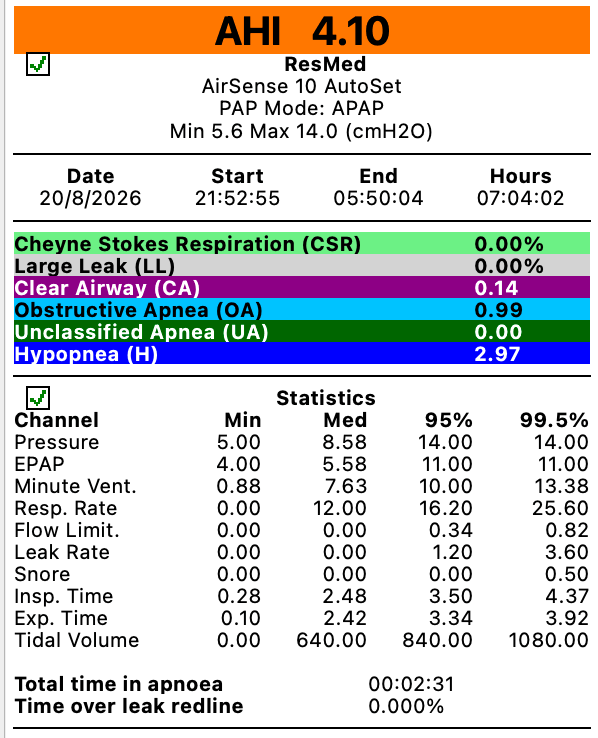
The most direct test is to feel for airflow yourself. Get into your normal sleeping position with the mask and machine on, in a quiet room with the lights dimmed. Hold your hand near the top of the mask and around the bridge of the nose. If you feel a stream of air against your hand, that same stream is hitting your eyes when you turn it the other way. Many machines also report leak data in their companion apps, but the apps are conservative. They tend to flag only large leaks. A leak too small to register in the app can still be enough to dry out your eyes over the course of a night. The piece I wrote about mask leaks goes into the diagnostic process in more detail.
Fixing the Mask Fit
If a top edge leak is the cause, the first move is to fix the seal. That usually means one or more of these adjustments. Check the headgear tension. Many people make the mistake of tightening it harder when leaks appear, which actually deforms the cushion and creates new leaks elsewhere. The cushion should rest against the face, not press into it. Loosen the headgear, then gently lift the mask away from your face, and let it settle back down so the cushion can find its natural seal.
Refit the mask in your normal sleeping position rather than sitting up. Soft tissue in the face shifts when you lie down, and a seal that holds upright can break the moment you put your head on the pillow. Lie down, then adjust.
Inspect the cushion. Silicone and gel cushions stretch and lose their shape after a few months of nightly use. If yours has visible cracks, a glossy worn patch where it contacts the bridge of the nose, or simply feels softer than it used to, replace it. Cushion replacement intervals vary by manufacturer and material, but most clinicians recommend swapping them every one to three months. I keep a longer guide to CPAP equipment replacement timing here.
If you can feel air consistently escaping near the bridge of the nose even after refitting and replacing the cushion, the mask may not be the right size or shape for your face. CPAP masks are not one size fits all, and the fit at the nasal bridge depends heavily on individual face shape. A different size cushion, or a different mask family entirely, may be needed.
Considering a Different Mask Type
If fit adjustments do not resolve the leak, the next step is to think about whether your current mask type is the right one for you.
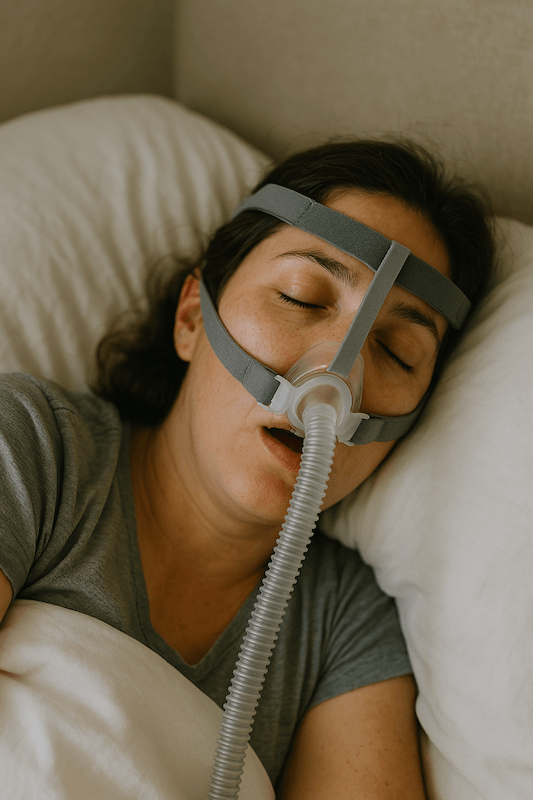
Nasal pillow masks sit at the base of the nostrils with minimal surface contact and no sealing surface near the eyes. For patients who can tolerate them, they are the lowest risk option for CPAP dry eyes. Nasal masks cover the nose only, sealing along the bridge and around the nostrils. They sit closer to the eyes than nasal pillows but still farther than the top of a full face mask. Full face masks cover both the nose and mouth, with the top of the seal directly under the eyes. They are the highest leak risk configuration when the question is dry eye specifically, but they are necessary for mouth breathers who cannot keep their mouth closed at night.
I use a full face mask. I have been a mouth breather since long before CPAP entered my life, and a nasal only mask would lose pressure through my open mouth all night. For me the trade off is worth it, and I have been fortunate not to develop eye symptoms. For other mouth breathers who do develop dry eyes, there are intermediate options. Hybrid masks combine nasal pillows with a mouth cushion, which can reduce the upper seal exposure while still keeping the mouth covered. Mouth taping is another approach some patients use to allow a switch from a full face to a nasal mask, but that route has its own considerations and is worth a separate conversation with your sleep physician.
If you are weighing options, I have written more on how to choose a CPAP mask, on the differences between nasal pillows and nasal masks, and on the trade offs between nasal and full face masks.
Humidity Matters
Drier air evaporates the tear film faster, which means that any escaping CPAP air will cause more eye irritation in a dry room than in a humid one. The simplest variable to control here is the heated humidifier built into your CPAP machine, if you have one. If you are running it on a low setting or with it turned off, try increasing it gradually over a week and see whether the eye symptoms improve.
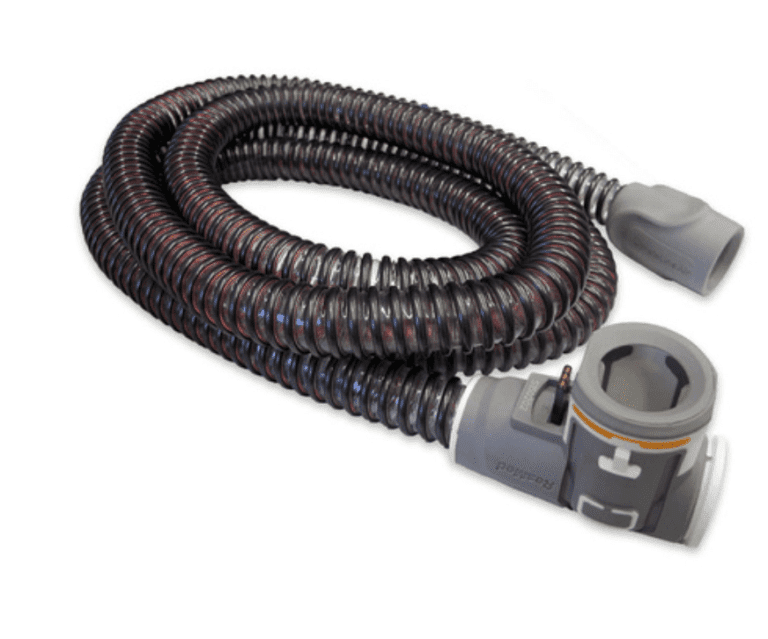
Heated tubing extends the benefit of the humidifier by keeping the warmed, moistened air at the right temperature all the way to the mask, preventing condensation that would otherwise dump water back into the humidifier chamber instead of delivering it to your airway. If you do not have heated tubing and you live somewhere with cool overnight temperatures, the post I wrote on heated CPAP tubing explains how it works and when it helps. Always fill the humidifier with distilled water to avoid mineral buildup that would shorten the life of the chamber and degrade air quality over time.
Room humidity matters too. If your bedroom drops below about 30 percent relative humidity, which is common in winter with heating running, a room humidifier near the bed can complement the CPAP humidifier and reduce the rate of tear evaporation throughout the night.
Protecting the Eyes Directly
Sometimes the leak cannot be fully eliminated, or the eyes have become sensitized enough that even normal nighttime tear evaporation produces symptoms. In these cases, direct eye care is worth adding to the routine.
Preservative free lubricating eye drops applied just before bed help reinforce the tear film at the moment it is most vulnerable. Preservative free is the preferred form for nightly use. The preservatives in many over the counter eye drops can themselves irritate the ocular surface when used heavily. A thicker artificial tear gel or ointment applied at bedtime lasts longer than thin drops, though it will blur vision for a short time after application. Some patients use lubricating ointment overnight and saline drops in the morning.
Moisture chamber goggles, sometimes sold as sleep goggles or dry eye goggles, create a sealed humid environment around the eyes. They are not glamorous, and they take some getting used to alongside a CPAP mask, but they can be effective for patients whose dry eye persists despite mask and humidity adjustments. They are particularly worth considering for patients with dry eye after LASIK, autoimmune dry eye, or any baseline ocular surface disease.
When to See an Ophthalmologist
Self management is reasonable for mild morning dryness that resolves quickly and responds to the fixes described above. It is not reasonable for persistent pain, persistent redness, vision changes that do not clear within minutes of waking, light sensitivity that affects daily function, or any sense that the eye surface is being damaged. Chronic untreated dry eye can progress to corneal damage, which is not something to wait out.
If you have already had LASIK or other refractive surgery, an autoimmune diagnosis, or a history of eye problems, the threshold for seeing an ophthalmologist should be lower. The same goes for patients on medications known to suppress tear production. A specialist can measure tear film quality and quantity, identify meibomian gland dysfunction if it is present, and prescribe treatments that go beyond what is available over the counter. These include punctal plugs that block tear drainage, prescription eye drops that target inflammation of the ocular surface, and treatments aimed specifically at the meibomian glands.
Common Questions
A few questions come up often enough to address briefly.
Can adjusting humidity alone fix the problem? Sometimes, particularly in mild cases or when the room itself is unusually dry. More often, humidity is one part of a fix that also includes mask refitting and possibly a mask change.
Can CPAP air leaks cause blurry vision? Yes. Overnight tear film disruption can produce blurriness on waking that clears after several blinks. Vision changes that persist longer than that, or that worsen over time, should be evaluated by an eye doctor rather than attributed to CPAP.
Does CPAP cause eye infections? Not directly, but a chronically irritated eye is more vulnerable, and CPAP equipment that is not cleaned regularly can harbor bacteria and mold. The routine for cleaning CPAP equipment is worth taking seriously for its own sake. Reducing eye risk is one of several reasons.
Does LASIK make CPAP dry eyes worse? Yes. The cornea is more sensitive after refractive surgery, sometimes permanently. Patients with a LASIK history should be especially careful about mask leaks and humidity.
Will switching to a BiPAP help? Probably not for this specific problem. BiPAP and CPAP both deliver pressurized air through the same mask categories, and the dry eye mechanism is the mask seal rather than the machine. The machine matters for other reasons, but not usually for this one.
A Note on What This Page Is and Is Not
I write about CPAP therapy as a long term user, not as a clinician. I have lived with sleep apnea for more than a decade and I know the equipment well, but I am not an ophthalmologist and I have not personally experienced CPAP dry eye. The recommendations on this page are drawn from the clinical literature, from advice given to me and others by sleep physicians over the years, and from what I know about how CPAP equipment behaves in real homes. If your symptoms are severe or persistent, an ophthalmologist is the right person to see, not a blog.
The deeper point is that CPAP dry eye is fixable for most people who have it. The fix is rarely glamorous. Better mask fit, fresher cushions, more humidity, sometimes a different mask, and in some cases direct eye care or specialist input. It does not require giving up therapy that is keeping you healthy. If you have been considering quitting CPAP because of your eyes, I would urge you to work the problem first.
⚠️ MEDICAL DISCLAIMER This blog provides general information only and is not a substitute for professional medical advice, diagnosis, or treatment. Sleep apnea is a serious condition, and CPAP equipment should be used under proper medical supervision. Always consult your doctor or sleep specialist before starting, stopping, or changing any therapy. I share personal experiences as a CPAP user, not as a medical professional. Individual results vary. For medical guidance, please consult a qualified clinician or the American Academy of Sleep Medicine (aasm.org).