Heated CPAP Tubing: What It Is and Why You Need It

If you have ever woken up to a gurgling hose, a face full of warm water, or a mask that feels like it has been left out in the rain, you have met an old enemy of CPAP therapy. Rainout. It is one of the most common complaints in the first months on a machine, and it pushes a fair number of people to give up on their humidifier altogether. That is exactly the wrong move.
Heated tubing is the quiet fix for this problem. It is the bit of kit I almost forgot was there until I stopped to take a photo of it for this post. After more than a decade on CPAP, mine has been such a reliable part of the setup that I rarely think about it. That is the goal. Therapy that just works.
This post walks through what heated CPAP tubing is, how it works, who actually needs it, and what to look for if you are choosing one. I am not a doctor or a sleep technician. My background is in computer science. I am a long term user who lives with the gear every night and writes about it for other people who do the same.
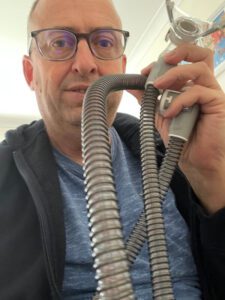
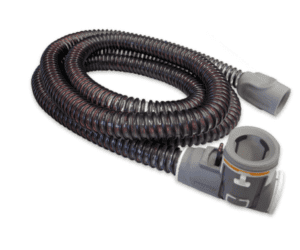
This is the heated tubing on my ResMed AirSense 10. The ClimateLineAir.
What heated CPAP tubing actually is
Heated CPAP tubing is a hose with a thin heating wire built into the wall of the tube. It still carries air from your machine to your mask the same way a standard hose does. The difference is that it keeps the air inside the hose at a steady, slightly warmer temperature, so that water vapor from your humidifier does not cool down and condense before it reaches your face.
You can see it in the photo above. That is the ClimateLineAir tubing on my ResMed AirSense 10. It plugs into the back of the humidifier with a two-part connector. One side carries the air. The other side carries a low-voltage current that runs along the heating wire.
Most people first hear about heated tubing because of rainout. That is when humidified air cools as it travels through a regular hose, condenses on the inner wall, and pools up. You wake to a wet mask, a wet pillow, or that lovely sensation of taking a sip from your hose. It is not dangerous. It is just unpleasant, and it makes therapy harder to stick with.
A heated hose stops that condensation before it can form.
How the heating actually works
Inside the hose is a thin coil of resistance wire. When current passes through, the wire warms up. The warmth radiates inward and keeps the air inside at the temperature your machine is calling for.
On a ResMed AirSense, you can let the machine do the thinking with the Climate Control Auto setting. The machine reads the room temperature and humidity through a sensor in the connector and adjusts the hose temperature on its own. You can also flip it to manual mode and set a specific tube temperature and humidity level. I have never bothered with manual. Auto has been fine for me through cool winter nights and warm summer ones in Western Australia.
The Sleep Foundation has a useful overview of how CPAP humidifiers work if you want a deeper background read on the relationship between humidification, tubing, and comfort.
The real benefits, in plain terms
The marketing copy around heated tubing tends to oversell it. Here is what it actually does for you, in the order I think matters most.
It stops rainout. This is the headline benefit, and it is real. If you have woken up to water in your mask more than once, a heated hose is going to fix the problem in the vast majority of cases. I have a separate guide on stopping CPAP rainout that covers the cheaper workarounds first if you want to compare options before buying.
It lets you run higher humidity without paying for it later. People with dry airways, allergies, or sinus issues often need a higher humidity setting to feel comfortable. Without heated tubing, that high setting is what causes rainout in the first place. With a heated hose, you can dial humidity up, and the air still arrives warm, and the inside of the tube stays dry.
It keeps the air more consistent through the night. Room temperature swings, especially if you sleep with a window open or if the bedroom cools off in the small hours, can change how the air feels at the mask. A heated hose smooths out those swings.
It is quieter in practice. Standard tubes that have collected condensation can develop a faint gurgle when air pushes water around inside. It is not loud, but it is the kind of small irritation that can wake a light sleeper. A heated hose tends to stay dry.
What heated tubing does not do is cure mouth dryness on its own, fix mask leaks, or make a poorly fitting mask comfortable. Those are different problems with different solutions, and I cover most of them elsewhere on the site under troubleshooting CPAP problems.
Who actually needs heated tubing
I want to be honest here. Plenty of people use a standard hose for years and never have a problem. If you live somewhere warm year round, run a low humidity setting, and never see condensation, you may not need to upgrade.
The people who genuinely benefit are these.
First, anyone in a cool or cold climate. The bigger the gap between the warm humidified air and the cold room, the faster condensation forms. Even here in Perth, where winter is mild by global standards, nights get cool enough that I notice the difference if I ever borrow a standard hose for testing.
Second, anyone who is already getting rainout. If you have water collecting in your mask or hose, a heated tube is the most direct fix. There are workarounds with hose covers and humidity adjustments, but heated tubing solves the underlying problem rather than working around it.
Third, anyone who runs higher humidity by necessity. If your sleep doctor has suggested cranking the humidifier up because of a dry nose, frequent congestion, or post nasal drip, a heated hose makes that setting livable.
Fourth, anyone who keeps the bedroom cool on purpose. Some of us sleep better in a chilly room. That is wonderful for sleep quality and terrible for CPAP condensation. Heated tubing lets you have both.
If none of those describe you, a standard hose with a hose cover might be enough. The cover does some of the same insulation job at a fraction of the price.
How heated tubing connects to the rest of your setup
Heated tubing only works if you have a humidifier on your machine. The hose pulls heat from the same circuit that drives the water chamber. If you have skipped the humidifier, or you are using a waterless HME filter instead, heated tubing does not really apply.
That is why the AirMini, which uses a waterless humidification cartridge, does not have a heated hose at all. I use the AirMini when I travel and camp, and the trade-off is that I have to be more careful about humidity and temperature on cold nights away from home. The full-size AirSense 10 with the ClimateLineAir is a noticeably more comfortable experience by comparison. It is one of the things I miss when I am on the road.
The water in the chamber matters too. Tap water leaves mineral deposits that can shorten the life of both the water chamber and the surrounding components. I cover that in more depth in my post on why distilled water matters for your CPAP.
Choosing the right heated tubing
If you have a ResMed AirSense or AirCurve, your choice is easy. ResMed makes ClimateLineAir for the older 10 series and ClimateLineAir 11 for the newer 11 series. They are not interchangeable. The connector size is different and the firmware on the newer machines expects the newer hose.
If you have a Philips DreamStation, the System One Heated Tube is the matching part. Fisher and Paykel use a different system again, called ThermoSmart, which is built into their SleepStyle and ICON line. I have not personally used the Philips or the Fisher and Paykel systems, so I cannot speak to them in detail. ResMed is what I have lived with.
A few things to think about no matter which brand you are on.
Length. Most heated hoses come in around six feet. Some brands offer shorter or longer cuts. I would not chase a longer hose unless your bedroom layout demands it, because longer tubes take longer to warm up and have more surface area for the room to cool down.
Weight and feel. Heated tubes are slightly heavier than standard ones because of the wire. If you are a side sleeper or a stomach sleeper, that small difference can pull on the mask. A hose holder above the bed solves this and is one of the cheapest quality of life upgrades in CPAP.
Build quality. The plastic on these tubes is thinner than the heavy duty rubberized hoses you may have used in the past. They are more comfortable but also easier to damage if you crush them under a knee, kink them under a pillow, or stretch them too tight across the bed.
Replacement timing. ResMed treats the ClimateLineAir as a consumable. The hose itself usually carries a shorter warranty than the machine. Plan to replace it on the same kind of schedule as a regular hose, which is roughly every six to twelve months depending on use and how careful you are with cleaning. I have a full CPAP replacement schedule if you want a single source of truth on this.
Looking after a heated hose
The maintenance is not difficult, but it is different from a standard hose.
Wash it weekly in warm water with a mild, fragrance-free dish soap. Run the soapy water through the hose, swirl it gently, then rinse with clean water until the water runs clear. Hang the hose over the back of a chair or from a shower rail to drip dry. Make sure the inside is fully dry before you connect it again. A damp hose does not just feel unpleasant, it can also throw off the temperature reading at the connector.
Never run water near the electrical connector. The connector clips onto the back of the humidifier, and that side should stay completely dry. If it gets a splash, dry it with a clean towel and let it air for a few hours before using.
Avoid harsh disinfectants. Bleach, vinegar in high concentrations, and most antibacterial sprays can degrade the inner lining and corrode the heating wire over time. There is a good rundown of safe cleaning options in my guide on how to clean a CPAP machine.
Watch for signs of wear. The hose will develop tiny pinholes, stretched sections, and stiff spots eventually. If you see discoloration, exposed wire, or feel a tear in the cuff, replace it. A leaking hose drops your delivered pressure and undoes the therapy you are paying for.
A few honest caveats
Heated tubing is helpful gear, not magic. A few things worth knowing before you order one.
It is not cheap relative to a standard hose. Expect to pay two to three times the price of a basic tube. For most people that is still well worth it, but it is not a five dollar accessory.
It only works on machines that support it. If you are on an older or budget machine without a Climate Control feature, the heated hose may either not connect or not actually heat. Check your machine’s manual before ordering.
It does not replace good humidifier hygiene. If your water chamber is full of scale, your hose will still feel funky no matter how warm it is. Distilled water and weekly cleaning matter just as much.
It will not fix issues that are not really about temperature. If your mask leaks, your pressure setting is wrong, or your mouth falls open at night, those are separate problems. I cover the most common ones in why your CPAP mask might leak and in my notes on CPAP dry mouth.
It does not run forever. The wire and the plastic both degrade, especially if the hose gets bent or pinched in the same spot every night. Treat it like a consumable rather than a forever piece of kit.
Final thoughts
If I had to rank the upgrades that have made my therapy more livable over the years, heated tubing is in the top five. It is not flashy. It is not the kind of thing you would spend an evening reading about for fun. But on a winter night when the room is cold, and I am breathing humidified air at a sensible setting, I notice that the air at my mask is comfortable and the inside of my hose is dry. That is the whole job.
If you are getting rainout, if you live somewhere with a real winter, or if your sleep doctor has asked you to run a higher humidity setting, heated tubing is one of the most direct upgrades you can make. If none of those apply, you can probably skip it without missing much.
Whatever you decide, talk it through with your sleep clinician before changing anything material about your therapy. They know your pressure, your mask, and your history.
⚠️ MEDICAL DISCLAIMER This blog provides general information only and is not a substitute for professional medical advice, diagnosis, or treatment. Sleep apnea is a serious condition, and CPAP equipment should be used under proper medical supervision. Always consult your doctor or sleep specialist before starting, stopping, or changing any therapy. I share personal experiences as a CPAP user, not as a medical professional. Individual results vary. For medical guidance, please consult a qualified clinician or the American Academy of Sleep Medicine (aasm.org).