How to Manage CPAP Dry Mouth: Why It Happens and What Actually Helps

Dry mouth is the most common complaint I hear from people on CPAP therapy. The Sleep Foundation lists it among the leading side effects of treatment, alongside congestion, mask discomfort, and aerophagia. If you’ve woken up with a tongue that feels glued to the roof of your mouth, sandpaper lips, and a throat that needs three glasses of water before it feels normal, you’re not alone.
It’s also worth saying upfront: dry mouth is not just a comfort issue. Saliva does real work overnight. It buffers acid, controls bacteria, and keeps the soft tissues in your mouth healthy. Chronic dryness is associated with cavities, gum disease, and bad breath, which is why this is worth solving rather than tolerating.
The good news is that almost every cause of CPAP dry mouth is fixable once you understand what’s actually driving it. The catch is that there’s no single fix. The right move depends on which cause is doing the damage in your case.
I’ve been on CPAP therapy for more than a decade. I’m a chronic mouth breather, which means I started in the demographic most likely to wake up parched. My current setup is a ResMed AirSense 10 with a full face mask, the AirFit F20, and distilled water in the humidifier. That setup didn’t happen by accident. It’s the result of working through the exact problem this article is about.
A quick note before I get into it. I’m not a doctor. My background is in computer science, and what I share on this site is grounded in lived experience and reading I’ve done over the years. None of this replaces a conversation with your sleep clinician, especially if dry mouth is persistent or getting worse.
What’s actually causing your dry mouth
There are three real causes of CPAP dry mouth, and they don’t apply equally to everyone.
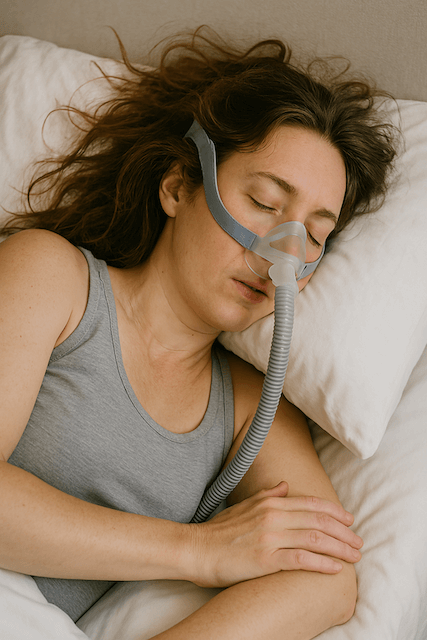
The first is mouth breathing during sleep. If your mouth falls open at night and you’re using a nasal mask or nasal pillows, the pressurized air from your machine streams in through your nose and exits through your open mouth. That’s a steady flow of dry air across your tongue, gums, and throat for six or seven hours straight. Saliva can’t keep up.
The second is mask leaks. A mask that’s lost its seal, has a worn cushion, or doesn’t quite fit your face shape will let pressurized air escape across your skin and around your mouth. Even small leaks dry things out fast because the air coming out of a CPAP machine is, by default, warm and dry. If you’re seeing high leak numbers in your machine’s data, that’s worth chasing down. I have a separate post on why CPAP masks leak that covers the common culprits.
The third is humidity, or rather the lack of it. Out of the box, a CPAP machine pushes ambient air through a pressure system. Without an active humidifier, what reaches your airways has been stripped of any moisture it had, and what little moisture was in your mouth gets pulled out with it.
These three causes interact. A mouth breather with a perfectly fitting nasal mask and an inactive humidifier will still wake up dry. A nose breather with a leaky full face mask will too. Most people I talk to have at least two of the three in play at once.
Why mask choice matters more than anything else
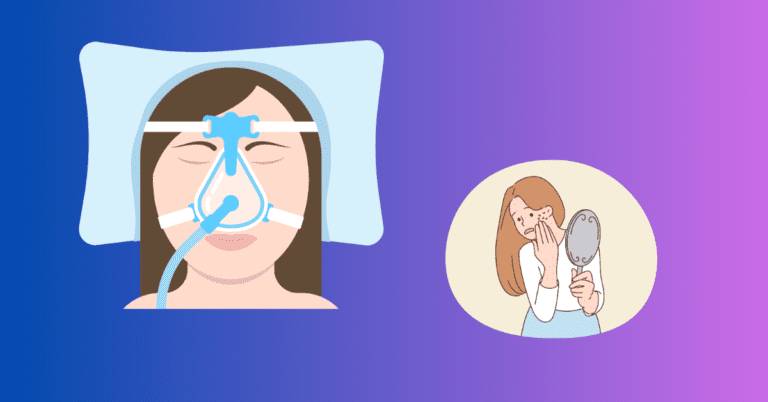
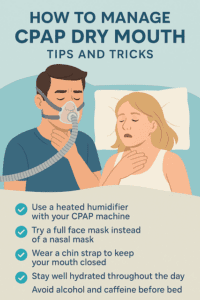
For chronic mouth breathers, the single biggest lever is mask type. A full face mask covers both your nose and mouth, so even if your mouth falls open during the night, the pressurized air stays inside the seal instead of escaping across your tongue.
That’s the path I went down. Switching to a full face mask early on solved a category of problems all at once. I no longer had to worry about whether I was breathing through my nose or my mouth on a given night. The seal handled it either way.
I haven’t trialed a dozen masks. The AirFit F20 is the only mask I’ve used long term, and it’s worked well enough that I’ve never felt compelled to switch. If you’re a mouth breather currently fighting a nasal cushion, this is the change I’d look at first. There’s a separate guide on full face vs. nasal masks if you want to think through the trade-offs, and a roundup of the best masks for mouth breathers if you’re shopping.
There’s a related problem some people discover when they switch. With a full face mask plus an aggressive humidifier setting, you can swing the pendulum the other way and wake up drooling instead of parched. I have a separate post on drooling with CPAP because it’s its own thing.
Humidification: the second big lever
Almost every modern CPAP machine ships with an integrated humidifier or has one as an option. The ResMed AirSense 10 includes a heated humidifier in most configurations, and I’d consider it essential for anyone living in a dry climate, running air conditioning at night, or generally struggling with dryness.
A few practical points on humidifier use.
Use distilled water. Tap water, even filtered tap water, leaves mineral deposits in the chamber over time. Those deposits are a pain to clean, can affect humidifier performance, and aren’t great to be heating and inhaling. I keep a few jugs of distilled water on hand and refill nightly. There’s more on this in my post on distilled water for CPAP machines.
Start at a moderate humidity setting and adjust based on how you feel in the morning, not on the number on the screen. The right setting depends on your bedroom climate and your personal physiology, so the only meaningful test is whether you wake up comfortable. If you’re still dry, bump it up. If you’re waking up with condensation in the tube or water in the mask, dial it back or look at heated tubing.
Heated tubing matters more than people expect. Without it, the humid air your machine produces cools as it travels through the hose, and that cooling causes condensation, called rainout. Rainout puddles in the tube, gurgles into the mask, and discourages you from running humidity high enough to actually solve the dry mouth problem. Heated tubing keeps the air warm all the way to your face. ResMed sells the ClimateLineAir for the AirSense lineup, and I have a guide on CPAP hoses that covers the options.
If you’ve tried turning humidity up and you’re still dry, the cause probably isn’t humidity. That’s a signal to check your mask fit and your breathing pattern.
Leaks: the dryness cause that hides in plain sight
A worn out mask cushion will dry your mouth out even if everything else in your setup is perfect. Cushions are made of silicone, and silicone fatigues. After several months of nightly use plus daily cleaning, the material starts to lose its shape and the seal degrades.
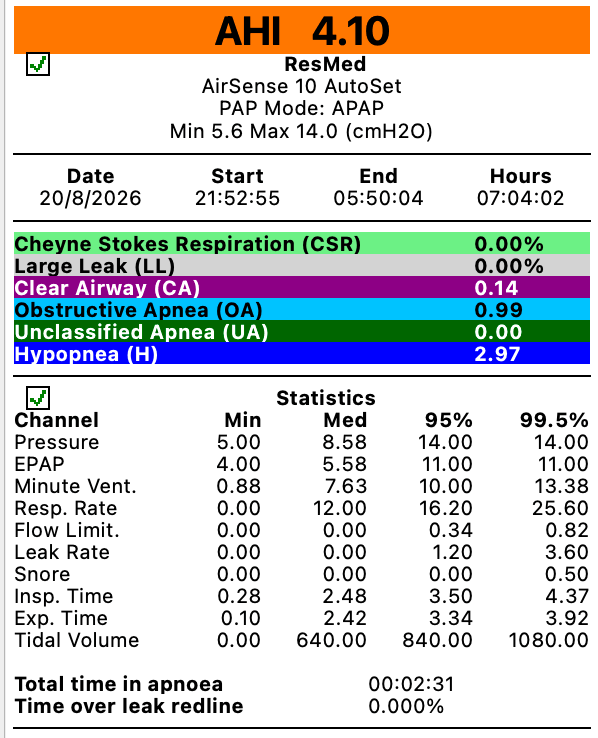
Manufacturers publish replacement schedules for a reason. Cushions are typically a roughly monthly replacement. Full face mask frames are a quarterly change. Headgear stretches. Hoses develop tiny cracks. None of these go bad in dramatic ways. They go bad slowly, and the symptoms creep up on you. Your AHI ticks up a fraction. Your leak rate ticks up a fraction. You wake up dryer than you used to.
I’ve put together a full CPAP replacement schedule that covers what to swap out and when. If you can’t remember the last time you replaced your cushion, that’s probably the answer to your dry mouth problem.
The other leak cause is fit drift. Your face changes. Weight gain or loss, facial hair, sinus shape, even posture during sleep can affect how your mask sits. If your mask used to fit and now it doesn’t, that’s worth a refit conversation with your DME or sleep clinic.
If you’re committed to a nasal mask
Some people find nasal masks or nasal pillows more comfortable than a full face setup, and for nose breathers they often work beautifully. If that’s you and you’re still waking up dry, the question becomes: how do you keep your mouth closed at night?
Chin straps are the traditional answer. They’re an adjustable band that sits under your chin and over the top of your head, holding your jaw closed gently. They work for some people. They don’t work for others, particularly heavier mouth breathers whose jaw drops with enough force to overcome the strap.
Mouth tape is the more recent entrant. Specialized tapes designed for sleep keep the lips closed without irritating the skin. The mouth tape conversation is genuinely contested. Some people find it transformative. Some clinicians worry about it for people with undiagnosed nasal obstruction or for anyone who might struggle to remove it quickly if needed. If you’re going to try it, do it after talking to your sleep doctor and not as a workaround for an unaddressed congestion problem.
I haven’t used either personally because the full face mask solved my mouth breathing. I mention them so the picture is complete, but I can’t speak to either from my own experience. There’s a broader piece on preventing mouth breathing on CPAP if you want to dig in.
Nasal congestion as the upstream cause
There’s one thing that turns even a confirmed nose breather into a mouth breather every night: a blocked nose. Allergies, deviated septum, chronic rhinitis, a head cold. If you can’t move air through your nose easily, your body will default to mouth breathing whether you want it to or not.
This is the cause people miss most often, in my experience. They focus on the mask and the humidifier and the chin strap, and the actual problem is that they can’t breathe through their nose.
Saline nasal sprays are a useful first step. They’re cheap, available everywhere, and don’t have the rebound effect that decongestant sprays do. A warm shower before bed can also help open things up. If congestion is chronic, that’s a conversation for your GP or an ENT, not something to manage indefinitely with a CPAP humidifier.
The Sleep Foundation has a thorough overview of CPAP dry mouth that covers the congestion angle in more detail if you want to read further.
Hydration and lifestyle
Water during the day matters. Saliva production needs hydration to work, and showing up to bed already dry will make every other intervention less effective. I aim for steady sips through the day rather than chugging a glass right before bed, which mostly just guarantees a 3 a.m. bathroom trip.
Alcohol and caffeine in the evening both contribute to dryness. Alcohol has the additional downside of relaxing the muscles in your throat, which makes your sleep apnea worse and your CPAP therapy less effective. If you’re already cutting back for general sleep reasons, this is one more box in the same column.
Saliva substitutes and dry mouth sprays from the pharmacy can help with overnight relief. They don’t fix the cause, but they’re useful as a stopgap while you sort out the equipment side. A small humidifier in the bedroom can also help on dry winter nights, particularly if you’re running heating overnight.
Travel and waterless humidification
When I travel, I take my ResMed AirMini. It’s a small machine, smaller than a soft drink can, and it doesn’t have a water chamber the way the AirSense 10 does. Carrying jugs of distilled water through airports is not a viable plan, and the AirSense 10 plus its accessories takes up more space than I want to give up in a suitcase.
The AirMini’s solution is waterless humidification through HumidX cartridges. They sit in the connection between the hose and the mask and use your own exhaled humidity to add moisture to the inhaled air. There are a few cartridge variants. With my AirFit F20, the only compatible option is HumidX F20, which is what I run on the road.
It’s not as effective as the heated humidifier on my home machine, especially in genuinely dry environments like long haul flights or arid hotel rooms. But it’s far better than running the AirMini bone dry, and it’s the right call for camping trips and overseas travel where bringing the AirSense 10 isn’t practical. I’ve covered the camping side in how to camp with a CPAP machine.
When to call your sleep clinician
If you’ve worked through mask type, humidification, leak control, hydration, and nasal patency and you’re still waking up dry, that’s a signal something else is going on. Possibilities include medications you’re taking that have dry mouth as a side effect, an undiagnosed underlying condition, or a CPAP pressure setting that’s no longer right for you.
Persistent dry mouth is worth flagging at your next sleep medicine appointment. It’s also a good reason not to skip those appointments. CPAP therapy isn’t a set it and forget it treatment. It’s an ongoing relationship with your equipment and your clinical team, and small things change over time.
A final thought
The thing I’d most want a new CPAP user to understand about dry mouth is that it’s almost always solvable, and the solution is almost always boring. It’s the right mask for your breathing pattern, a humidifier dialed to your environment, equipment replaced on schedule, and reasonable hydration during the day. Specialty products and lifestyle hacks have their place, but they’re not where I’d start.
If you’re a few weeks into therapy and the dryness is making you want to throw your machine out the window, hang on. The fix is probably one or two adjustments away.
⚠️ MEDICAL DISCLAIMER This blog provides general information only and is not a substitute for professional medical advice, diagnosis, or treatment. Sleep apnea is a serious condition, and CPAP equipment should be used under proper medical supervision. Always consult your doctor or sleep specialist before starting, stopping, or changing any therapy. I share personal experiences as a CPAP user, not as a medical professional. Individual results vary. For medical guidance, please consult a qualified clinician or the American Academy of Sleep Medicine (aasm.org).