Joe Rogan Sleep Apnea: Whats the Deal?

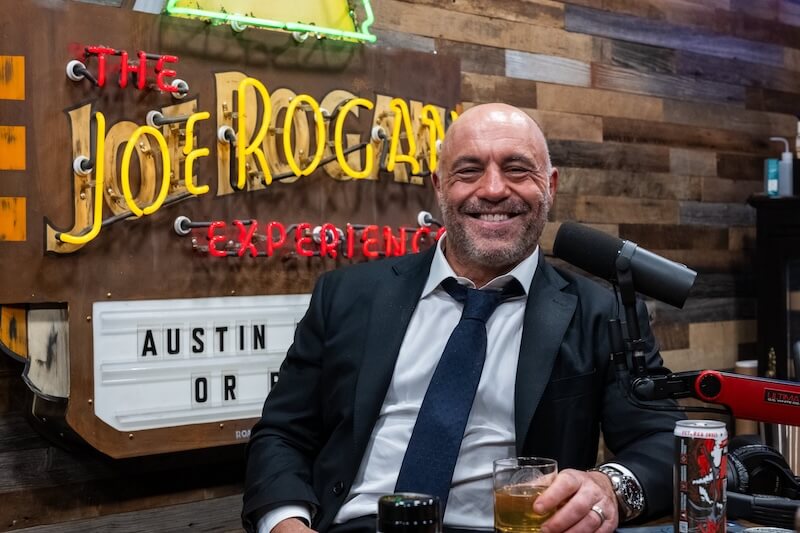
Joe Rogan is the reason a lot of people end up searching for a sleep apnea mouthpiece in the first place. He has the biggest podcast in the world; he talks openly about his own sleep, and when he mentioned the device he wears at night, a wave of curiosity followed. Search any combination of his name and “sleep apnea” and you will find dozens of pages, most of them written by companies that happen to sell mouthpieces.
I am not one of those companies. I have lived with severe obstructive sleep apnea for more than a decade, and I treat it with a CPAP machine and a full face mask every night. I write as a patient, not as a doctor, and the goal of this page is simple. I want to lay out what Rogan has actually said, separate it from what people have made up around it, and give you an honest read on whether the kind of mouthpiece he uses would do anything for you.
Does Joe Rogan have sleep apnea?
Yes, by his own account. In a clip from his podcast with Christopher Ryan, bluntly titled “Sleep Apnea Will Ruin Your Life,” Rogan talks about how badly the condition affects you when it goes untreated, and he explains that he manages his own with a mouthpiece rather than a CPAP machine. That last part is the detail people latch onto. He chose an oral appliance specifically because he did not want to sleep with a mask and a hose, which is a reaction I hear constantly from people new to therapy.
Beyond what he says in that clip, the internet has filled in a lot of blanks Rogan never actually spoke to. You will see confident claims about specific procedures he supposedly had and specific brands he supposedly endorsed. Most of that does not hold up. What he has consistently said is that he uses a custom mouthpiece fitted by a dental sleep specialist, that it keeps his airway open at night, and that it changed how he sleeps and snores. He has also said he gets anxious about forgetting it when he travels, which tells you he relies on it.
So the honest answer to the headline question is that Rogan treats breathing trouble during sleep with an oral appliance. Whether his case would be formally graded as mild, moderate, or severe is not something he has published, and I am not going to guess at someone’s apnea hypopnea index from podcast clips. That number matters more than most people realize, and I will come back to why.
What kind of mouthpiece does Joe Rogan use?
The device Rogan describes is a custom oral appliance, the category clinicians usually call a mandibular advancement device, or MAD. The principle is straightforward. The appliance fits over your upper and lower teeth like a sports mouthguard and holds your lower jaw slightly forward while you sleep. Pulling the jaw forward also pulls the tongue and the soft tissue at the back of the throat forward, which leaves more room for air to pass and makes the airway less likely to collapse.
A custom version is made by a dentist who takes impressions of your teeth and builds the appliance to fit your mouth specifically. The good ones are titratable, meaning the dentist can adjust how far forward the jaw is held over a series of visits until the breathing improves without wrecking your jaw. That is a different product entirely from the boil-and-bite mouthguards you can buy without a prescription, and the difference matters a great deal for whether the thing actually works.
If you want a closer look at the category and the products in it, I keep a separate breakdown of sleep apnea mouth guards that goes into the types and the trade offs. This page is about Rogan and about the bigger question of who a mouthpiece suits, so I will keep the hardware tour over there.
Why the mask put him off, and why I kept wearing mine
The part of Rogan’s story that I connect with most is the part everyone glosses over. He did not reject CPAP because it does not work. He rejected it because the mask felt intolerable to him. I understand that completely, because my own first weeks on therapy were rough.
I am a chronic mouth breather, which means a nasal mask or nasal pillows were never going to do the job for me. I need a full face mask that covers the nose and mouth, and a full face mask is the most physically present option there is. In my early nights I fought with leaks, I woke up with red strap marks pressed into my cheeks, the airflow felt far too strong, and more than once I woke to find I had pulled the whole thing off in my sleep without remembering. If I had been given an easier sounding option in that first miserable week, I can see why I might have grabbed it.
The reason I stuck with the mask is that the relief was bigger than the discomfort. My breathing trouble had been severe, and once the machine was doing its job I felt the difference quickly. The early problems also turned out to be fixable. Mask fit, strap tension, and ramp settings are adjustable, and most of what makes the first weeks unpleasant is a setup problem rather than a permanent feature of therapy. I wrote up the things that actually helped me adapt in my notes on getting used to CPAP, and separately on the anxiety that the mask can trigger, because for a lot of people that is the real barrier rather than the apnea itself.
None of this means a mask is the right answer for everyone. It means that “the mask was uncomfortable” is the start of a conversation, not the end of one. If you are a mouth breather like me and you have written off CPAP because a nasal mask felt wrong, it is worth knowing that masks built for mouth breathers exist, and that the choice between nasal and full face changes the experience entirely.
What a sleep apnea mouthpiece is actually for
This is where the celebrity angle stops being useful and the clinical reality has to take over, because a mouthpiece is not a universal swap for CPAP.
The American Academy of Sleep Medicine and the American Academy of Dental Sleep Medicine published a joint clinical practice guideline on oral appliance therapy, and the recommendation is clear about its place. CPAP remains the first choice for treating obstructive sleep apnea. Oral appliance therapy is recommended for adults who cannot tolerate CPAP, or who prefer an alternative, and when an appliance is used the guideline says it should be a custom, adjustable device fitted by a qualified dentist rather than something bought off the shelf. You can read the summary on the AASM site.
The practical version of that guidance looks like this. For primary snoring and for mild to moderate sleep apnea, a custom oral appliance can be a genuinely effective treatment, and many people stick with it more reliably than they would with a mask. For severe sleep apnea, the picture is different. A mouthpiece can reduce the number of breathing events, but it generally does not control severe apnea as completely as CPAP does, and the research is honest about the fact that a meaningful share of people see little benefit from an appliance at all. That is exactly why candidate selection and a proper diagnosis matter so much.
There are real reasons people choose an appliance even knowing all that. It is silent, there is no hose, nothing needs to be plugged in, and it travels in a pocket. For someone whose apnea is on the milder end, who travels constantly, or who simply will not wear a mask, an appliance they actually use every night beats a CPAP that sits in a closet. Adherence is the whole game, and a treatment only works on the nights you use it.
Why a mouthpiece is probably not the answer for severe apnea
My own apnea was severe. At diagnosis, my breathing was stopping and starting many times an hour, far into the range where the risk to the heart and brain is not theoretical. For a case like mine, the appliance route is not a straightforward substitute, and I would be doing you a disservice if I implied that watching Rogan praise his mouthpiece means you can skip the mask.
The danger with high-profile endorsements is that they flatten the differences between cases. Rogan talks about his own experience honestly, and there is nothing wrong with what he says. The problem is the layer of marketing that gets built on top of it, where a device suited to snoring and milder apnea gets sold as if it solves everything. Untreated severe apnea is linked to serious cardiovascular consequences, and the stakes of getting the treatment wrong are real. This is genuinely a case where the right answer depends on your numbers, not on what worked for a podcaster.
If you have not been formally tested yet, that is the first thing to sort out, ahead of shopping for any device. Knowing whether you are dealing with snoring, mild apnea, or something more serious is the difference between an appliance being a reasonable choice and being a mistake. My overview of the symptoms to watch for and the path to a diagnosis is a better starting point than any product page, including this one.
The travel detail that says a lot
One thing Rogan has mentioned stuck with me. He has said he worries about forgetting his mouthpiece when he travels, which is a small comment that reveals something true about long term treatment. Whatever you use, you come to depend on it, and being without it for a few nights is genuinely unpleasant.
I feel the same way about my equipment, just from the other side of the fence. Hauling a full CPAP setup through airports is a hassle, which is why I keep a small travel CPAP for trips and camping rather than dragging my main machine everywhere. The point is the same in both directions. Effective treatment becomes part of your routine, and the best treatment is the one you will keep with you and keep using. If travel is what is pushing you toward a mouthpiece, it is worth knowing that traveling with CPAP is far more manageable than people assume.
If you are curious about the mouthpiece Joe Rogan uses
Here is the honest path, in order. First, find out what you are actually treating by getting tested, because every reasonable decision flows from that number. Second, if you land in the snoring or mild to moderate range and a mask is not for you, talk to a dentist who does dental sleep medicine about a custom, adjustable appliance rather than buying a generic one online. Third, if your apnea is moderate to severe, take CPAP seriously even if your first impression of the mask is bad, because the early discomfort is usually a fixable setup issue and the protection it offers is hard to match.
I want to be straight about my own limits here. I have never used an oral appliance. CPAP with a full face mask has been my treatment from the beginning, so I cannot tell you firsthand how a mouthpiece feels in your mouth night after night. What I can tell you is what the evidence says about where it fits, and what a decade of living with this condition has taught me about choosing a treatment you will actually stay with. There are other routes worth understanding too, from positional therapy for people whose apnea is worst on their back, to the role weight loss can play, to the broader question of whether sleep apnea can ever truly be cured.
The bottom line on Joe Rogan and sleep apnea
Joe Rogan deals with breathing trouble during sleep and manages it with a custom oral appliance because he did not get along with a CPAP mask. That is a legitimate choice, and the device he uses is a real, recognized treatment for the right person. What it is not is proof that a mouthpiece beats CPAP, or that the mask is something to avoid. Those are two different tools for two overlapping but distinct sets of patients, and the line between them runs straight through how severe your apnea is.
I stayed with the mask because my apnea was severe and the relief was worth the early hassle. If you want the longer version of how I got there, including the part my wife played in pushing me to get tested, it lives in my account of living with sleep apnea. The most important step, before any of this, is finding out what you are actually dealing with. Everything else is downstream of that.
⚠️ MEDICAL DISCLAIMER This blog provides general information only and is not a substitute for professional medical advice, diagnosis, or treatment. Sleep apnea is a serious condition, and CPAP equipment should be used under proper medical supervision. Always consult your doctor or sleep specialist before starting, stopping, or changing any therapy. I share personal experiences as a CPAP user, not as a medical professional. Individual results vary. For medical guidance, please consult a qualified clinician or the American Academy of Sleep Medicine (aasm.org).