ResMed AirSense 11 AutoSet Review: The Latest CPAP tech!

“This post contains affiliate links. I may earn a commission if you buy through these links, at no extra cost to you. Read my Disclaimer for more details.”
I want to be upfront about one thing before you read another word. I have not personally used the ResMed AirSense 11. My current daily driver is the AirSense 10, and I am genuinely weighing whether the 11 is worth the upgrade. This page is what I have learned while making that decision myself, and what I think you should consider if you are weighing the same question or buying your first CPAP machine.
I am not a doctor. My background is in computer science. I am a person who has lived with severe obstructive sleep apnea for more than a decade, writes about CPAP because I wish I had this kind of information when I was diagnosed, and tries hard to be honest about what I do and do not know.
If you want a single sentence answer up front: the AirSense 11 is a sensible default for someone starting therapy or replacing a broken machine, and there is no clinical reason to ditch a working AirSense 10. The longer answer is below.
My Background with the AirSense 10
When I had my first sleep study more than a decade ago, my AHI came back at 51. That put me solidly in the severe category and explained why I had been sleeping eight or nine hours a night and waking up wrecked. My wife had been telling me I stopped breathing in my sleep long before any doctor confirmed it. The full diagnosis story is over on my Living With Sleep Apnea page if you want the longer version.
I am on my second AirSense 10. The first one ran reliably for about four years before the bearings in the blower started to whine, and I replaced it with another AirSense 10. The second machine is still going strong. It has come with me on camping trips, on international flights, and through more than its share of dust and humidity changes. For my own situation, the AirSense 10 has been a quiet, dependable piece of medical equipment that I genuinely do not have to think about most of the time.
For mask, I wear a ResMed AirFit F20 full face. I am a chronic mouth breather, so a nasal pillow or nasal mask was never going to work for me. The F20 has been the only mask I have ever used, because it works.
I share this not to flex but because it shapes how I evaluate the AirSense 11. I am not coming at this as a first time CPAP buyer trying to decide between brands. I am coming at it as someone whose current machine works, who already has a routine, and who is trying to figure out whether the new model brings enough to the table to justify the cost.
What the AirSense 11 Actually Is
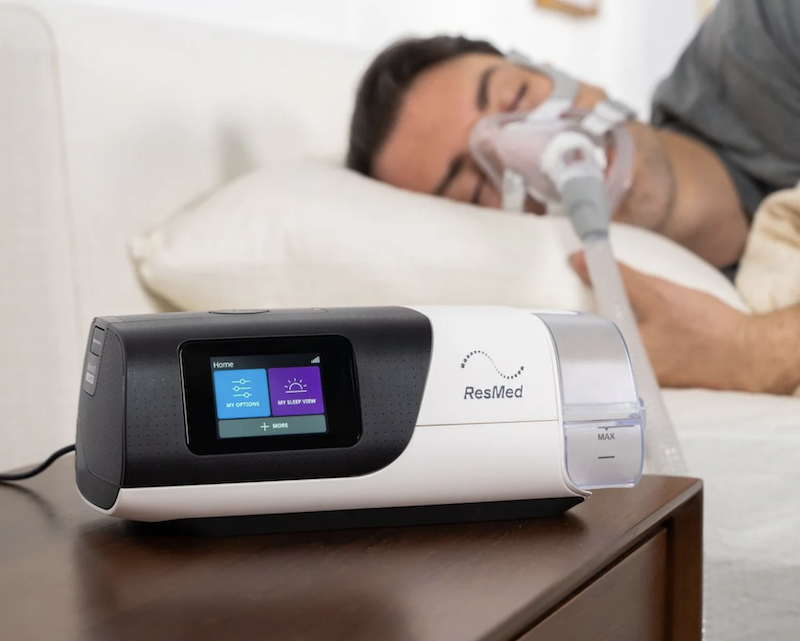
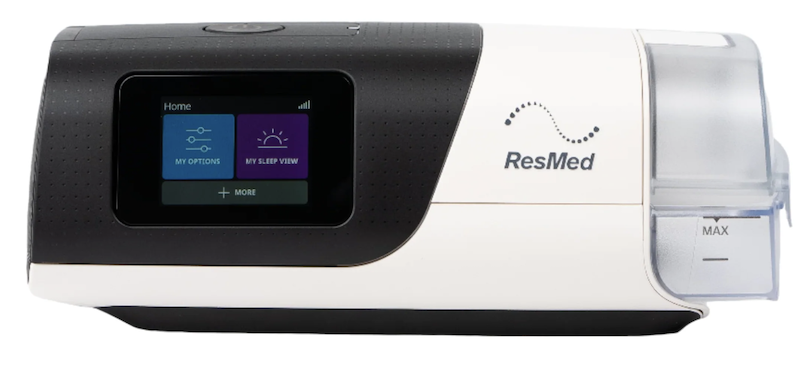
The AirSense 11 is ResMed’s current generation auto adjusting CPAP machine and the direct successor to the AirSense 10. The therapy core is the same. Same AutoSet algorithm. Same 4 to 20 cm H2O pressure range. Same general clinical purpose: keep your airway open while you sleep. If your doctor and you agreed that an APAP machine was right for your situation, the AirSense 11 is doing the same job the AirSense 10 was.
What ResMed changed sits mostly around the experience of owning and learning the machine, not the therapy itself. There are six things worth knowing about.
The first is digital onboarding. The AirSense 11 ships with a feature called Personal Therapy Assistant, which is a video guided setup walkthrough delivered through the myAir app. There is also a Test Drive mode that lets you wear the mask and feel the pressurized air during the day, before your first night of therapy. And a Care Check-In feature asks you how things are going through the first month and offers tailored troubleshooting based on your answers.
If that sounds like marketing language, I understand the skepticism. The underlying problem these features address is real, though. The American Academy of Sleep Medicine clinical practice guideline on PAP treatment makes a strong recommendation that educational interventions be given at the start of PAP therapy, and a conditional recommendation for behavioral and troubleshooting support during that initial period. Adherence in the first weeks is one of the strongest predictors of whether someone will still be using their machine a year later. Anything that walks a brand new user through their first night calmly is doing useful work, and on this point I think the AirSense 11 is a genuine step forward over the AirSense 10’s basic printed manual.
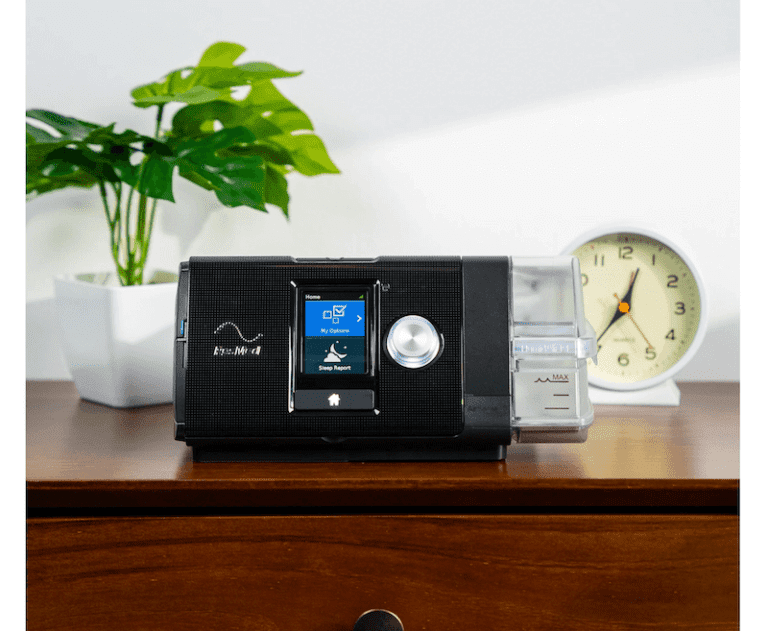
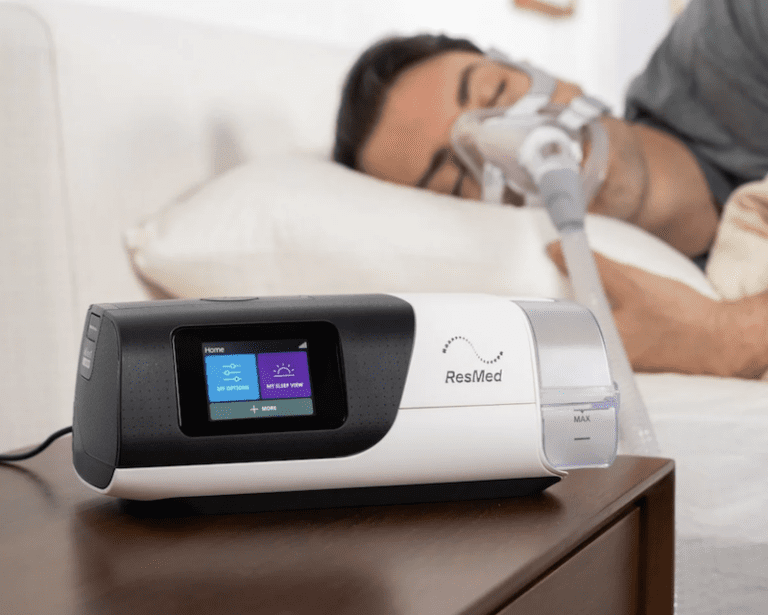
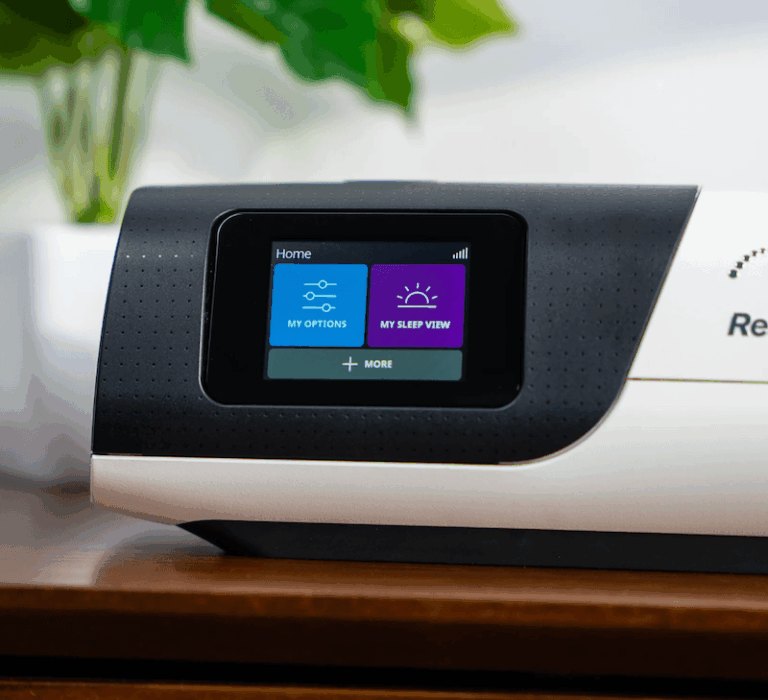
The second is the screen. The AirSense 11 has a color touchscreen rather than the AirSense 10’s button and small LCD interface, with an ambient light sensor that dims it at night. Not life changing, but more pleasant to live with. If you have ever fumbled to find the ramp button at 2 a.m., you understand why a clearer interface matters more than it sounds like it should.
The third is the power connector. The AirSense 11 uses a more secure connector than the AirSense 10’s barrel plug, which can wiggle loose if the cord gets tugged. I have woken up to a silent machine in the middle of the night exactly twice in my AirSense 10 years, and both times it was the cord. A small change, but a real one.
The fourth is the air filter. The AirSense 11’s standard filter is rated for up to six months of use, compared to the AirSense 10’s roughly monthly replacement schedule. Fewer filters to keep on hand, fewer reminders to set. If you want a complete maintenance picture, see my CPAP replacement schedule post.
The fifth is firmware updates over the air. The AirSense 11 can receive software improvements wirelessly, similar to a smartphone. This did not matter on the AirSense 10, because the AirSense 10 cannot do it. It does matter on a machine you might own for the better part of a decade, because it means the machine can theoretically improve over its life rather than being frozen at the firmware it shipped with.
The sixth is what did not change, and this matters as much as anything that did. Same therapy algorithm. Same pressure range. Same integrated heated humidifier. Same compatibility with standard 22 mm masks, including my F20. The heated tubing connector changed slightly, so if you use ClimateLineAir tubing on the AirSense 10 you will need the version 11 heated tubing for the new machine. A regular unheated hose works on either.
If you want a second opinion from a team that handles current CPAP equipment for a living, Sleep Foundation’s review of the AirSense 11 goes into device performance and packaging in detail.
AirSense 10 vs AirSense 11: Side by Side
The numbers below come from ResMed’s published specifications and trusted third party reviews, not from my own bench measurements.
| Feature | AirSense 10 | AirSense 11 |
|---|---|---|
| Therapy algorithm | AutoSet / AutoSet for Her | AutoSet / AutoSet for Her (same) |
| Pressure range | 4 to 20 cm H2O | 4 to 20 cm H2O |
| Display | Basic LCD with buttons | Color touchscreen with ambient light sensor |
| Setup assistance | Printed manual | Personal Therapy Assistant, Test Drive, Care Check-In |
| Power connection | Barrel connector | Secure connector |
| Air filter life | Roughly monthly | Up to six months |
| Firmware updates | Hardware replacement only | Over the air |
| Humidifier | Integrated heated | Integrated heated (same) |
| Heated tubing | ClimateLineAir | ClimateLineAir 11 (different connector) |
| Mask compatibility | Standard 22 mm | Standard 22 mm (same) |
| Noise level | About 27 dBA | About 27 dBA |
| Weight (with humidifier) | Around 2.6 lb | Around 2.5 lb |
| myAir app | Yes | Yes, with enhanced onboarding features |
The most important row is the first one. The therapy is the same. Whatever clinical benefit you are getting from your AirSense 10 is the clinical benefit you would get from an AirSense 11. The rest of the table is convenience and lifecycle, not medicine.
Who Should Consider the AirSense 11
If you are buying your first CPAP machine, the AirSense 11 is the one most retailers will steer you toward, and I think the steering is fair. The onboarding features exist for a reason. The first month of therapy is where most people quit. If you are anxious about the mask, the noise, or the pressure, the Test Drive feature and the guided setup are not gimmicks, they are doing real work. (If anxiety is the issue you are wrestling with most, my post on overcoming CPAP anxiety covers what worked for me in the early months. The two pieces work together: machine features can help, but the head game is most of the battle.)
If you are replacing a machine that has reached the end of its life, the AirSense 11 is the obvious successor. You are going to be buying something. The current generation makes more sense than chasing a small discount on the outgoing one, especially because the firmware update capability suggests the 11 will keep getting refined for years.
If you have a working AirSense 10, like I do, the math is more complicated. The therapy is the same. The data you can pull into OSCAR or the myAir app is broadly the same, and if you want to dig into your numbers in detail my OSCAR CPAP software post walks through how. What the 11 actually offers an experienced user is a clearer screen, a more secure power plug, fewer filter changes, and the possibility of firmware improvements over time. None of that is medically required. Whether it is worth the upgrade cost depends on how much you value those refinements and how close your current machine is to the end of its useful life.
The case for skipping the upgrade, if your AirSense 10 still works, is straightforward. The clinical outcomes will be identical. You already know your settings. You already have masks and tubing that fit your routine. The AirSense 10 remains an excellent CPAP machine, and saving the cost difference for replacement supplies, a better mask, or a travel CPAP for trips is often the more sensible call.
I will say this clearly because the original version of this page did not. I have not yet upgraded. The honest reason I am considering it is that I write about CPAP and I want to be able to speak to the AirSense 11 from real experience rather than from spec sheets and other people’s reviews. That is a publishing reason, not a clinical one. If your reasons are more practical than mine, the question is also simpler than mine.
Frequently Asked Questions
Will my AirSense 10 mask and accessories work with the AirSense 11?
Standard 22 mm masks and regular hoses work on both machines. If you use ClimateLineAir heated tubing, you will need the version 11 heated tubing for the new machine, because the connector changed slightly. Filters are different too. Keep some of your existing supplies as backup, but plan to buy the 11 specific consumables.
Is the AirSense 11 travel friendly?
It is FAA approved for in flight use, weighs around 2.5 pounds, and packs into a standard travel case. I have flown internationally many times with my AirSense 10 and have never had a problem at a security checkpoint. The AirSense 11 is in the same size class. It is not as compact as a dedicated travel CPAP, but for most trips a standard machine is fine. My travel with CPAP guide covers what I actually pack and how I handle airline power.
Can I use the AirSense 11 without the humidifier?
Yes, but you need a side cover accessory to seal the chamber slot. Running it without a chamber and without the cover is not safe, because the airflow path is not closed. ResMed sells the side cover separately. If you camp or travel and want to skip the humidifier to save weight and reduce condensation in the hose, this is the way to do it. My camping with CPAP post covers how I handle power and water on trips.
How often do I need to clean the AirSense 11?
Daily, rinse the water chamber and let your hose air dry. Weekly, wash the chamber and hose with mild soap and warm water. Replace the air filter every six months, or sooner if it is visibly dirty. My how to clean a CPAP machine post has the full routine I follow on my AirSense 10, and it carries over to the 11 directly.
Can I adjust the pressure settings myself?
The clinical menu is typically locked by your equipment provider to match your prescription. You can still adjust comfort settings like ramp time, EPR (expiratory pressure relief), and humidity from the standard menu without unlocking anything. Whether to change the clinical settings yourself is a conversation to have with your doctor or sleep specialist, not me.
Does the AirSense 11 work with OSCAR for detailed data analysis?
Yes. The AirSense 11 is OSCAR compatible, just like the AirSense 10. You pop the SD card into your computer and OSCAR shows pressure curves, leak rates, flow limitations, and individual events. The myAir app gives you a daily score and the basics, but if you want to actually understand your therapy I recommend learning OSCAR.
Should I buy the AutoSet or the regular CPAP version?
The AutoSet, in almost all cases. The AASM guideline notes that auto adjusting and fixed pressure are both reasonable choices for most patients with OSA, and the AutoSet gives you both options on one machine. There is rarely a reason to lock yourself into fixed pressure unless your doctor has a specific clinical reason.
How long will the AirSense 11 last?
CPAP machines typically last five to seven years with normal use. My first AirSense 10 made it to about four years before the bearings went, and my second one is still going. The AirSense 11’s firmware update capability could theoretically extend its useful life, but the mechanical parts (blower, motor) age the same way they always have.
Does insurance cover replacement parts and supplies?
Most insurance plans cover replacement supplies on a schedule, and the schedule does not change between the 10 and the 11. Masks every three months or so, cushions monthly, filters on the manufacturer’s schedule, tubing every three months, and water chambers every six months. Specifics vary by insurer. My CPAP replacement schedule post has more.
What if I get dry mouth on either machine?
Dry mouth is the most common complaint I hear, and it is usually a humidifier setting issue, a mouth breathing issue, or a leak issue. The humidifier on both the 10 and the 11 is the same hardware. If you are getting dry mouth on the AirSense 10, you will get the same dry mouth on the 11 unless something else changes. My CPAP dry mouth post walks through what to try in order.
My Honest Take
The AirSense 11 is a good machine. I am confident saying that based on its identical therapy core to the AirSense 10, ResMed’s published specifications, and the consistency of independent reviews from teams who have actually handled one. What I cannot honestly tell you, because I have not used one yet, is what it feels like to live with night after night. The AirSense 10, I can speak to in detail because I have spent the better part of a decade with one. The 11, not yet.
If you are starting CPAP therapy or replacing a broken machine, the AirSense 11 is a sensible default and I would not talk you out of it. The onboarding features genuinely help in the first month, and that first month is where therapy succeeds or fails for most people.
If you have a working AirSense 10 and a working routine, there is no clinical reason to switch. Save the money for a good mask, a pillow that works with your mask, or a travel unit if you go places. The therapy you are getting is the therapy.
When I do upgrade, I will rewrite this page from real experience. Until then, this is what I can honestly tell you. If you want my broader take on the current CPAP landscape, my best CPAP machines page lays out the field.
⚠️ MEDICAL DISCLAIMER This blog provides general information only and is not a substitute for professional medical advice, diagnosis, or treatment. Sleep apnea is a serious condition, and CPAP equipment should be used under proper medical supervision. Always consult your doctor or sleep specialist before starting, stopping, or changing any therapy. I share personal experiences as a CPAP user, not as a medical professional. Individual results vary. For medical guidance, please consult a qualified clinician or the American Academy of Sleep Medicine (aasm.org).