Why Does My CPAP Mask Leak? A Veteran User’s Honest Guide to Fixing It


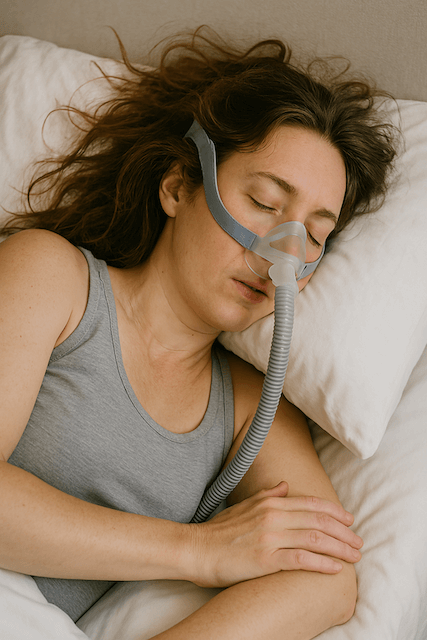
This is me diagnosing why my mask is leaking.
I have worn a CPAP every single night for over ten years. Severe sleep apnea does not give you the option to skip a night. And in all those years, I can tell you that nothing has tested my patience more than a leaking mask. Not the humidifier rainout. Not the travel hassle. Not even the insurance runaround. The leak is the thing that breaks people, and if it is breaking you right now, I want you to know two things up front. First, you are not doing anything wrong. Second, almost every leak I have ever had was fixable once I understood what I was looking at.
This guide is the one I wish someone had handed me during my first year on therapy. Back then I was sore, sleep deprived, and convinced the machine itself was defective. It was not. The mask was. And I had to learn the difference the slow way.
What a leaking CPAP mask actually is
Your CPAP does not push air in a vacuum. Every mask is engineered with exhaust vents, small and very deliberate holes that let your exhaled air escape so you do not rebreathe carbon dioxide. That is what makes CPAP safe. The airflow you feel near those vents is not a malfunction. It is the design doing its job.
The trouble starts when air escapes somewhere it was not meant to. A gap at the bridge of your nose. A fold of skin near your cheek. The seam where the silicone rolls over during a toss in your sleep. That kind of leak is called an unintentional leak, and it is the one we need to talk about.
Most modern machines display a leak number in liters per minute. The acceptable range varies by model and mask, but a rough rule of thumb is that anything north of about 24 liters per minute of total leak starts to compromise therapy. When the leak climbs, your pressure cannot hold steady, the algorithm chases its tail trying to compensate, and your airway gets less support than it was prescribed. ResMed puts it plainly in their own writeup on the problem: around 45 percent of people who quit CPAP said the inability to keep a mask seal was part of the reason.
That stat still shocks me. Nearly half of the people who walked away from therapy did so because of a problem that, in my experience, is almost always solvable with a weekend of patient experimentation.
How I knew my mask was leaking, and how you can tell
In my first year, I had no idea what to look for. I thought I just slept badly. Here is what I now look for, in rough order of how loud the signal is.
The obvious tell is the sound. A steady whistle or a sharp hiss is your first clue. My wife usually noticed before I did. She would say it sounded like a slow puncture in a bicycle tire, and after a week of that, we were both short on sleep.
The second clue is on your face when you wake up. Dry, gritty eyes are the classic sign of an upward leak near the bridge of the nose. If your eyelids feel puffy or your eyes water for the first half hour of the day, the air has probably been pointed at them all night. I wrote a whole piece on how CPAP air causes dry eyes for anyone fighting that specific symptom, because the fix is usually the mask, not eye drops.
The third clue is in the data. If you run OSCAR, SleepHQ, or the native ResMed app, watch the leak trend across the night. A spike at 3 a.m. often lines up with the moment you rolled onto your side. A flat, elevated leak across the whole night points to fit or wear. A sudden jump that never comes back down usually means you knocked the mask out of position and never reseated it.
The fourth clue, and the one that catches people out, is silent. I have had nights where the machine reported a large leak, my AHI looked fine, and I felt nothing unusual. Those sneaky leaks are the ones that slowly erode therapy without giving you the courtesy of a whistle to wake you up. The Sleep Foundation’s sleep medicine advisory board points out that silicone simply breaks down over time and loses its sealing ability, which is why replacement schedules matter even when the mask still looks fine to your eyes.
The real reasons your mask is leaking
After a decade of this, I have narrowed it down to about six causes. Most nights, one of them is the culprit.
The first and most common cause is a worn-out cushion. Silicone looks tough, but it is porous, it absorbs facial oils, and it compresses over time. A cushion that sealed beautifully in month one will start to slip in month four. I have learned to replace cushions roughly every three months, which aligns with what most insurers will cover. I wrote a full breakdown of timings in my CPAP replacement schedule guide, because the rest of your gear follows a similar rhythm.
The second cause is oil. This one surprised me. I used to put moisturizer on before bed, then wonder why my mask slid all over my face. Facial oils, sunscreen residue, night creams, and even the waxy residue left by makeup remover all degrade the silicone seal. A quick wash of your face with a mild, fragrance free soap before you strap in makes a noticeable difference. Same goes for wiping down the cushion itself with a damp cloth every morning.
The third cause is fit in the wrong position. A mask fitted while you are sitting upright in front of a mirror will behave differently the moment you lie flat. Your cheeks shift. Your jaw drops back a fraction. The bridge of your nose flattens against the pillow if you side sleep. I always do my final adjustment lying on my side with the machine running, because that is where I actually spend my night.
The fourth cause is over tightening. This is the most counterintuitive one. When people feel a leak, their instinct is to crank the straps. I did it for months. All it did was crush the cushion, flatten its sealing edge, and create new leaks in places that had been fine. Modern silicone cushions are designed to inflate slightly with pressure and create their own seal. You want the mask snug enough to stay put, not tight enough to leave deep red tracks across your cheeks in the morning.
The fifth cause is the wrong mask for your face or your sleep style. This one is harder to hear, because it means going back to the drawing board. But a side sleeper in a bulky full face mask, or a mouth breather in a nasal pillow, is fighting physics all night. I have written more about the distinction between nasal pillows and nasal masks, because that choice alone changes your leak behavior dramatically.
The sixth cause is the one nobody wants to think about. Hair. Beards. Even the subtle stubble that appears after a long day. Facial hair lifts the cushion off the skin by a fraction of a millimeter, which is all it takes. You should not have to shave for your therapy, and plenty of bearded guys get along fine, but it is worth knowing that a five o’clock shadow can turn a sealed mask into a leaky one by bedtime.
What mask types do in terms of leak risk
I have used only a full face mask over the years, but I want to walk through them as honestly as I can, because the listicle version of this online never really prepares you for the tradeoffs.
Full face masks, the ones that cover both your nose and mouth, are the workhorse for anyone on high pressure or anyone who breathes through their mouth at night. I still reach for my ResMed F20 when I have a cold, because I cannot breathe through my nose and nothing else would work. The honest tradeoff is size. More surface area means more seams, more chance of a gap, and more potential for air to vent upward into your eyes. If you are going to use a full face mask, the fit at the bridge of the nose is the place where leaks almost always start.
Nasal masks cover just the nose. They are a nice middle ground. Less bulk than a full face, more surface than a pillow, and they handle a wide range of pressures. The downside is that they need you to keep your mouth closed at night. If you are a mouth breather, they will leak in a way that no amount of cushion swapping will fix, because the air will simply escape through your open mouth.
Nasal pillows sit at the nostrils and seal from underneath. They are the lightest option and, in my experience, the most forgiving for side sleepers. I use pillows most nights because I spend half of them with my face pressed into the bedding. The tradeoff is that very high pressures can feel like a wind tunnel in your nose, and the cushions wear out faster because they are smaller.
Hybrid masks blend a mouth cushion with nasal pillows. They are a clever answer for mouth breathers who hate the bulk of a full face mask. Fit is fiddly at first. Once you dial it in, they hold beautifully. They are not cheap.
If you are wrestling with which style fits your body and habits, I would not rely on a shop assistant to guess for you. Try the mask at your prescribed pressure, lie down in your actual sleeping position, and see what happens. The showroom demo of a mask sitting upright at 4 cm of water pressure tells you almost nothing about how it will behave on your side at 14.
Fixing leaks, step by step
This is the routine that took my average leak numbers from regularly over 30 liters per minute down to a boring, consistent figure under 10. None of these steps are magic. They just work together.
Wash your face at night with a simple soap. No lotion, no residue. Give it a minute to dry fully before you put the mask on. Skin oil is the slow killer of a good seal, and every night you start with a clean canvas is a night your cushion lasts longer.
Fit the mask lying on your side, not sitting up. Turn the machine on, let it ramp, and only then adjust the straps. You are fitting the mask to the body position it will actually work in, not the one that is most convenient for you.
Go one notch looser than feels right. If your cushion is designed to inflate, and almost all modern ones are, it needs a little room to puff up and form its seal. Overtight straps collapse the cushion flat and create leaks. Undertight straps let the mask shift. The sweet spot is snug without tension.
Consider a mask liner if your skin is oily, if you have stubble, or if the cushion edges mark your face. Liners are thin fabric barriers that sit between your skin and the silicone, absorb oils, and actually improve the seal for most people. I was skeptical until I tried one, and now I will not sleep without it. My full breakdown of the best options is in my mask liner guide if you want to compare.
If you are a side sleeper, change the pillow. A regular pillow pushes your mask sideways during the night and levers the cushion off your face. A purpose built CPAP pillow has cutouts that let the mask sit unobstructed. This single swap made a bigger difference to my leak numbers than any mask change ever did.
Replace your cushion before it visibly fails. If it looks shiny, if the silicone feels soft or sticky, if the sealing lip has lost its bounce, it is already leaking even if you have not noticed. Three months is the standard insurance cycle in the US for a reason.
Check your hose. It is the thing nobody inspects. Tiny cracks near the cuffs, split seams along the length, a loose connection where the hose meets the mask or the machine: all of these show up on your machine as a mask leak, because the machine cannot tell the difference. I inspect mine every week.
Things the internet tells you to do that you should not do
Taping your mask to your face. I have seen this recommended in support groups. Do not do it. You risk blocking the exhaust vents, which is the whole point of the mask venting CO2 safely. Any fix that relies on sealing those vents is dangerous.
Cranking the pressure to compensate for a leak. This should be a conversation with your doctor, not a solo adjustment. If your leak is causing your AHI to climb, the answer is to fix the leak, not to out muscle it with more pressure. The American Academy of Sleep Medicine has noted repeatedly that mask selection and fit are among the biggest drivers of therapy success, which tells you the fix belongs on the mask end, not the pressure end.
Petroleum based products on the cushion. Vaseline, mineral oil, any kind of petroleum jelly will eat silicone. It looks like it helps for a night, then destroys your cushion within a week.
Duct tape around the edges. I have genuinely seen this one online. Please do not. Adhesive residue destroys the seal permanently, and you will be buying a new mask in days.
When to call in the professionals
Most leaks are fixable at home. Some are not. If you have tried different cushion sizes, different mask styles, proper fitting in your sleep position, and a clean nightly routine, and your leak numbers still will not come down, talk to your DME provider or sleep doctor. You may have an anatomy issue, a pressure that genuinely is too high, or a mask model that simply does not suit your face. None of that is a failure on your part. Some of the best outcomes I have seen in my own support network came from someone swallowing their pride, going back to the clinic, and asking for a proper refit.
A quick FAQ from real reader questions
Is any leak too much, or is there a normal amount? A small, steady reading below about 24 liters per minute is generally considered within tolerance on most modern machines. That number includes the intentional venting that every mask is designed to do. It is the persistent, climbing, or variable leak you want to act on.
Why does the leak only happen at 4 a.m.? Almost always a position issue. You roll, the mask shifts, and the seal breaks. A CPAP pillow with cutouts or a switch to nasal pillows usually fixes it.
My partner says I am still snoring with the mask on. Am I leaking? Possibly. It can also mean the pressure is set too low for your current weight and airway, or that you are mouth breathing through a nasal mask. Worth raising with your doctor before you assume the mask is the only problem.
Will a chin strap help? For some mouth breathers, yes. For others, the chin strap just shifts the problem and makes the mask sit oddly. I would try a full face mask before committing to a chin strap if the jaw drop is severe.
Does insurance really cover a new cushion every three months? In most US plans, yes, and new headgear every six months. Call your DME and ask for your replacement schedule in writing. You are leaving money on the table if you do not.
The part I want you to hear
I still remember the first morning I woke up from a full, uninterrupted seven hours of CPAP without a leak. The headache that had been my constant companion for years was gone. I was not angry at the alarm clock. My wife slept through. I know how dramatic that sounds, but severe sleep apnea does that to you. You forget what being rested feels like, and then one morning you remember.
If you are still in the leak wrestling phase, stay with it. The work you are doing right now, the cushion swaps and the strap adjustments and the hundred small fit tests, is the exact work that gets you to the rested morning on the other side. Leaks are not the end of your therapy story. They are the stubborn middle chapter, and you will get past them.
⚠️ MEDICAL DISCLAIMER This blog provides general information only and is not a substitute for professional medical advice, diagnosis, or treatment. Sleep apnea is a serious condition, and CPAP equipment should be used under proper medical supervision. Always consult your doctor or sleep specialist before starting, stopping, or changing any therapy. I share personal experiences as a CPAP user, not as a medical professional. Individual results vary. For medical guidance, please consult a qualified clinician or the American Academy of Sleep Medicine (aasm.org).