Best CPAP Wipes: What I Use and What to Look For


I have cleaned my CPAP equipment every morning for more than a decade, and a mask wipe is the first thing I reach for. Not because a wipe is the most thorough way to clean a mask. It is not. Warm water and a little mild soap will always do a better job. The reason I use wipes is simpler than that. They are fast, they live on the bedside table, and they get used. A thirty-second wipe of the cushion that actually happens every morning beats a perfect wash that I keep meaning to do and skip.
That is the honest case for CPAP wipes, and it is worth saying up front before any product talk. Wipes are a convenience tool for daily upkeep between proper washes. They are not a replacement for the weekly soap and water clean, and no wipe sanitizes your equipment the way some packaging implies. Keep that frame in mind and they are genuinely useful. Treat them as your whole cleaning routine and you will run into trouble.
This page covers the wipes I actually use, a couple of well regarded options I have not used but think are worth knowing about, and the things that actually matter when you pick a brand. If you want my full cleaning setup rather than just wipes, that lives on my CPAP cleaning supplies page.
Quick picks
| What you want | My take |
|---|---|
| The wipes I use daily | Resplabs CPAP Mask Wipes |
| A scented option (citrus) | Purdoux Scented CPAP Mask Wipes |
| For travel and camping | Purdoux CPAP Mask Travel Wipes |
A note on honesty before you read further. I use the Resplabs wipes every day and can speak to them from real use. The Purdoux options I have not used myself. I am including them because they are widely recommended, sold through a supplier I trust, and they fill gaps the Resplabs canister does not. Where I am reporting rather than speaking from experience, I will say so plainly.
The wipes I use: Resplabs CPAP Mask Wipes
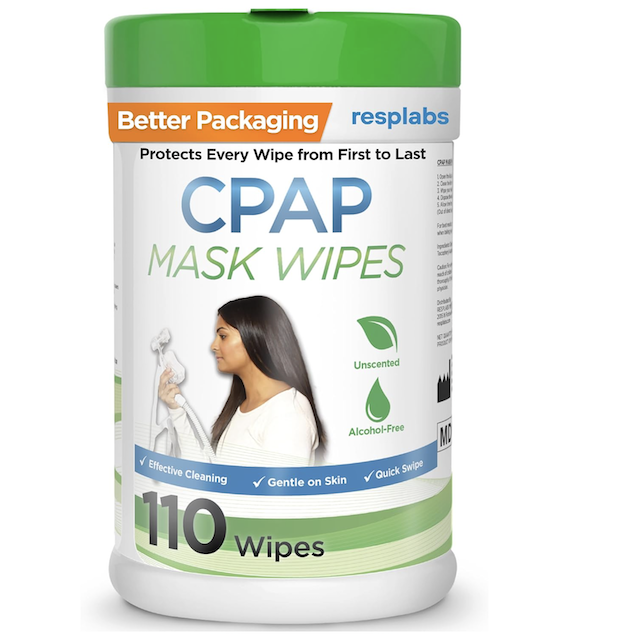
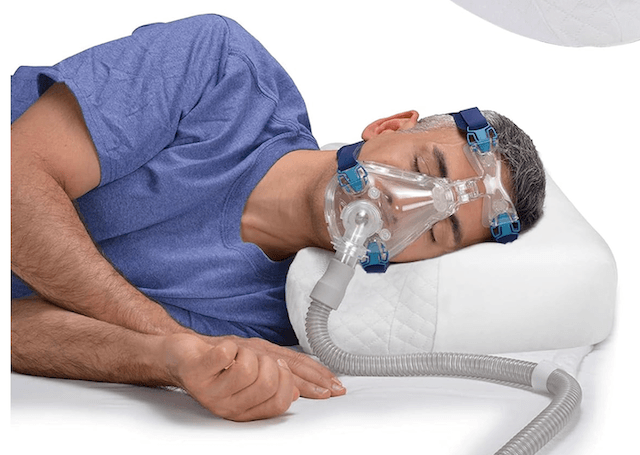
These are what I reach for every morning without thinking about it. After removing my full face mask, I wipe down the cushion to clear the overnight buildup of facial oils before it has time to sit on the silicone. It takes about thirty seconds and it has become as automatic as brushing my teeth.
Two things keep me buying them. The first is the container. They come in a canister rather than a flat pack, and the canister keeps the wipes consistently moist down to the last one. I went through a phase of using flat pack wipes years ago and the last third of every pack had dried out and gone useless within a couple of weeks of opening. The canister seal solved that, and the last wipe is as usable as the first.
The second is what is not in them. They have no added fragrance and no alcohol, and both of those matter more than they sound. A scented wipe leaves a residue you will smell against your face for the next seven or eight hours, which gets old fast. Alcohol is worse. It is good at cutting oil, but it slowly dries out and degrades the silicone in a mask cushion, which is the last part you want breaking down early. Wipes with neither problem are the right call for daily use on the part of your gear that touches your skin all night.
If you want a no-fuss daily wipe and you are not chasing a particular scent, these are an easy recommendation because they are the ones I trust on my own equipment.
Other wipes worth knowing about
I am only one person with one mask and one routine, so I am not going to pretend I have tested a shelf full of brands. What follows are two options I have researched rather than lived with. I trust the supplier and the specs hold up, but read these as reporting, not as a personal verdict.
Purdoux Scented CPAP Mask Wipes
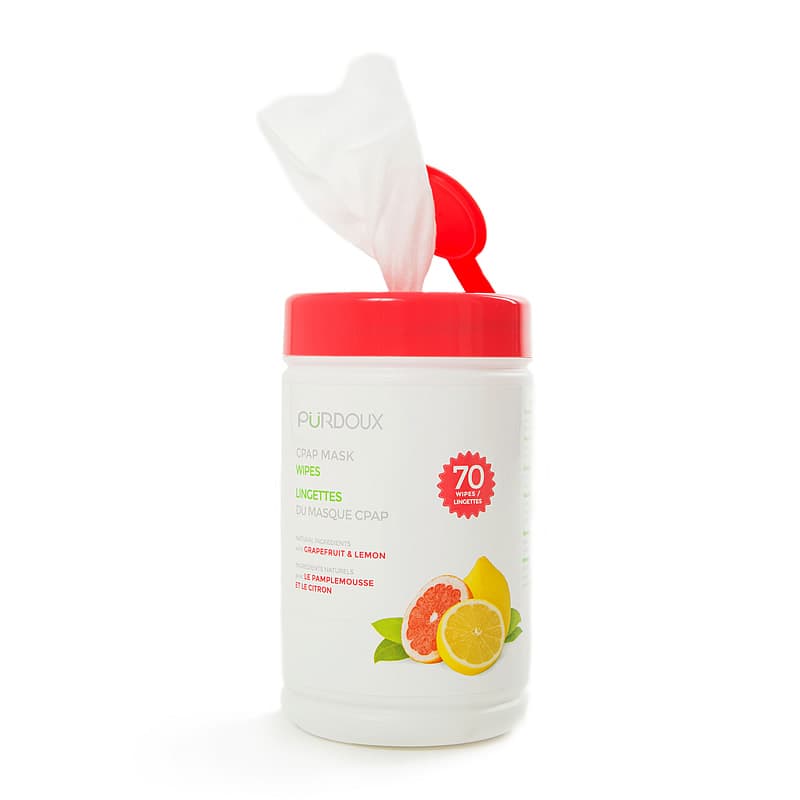
If you actually like a light scent rather than tolerating it, the Purdoux scented wipes are the option I would look at first. They use a citrus scent from lemon and grapefruit extract rather than a synthetic perfume, and they are made from cotton with no alcohol or solvents, so the concerns I have about harsh ingredients on a cushion do not apply here. They come in a canister, which is the format I would want for everyday home use for the same moisture reason I mentioned above.
The honest caveat is the one I always come back to. Any scent on a mask is a scent you live with all night, so a citrus wipe is a personal preference call, not a clean win over unscented. If you have ever found scented products bother your nose or skin, skip it. If you have wished your unscented wipes smelled like something pleasant, this is the one to try.
Purdoux CPAP Mask Travel Wipes
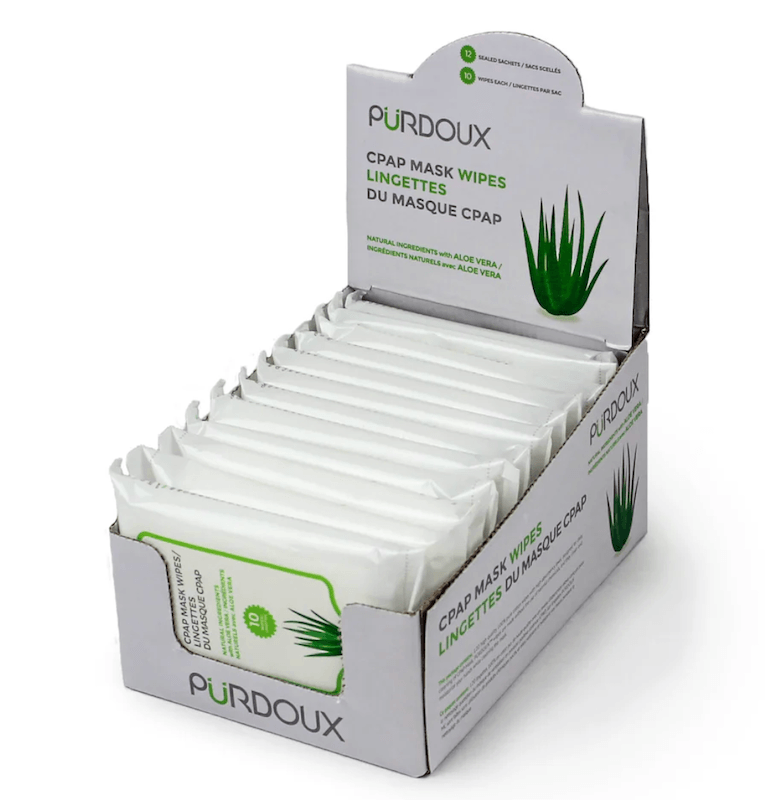
The one real weakness of a canister is travel. A canister is bulky, and once you crack the seal it starts losing moisture, which is the opposite of what you want when you are away from home for a week. Individually wrapped singles solve that. Each wipe stays sealed and moist until you open it, and you can throw a handful in a bag without packing the whole tub.
This is the format I would pack alongside a travel machine. I camp and travel internationally with my setup and run a ResMed AirMini on the road, and the whole point of a travel kit is keeping it small. Sealed singles fit that better than anything that needs a lid. The Purdoux travel wipes are unscented cotton with no alcohol, and they come split across sealed packets so you bring only what the trip needs. I have not used these specifically, but the format is exactly what I would reach for when space is tight.
What actually matters when you choose CPAP wipes
Most wipes look the same in a product photo, so here is what I pay attention to.
No alcohol. This is the one I would not bend on. Alcohol dries and degrades silicone over time, and a mask cushion is expensive to replace early. It can also irritate the skin on your face. Plenty of wipes are made without it, so there is no reason to use one that has it.
Scent, or the lack of it. Unscented is the safe default because whatever is on the wipe ends up against your face for the night. Scented wipes are fine if you genuinely enjoy the smell, but treat scent as a preference rather than a feature that makes a wipe better.
Residue and rinsing. A good wipe should leave the cushion clean and dry, not tacky. Some wipes ask you to rinse the parts afterward, which quietly turns a thirty second job into a longer one. If a no rinse daily routine is the appeal, check that the wipe is meant to be used that way.
Material and feel. Most quality CPAP wipes are cotton, which is absorbent and gentle. The wipe should be large enough to do the whole cushion in one pass and sturdy enough not to shred on the mask frame.
Count and cost per wipe. Wipes are pricier than ordinary cleaning wipes, and if you use one a day that adds up over a year. Compare the count, not just the sticker price, and work out the cost per wipe. Buying a larger canister usually lowers it.
Canister or singles. A canister keeps wipes moist and suits a fixed bedside routine at home. Individually wrapped singles cost a little more per wipe but travel far better. There is no single right answer here, and plenty of people keep a canister at home and a few singles in the travel bag.
The main types of CPAP wipes
You will see wipes sorted into a few overlapping categories, and a single product often sits in more than one. Knowing the labels makes the shelf easier to read.
Unscented wipes have no added fragrance and are the most broadly sensible choice, especially if you have any sensitivity to scent. Scented wipes add a fragrance, usually citrus, which some people like and some find too much overnight. Alcohol free wipes skip alcohol in favor of gentler ingredients, which is what you want for a cushion you use every night. Sanitizing wipes are formulated to kill bacteria, and they can be a useful stopgap, but they still do not replace a real soap and water wash. Natural wipes lean on cotton and plant based ingredients and tend to cost a bit more.
If you are not sure where to start, an unscented cotton wipe with no alcohol covers almost everyone.
Can you use baby wipes or regular cleaning wipes instead?
This question comes up a lot, usually because baby wipes are cheap and already in the house. I would not do it. Baby wipes and general cleaning wipes are gentle on skin, but they often carry lotions, fragrances, or other additives that are not meant to be breathed through a mask night after night. Some leave a film on the silicone that you then inhale, and others can speed up the breakdown of the cushion. CPAP wipes exist precisely because they leave out the ingredients you do not want sitting against your airway. The price difference per wipe is small, and on something your face is pressed into for hours, it is not the place to improvise.
The same caution applies to anything oil or petroleum based. Never put products like Vaseline on a mask cushion to ease a leak or soothe skin. It degrades silicone quickly, and I have written separately on why Vaseline and CPAP masks do not mix if you want the detail.
Do you actually need CPAP wipes?
No, and I want to be straight about that on a page that recommends them. You can keep your gear perfectly clean with mild soap and warm water, which is the method every manufacturer and clinician points to. The Sleep Foundation’s guidance on cleaning a CPAP machine lays out the standard daily and weekly routine, and none of it requires a single wipe.
What wipes buy you is consistency. The morning I am running late and would otherwise skip cleaning entirely is the morning a wipe still gets used, because it asks almost nothing of me. Over a decade, the routine that actually survives real life is the one worth having. For me that means a wipe most mornings and a proper wash once a week. If you would rinse the cushion under the tap every morning instead, that is just as good and cheaper. Wipes are a convenience, not a requirement.
How to use them without fooling yourself
A daily wipe handles the parts that touch your face, mainly the cushion. That is what collects oil and skin overnight and what affects the seal, so it is the right thing to clean often. Wiping it down each morning, before the oils have time to sit and harden, keeps the seal consistent and extends the life of the cushion.
What a wipe does not do is clean the inside of your hose, deep clean the humidifier chamber, or sanitize anything. So the wipe is the daily layer, and a weekly wash with soap and water is the layer underneath it. If you want the full routine I follow, it is on my how to clean a CPAP machine walkthrough, and if you are weighing a UV device on top of all this, I went through whether they are worth it in my CPAP sanitizer machine review. The short version is that a sanitizer kills germs but does not remove physical residue, so it sits alongside cleaning rather than replacing it.
One small thing that catches people out. Do not flush used wipes. They are not designed to break down like toilet paper and they cause real plumbing problems. They go in the bin.
A clean mask only goes so far
Wiping the cushion every day genuinely extends how long it lasts, but no amount of cleaning makes a mask immortal. Cushions, headgear, and hoses all wear out and need replacing on a schedule, and a clean worn cushion still leaks. I keep an eye on this with a simple CPAP replacement schedule so a tired cushion gets swapped before it starts ruining my nights. If you are curious about the specific mask I clean every morning, it is the one I cover in my ResMed AirFit F20 review.
Pick an unscented wipe with no alcohol, keep a canister by the bed and a few singles in your travel bag, and use them as the easy daily layer on top of a weekly wash. That is the whole system, and after more than a decade of doing it, it is still about five minutes of effort a day.
⚠️ MEDICAL DISCLAIMER This blog provides general information only and is not a substitute for professional medical advice, diagnosis, or treatment. Sleep apnea is a serious condition, and CPAP equipment should be used under proper medical supervision. Always consult your doctor or sleep specialist before starting, stopping, or changing any therapy. I share personal experiences as a CPAP user, not as a medical professional. Individual results vary. For medical guidance, please consult a qualified clinician or the American Academy of Sleep Medicine (aasm.org).